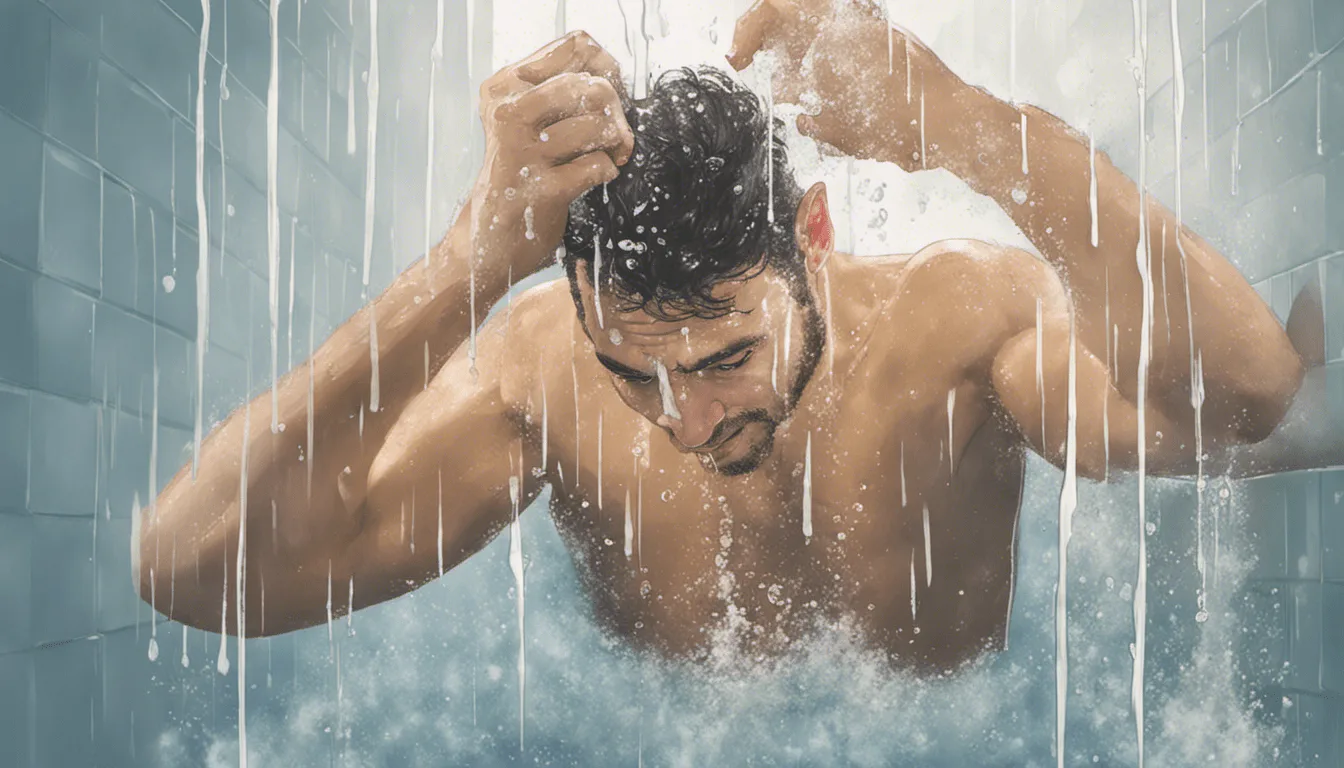
❔ Cold or hot shower: is one truly healthier?
The short answer is: neither is universally better.
A warm shower may be more useful for relaxation, muscle comfort, nasal congestion, and preparing for sleep. A brief cool or cold shower may increase alertness, provide a strong sensory stimulus, and feel helpful after heat exposure or selected forms of exercise. For everyday skin and hair care, lukewarm water is usually the most sensible compromise.
The question is not “Which temperature is superior?” It is:
What outcome are you trying to support, and can your body tolerate the temperature safely? 🚿
Water temperature changes blood-vessel behaviour, skin-barrier exposure, sensory input, perceived pain, heat loss, and the transition between activation and recovery. These effects are real, but online wellness culture often turns modest findings into dramatic promises. A cold shower isn’t a cure-all, and a hot shower isn’t a cardiovascular workout.
🚿 Cold or Hot Shower?
What happens when you shower with warm water?
Warm water transfers heat to the skin and encourages peripheral vasodilation, meaning blood vessels near the surface widen. This can increase skin blood flow and create a feeling of muscular ease.
The experience may also function as a transition ritual. After a demanding day, a warm shower can signal that work is ending. When followed by gradual cooling, it may support the body’s normal preparation for sleep.
The distinction between warm and hot matters. Comforting water isn’t necessarily the same as excessively hot water. Very hot water can cause dizziness, worsen dry skin, aggravate itching, and increase burn risk.

Muse Headband: A Game-Changer for Meditation
Potential benefits of a warm shower
1. Muscle comfort and relaxation
Warm water may reduce the perception of stiffness and temporarily ease muscle tension. It can be particularly pleasant after ordinary activity, prolonged sitting, or a stressful day.
This is not the same as healing an injury. Acute swelling, a suspected fracture, severe pain, or unexplained weakness deserves medical assessment. Heat may be inappropriate for some fresh injuries because it can increase local blood flow and swelling.
2. A calmer evening transition
A warm shower can become part of a predictable wind-down routine. A systematic review and meta-analysis found that passive body heating through a warm shower or bath, generally taken approximately one to two hours before bed, was associated with improved sleep onset and self-rated sleep quality in adults.
The likely mechanism is not that hot water “knocks you out.” Rather, warming the skin can increase peripheral heat loss afterward. The subsequent fall in core body temperature may support the normal physiology of sleep.
Read: Sleep Hygiene for the Brain and Body for a broader evening routine.
3. Temporary relief from nasal stuffiness
Steam and warm humidity may make mucus feel less thick and can provide temporary comfort during a blocked nose. This is symptom relief, not treatment of the infection or cause.
Avoid very hot steam, especially for children, because scald injuries can occur. A warm shower is safer than leaning over boiling water.
4. A useful self-care ritual
A shower can provide privacy, a sensory reset, and a short period without screens. These psychological benefits are often overlooked. The water is not doing all the work; the ritual, breathing, reduced interruptions, and transition may also matter.
Muse Headband: A Game-Changer for Meditation
What happens when you shower with cold water?
Cold water causes rapid skin cooling and peripheral vasoconstriction, meaning surface blood vessels narrow. It also creates a strong sensory signal that can increase alertness and respiratory drive.
Cold exposure may activate the sympathetic nervous system – the body’s mobilisation system. Heart rate, breathing, and blood pressure can change quickly, especially when the temperature drop is sudden.
That reaction is why cold showers can feel invigorating, but it is also why they are not suitable for everyone.
Potential benefits of a cool or cold shower
1. Increased alertness
A brief cold exposure can make you feel more awake because the sensory shock demands attention. This may be useful when you are mildly sluggish, but it does not replace sleep. Using cold water to override severe sleep deprivation can create a false sense of readiness, which is unsafe before driving or operating machinery.
2. A strong stress-inoculation practice
Some people use controlled cold exposure to practise staying calm during a manageable physical challenge. The skill is not enduring maximum discomfort. It is noticing the initial alarm response, regulating breathing, and exiting safely.
This approach should remain voluntary and gradual. A cold shower is not a test of toughness, masculinity, discipline, or moral worth.
3. Possible support for exercise recovery
Cold-water immersion has been studied more extensively than ordinary cold showers. Research suggests that cold exposure may reduce perceived soreness and alter inflammatory responses after some forms of strenuous exercise. A 2025 systematic review found that effects varied according to timing and outcome, with evidence not supporting every popular claim about immunity, mood, or long-term health.
A crucial nuance: immediately using cold immersion after resistance training may interfere with some cellular signals involved in adaptation. If your primary goal is muscle hypertrophy or strength adaptation, frequent intense cold exposure immediately after lifting may not be ideal. Discuss the trade-off with a qualified sports professional.
A cold shower is also not equivalent to an ice bath. The exposed surface, temperature, duration, hydrostatic pressure, and depth differ.
4. Temporary relief from heat and itch
Cool water may feel soothing when the skin is overheated or itchy. It can reduce the sensation of warmth and may temporarily calm irritation.
Persistent itch, rash, swelling, hives, infection, or unexplained skin changes require assessment. Cold water may reduce symptoms without addressing the cause.
Muse Headband: A Game-Changer for Meditation
Dopamine, cold showers, and why the claim needs nuance
Dopamine is frequently discussed in cold-shower content. It is involved in motivation, learning, movement, reward prediction, salience, and effort – not simply pleasure or happiness.
Cold exposure can produce a strong physiological response involving several stress and arousal systems. Some studies and expert discussions have reported changes in catecholamines such as noradrenaline, and cold exposure may feel motivating or energising. But the popular claim that a cold shower gives a precise, sustained “dopamine boost” should be treated cautiously.
There is no universal shower temperature that guarantees a fixed neurotransmitter increase, permanent motivation, or improved mental health. Results depend on temperature, duration, whole-body versus local exposure, prior adaptation, sleep, expectations, sex, age, health, and the measurement method.
A more accurate interpretation is:
A brief cold shower may provide a salient sensory challenge that changes arousal and attention for a period of time; that experience is not the same as permanently improving dopamine function.
Do not chase increasingly extreme exposure to reproduce a dramatic feeling. The goal is useful alertness and self-regulation, not a daily chemical spectacle. If a cold shower makes you panicked, dizzy, compulsive, or exhausted, it is not a suitable wellness practice.
Which shower is better for sleep?
For most people, a comfortably warm shower is more compatible with sleep than a cold shower immediately before bed.
Warm water taken approximately one to two hours before bedtime may support sleep onset by increasing skin temperature and subsequent heat dissipation. The effect is usually more relevant to a consistent routine than to a single “perfect” shower.
Cold water can increase alertness and may be stimulating. Some people find it refreshing; others feel chilled or activated afterward. If you enjoy cool water at night and it does not disturb your sleep, individual preference matters. If it leaves you tense or awake, move it earlier in the day.
Avoid very hot water close to bedtime if it makes you sweaty, light-headed, itchy, or uncomfortable.
Which shower is better after exercise?
The answer depends on the training goal and the type of exercise.
- After endurance work in heat, cooling may improve comfort and perceived recovery.
- After ordinary exercise, either lukewarm or warm water may feel beneficial.
- After resistance training, avoid assuming that intense immediate cold exposure is always optimal for adaptation.
- After an acute injury, do not use temperature as a substitute for assessment.
- After heavy sweating, rehydration and cooling the environment may matter more than a dramatic shower ritual.
Cold water may reduce soreness perception without necessarily speeding every aspect of tissue repair. Feeling better is valuable, but it is not identical to recovering faster.
Skin and hair: why lukewarm water usually wins
Very hot water can strip surface oils, increase dryness, worsen itch, and disrupt the skin barrier – particularly in people with eczema, psoriasis, sensitive skin, or low-humidity exposure.
Cold water does not “close pores” in a permanent anatomical sense, and it cannot prevent hair loss. Hair follicles are not strengthened simply by switching to cold water. Cool water may feel gentler and reduce the drying effect associated with very hot water, but the larger factors are water temperature, shower duration, cleansing products, friction, and moisturising.
For most skin types:
- Use lukewarm rather than steaming water.
- Keep showers reasonably short.
- Use a gentle, fragrance-free cleanser when needed.
- Avoid scrubbing irritated skin.
- Pat dry rather than rubbing aggressively.
- Apply moisturiser while the skin is still slightly damp.
People with persistent eczema, severe dryness, infection, or recurrent rashes should follow personalised dermatological advice.
Cold versus hot shower: a practical comparison
| Goal | Usually more suitable | Important nuance |
|---|---|---|
| Relaxation | Warm | Avoid excessive heat and dizziness |
| Preparing for sleep | Warm, 1–2 hours before bed | Individual response varies |
| Morning alertness | Cool or mildly cold | Does not replace sleep |
| Cooling after heat | Cool | Rewarm gradually and hydrate |
| Muscle comfort | Warm | Not a treatment for acute injury |
| Post-exercise soreness | Cool/cold may help perception | Ice immersion is not the same as a shower |
| Sensitive or dry skin | Lukewarm | Moisturiser and shorter showers matter |
| Hair care | Lukewarm or cool | Cold water does not prevent hair loss |
| Respiratory comfort | Warm humidity | Temporary relief only |
| Cardiovascular safety | Moderate lukewarm temperature | Extreme hot and cold can be risky |
Advanced shower protocols without unnecessary extremes
The evening warm-shower protocol
Take a comfortably warm shower one to two hours before bed. Keep the lighting soft afterward, avoid returning immediately to demanding work, and allow the body to cool naturally. Track sleep onset and night awakenings for one week rather than judging the method after one night.
The gradual cool-finish protocol
Begin with a normal lukewarm shower. At the end, reduce the temperature slightly for 15–30 seconds while breathing slowly. Stop if you gasp uncontrollably, feel chest discomfort, become dizzy, or lose coordination. Increase duration only if the response remains manageable.
The recovery protocol
After exercise, first address hydration, food, sleep, and environmental heat. Use a cool shower for comfort when appropriate. Do not let the shower become a substitute for rest or a reason to train through pain.
The skin-barrier protocol
Use lukewarm water, a short shower, gentle cleanser on areas that need it, and moisturiser immediately afterward. This often has more practical value than choosing between “hot” and “cold.”
Who should be especially cautious?
Avoid abrupt cold exposure or obtain medical guidance first if you have coronary disease, arrhythmias, uncontrolled hypertension, a history of fainting, Raynaud’s phenomenon, cold urticaria, peripheral neuropathy, impaired temperature sensation, pregnancy-related concerns, or significant respiratory disease.
Be cautious with very hot showers if you have low blood pressure, orthostatic intolerance, cardiovascular disease, neuropathy, diabetes-related sensation changes, or a history of fainting.
Children and older adults may have greater difficulty regulating temperature or recognising danger. Never leave a child alone around hot water.
Stop immediately if you experience chest pain, severe breathlessness, confusion, weakness, faintness, blue or pale skin, uncontrolled shivering, or a racing or irregular heartbeat.
🌿 Your free holistic routine for daily recovery
A shower can become one part of a broader routine rather than a miracle intervention. The Free Expert-Crafted Holistic Routine to Nourish Your Daily Life can help you combine sleep, movement, nutrition, recovery, reflection, and stress-care practices.
The Holistic Living Routine
Get our Free Expert-Crafted Holistic Routine to Nourish Your Daily Life.
For readers interested in nervous-system regulation, Sensate is an optional affiliate resource for a quiet relaxation routine. It should complement – not replace – sleep, professional care, breathing practices, or practical stress reduction.

Sensate: A Simple Tool for Everyday Stress Relief and Relaxation
Sensate is a non-electrical vagus nerve wellness device that uses low-frequency sound vibrations and synchronized soundscapes to calm your nervous system in just 10 minutes. No meditation experience or breathing techniques required. Clinically shown to reduce stress by 48% in 28 days and improve sleep quality with an average of +55 minutes extra sleep per night. Simply place it on your chest, put on headphones, and let the technology work passively while your body shifts into a state of deep relaxation-measurable brain activity similar to that of experienced meditators in just 10 minutes.
Explore: How to Start a Mindfulness Practice for Beginners. If you want to use the shower as a brief sensory-awareness practice, notice water pressure, temperature, breathing, muscle tension, and the moment your attention wanders.
❓ Frequently asked questions
Is a cold shower better than a hot shower?
No single temperature is best for everyone. Cold showers may support alertness and perceived recovery, warm showers may support relaxation and sleep, and lukewarm water is often best for everyday skin care.
Do cold showers increase dopamine?
Cold exposure may influence arousal and several stress-related systems, but claims of a guaranteed or sustained dopamine increase are oversimplified. Effects vary, and a cold shower is not a treatment for low mood or poor motivation.
Are hot showers good before bed?
A comfortably warm shower or bath taken approximately one to two hours before bedtime may support sleep onset for some people. Very hot water immediately before bed can be uncomfortable or make some people feel overly alert.
Can cold showers burn fat?
Cold exposure can increase heat production, but a shower is not a reliable weight-loss strategy. Nutrition, physical activity, sleep, medication, and health conditions have much greater practical relevance.
Can hot showers damage the skin?
Very hot and prolonged showers can worsen dryness, itch, and barrier disruption. Lukewarm water, shorter showers, gentle cleansing, and moisturising are usually more protective.
Should I take a cold shower after strength training?
It may reduce perceived soreness, but frequent intense cold exposure immediately after resistance exercise could interfere with some adaptation signals. Use it selectively according to your training goal.
Do cold showers prevent illness?
Evidence does not justify presenting cold showers as a reliable way to prevent infections. They may influence subjective well-being, but hygiene, vaccination, sleep, nutrition, and medical care are more relevant to disease prevention.
How long should a cold shower last?
There is no universal duration. Start with a mild, brief cool finish rather than extreme exposure. Stop when your breathing or coordination becomes difficult.
What are the main health benefits of taking hot showers?
Hot showers help relax muscles, alleviate respiratory symptoms, improve blood circulation, lower blood pressure, relieve headaches, and reduce stress.
Why should I consider cold showers over hot showers?
Cold showers can help with post-workout recovery, reduce skin itching, protect skin and hair proteins, and increase alertness and energy levels.
What is the recommended shower temperature for skin and hair health?
Lukewarm showers are generally considered best for skin and hair health, as they help retain natural oils and prevent damage from hot water.
Can hot showers be harmful to hair?
Yes, hot showers can damage hair by affecting its protein structure and causing dryness, so it’s advisable to use cold water for washing hair to keep it healthy and moisturized.
How should I choose between hot and cold showers based on my goals?
Choose hot showers for muscle relaxation, improved sleep, and respiratory relief, and opt for cold showers for recovery, skin health, and increased alertness, depending on your personal needs and preferences.
💬 Questions for reflection and discussion
- Do you use water temperature for relaxation, alertness, recovery, skin care, or habit-building?
- Does a cold shower genuinely improve your day, or do you feel pressured to tolerate it?
- Which produces better sleep for you: a warm shower, a cool shower, or no shower close to bedtime?
- Have wellness claims about dopamine influenced how you think about cold exposure?
- What would a safe, sustainable shower routine look like in your climate and health context?
Share your experience. Individual responses to temperature are meaningful, but they should be interpreted alongside evidence rather than exaggerated into universal rules.
The future of thermal wellness may become more personalised: wearable data could help people understand sleep timing, heat tolerance, recovery, and cardiovascular responses. But better tracking will not make extreme exposure automatically safer or more beneficial.
The most useful question may not be whether cold or hot water is superior. It may be whether we can choose temperature with enough self-knowledge to support the body rather than challenge it unnecessarily. Sometimes the healthiest shower is the one that helps you sleep. Sometimes it is the one that cools you safely after heat. And very often, the answer is simply warm, brief, comfortable, and consistent. ✨
Safety note: A shower is not a substitute for medical treatment. Avoid extreme temperatures if you have cardiovascular disease, uncontrolled blood pressure, fainting episodes, neuropathy, reduced temperature sensation, or another condition affected by heat or cold. Never use a shower to “treat” an emergency. If you feel chest pain, severe breathlessness, confusion, faintness, or an irregular heartbeat, stop and seek urgent medical help.
📒 Related Reads:

📈 How to Increase Mitochondria Naturally: 6 Science-Backed Strategies for Energy

🎧 Muse Headband Review 2026: Does It Really Work? (+Alternatives & Buying Guide)
🥛 5 Benefits of Drinking Alkaline Water: What the Science Really Says About Hydration, Digestion, and Well-Being
🥛Why 75% of Your Brain is Water (And Why Dehydration is Killing Your Focus)

🛌 Transform Your Sleep Routine for Optimal Recovery and Restorative Sleep

🔋 Reclaim Your Energy: Sleep Better + 10 Science-Backed Tips to Boost Vitality
References:
- Haghayegh, S., et al. (2019). “Before-Bedtime Passive Body Heating by Warm Shower or Bath to Improve Sleep.” Sleep Medicine Reviews, 46, 124–135.
- Cain, T., et al. (2025). “Effects of Cold-Water Immersion on Health and Wellbeing.” PLOS ONE.
- Kunutsor, S. K., et al. (2024). “The Untapped Potential of Cold Water Therapy as Part of a Healthy Lifestyle.” Cureus/PMC.
- Buijze, G. A., et al. (2016). “The Effect of Cold Showering on Health and Work.” PLOS ONE, 11(9), e0161749.
- Ajjimaporn, A., et al. (2019). “Effect of a Cold Shower on Recovery from High-Intensity Cycling in the Heat.” Journal of Strength and Conditioning Research, 33(8), 2233–2240.
- Peake, J. M., Roberts, L. A., Figueiredo, V. C., et al. (2017). “The Effects of Cold Water Immersion and Active Recovery on Inflammation and Cell Stress Responses in Human Skeletal Muscle after Resistance Exercise.” Journal of Physiology, 595(3), 895–918.
- American Academy of Dermatology Association. “Dermatologists’ Tips for Relieving Dry Skin.”
- National Institute of Arthritis and Musculoskeletal and Skin Diseases. “Atopic Dermatitis.”
- American Heart Association. “Cold Weather and Cardiovascular Disease.”
- Bromberg-Martin, E. S., Matsumoto, M., & Hikosaka, O. (2010). “Dopamine in Motivational Control.” Neuron, 68(5), 815–834.
- Stanford Lifestyle Medicine. “Jumping into the Ice Bath Trend.”
- Harvard Health Publishing. “Research Highlights Health Benefits from Cold-Water Immersions.”
Learn, Help Family And Friends, And Help The Planet!