Why Kindness Still Matters
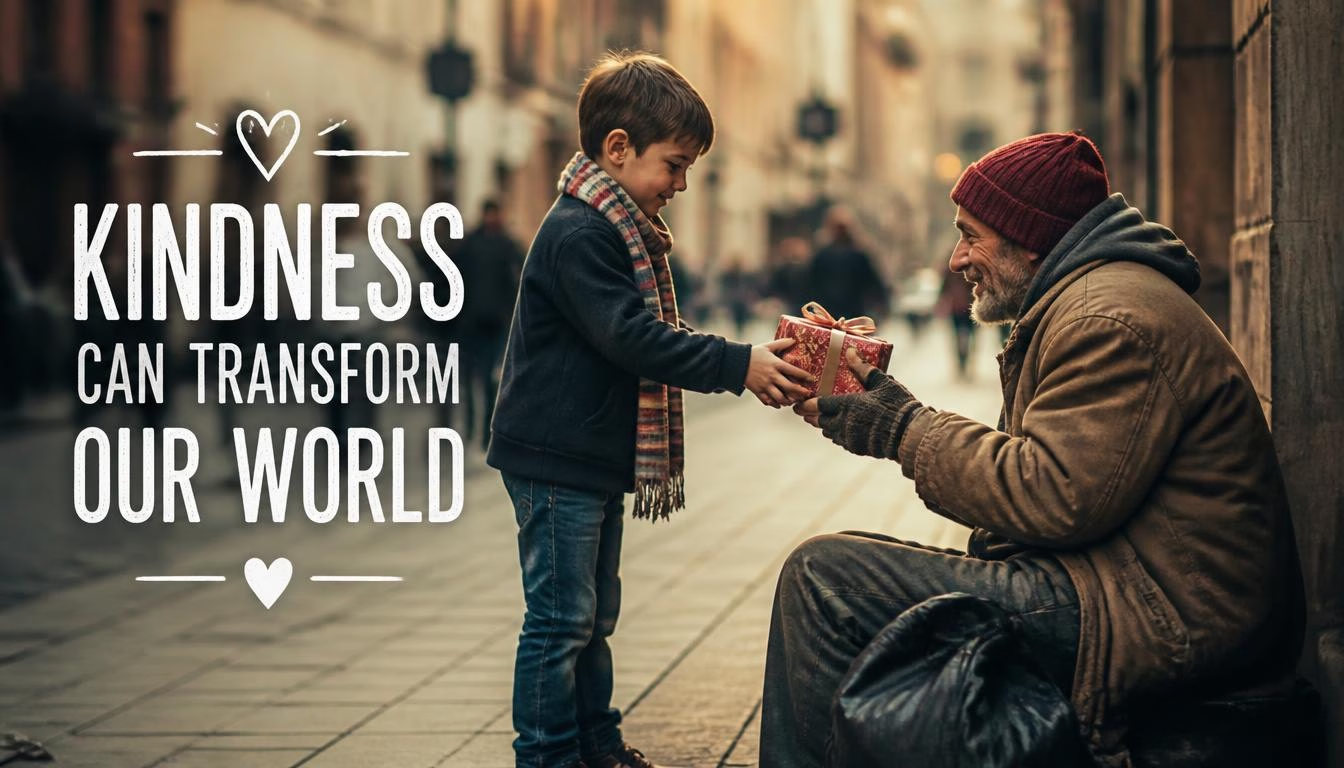
Kindness can feel almost too simple for a complicated world. Headlines focus on conflict, outrage, division, and fear, while quiet acts of compassion rarely receive the same attention. Yet kindness remains one of the most practical ways to change the emotional atmosphere around us. A thoughtful message, a patient response, an honest compliment, a meal shared with someone who is struggling, or a decision to listen without interrupting can alter the direction of a person’s day.
That does not mean kindness solves every social problem. It does not replace justice, accountability, professional support, or meaningful political and community action. Kindness is not passive approval, and it should never require us to tolerate abuse or abandon healthy boundaries. Instead, kindness is a way of relating to ourselves and other people with dignity, attention, and care.
The question is not whether one kind gesture can fix the world. The more useful question is this: What kind of world do our repeated choices create? Every interaction teaches something. A harsh response can make another person defensive. A compassionate response can create enough safety for honesty, learning, and cooperation. Over time, these small moments shape families, workplaces, friendships, neighbourhoods, and online communities.
Explore how kindness can transform the world through psychology, social connection, everyday habits, and holistic living. You will also find practical ideas for showing kindness without becoming a people-pleaser, a seven-day kindness challenge, and questions that help turn inspiration into action.
✨ Kindness is not weakness. It is the deliberate choice to reduce unnecessary suffering while protecting dignity – including your own.
❤️Kindness Can Transform Our World
What Does Kindness Really Mean?
Kindness is intentional behaviour that supports another person’s well-being. It can be generous and visible, such as volunteering or donating, but it can also be quiet and almost invisible: allowing someone to merge into traffic, replying with patience, giving credit to a colleague, or respecting a person’s need for space.
Kindness is closely related to compassion, empathy, generosity, and prosocial behaviour, but the terms are not identical. Empathy involves understanding or sensing another person’s experience. Compassion adds a desire to respond to suffering. Kindness is compassion expressed through a helpful, respectful action. Prosocial behaviour is the broader scientific term for actions intended to benefit other people or society.
This distinction matters because good intentions alone are not always enough. We may believe we are helping while ignoring what another person actually needs. Mature kindness involves curiosity: “What would be supportive here?” Sometimes the answer is practical assistance. Sometimes it is listening. Sometimes it is giving honest feedback. Sometimes it is stepping back.
Kindness also includes self-kindness. Speaking to yourself with respect after a mistake does not mean avoiding responsibility. It means replacing humiliation with a more useful question: “What happened, what can I learn, and what is the next constructive step?” This approach connects naturally with the principles explored in The Significance of Holistic Living, where well-being is understood as an interaction between mind, body, purpose, relationships, and daily choices.

Unparalleled online learning experiences, New Skills Academy!
The Science Behind Kindness and Well-Being
Research on kindness generally examines prosocial behaviour rather than the word kindness alone. This is important because scientific findings should be described carefully. Studies suggest that helping others can be associated with greater well-being, social connection, and positive emotion, but the size of the benefit depends on context, motivation, frequency, and the type of action involved.
A systematic review and meta-analysis of kindness interventions found that performing kind acts can produce a modest improvement in the well-being of the person acting. The finding is encouraging, but it does not mean every act produces an instant mood lift or that people should help others to earn happiness. Kindness is valuable even when it is inconvenient, unnoticed, or emotionally neutral.
Prosocial actions may support well-being through several pathways:
The brain is also sensitive to social reward. When people cooperate, give, or receive appreciation, reward and bonding systems may be involved. We should avoid reducing kindness to a simplistic claim that it “releases a chemical” and therefore guarantees happiness. Human emotions are more complex than a single neurotransmitter. Still, the broader evidence supports the idea that social connection and prosocial behaviour are meaningful parts of mental health.
For more ideas about emotional balance and positive habits, explore The Mind & Mindset category, where personal growth is connected to thinking patterns, emotional regulation, and intentional living.
Is Kindness Contagious?
Kindness can spread through social learning. People notice how others behave, interpret what is considered normal, and often adjust their own behaviour accordingly. A person who sees a stranger return a lost wallet may feel more willing to help someone else. A team leader who thanks people sincerely can make appreciation more common at work. A parent who apologises after losing patience teaches a child that repair is possible.
This is the ripple effect of kindness: one action influences the emotional climate around it, which can affect further actions. The ripple is not guaranteed, and it is not always immediate. People have different personalities, histories, stresses, and values. Still, social environments are shaped by repeated signals of care or hostility.
Online spaces make this especially relevant. A thoughtful comment can encourage nuanced discussion, while public ridicule can reward aggression. Before responding, ask:
- Is this true and necessary?
- Am I correcting the idea or attacking the person?
- Would I use the same words in a face-to-face conversation?
- Could I make my point more clearly without increasing shame?
Digital kindness does not mean agreeing with misinformation or avoiding difficult topics. It means refusing to turn disagreement into dehumanisation.
Unparalleled online learning experiences, New Skills Academy!
How Kindness Supports Relationships
Healthy relationships are built through thousands of small moments rather than occasional grand gestures. Reliability, attention, repair, and respect matter more than dramatic declarations. Kindness can strengthen relationships in several practical ways.
Kindness creates emotional safety
People are more likely to share concerns when they expect to be heard rather than mocked. Emotional safety does not mean that every conversation is comfortable. It means that disagreement does not automatically threaten the relationship.
Kindness improves conflict repair
Conflict is unavoidable. The defining question is whether people can return to respect after conflict. A simple sentence such as “I was defensive, and I want to understand what you meant” can change a conversation. An apology is strongest when it names the behaviour, acknowledges the impact, and describes what will change.
Kindness makes appreciation visible
Do not assume people know you value them. Say it specifically: “I appreciated the way you made space for everyone in that meeting.” Specific appreciation feels more genuine than generic praise and helps people understand which behaviours strengthen the relationship.
Kindness encourages reciprocity without demanding repayment
Healthy reciprocity is not a transaction. It is a pattern in which people support each other over time. If kindness becomes a hidden contract – “I helped you, so you must now do what I want” – resentment follows. Give freely, communicate needs clearly, and notice whether a relationship is genuinely mutual.
Kindness in Families, Workplaces, and Communities
Kindness becomes transformative when it moves beyond private intentions and enters systems. A kind workplace is not simply one with friendly messages. It is one with fair expectations, respectful leadership, psychological safety, and mechanisms for addressing harm.
In families, kindness may look like listening to a child’s full story before correcting them, sharing invisible household tasks, or making time for an ageing relative. In schools, it may involve inclusion, peer support, and teaching children how to repair harm. In communities, it can mean checking on a neighbour, supporting local organisations, or participating in projects that improve shared spaces.
Volunteering is one possible expression of this. It can support a sense of purpose and connection, but it should be sustainable. A person who is exhausted, financially insecure, or responsible for intensive caregiving may need rest rather than another obligation. Sustainable kindness considers capacity.
The same principle applies to environmental care. Picking up litter, reducing waste, protecting local habitats, or choosing more thoughtful consumption can be acts of kindness toward people who share the planet with us and toward future generations.
This is one reason the Nature & Spirit category belongs in a broader conversation about compassionate living.
Kindness Is Not People-Pleasing
People-pleasing often looks kind from the outside, but it is driven by fear: fear of rejection, conflict, disappointment, or being seen as selfish. Kindness is freely chosen; people-pleasing is often self-abandonment.
You can be kind and still say:
- “I cannot take this on right now.”
- “I need time to think before I answer.”
- “I care about you, but I do not agree.”
- “That way of speaking to me is not acceptable.”
- “I can help for thirty minutes, not for the entire afternoon.”
Boundaries make kindness more sustainable because they prevent hidden resentment. Self-kindness includes protecting sleep, health, finances, time, and emotional energy.
If you are interested in developing more deliberate habits, The Power of Habit can complement the practical habit-building ideas in this article.

The Power of Habit by Charles Duhigg
In his insightful book The Power of Habit, Charles Duhigg explores the science behind how habits are formed and how they can be changed. This transformative approach helps readers understand their daily routines and the underlying triggers that drive their actions.
Self-Kindness: The Foundation of Outward Kindness
Many people are generous with others and harsh with themselves. They forgive a friend’s mistake but replay their own mistake for years. They encourage someone else to rest but call themselves lazy when they need recovery. This double standard drains energy.
Self-kindness has three components:
- Self-directed warmth: Speaking to yourself as you would speak to someone you care about.
- Common humanity: Remembering that imperfection, uncertainty, and pain are part of being human.
- Mindful awareness: Acknowledging what hurts without exaggerating it or pretending it is not there.
Self-kindness does not mean avoiding growth. In fact, shame often narrows attention, while respectful self-reflection makes learning easier. After a difficult day, try writing three sentences:
- “This was hard because…”
- “What I needed in that moment was…”
- “One kind and responsible next step is…”
Mindfulness can make this practice easier by creating a pause between an emotion and a reaction.
The Mindfulness & Meditation category offers further ways to develop present-moment awareness and reduce automatic reactivity. A structured mindfulness course, such as the mindfulness courses available through New Skills Academy, may also appeal to readers who prefer guided learning.
25 Everyday Acts of Kindness
Kindness becomes more realistic when it is specific. Choose actions that fit your life rather than waiting for a perfect opportunity.
- ✅Send a sincere message to someone you appreciate.
- ✅Ask a friend how they are and listen to the answer.
- ✅Give someone your full attention without checking your phone.
- ✅Thank a person whose work is often overlooked.
- ✅Leave a helpful review for a small business.
- ✅Share useful information without expecting recognition.
- ✅Let another driver merge safely.
- ✅Offer practical help instead of saying only, “Let me know if you need anything.”
- ✅Make a meal for someone going through a difficult week.
- ✅Donate genuinely useful items.
- ✅Speak up when someone is being unfairly excluded.
- ✅Correct a mistake publicly when you made it publicly.
- ✅Give credit to the person who contributed an idea.
- ✅Check in on an older neighbour.
- ✅Make space for a quieter voice in a group.
- ✅Put your phone away during a conversation.
- ✅Replace gossip with a more generous interpretation.
- ✅Offer encouragement before offering advice.
- ✅Learn and use someone’s name correctly.
- ✅Support a local community project.
- ✅Treat service workers with patience.
- ✅Write down three things you value about your life.
- ✅Rest before exhaustion turns into irritability.
- ✅Apologise without adding “but”.
- ✅Perform one helpful action anonymously.
The purpose is not to complete a checklist for moral perfection. It is to train attention toward opportunities for care.
Unparalleled online learning experiences, New Skills Academy!
How to Make Kindness a Habit
A habit becomes easier when it has a clear cue, a small action, and a meaningful reward. For example:
- Cue: You make your morning coffee.
- Action: Send one appreciative message.
- Reward: Pause for ten seconds and notice how it feels to act intentionally.
You could also connect kindness to existing routines: thank someone before opening your inbox, ask one curious question during dinner, or choose one community-supporting action every weekend. Keep the behaviour small enough to repeat.
Track consistency rather than emotional results. If you expect every kind action to make you feel wonderful, you may stop when the reward is delayed. Kindness is a value, not a mood-management technique. Some acts feel joyful; others feel quiet, difficult, or unseen.
A weekly reflection can help:
- Where did I notice a need?
- How did I respond?
- Did I respect my own limits?
- What kind action could I repeat?
- Where do I need accountability rather than softness?
This balance links kindness with Purpose & Growth: compassion becomes part of the person you are practising becoming.
A Seven-Day Kindness Challenge
Day 1: Kindness toward yourself
Write a supportive response to one recent mistake.
Day 2: Kindness through attention
Give one person ten uninterrupted minutes.
Day 3: Kindness through appreciation
Name a specific contribution someone has made.
Day 4: Kindness through action
Complete one practical task that reduces another person’s burden.
Day 5: Kindness beyond your circle
Support a local, environmental, or community initiative.
Day 6: Kindness with boundaries
Say no to one request that exceeds your capacity, clearly and respectfully.
Day 7: Kindness through reflection
Write about what changed in your attention, mood, or relationships during the week.
🌱Receive a Holistic Living Routine
Small habits become easier when they are supported by reminders, reflection, and a sense of direction. If you want gentle guidance for nourishing your mind, body, and daily life, subscribe to The Dream Oak’s emails and receive the Holistic Living Routine.
You will receive practical inspiration designed to help you build calmer, more intentional days – without turning well-being into another demanding project. Join the community and make one meaningful change today.
Receive Our Expert-Crafted Holistic Routine to Nourish Your Daily Life.
🌱 A kinder world begins with the next interaction, the next message, and the next choice you make.
❓Frequently Asked Questions
Can kindness really transform the world?
Kindness alone cannot solve structural injustice, poverty, violence, or discrimination. It can, however, influence relationships, social norms, cooperation, and community participation. Repeated compassionate actions help create environments in which people are more likely to listen, support one another, and take constructive action.
What are the mental health benefits of kindness?
Research associates prosocial behaviour with well-being, positive emotion, social connection, and a stronger sense of meaning. The effects are usually modest and vary between people. Kindness should complement – not replace – professional support for anxiety, depression, trauma, or other mental health conditions.
Is kindness the same as being agreeable?
No. Kindness involves respect and care, while agreeableness can mean avoiding disagreement. You can challenge harmful behaviour, set boundaries, or say no while remaining kind in the way you communicate.
How can I be kind when I am emotionally exhausted?
Start with self-kindness and choose a small action. Rest, ask for help, or send a brief honest message. Sustainable kindness depends on capacity; you do not need to rescue everyone or perform generosity at the expense of your health.
How can parents teach children kindness?
Model it, name it, and teach repair. Invite children to notice how actions affect others, practise gratitude, include people, and apologise when harm occurs. Avoid turning kindness into obedience; children also need to learn boundaries and safety.
Can kindness reduce workplace stress?
Respectful communication and supportive relationships may reduce interpersonal friction and improve belonging. Kindness cannot compensate for unsafe workloads, harassment, discrimination, or poor leadership. Organisational problems require organisational solutions.
What is an easy act of kindness to start with?
Offer someone your full attention. Listen without immediately correcting, comparing, or giving advice. Attention is one of the most valuable forms of kindness because it communicates that another person matters.

The Science of Happiness by Bruce Hood
Ever wondered why some people simply radiate joy while others seem to be perpetually stuck in a frown? Well, dive into The Science of Happiness by the brilliant Bruce Hood, and prepare to have your mind blown! This book unravels the mysteries of happiness, illustrating how our brains perceive joy.
🌟Let Kindness Become a Practice
Kindness transforms the world gradually. It begins in ordinary places: kitchens, pavements, classrooms, offices, family conversations, and digital spaces. It is expressed through attention, generosity, boundaries, accountability, and repair.
The most powerful form of kindness is not performance. It is consistency. It is choosing not to add unnecessary harm when you are frustrated. It is helping when you can, accepting help when you need it, and treating your own humanity as worthy of care.
You do not need to wait until you have more time, money, confidence, or influence. Begin with one action that is small enough to complete and meaningful enough to matter. Then repeat it. Over time, those choices become habits, habits become culture, and culture shapes the world we share.
The Dream Oak editorial note: This article discusses general well-being and prosocial behaviour. It is not medical or psychological advice, and readers experiencing significant distress should seek appropriate professional support.
📚References and Further Reading
- Curry, O. S., Rowland, L. A., Van Lissa, C. J., Zlotowitz, S., McAlaney, J., & Whitehouse, H. (2018). Happy to help? A systematic review and meta-analysis of the effects of performing acts of kindness on the well-being of the actor. Journal of Experimental Social Psychology.
- Byrne, M., et al. (2023). Prosocial Interventions and Health Outcomes. National Library of Medicine / PMC.
- American Psychological Association. (2020). When doing good boosts health and well-being.
- National Institute of Mental Health. Resources on caring for mental health and building supportive habits.
- The Dream Oak. The Significance of Holistic Living.
The Dream Oak is a holistic living platform exploring mindful habits, personal growth, health, purpose, and the connection between individual well-being and the wider world.
Learn, Help Family And Friends, And Help The Planet!