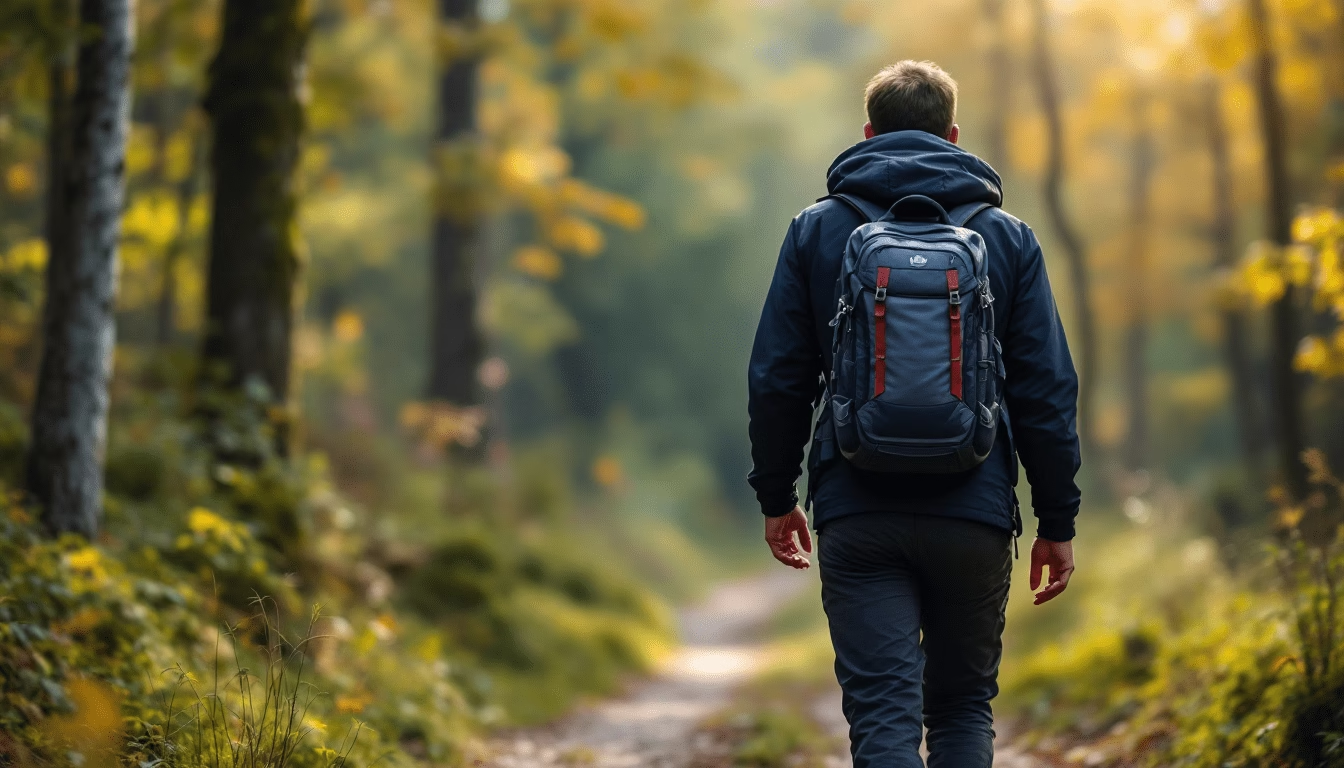
Forget the gym. Forget expensive wellness retreats. Walking in nature is the free medicine your mind, body, and soul have been craving.
Mother Nature never fails to inspire. It always mesmerizes its observers with something incredible. Humans are genetically wired to absorb positivity from natural spaces. That’s precisely why we must fuel ourselves with the majesty of nature.
Here’s the truth: Walking is the easiest form of exercise. It costs nothing but gives back everything. This simple practice refreshes the mind, energizes the body, and nourishes the soul.
👣Boost Mental Health, Physical Wellness & Spiritual Growth
🌅Why Walking in Nature Works – The Science Behind the Magic
You probably don’t realize it, but every 20-minute walk in nature shifts your brain chemistry.
Recent research shows:
- Research consistently shows that just 15 minutes in nature significantly reduces anxiety and stress.
- Cortisol (stress hormone) drops by 21% after a 30-minute forest walk.
- Blood pressure decreases, and heart rate stabilizes within minutes.
- Dopamine and serotonin levels increase, improving mood for hours.
This isn’t magic. It’s neuroscience.
Your brain has two nervous systems: the sympathetic (fight-or-flight) and parasympathetic (rest-and-digest). Walking in nature activates your parasympathetic system. This shifts you from stress mode to healing mode. It’s like pressing a reset button for your entire physiology.

Muse Headband: A Game-Changer for Meditation
🌵7 Transformative Benefits of Walking in Nature
1. Mental Clarity & Sharper Focus
Walking in nature clears mental fog. No screens. No notifications. No runaway thoughts spiraling.
When you walk surrounded by trees, your prefrontal cortex (your decision-making brain) gets a break. Your mind shifts from reactive mode to reflective mode. This is called “Attention Restoration Theory” – nature restores your depleted mental resources.
What changes immediately:
- Sharper focus for 2-3 hours post-walk.
- Better problem-solving ability.
- Reduced mental fatigue and decision paralysis.
Research shows people who walk in nature demonstrate improved creative thinking and problem-solving abilities compared to urban walkers. Your best ideas aren’t coming in the office. They’re coming on the trail.
2. Stress & Anxiety Relief – The Emotional Reset
Nature activates your parasympathetic nervous system. This is your body’s “rest and digest” mode – the opposite of stress.
Walking in nature does this:
- Lowers cortisol (stress hormone) by up to 21%.
- Reduces anxiety symptoms in just 15 minutes.
- Calms racing thoughts and overthinking patterns.
- Reduces inflammatory markers associated with chronic stress.
If you’re struggling with chronic anxiety, a 30-minute nature walk is as effective as meditation – and you’re moving your body simultaneously.
Pro tip: Pair your walk with the Muse Headband for active meditation. Real-time biofeedback lets you track when your brain enters calm states. You’ll see exactly how nature impacts your nervous system.
Muse Headband: A Game-Changer for Meditation
3. Improved Sleep Quality – The Night Win
Walking in nature synchronizes your circadian rhythm – your internal 24-hour clock.
Morning sunlight exposure tells your body: “It’s time to wake up.”
Evening walks signal: “It’s time to rest.”
This natural alignment regulates melatonin production (your sleep hormone) without supplements.
Research shows:
- 30-minute morning nature walks improve sleep onset by 45 minutes earlier.
- Sleep quality increases by 40% after consistent nature-walking routines.
- People fall asleep faster and stay asleep longer.
Research shows that consistent nature walking significantly improves sleep quality and helps people fall asleep faster. That’s hours of extra sleep monthly – just from walking.
Track your sleep improvements with Oura Ring 4 to see measurable data on sleep duration and quality.
4. Physical Health Benefits – Stronger Body, Better Immunity
Walking in nature isn’t just emotional medicine – it’s physical medicine.
Your body gets:
- Cardiovascular strengthening – improved heart health and circulation.
- Stronger bones and muscles – natural resistance from terrain variation.
- Improved immune function – exposure to phytoncides (airborne chemicals released by plants).
- Reduced inflammation – chronic pain decreases with consistent walking.
- Weight management – natural, low-impact calorie burn.
A 2019 Stanford study found that nature walks reduced activity in rumination brain regions. Simultaneously, participants showed improved metabolic markers.
Walking in nature isn’t exercise you tolerate. It’s exercise you crave – because it feels good.
5. Boosted Mood & Emotional Resilience
Walking in nature increases BDNF (brain-derived neurotrophic factor). This protein repairs and protects brain cells.
Result:
- Sharper memory formation.
- Better emotional regulation.
- Stronger resilience against depression and low mood.
- Improved sense of well-being lasting hours after your walk.
People with seasonal depression (SAD) show dramatic improvements with consistent nature walks. Even 20 minutes of natural light exposure during a walk can shift mood measurably.
6. Enhanced Creativity & Breakthrough Insights
Take your most creative challenge to nature. 90% of people report creative breakthroughs during or shortly after nature walks.
Why? Walking rhythmically + natural stimuli = your subconscious problem-solving engine activates. This is why philosophers, writers, and artists have walked in nature for centuries.
Steve Jobs walked daily. Charles Darwin walked. Beethoven composed after walks. They understood something we’re rediscovering: movement + nature = innovation.
7. Spiritual Connection & Inner Peace
Nature reconnects you to something bigger than yourself. Whether you call it spirituality, awe, or flow – walking in nature cultivates it.
This practice:
- Deepens self-awareness and introspection.
- Fosters genuine gratitude and perspective.
- Aligns you with natural rhythms and cycles.
- Builds inner peace that lasts beyond the walk.
You don’t need religion for this. You just need trees, sky, earth, and your willingness to pay attention.

A Philosophy of Walking by Frédéric Gros
If you thought walking was merely a way to move your feet, think again! In A Philosophy of Walking, Frédéric Gros invites you to stride into a world of contemplation and inspiration. This book is less about the mechanics of walking and more about the metaphysical journey it ignites.
📆How to Start Walking in Nature – Your 7-Day Action Plan
Step 1: Choose Your Environment (Days 1-2)
- Parks, forests, trails, or coastlines all work.
- 20-30 minutes minimum for measurable benefits.
- Morning walks (sunrise) are optimal for circadian reset.
Step 2: Walk Intentionally (Day 3)
- Leave your phone (or use airplane mode).
- Pay attention to sensory details: colors, sounds, textures, smells.
- Walk at a conversational pace (not rushing, not strolling).
Step 3: Make It Consistent (Days 4-7)
- 3-4 walks per week = noticeable mental shifts within 2 weeks.
- Daily walks = compounding benefits within 7 days.
- Set a specific time and make it non-negotiable.
Step 4: Deepen Your Practice (Advanced)
- Muse Headband – Track your brain’s relaxation state in real-time.
- Centre of Excellence Meditation Diploma – Combine nature walking with formal meditation.
- Oura Ring 4 – Measure sleep and recovery improvements.
👨🦰What Real People Report After 4 Weeks
- “I sleep 1-2 hours longer and wake up refreshed”.
- “My anxiety is manageable without medications”.
- “I solve work problems faster and feel less stuck”.
- “I feel grateful again – the little things matter”.
- “My mood is noticeably lighter, even on bad days”.
These aren’t promises. These are outcomes from 4 weeks of consistent practice.

🐞The Bottom Line – Start Today
Walking in nature costs nothing. It requires no equipment. No gym membership. No complicated routine.
Yet it may be the single most powerful wellness practice you’re not doing.
Your mind is stressed. Your body is tired. Your soul is craving connection.
Nature has the answer.
Start today. Walk for 20 minutes. Pay attention. Notice how you feel afterward.
Then walk again tomorrow.
❓Walking in Nature – Frequently Asked Questions
Q1: How long do I need to walk in nature to see mental health benefits?
A: You can experience immediate benefits in just 15 minutes. However, 20-30 minute walks produce measurable reductions in stress hormones (cortisol drops by 21%), improved mood, and mental clarity. For sustained results, aim for 3-4 walks weekly. Consistency matters more than duration.
Q2: Does walking in nature really improve sleep quality?
A: Yes – significantly. Nature exposure synchronizes your circadian rhythm, especially morning walks with sunlight. Research shows 30-minute morning nature walks improve sleep onset by 45 minutes earlier and increase sleep quality by 40%. Evening walks signal your body to prepare for rest by naturally regulating melatonin production.
Q3: Can walking in nature replace meditation or therapy?
A: Walking in nature is incredibly powerful, but it complements rather than replaces professional help. For anxiety and depression, combine nature walks with meditation practices (use the Muse Headband to track relaxation state) and consult mental health professionals when needed. The combination is more effective than either practice alone.
Q4: What’s the best time to walk in nature for maximum benefits?
A: Morning walks (within 1-2 hours of sunrise) are optimal for circadian rhythm regulation. The natural light resets your internal clock. However, any time works – evening walks before sunset are excellent for stress relief and nighttime relaxation. Consistency matters more than timing.
Q5: What does walking in nature do for you?
A: Walking in nature reduces stress, improves mood, enhances creativity, boosts mental clarity, and promotes physical health.
Learn, Help Family And Friends, And Help The Planet!