The overlooked health resource outside the window
Modern life often asks the human nervous system to remain available long after the original demand has passed. A message arrives while we are eating. A calendar reminder interrupts a conversation. A news headline follows us into bed. Work, entertainment, administration and social connection now compete for attention through the same glowing rectangle. Even when nothing is urgently wrong, the body can behave as though it should remain ready for the next interruption.
This is one reason the question of how nature contributes to our well-being has become more than a romantic subject. It is now part of environmental psychology, public health, urban planning, occupational health and preventive medicine. Researchers are investigating forests, parks, gardens, coastlines, rivers, street trees, biodiversity, daylight, natural sounds and even views of vegetation as possible contributors to human health.
🌳 Nature Contributes to Our Well-Being: 11 Science-Backed Ways
The important point is not that nature is a magical cure. It is not. A walk among trees cannot erase grief, repair an unsafe home, treat a serious illness, or substitute for psychological support. Nor does every outdoor experience feel restorative. A polluted river, an inaccessible path, an unsafe park, extreme heat, or a traumatic association with a place can make “go outside” poor advice.
A more accurate statement is this: natural environments can support well-being through several overlapping pathways. They may help the body recover, restore depleted attention, encourage movement, provide daylight and sensory variety, create opportunities for social connection, strengthen a sense of meaning and make healthier choices easier to repeat. The strength of the effect depends on the person, the setting, the dose, the quality of the environment and what happens during the visit.
For informed readers, the most useful question is therefore not, “Is nature good for us?” It is:
Which aspect of nature, experienced by whom, in what context, through which mechanism, and with what realistic expectation?
This article explores that question in depth. It distinguishes nature exposure from nature connectedness, explains what current evidence suggests, examines important limitations, and offers advanced ways to create a personal nature practice. The goal is not to turn a forest into another productivity tool. It is to help you develop a more intelligent relationship with the living world – and with the parts of yourself that become easier to hear there. 🌿

Unparalleled online learning experiences, New Skills Academy!
What are the main ways nature contributes to our well-being?
Nature can contribute to human well-being in at least eleven interconnected ways:
- It may help the nervous system move from prolonged vigilance toward recovery.
- It can restore directed attention and reduce cognitive fatigue.
- It may improve mood and interrupt rumination.
- It can make regular movement more enjoyable and sustainable.
- Daylight and outdoor routines can support sleep and circadian alignment.
- Natural sensory environments can provide a different quality of stimulation.
- Parks, gardens and shared outdoor activities can strengthen social connection.
- Biodiverse places can evoke curiosity, awe, meaning and perspective.
- Green and blue infrastructure can improve the conditions in which health is possible.
- Contact with living systems can strengthen environmental identity and agency.
- Repeated nature contact can become a practical foundation for a holistic daily routine.
The evidence is strongest when we speak carefully about outcomes. Short-term studies often measure mood, perceived stress, blood pressure, heart rate, or attention. Population studies may examine access to green space, physical activity, mortality, or mental-health patterns. These are not interchangeable. A brief improvement in mood is meaningful, but it is not the same as preventing chronic disease. A correlation between tree cover and health does not prove that trees alone caused the outcome.
That distinction does not weaken the case for nature. It makes the case more credible – and more useful.
First, what counts as “nature”?
When people hear the word nature, they often imagine a remote forest, a mountain lake or a dramatic coastline. These settings can be deeply restorative, but defining nature only as wilderness creates two problems. First, it excludes the environments where most people actually live. Second, it makes well-being advice feel unavailable to people with limited transport, mobility, money, time or safety.
Nature exists on a spectrum. A national park is nature. So is a city park, a community garden, a tree-lined street, a balcony with herbs, a patch of wildflowers, a pond, a beach, a riverbank, a courtyard garden or a window with a view of foliage. A houseplant is not ecologically equivalent to a woodland, but it can still offer sensory contact, care, seasonal observation and a reminder that life is not entirely designed by humans.
Researchers also distinguish between green space and blue space. Green space usually refers to vegetation-rich environments such as parks, forests, gardens and grasslands. Blue space includes rivers, lakes, wetlands, coastlines and other water environments. The two overlap, but they may provide different sensory experiences. Water can offer movement, reflection, sound and visual depth; vegetation can provide shade, biodiversity, texture and habitat.
Three related concepts are especially important:
Nature exposure
This refers to being in or near a natural environment. It may be intentional, such as a hike, or incidental, such as passing through a planted square on the way to work.
Nature interaction
This implies a more active relationship: gardening, touching plants, walking, swimming, observing birds, photographing fungi, caring for a community plot or helping with habitat restoration.
Nature connectedness
This describes a psychological sense of relationship with the natural world. Someone can spend an hour outdoors while remaining mentally absorbed in work, and someone else can feel deeply connected while tending a small indoor garden. Time matters, but meaning and attention matter too.
Quality also matters. A manicured lawn may be visually pleasant but ecologically quiet. A smaller space with trees, insects, birds and seasonal variation may offer more sensory richness. A park may be beautiful but unusable if it lacks accessible paths, shade, toilets, seating or perceived safety.
This is why nature-based well-being should never be reduced to a universal prescription such as “spend exactly a certain number of minutes outside.” Time-based guidance can be a helpful starting point, but it is not a biological law. The most beneficial practice is often the one that is safe, repeatable, sufficiently engaging and compatible with the person’s actual life.
This broader understanding fits naturally within The Dream Oak’s guide to holistic living, where mind, body, relationships, purpose and spiritual life are considered interconnected rather than isolated projects.
1. Nature helps the nervous system shift out of constant threat monitoring
One of the most discussed pathways is physiological stress regulation. Stress is not inherently harmful. The ability to mobilise energy, focus attention and respond quickly can protect us. The difficulty begins when activation becomes chronic, poorly matched to the actual demand or followed by too little recovery.
The autonomic nervous system is often described through two broad branches. The sympathetic system supports mobilisation – the familiar fight-or-flight response – while parasympathetic activity is associated with rest, digestion and recovery. Real physiology is more complex than a simple on/off switch, but the distinction is useful. A person can be physically still while remaining internally mobilised, scanning emails, rehearsing arguments or anticipating bad news.
Natural settings may support recovery by reducing some of the demands that keep vigilance active. A woodland path often contains visual depth, repeating patterns, natural movement and sounds that do not require a response. Leaves move, birds call, light changes and water flows, but these signals are usually less demanding than traffic, advertisements, alerts and crowded built environments. The result may be a shift in perceived threat and a reduction in mental effort.
The Stress Reduction Theory associated with Roger Ulrich proposes that certain natural scenes can produce relatively rapid affective and physiological responses. Attention Restoration Theory, developed by Stephen and Rachel Kaplan, focuses more on the recovery of directed attention. These theories are not identical, but they point toward complementary mechanisms: nature may help the body settle, and the mind recover.
A major review by Jimenez and colleagues, published in the International Journal of Environmental Research and Public Health in 2021, examined associations between nature exposure and multiple health outcomes, including cognitive function, brain activity, blood pressure, mental health and physical activity. The authors emphasised that the evidence is promising but heterogeneous. Studies differ in the kinds of nature measured, the outcomes assessed and the populations included.
This matters because popular wellness writing sometimes turns one study into a guarantee. You may have heard that twenty minutes in nature lowers cortisol by a precise percentage, or that a particular landscape automatically activates a specific brain region. These statements may be based on real findings, but the effect is never detached from design, baseline stress, season, activity, expectations, sound, temperature, and perceived safety.
A more responsible interpretation is that a short period in a calming natural setting may help some people experience measurable recovery, especially when it is repeated and not undermined by multitasking. The benefit can be small but still cumulative. A ten-minute walk that lowers tension slightly, repeated five days a week, may be more valuable than a once-a-year expedition that is difficult to arrange.
How to build a down-regulation walk
Try designing a walk around recovery rather than distance:
First five minutes: orient. Walk at a comfortable pace. Notice whether the route feels safe, whether the ground is stable, and whether your breathing is rushed. You are not trying to force calm; you are giving the nervous system information about the present moment.
Middle section: widen attention. Let your eyes move beyond the next task. Notice layers: near leaves, middle-distance trunks, distant sky. Listen for sounds without labelling every one. If your phone is necessary for safety, keep it available without making it the centre of the walk.
Final minutes: observe the transition. Ask whether your jaw, shoulders, breath or thoughts feel different from when you began. Do not grade the walk as a success or failure. You are gathering information about what supports you.
You can rate perceived stress from zero to ten before and after the walk. This is not a medical measure. It is simply a way to notice patterns. Perhaps water helps more than trees. Perhaps shade matters more than distance. Perhaps you recover best when you walk alone, or when you walk with one trusted person.
If stress remains severe, persistent, or associated with panic, hopelessness, trauma symptoms, or thoughts of self-harm, nature can be a supportive setting but not the complete response. Professional mental-health support remains important.
2. Nature restores attention and protects cognitive bandwidth
Modern attention is not merely busy; it is repeatedly interrupted. Directed attention allows us to inhibit distractions, hold information in mind, switch between tasks and pursue a goal. It is essential for reading, problem-solving, driving, caregiving and creative work. Yet it is also finite. When it is depleted, ordinary decisions feel heavier and small interruptions become disproportionately irritating.
Natural environments may help because they contain what psychologists call soft fascination. Clouds, water, leaves, birds and shifting light can hold attention without demanding the same effort as a spreadsheet, a busy road or an argumentative social-media thread. The mind is occupied, but not necessarily strained.
Attention Restoration Theory proposes four qualities that make an environment restorative:
- Being away: psychological distance from the usual demands, even if the physical distance is small.
- Extent: a sense that the environment has enough coherence or richness to invite continued exploration.
- Soft fascination: gentle engagement that does not consume all directed attention.
- Compatibility: a fit between what the environment offers and what the person needs or wants to do.
Compatibility is often overlooked. A steep trail may be restorative for one person and stressful for another. A birdwatcher may find a quiet marsh fascinating, while someone with a strong fear of insects may find it impossible to relax there. The same park can be restorative in the morning and overwhelming during a crowded festival.
Research on nature and cognition has reported improvements in attention, working memory, and mental fatigue, but the results vary. Some studies use controlled photographs or virtual environments; others use actual outdoor experiences. Some measure immediate performance; others examine longer-term patterns. The differences are not a nuisance to be ignored. They tell us that “nature” is not one intervention.
The two-context attention experiment
If you want to examine your own response without turning the practice into an obsession, try a simple experiment over two weeks. Choose a demanding but repeatable task, such as reading a technical article, planning a project, or completing a concentration exercise.
On one day, begin after ten minutes of ordinary indoor rest. On another day, begin after ten minutes in a natural setting. Keep the time of day, caffeine intake, and task difficulty as similar as possible. Record:
- perceived mental fatigue before the task;
- number of interruptions or phone checks;
- ease of returning to the task;
- errors or unfinished items;
- how mentally recovered you feel afterwards.
The point is not to prove that nature works. It is to discover which conditions support your attention. You may find that the most effective setting is not a forest but a shaded courtyard, a quiet garden or a walk beside water. You may also find that nature works best when paired with a clear intention: read, reflect, walk or observe – not all four simultaneously.
Mindfulness can deepen this effect by training the ability to notice distraction and return without self-criticism. The Dream Oak’s complete mindfulness guide and beginner’s meditation guide can support readers who want a more structured attention practice. The outdoor environment provides the context; the practice teaches you how to relate to what appears there.
3. Nature can improve mood and interrupt rumination
Mood, anxiety, rumination, and depression are related but not identical. A pleasant walk may increase positive emotion without treating a depressive disorder. A quiet landscape may interrupt repetitive thinking for an hour without resolving the circumstances that generated it. Precision protects both the reader and the credibility of nature-based well-being.
Rumination involves repetitive, often self-focused thought that circles around distress without producing useful action. Natural environments may interrupt rumination through sensory engagement, changes in perspective, gentle movement, and reduced exposure to cues associated with work or conflict. The mind has something real to notice: the temperature on the skin, the pattern of bark, the smell of rain, the movement of water or the call of a bird.
Several reviews have found generally positive relationships between contact with nature and mental health. Recent work has also examined children and adolescents, adults with diagnosed mental illness and nature-based interventions. The evidence is encouraging, but not evenly distributed. Some populations and regions are underrepresented. Many studies rely on self-report, short follow-up periods, or participants who already enjoy nature. People who choose to join a forest-bathing study may differ from people who feel no interest in it.
This is known as selection bias. If healthier, wealthier, or more mobile people have greater access to safe green space, the health benefits observed around nature may partly reflect those advantages. Good research attempts to account for confounding factors, but no single study resolves the entire question.
When nature feels uncomfortable
The instruction to “go outside” assumes a great deal. It assumes the person has somewhere safe to go, suitable clothing, energy, transport, accessible terrain and no severe allergies. It also assumes that outdoor environments feel emotionally neutral. They may not. Someone with trauma linked to a landscape, fear of animals, agoraphobia, sensory sensitivity or chronic pain may experience nature as demanding rather than restorative.
Alternatives include:
- sitting near an open window with a view of trees;
- using a balcony, courtyard or indoor garden;
- visiting a quiet botanical garden with accessible paths;
- going with a trusted companion;
- choosing a predictable route and returning before fatigue becomes overwhelming;
- listening to natural sounds while doing gentle breathing indoors;
- caring for one plant and observing its changes;
- using virtual nature as a bridge when physical access is temporarily impossible.
These alternatives are not identical to a forest visit, but they are not meaningless. Well-being practice should expand choice, not create another standard that people feel they have failed to meet.
For readers managing clinical anxiety or depression, nature may complement therapy, medication, social support, sleep care and movement. It should not be presented as an alternative to those forms of care.
4. Nature makes healthy movement easier to repeat
Movement is one of the clearest ways environment and behaviour interact. Many people know that physical activity supports health but struggle to sustain an exercise routine based on obligation alone. Natural settings can change the emotional meaning of movement. A walk becomes exploration. Gardening becomes care. A trail becomes a story. Playing outdoors becomes social time rather than a workout.
This does not mean that nature magically makes all activity easy. Terrain can be physically demanding. Heat can increase risk. Paths can be inaccessible. A person with joint pain may need level surfaces and regular seating. Someone recovering from illness may need five minutes, not five kilometres.
The useful concept is green exercise: physical activity performed in natural or nature-rich environments. Its potential benefits may arise from the combined effect of movement, daylight, sensory engagement, social context and positive emotion. It is often impossible to isolate the exact contribution of trees from the contribution of walking. That is not a weakness. Real-life well-being usually works through combinations.
A nature walk may simultaneously provide:
- moderate aerobic movement;
- exposure to daylight;
- a break from screens;
- sensory variation;
- social interaction;
- a transition between work and home;
- a feeling of competence or discovery.
The friction audit
To make movement repeatable, examine what prevents you from starting. Distance is only one barrier. Other forms of friction include finding suitable shoes, changing clothes, transport, poor lighting, weather uncertainty, lack of toilets, unsafe crossings, steep slopes and the feeling that the activity must last an hour to count.
Create the easiest acceptable version. It might be a ten-minute loop near home at lunchtime, a gentle gardening session, walking inside a planted public building, or a weekend trip to a larger park. Once the routine is stable, duration can increase if your body wants it to.
Readers interested in the wider relationship between movement, sleep, nutrition and mental well-being can explore The Dream Oak’s Physical & Mental Well-Being category. Nature does not replace those foundations; it can make several of them easier to practise together.

A Philosophy of Walking by Frédéric Gros
If you thought walking was merely a way to move your feet, think again! In A Philosophy of Walking, Frédéric Gros invites you to stride into a world of contemplation and inspiration. This book is less about the mechanics of walking and more about the metaphysical journey it ignites.
5. Nature supports sleep and circadian alignment – indirectly and directly
Sleep is influenced by light, timing, temperature, movement, stress, health conditions, substances, environment and behaviour. Nature can support several of these factors, but it does not automatically resolve insomnia or sleep disorders.
Morning outdoor light helps provide a strong time cue for the circadian system, the network of biological rhythms that influences alertness and sleepiness. The effect depends on brightness, weather, season, latitude, and whether light reaches the eyes without being excessively filtered by dark glasses or indoor windows. This is not a reason to stare at the sun; ordinary daylight exposure while walking, sitting, or commuting is sufficient for many people.
Outdoor movement may also improve sleep pressure later in the day. A quiet evening walk can create a transition between work and rest, especially when it is not treated as an opportunity to answer messages. Natural sounds and cooler evening air may feel calming, but safety, allergies, mosquitoes, air quality, and local conditions matter.
A realistic nature-supported sleep routine could include:
- Get some daylight early in the day when possible.
- Move outdoors at a comfortable intensity rather than exercising aggressively close to bedtime.
- Use a brief evening walk or garden pause as a transition away from work.
- Reduce stimulating content during the final hour before sleep.
- Keep the bedroom cool, dark and quiet according to your needs.
- Seek medical evaluation for persistent insomnia, loud snoring, breathing interruptions, restless legs or severe daytime sleepiness.
The Dream Oak’s sleep routine guide can be linked here as part of a broader recovery strategy. A sleep-tracking product or book may help some readers notice patterns, but wearable scores are estimates, not clinical diagnoses. Do not allow tracking to create anxiety around sleep.
6. Nature regulates sensory load and offers a different kind of information
Digital environments often compress attention into a narrow field of rapid symbols. Natural environments offer information differently. Sound arrives from multiple directions. Objects vary in distance and texture. Light changes gradually. The body notices temperature, balance, smell, and movement. This multisensory complexity can be nourishing because it is rich without always being urgent.
Natural soundscapes may be especially important. Water, wind, and birdsong can mask traffic or create a perception of acoustic refuge. But natural sound is not always quiet. Cicadas, storms, waves, strong wind and animal calls can be intense. “Natural” does not automatically mean soothing.
The same principle applies to visual stimulation. A biodiverse meadow may delight one person and overwhelm another. Someone with sensory processing differences may prefer a predictable garden, a shaded route, ear protection or a short visit. Neurodiversity should be included in nature-based well-being rather than treated as an exception.
Sensory sequencing practice
Choose one sense as an anchor for two minutes. You might listen for the farthest sound you can detect, notice three shades of green, feel the temperature of the air, or observe how your feet meet the ground. Then add a second sense if it remains comfortable. Stop before the practice becomes effortful.
This is different from trying to notice everything. The aim is not to collect sensory data. It is to let attention become embodied and less dominated by abstract thought.
For some people, sensory regulation in nature can be a bridge into mindfulness. For others, mindfulness may need to begin indoors, in a low-stimulation room, before an outdoor practice feels possible. Both paths are valid.
7. Nature creates social connection, belonging and collective efficacy
Well-being is not only an individual experience. Human health is shaped by relationships, belonging, trust and the belief that collective action can improve a place. Nature can create social contact in ways that feel less intense than formal networking or direct conversation.
A community garden gives people something to care for together. A walking group provides rhythm and an easy topic of conversation. A local clean-up connects practical action with place attachment. Outdoor education lets children learn through shared observation. A family ritual – watching seasonal changes, visiting the same beach, or planting herbs – creates continuity across time.
Natural spaces can also support place attachment, the emotional bond people develop with particular environments. A tree-lined route may become part of someone’s identity. A river may hold memories of childhood. A garden can become a place where grief is processed without requiring constant explanation.
However, access is not equal. Green space can be distributed unevenly. Some communities have fewer trees, more traffic, higher heat exposure, or polluted land. A park may technically exist but remain inaccessible because of poor lighting, lack of ramps, harassment, cost, transport, or fear. Environmental improvement can also contribute to green gentrification when investment raises rents and displaces the residents who lived with the environmental burden.
A credible article about nature and well-being must therefore ask: who benefits, who is excluded, and who gets to decide what a healthy environment looks like?
Personal action can still matter. Join a local planting project, support a community garden, learn about the history of a public space, or advocate for shade and accessible paths. The goal is not to make well-being the responsibility of individuals alone. It is to connect personal restoration with civic agency.
This is where nature meets purpose. The Dream Oak’s guide to helping family, friends and the planet offers a natural next step for readers who want their relationship with nature to become more active and generous.
8. Nature can evoke awe, meaning and spiritual perspective
Awe is often described as an emotional response to vastness that requires the mind to update its existing frame of reference. A night sky, old-growth tree, migrating birds, powerful ocean or unexpected flowering can make ordinary concerns feel temporarily smaller – not because they are unimportant, but because the mind has encountered a wider context.
Awe should not be oversold. Not every nature visit produces transcendence, and spiritual meaning cannot be reduced to a blood-pressure measurement. Some readers experience nature through religious belief, others through ecological identity, art, philosophy, ancestry, science or simple appreciation. There is no requirement to adopt one interpretation.
Nature can still contribute to existential well-being by offering experiences of interdependence, change and limitation. Seasons teach that stability includes transformation. A fallen tree reveals that decay is part of ecology. A tide demonstrates that movement can be rhythmic without being controlled. A garden shows that care is patient, partial and collaborative.
These observations may strengthen values such as humility, gratitude, responsibility and belonging. They can also provoke difficult questions about climate change, extinction and human impact. Nature is not always comforting; it can reveal vulnerability. Yet confronting vulnerability honestly may support mature meaning better than consuming endless optimism.
Try a reflective practice with one place you can revisit:
- What changes here over a week, month, or season?
- What forms of life are present but easy to overlook?
- What does this place receive from humans, and what does it give back?
- Which of my current concerns feel different when held beside a longer timescale?
- What responsibility follows from recognising that my well-being depends on living systems?
If you want to explore spirituality without forcing a specific belief system, The Dream Oak’s Nature & Spirit category and articles on spirituality, philosophy and meaning can extend this conversation.
9. Nature improves the environments in which well-being is possible
The conversation often focuses on individual exposure: visit a park, walk in a forest, sit beside water. Public health requires a wider lens. Nature can contribute to well-being by changing the physical conditions of neighbourhoods.
Trees can provide shade during heat events. Vegetation can reduce some forms of air pollution and noise, depending on design and location. Wetlands can help manage water. Green corridors can support walking and cycling. Parks can create places for play, social connection and recovery. Blue spaces can contribute to cooling, recreation and ecological resilience when they are clean and safe.
The World Health Organization has highlighted the potential of urban green and blue spaces to support health and well-being, while also emphasising design, access, equity and maintenance. Its work on nature-based solutions frames ecological restoration as capable of addressing environmental and human challenges together. The principle is important: nature is not merely a decorative amenity. It can be part of public-health infrastructure.
Schools, workplaces and healthcare settings can also integrate nature. A classroom with outdoor learning opportunities, a workplace with usable green space, a hospital garden or a shaded walking route can change the daily exposure patterns of many people – not only those who have free time for weekend hikes.
The strongest future approach is likely to combine personal habits with structural design. Telling people to exercise more while building car-dependent neighbourhoods is incomplete. Encouraging stress reduction without addressing noise, heat, pollution or unsafe housing is incomplete. Individual agency matters, but conditions shape which choices are realistic.
From personal appreciation to ecological citizenship
You can support this wider view by learning how your local environment is managed, participating in consultations, supporting habitat restoration, choosing native plants where appropriate and protecting urban biodiversity. The point is not to perform environmental virtue. It is to understand that human well-being and ecological health are not separate agendas.
A shaded street is a health resource. A clean river is a health resource. A community garden is a health resource. A safe, accessible park is a health resource. When these resources are distributed fairly, nature becomes part of everyday life rather than a luxury product.
10. Biodiversity may matter more than decorative greenery
A green view is not necessarily an ecologically rich view. One lawn can be visually pleasant but offer little habitat. A diverse space with trees, shrubs, flowers, fungi, insects and birds can provide more opportunities for curiosity and attention. Emerging research has explored whether biodiversity changes the mental-health value of green space, with findings suggesting that ecological quality may matter alongside quantity.
Biodiversity may contribute through several pathways:
- greater sensory variety;
- opportunities for discovery and learning;
- stronger perceptions of fascination and vitality;
- improved habitat for birds and pollinators;
- a deeper sense of being part of a living system;
- seasonal change that encourages repeated visits.
The research is still developing. Biodiversity is difficult to measure consistently, and people do not respond to every species in the same way. A person with a severe insect phobia may not experience a pollinator garden as immediately restorative. A person with allergies may need careful planning. Biodiverse environments can also contain hazards: ticks, poisonous plants, unstable ground, contaminated water, wildfire smoke or extreme heat.
This is another reason environmental literacy matters. The answer is not to romanticise nature as harmless. It is to learn how to engage wisely. Check air-quality alerts during smoke events. Use tick precautions where relevant. Respect water warnings. Choose shade and hydration during heat. Keep a safe distance from wildlife. Leave habitats undisturbed.
A biodiversity upgrade at home
If you have outdoor space, consider adding one element that supports living systems: a native plant, a shallow water source designed safely, a log habitat, a pollinator-friendly flower or a bird-safe window treatment. If you have only indoor space, learn the seasonal cycle of one plant, grow herbs or place a small observation point near a window.
The objective is not to build a perfect ecological refuge. It is to practise attention and care. Over time, the place becomes more than scenery. It becomes a relationship.
11. Nature can strengthen agency, identity and sustainable behaviour
Nature connectedness is not only about feeling calm in a beautiful place. It may also influence how people understand themselves and their responsibilities. Someone who knows the names of local birds may notice seasonal change differently. Someone who tends a garden may experience food, weather and labour differently. Someone who joins a restoration project may discover that care is a form of participation rather than a private feeling.
Research has found positive associations between nature connectedness and psychological well-being, including vitality, positive affect and life satisfaction. Some studies also connect nature connectedness with pro-environmental attitudes and behaviours. The relationship may be bidirectional: contact can strengthen connection, while connection encourages people to seek contact and protect places.
A useful way to understand this is through an identity-based habit loop:
- Cue: the same route, time, tree, garden or seasonal event.
- Action: a small, repeatable act of observation, movement or care.
- Reward: calm, curiosity, enjoyment, connection or contribution.
- Identity: “I am someone who notices and cares for living systems.”
This is more sustainable than chasing dramatic experiences. A nature practice does not need to be impressive to be transformative. It needs to be repeated often enough to become part of the way you see.
Unparalleled online learning experiences, New Skills Academy!
The 30-day nature relationship experiment
Week one: notice. Visit or observe the same place three times. Do not try to improve it or photograph everything. Record five details you had not previously noticed.
Week two: return. Visit at a different time of day or in different weather. Notice what changes and what remains.
Week three: learn. Identify one species, geological feature, ecological process or local history detail. Use a trustworthy field guide, museum, university or conservation resource.
Week four: contribute. Remove litter safely, water a plant responsibly, support a community garden, protect a habitat, share accurate information or change one behaviour that affects the place.
At the end, ask whether the place changed – or whether your perception changed. Often both happen.
A practical framework: design a personal nature-well-being practice
The most effective nature practice begins with the desired outcome, not the fashionable activity. If you need recovery from cognitive overload, a quiet shaded route may help. If you need movement, a walkable park may be ideal. If you feel isolated, a gardening group may offer more than solitary forest bathing. If you are searching for meaning, repeated observation and stewardship may be more valuable than a single scenic view.
Use the NATURE framework:
N – Notice your baseline
Before choosing an activity, assess your current stress, energy, mobility, sleep, sensory preferences and access. Notice whether you need stimulation, quiet, movement, companionship or solitude.
A – Adapt the setting
Choose the most realistic setting: a local park, tree-lined street, garden, balcony, window, indoor plant collection, coastline or community space. Adapt for weather, safety, disability, allergies and cultural comfort.
T – Time it intelligently
Morning may support daylight exposure and alertness. A lunch walk may interrupt work. Late afternoon may help transition home. An evening garden pause may support decompression. There is no universally perfect time.
U – Use one anchor
Select one focus: walking, breathing, listening, observing, gardening, learning, prayer, reflection, or social connection. One clear anchor is usually more restorative than trying to perform a complete wellness routine outdoors.
R – Repeat with low friction
Start with the smallest version you would willingly repeat. Five minutes three times a week can establish a relationship. Increase duration only when the practice feels stable rather than punitive.
E – Evaluate without obsession
Once a week, note whether the practice affects mood, attention, sleep, energy, connection or enjoyment. Look for trends. Do not turn nature into another performance dashboard.
Protocol one: the ten-minute urban reset
Find the nearest safe green or blue element. Walk slowly for ten minutes without listening to demanding content. Spend the first three minutes orienting to the environment, the next four noticing sensory details, and the final three choosing one next action for the day. This is useful between work blocks or before a difficult conversation.
Protocol two: the accessible indoor-to-outdoor bridge
Begin with a window view, houseplant or natural sound for two minutes. Add daylight near an open door or balcony if comfortable. Progress to a courtyard, accessible path or accompanied visit. The goal is not to imitate someone else’s outdoor experience; it is to build a safe bridge between your current capacity and a slightly wider one.
Protocol three: the deep nature immersion
Reserve two to four hours for a place with ecological richness. Leave room for unstructured observation. Learn one feature of the landscape, take breaks, bring water and plan for weather. Avoid filling every minute with photography, podcasts or achievement. Let the experience include boredom, uncertainty and quiet.
Measurement without turning nature into productivity
It is reasonable to track how you feel. It is less helpful to demand that every walk improve your focus, sleep and mood simultaneously. Sometimes the value is simply that you kept a promise to yourself. Sometimes nature brings sadness to the surface rather than removing it. Restoration is not always pleasant in the moment.
Unparalleled online learning experiences, New Skills Academy!
The Free Expert-Crafted Holistic Routine
Nature works best when integrated with the rest of life. A walk is more sustainable when sleep, work, food, relationships, and emotional needs are considered. If you would like help creating that integration, explore The Dream Oak’s Free Expert-Crafted Holistic Routine to Nourish Your Daily Life.
The Holistic Living Routine
📧 Receive Our Free Expert-Crafted Holistic Routine to Nourish Your Daily Life.
The routine is designed to help connect nature contact with mindfulness, movement, rest, purposeful habits, and daily self-care. Use it as a flexible starting point, not as a rigid schedule. The best routine is one that respects your actual capacity and can evolve with the season.
A nature practice may also pair well with structured learning. Readers who want guided attention exercises can explore the New Skills Academy mindfulness courses. Those who want broader study across holistic practices may find the Centre of Excellence courses relevant. These resources are optional; the tree-lined walk, garden pause or window view remains available without purchasing anything.
What nature cannot do: limits, risks and ethical boundaries
A trustworthy discussion must include what nature cannot promise.
Nature is not a replacement for clinical care
Depression, anxiety disorders, trauma-related conditions, addiction, psychosis, eating disorders, severe insomnia and suicidal thoughts require appropriate professional attention. Nature may be included in a care plan, but it should not be used to delay necessary assessment or treatment.
Outdoor environments can contain real hazards
Check weather, air quality, water conditions and local safety guidance. Use sun protection, hydration and appropriate clothing. Learn about ticks or other region-specific risks. Do not approach wildlife or consume unidentified plants. If you have asthma, severe allergies, heart disease or mobility limitations, adapt the practice and seek medical advice when appropriate.
Access is a health issue
Not everyone has a private garden, flexible schedule, transport, safe public space or energy for outdoor activity. Advice must not imply that people are personally responsible for structural deprivation. Indoor nature and small forms of contact are valid, but public policy must also address unequal access.
Nature can trigger difficult emotions
A place associated with loss, danger, or exclusion may not feel restorative. You do not need to force a connection. Choose another setting or work with a trusted professional if nature exposure intersects with trauma.
Do not appropriate living traditions
Practices described as forest bathing, Indigenous ecological knowledge, or spiritual ceremony have histories and cultural contexts. Learn from qualified, respectful sources and do not extract sacred practices as aesthetic wellness products. Appreciation should not become possession.
The evidence still has gaps
Definitions vary. Some studies are observational. Participants are not always representative. Short-term benefits may not translate into long-term clinical outcomes. Publication bias and self-selection can influence the literature. These limitations should produce better questions, not cynical dismissal.
Biohacking Your Physical and Mental Health: Optimize Performance, Clarity & Resilience
Biohacking Your Physical and Mental Health: Optimize Performance, Clarity & Resilience. Master evidence-based strategies to optimize physical health, mental clarity & resilience. Expert-led biohacking course-12-month access. Start now at £25.
❓ Frequently asked questions
What are the main ways nature contributes to our well-being?
Nature may support stress recovery, attention restoration, mood, movement, sleep routines, sensory regulation, social connection, meaning, environmental health and sustainable habits. These pathways overlap, and the effect depends on the person and setting.
How much time in nature is needed?
There is no universal dose that guarantees a result. A short, repeated practice may be more useful than occasional long excursions. Begin with a duration that is safe and realistic, then observe what helps you.
Can nature reduce stress and anxiety?
Research suggests that natural environments can be associated with lower perceived stress and improved mood. Nature can complement anxiety care, but it is not a substitute for professional treatment when symptoms are severe or persistent.
Does urban nature provide the same benefits as wilderness?
Not necessarily in every respect, but urban parks, street trees, gardens and blue spaces can still support movement, daylight, sensory restoration and social connection. Accessibility and quality may matter as much as distance from the city.
What is the difference between nature exposure and nature connectedness?
Exposure is contact with a natural environment. Nature connectedness is the psychological sense of relationship, belonging, or identification with the natural world. Both may matter, but they are not the same variable.
Can nature improve sleep?
Daylight and outdoor movement may support circadian timing and sleep pressure, while an evening nature ritual may reduce stimulation. Persistent insomnia or symptoms such as breathing interruptions should be assessed clinically.
What if I have limited access to green space?
Use the nearest available form of nature: a street tree, courtyard, balcony, window view, houseplant, community garden or indoor botanical space. You can also advocate for safer, more accessible public nature in your neighbourhood.
Is nature a treatment for depression?
Nature-based activities may support mood and well-being, but they should not be presented as a standalone treatment for depression. Seek qualified professional support for significant symptoms.
Does biodiversity affect mental well-being?
Early evidence suggests that ecological diversity and perceived biodiversity may influence fascination, vitality and mental well-being. Research is still developing, and individual preferences and accessibility remain important.
How can I create a sustainable nature habit?
Choose one desired outcome, reduce practical friction, select a nearby setting, use one simple anchor, and repeat the practice at a consistent time. Review the experience weekly without demanding perfect results.
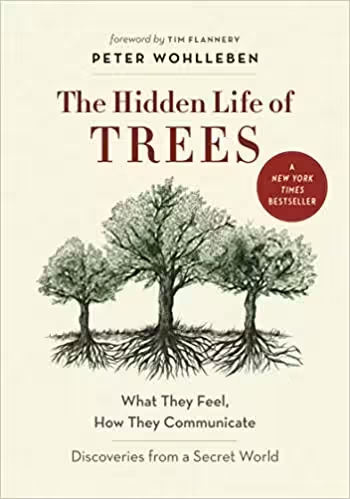
The Hidden Life of Trees: What Forests Can Teach Us About Nature and Connection
If you’ve ever wondered what trees gossip about when the wind rustles their leaves, Peter Wohlleben’s The Hidden Life of Trees will enlighten you. This isn’t just a book; it’s your ticket to the whispered secrets of the forest!
❔ A final question for the living world
Nature contributes to our well-being not through one miraculous ingredient, but through a web of relationships. A tree can shade a street, soften sound, hold birds, invite a pause and remind a person that time extends beyond the next deadline. A garden can provide movement, food, social contact, uncertainty, beauty and responsibility. A river can become recreation, habitat, memory and a reason to protect the future. These are not separate benefits placed neatly into separate boxes. They are layers of one relationship.
The future of well-being may therefore become more ecological than we currently imagine. Healthcare systems may prescribe access to safe green and blue space alongside other preventive interventions. Schools and workplaces may treat outdoor access as part of cognitive and emotional infrastructure. Urban planning may measure shade, biodiversity, walkability and belonging – not merely traffic flow and property value. Personal routines may become less focused on extracting performance and more focused on sustaining attention, health and reciprocity.
But this future will only be genuinely healthy if access is fair. A private forest retreat cannot be the model for everyone. The more important achievement is to make restorative nature ordinary: a shaded route to school, a biodiverse courtyard, an accessible park bench, a clean river, a community garden and a culture that values care as much as speed.
You do not need to wait for a perfect landscape. Begin with one living place you can return to. Notice it before asking it to make you feel better. Learn what changes. Let the relationship develop beyond the immediate reward.
Then ask yourself – and share your answer: What would change if we measured a healthy life not only by what we accomplish, but also by the quality of our relationship with the living world that makes accomplishment possible? 🌍✨
📚 References and further reading
- Jimenez, M. P., et al. (2021). “Associations between Nature Exposure and Health: A Review of the Evidence.” International Journal of Environmental Research and Public Health, 18(9), 4790.
- Twohig-Bennett, C., & Jones, A. (2018). “The Health Benefits of the Great Outdoors: A Systematic Review and Meta-Analysis of Greenspace Exposure and Health Outcomes.” Environmental Research, 166, 628–637.
- White, M. P., et al. (2019). “Spending at Least 120 Minutes a Week in Nature Is Associated with Good Health and Wellbeing.” Scientific Reports, 9, 7730.
- Kaplan, S. (1995). “The Restorative Benefits of Nature: Toward an Integrative Framework.” Journal of Environmental Psychology, 15(3), 169–182.
- Ulrich, R. S., et al. (1991). “Stress Recovery during Exposure to Natural and Urban Environments.” Journal of Environmental Psychology, 11(3), 201–230.
- World Health Organization. “Urban Green Spaces and Health: A Review of Evidence.” WHO Regional Office for Europe, 2016.
- World Health Organization. “Nature-Based Solutions for Climate Change Adaptation and Disaster Risk Reduction.” WHO, 2025.
- World Health Organization. “Urban Health.” WHO fact sheet, updated 2025.
- Bratman, G. N., et al. (2019). “Nature and Mental Health: An Ecosystem Service Perspective.” Science Advances, 5(7), eaax0903.
- Capaldi, C. A., Dopko, R. L., & Zelenski, J. M. (2015). “The Relationship between Nature Connectedness and Happiness: A Meta-Analysis.” Frontiers in Psychology, 6, 976.
- Paredes-Céspedes, D. M., et al. (2024). “The Effects of Nature Exposure Therapies on Stress, Depression, and Anxiety: A Systematic Review.” International Journal of Environmental Research and Public Health.
- Bettmann, J. E., et al. (2025). “A Systematic Review and Meta-Analysis on the Effect of Nature Exposure on Mental Health in Adults with Diagnosed Mental Illness.”
- World Health Organization Regional Office for Europe. “Green and Blue Spaces and Mental Health: New Evidence and Perspectives for Action.”
- National Institutes of Health / PubMed. Reviews on nature exposure, green and blue space, mental health, physical activity and health equity.
- Centers for Disease Control and Prevention. Public-health guidance on physical activity, heat, air quality and outdoor safety.
Disclosure: Some resources mentioned in this article may be affiliate recommendations. If you purchase through an affiliate link, The Dream Oak may receive a commission at no additional cost to you. Recommendations are selected for relevance, not because a product can replace professional care.
Learn, Help Family And Friends, And Help The Planet!