Sunbathing, sunlight, and health: a more accurate conversation
Sunbathing is usually associated with lying in direct sunlight to tan. That is not the same as spending time outdoors in daylight, walking in the shade, sitting beneath a parasol, or receiving light exposure without intentionally tanning.
😎 Sunbathing and Dopamine: 8 Health Benefits of Sunbathing
This distinction matters. Many of the potential benefits associated with “sunbathing” may come from daylight, outdoor activity, time in nature, social connection, temperature, or improved circadian timing – not from deliberately exposing unprotected skin to ultraviolet radiation.
A modern, evidence-informed approach therefore asks a better question:
How can we receive the benefits of daylight and outdoor living while minimizing unnecessary ultraviolet damage? ☀️
Sunlight affects biology through several pathways. Visible light reaches the eyes and helps synchronize the circadian system. UVB radiation can initiate vitamin D production in exposed skin. Outdoor environments may encourage movement, relaxation, and social interaction. Bright light can also influence alertness, mood, and daily timing.
Dopamine adds another important layer. Dopamine is involved in motivation, reward prediction, attention, movement, and reinforcement learning. Light exposure can interact with brain systems involved in alertness and mood, but it is inaccurate to say that sunbathing simply “boosts dopamine” in a predictable way. The strongest explanation is more integrated: daylight can help regulate timing, energy, activity, and positive experiences, while the brain learns to associate outdoor routines with reward.
The eight benefits below are therefore presented with appropriate nuance. Some are well established, some are plausible but context-dependent, and some should not be presented as treatments for disease.
1. Daylight helps anchor the circadian rhythm
The circadian rhythm is the body’s approximately 24-hour timing system. It influences sleep–wake timing, hormone release, body temperature, metabolism, alertness, and many other biological processes.
Morning and daytime light entering the eyes provides information to the brain’s central circadian clock. This helps distinguish biological day from biological night. Bright light earlier in the day can support alertness and may help establish a stronger contrast with darkness in the evening.
This is one reason a short outdoor walk or breakfast near bright natural light may be more useful than lying in direct sun at midday. The benefit is primarily related to light timing and intensity, not tanning.
A practical routine is to spend time outdoors soon after waking, without looking directly at the sun. Cloud cover, latitude, season, window glass, eye health, and individual sleep timing all influence the effect. UVB does not pass through ordinary glass effectively, but visible light still enters and can affect circadian timing.
If sleep is a concern, combine morning daylight with a consistent wake time and reduced bright light late at night.
Read more about biological timing in What Is Chronobiology?.

Muse Headband: A Game-Changer for Meditation
2. Outdoor light may support mood and motivation
People often report feeling more positive after time outdoors. This may reflect several overlapping mechanisms: daylight exposure, physical movement, nature contact, social interaction, improved sleep timing, and a break from rumination or digital stimulation.
The serotonin system is often discussed in relation to daylight, but mood is not controlled by one neurotransmitter. Dopamine is also relevant because it helps regulate motivation, effort, reward learning, and the perceived salience of activities.
An outdoor routine can create a healthy reinforcement loop:
- Daylight increases alertness and helps signal daytime.
- Improved alertness makes movement or social engagement more likely.
- The activity produces sensory, emotional, or social rewards.
- The brain learns that going outside is associated with a meaningful experience.
- The routine becomes easier to repeat.
This is different from claiming that sunlight directly treats depression. Seasonal affective disorder and major depression require appropriate assessment and treatment. Bright-light therapy is a specific clinical intervention with controlled intensity, timing, and safety considerations; casual sun exposure is not an equivalent treatment.
If low mood, loss of interest, hopelessness, or impaired functioning persists, consult a qualified health professional. Sunlight can be part of a supportive routine, not a replacement for care.
3. Sunlight can help the body produce vitamin D
Vitamin D is necessary for calcium absorption, bone metabolism, muscle function, and immune regulation. UVB exposure can convert a precursor in the skin into vitamin D3, which is later metabolized by the body.
The amount produced varies according to:
- Latitude and season.
- Time of day.
- Skin pigmentation.
- Age.
- Clothing and shade.
- Air pollution and cloud cover.
- Use of sunscreen.
- Surface area exposed.
- Individual differences in vitamin D metabolism.
There is no universal “safe sunbathing dose” that guarantees sufficient vitamin D without increasing skin-cancer risk. The U.S. National Institutes of Health Office of Dietary Supplements notes that sunscreen reduces vitamin D production but remains recommended for protecting skin. Vitamin D can also come from food and supplements when clinically appropriate.
Do not use sunburn as evidence that you have received a beneficial vitamin D dose. Sunburn represents acute skin injury. People at risk of deficiency should discuss dietary intake, testing, and supplementation with a healthcare professional.
4. Outdoor routines may support sleep quality
Daylight exposure is one of the environmental signals that helps regulate sleep timing. Morning light can support earlier circadian alignment, while regular daytime activity can increase sleep pressure by evening.
The effect is not simply “sunlight makes you sleepy.” In fact, bright light during the day can increase alertness. Better sleep may emerge from the combined pattern of daytime light, consistent activity, appropriate evening darkness, and a stable schedule.
A useful advanced strategy is to treat light as a time cue rather than a supplement. Seek brighter outdoor light during the first part of the day, use warmer and dimmer lighting as bedtime approaches, and keep the bedroom dark enough for sleep.
People with bipolar disorder, migraine sensitivity, eye conditions, medication-related photosensitivity, or severe insomnia should individualize light exposure with professional guidance.
Muse Headband: A Game-Changer for Meditation
5. Time outdoors can promote relaxation and stress regulation
Sitting outside can feel restorative, but the cause may not be sunlight alone. Nature exposure, gentle warmth, lower noise, breathing space, and a change of context can all reduce cognitive load.
Relaxation is not the same as neurological inactivity. A calm walk may involve attention, sensory processing, balance, and orientation while reducing repetitive worry. These experiences can create a healthier alternative to high-intensity digital reward seeking.
This matters for dopamine because the brain can become trained to expect constant novelty. A quiet outdoor activity may initially feel under-stimulating compared with rapid digital content. With repetition, however, attention can become more sensitive to subtler rewards: birdsong, temperature, movement, texture, and conversation.
Try pairing outdoor light with a brief mindfulness practice. The Muse Headband may interest readers who want a technology-assisted meditation resource, although no device is required to practise attention outdoors.
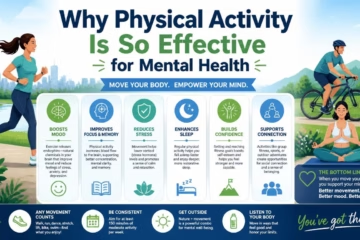
6. Sun-safe outdoor time can increase physical activity
The health benefit may come less from passive sunbathing and more from what daylight makes easier: walking, cycling, gardening, swimming, playing, or exercising outside.
The World Health Organization recommends that adults complete 150–300 minutes of moderate-intensity aerobic activity weekly, or 75–150 minutes of vigorous activity, together with muscle-strengthening activity. These are population-level recommendations, not a requirement to exercise in direct sunlight.
Outdoor movement may be especially sustainable when it is enjoyable and socially supported. A walk with a friend can combine moderate activity, daylight, conversation, and emotional connection. A garden task can add light resistance and contact with nature.
Avoid exercising in extreme heat, monitor hydration, and choose shade or cooler periods when the heat index is high. People with cardiovascular, respiratory, or heat-sensitive conditions should follow individualized medical advice.
7. Daylight and nature can support attention and cognitive recovery
A change from sustained screen-based concentration to an outdoor environment may offer attentional recovery. Natural settings contain complexity without demanding the same directed focus as a spreadsheet, inbox, or social-media feed.
This can support a useful transition between cognitive modes. After focused work, a short walk may allow deliberate attention to relax while ideas continue to develop in the background. Creative insight may then emerge not because sunlight magically produces ideas, but because the brain has moved from narrow task control to a more flexible state.
This is also where dopamine and novelty need careful interpretation. Novelty can increase salience and exploration, but excessive novelty fragments attention. Outdoor environments often offer moderate, embodied novelty – enough variation to refresh attention without the relentless interruptions of an algorithmic feed.
For a deeper exploration of movement and contemplation, see Ways Nature Contributes to Our Well-Being.
8. Safe daylight exposure can strengthen daily rituals and social connection
A recurring outdoor practice can become an anchor in the day. Morning coffee on a balcony, an afternoon walk, gardening, or an evening conversation outdoors can create structure and meaning.
Rituals matter because they connect abstract intentions with observable behavior. They can also create predictable reward associations. Over time, the brain may begin to anticipate the calm, movement, connection, or reflection that follows the cue.
This is not a reason to force an outdoor routine that feels unsafe or inaccessible. A person with limited mobility, photosensitivity, chronic illness, or a demanding schedule may benefit from accessible daylight near a window, a covered outdoor area, a balcony, or a short outing at a suitable time.
The objective is not a particular lifestyle aesthetic. It is a repeatable source of light, connection, movement, or restoration.
Muse Headband: A Game-Changer for Meditation
What sun exposure does not reliably treat
Several popular claims about sunbathing need correction.
Sun exposure should not be presented as a treatment for diabetes. Vitamin D status, diet, movement, medication, sleep, and metabolic health are interconnected, but sunbathing does not replace diabetes management.
Sunlight should not be used on open wounds. Heat and UV exposure can damage tissue, increase inflammation, and raise infection or scarring concerns. Follow wound-care advice from a medical professional.
Sun exposure should not be promoted as a treatment for multiple sclerosis, cancer, autoimmune disease, hypertension, or dementia. Research may identify associations between sunlight, vitamin D, latitude, disease risk, or biological pathways, but associations do not establish that deliberate tanning prevents or treats illness.
Sunlight can also worsen photosensitive conditions, trigger some migraines, interact with medications, and increase skin-cancer risk. Nuance is not an obstacle to wellness; it is what makes wellness advice trustworthy.
Dopamine, sunlight, and the “natural high” narrative
It is tempting to describe sunlight as a natural dopamine boost. That phrase is memorable but scientifically incomplete.
Dopamine is involved in motivation and reward learning, but subjective well-being results from interacting systems involving mood, sleep, stress, social connection, physical activity, expectation, and meaning. Sunlight may influence some of these conditions indirectly.
A more defensible model is:
Daylight can improve the timing and context in which healthy rewarding behaviors occur; those behaviors can then reinforce an outdoor routine.
This avoids two common errors:
- Treating dopamine as a single happiness meter.
- Assuming that every pleasant experience must produce a measurable dopamine increase.
If you want to make the routine more rewarding, use immediate, non-harmful feedback: walk with a friend, listen to enjoyable music, notice sensory details, track energy rather than tanning time, or end with a nourishing meal. Do not pursue redness, heat exhaustion, or UV exposure as proof of effectiveness.

Dopamine Nation by Dr. Anna Lembke
Discover ‘Dopamine Nation: Finding Balance in the Age of Indulgence’ by Dr. Anna Lembke, a profound exploration of pleasure, pain, and the science of addiction. Learn how to navigate the modern culture of overindulgence, reset dopamine levels, and embrace discomfort as a pathway to authentic joy.
Advanced sun-safe strategies for informed readers
Use the UV Index, not the clock alone
“Morning sun” is not automatically risk-free, and “ten minutes” is not equally safe for every person. UV intensity varies with season, latitude, altitude, cloud conditions, reflective surfaces, and time of day. Check the local UV Index and use protection when UV levels are elevated.
Define the goal before going outside
Ask whether you are seeking:
- Daylight for circadian timing.
- Movement for physical health.
- Nature exposure for restoration.
- Social contact.
- Vitamin D guidance.
- A deliberate tanning effect.
Different goals require different strategies. If the goal is circadian timing, direct tanning is unnecessary. If the goal is movement, shade may be preferable. If the goal is vitamin D, food or supplementation may be safer and more measurable.
Use the hierarchy of protection
Current public-health guidance emphasizes a combination of shade, protective clothing, a wide-brimmed hat, sunglasses, and broad-spectrum sunscreen. Sunscreen should be applied according to the product instructions and reapplied when needed, especially after swimming or sweating.
Protection is not a failure to receive the benefits of being outdoors. It is a way to preserve outdoor living across a lifetime.
Create a light-and-movement micro-routine
Try this 15–30 minute structure when conditions are comfortable:
- Spend a few minutes in outdoor daylight without looking directly at the sun.
- Walk at an easy pace or perform gentle mobility work.
- Move into shade or add protective clothing before discomfort or redness develops.
- Drink water and continue indoors if heat, dizziness, headache, or fatigue appears.
- Record how the routine affected alertness, mood, and sleep – not your tan.
Watch for the edge cases
Use extra caution or seek professional advice if you have very fair skin, a history of skin cancer, many or atypical moles, photosensitivity, lupus, albinism, eye disease, a medication that increases photosensitivity, or a condition affected by heat. Children require particular protection; never use sun exposure as a treatment for infant vitamin D deficiency without pediatric guidance.
🌿 Your free holistic routine for healthier daylight habits
Sunlight is only one element of a balanced daily rhythm. Combine outdoor light with movement, hydration, sleep, nutrition, reflection, and meaningful connection through the Holistic Routine Created by a Free Expert to Nourish Your Daily Life.
The Holistic Living Routine
Get our Free Expert-Crafted Holistic Routine to Nourish Your Daily Life.
A practical routine might include morning daylight, a short walk, focused work, a nourishing lunch, an afternoon break outdoors, and a darker, calmer evening environment. Adjust it to your climate, skin, health, schedule, and access to outdoor space.
For readers interested in developing a more complete well-being practice, The Importance of Hydration for Your Life and The Perfect Daily Routine: Nurturing Body, Mind, and Soul offer related perspectives.
❓ Frequently asked questions about sunbathing, sunlight, and dopamine
How long should I sunbathe each day?
There is no universal safe duration for intentional unprotected sunbathing. Risk varies by UV Index, skin type, location, season, age, medications, and medical history. Focus on outdoor daylight and use shade, clothing, sunglasses, and broad-spectrum sunscreen rather than seeking a tan.
What is the safe duration for daily sunbathing?
Dermatologists recommend sunbathing for about 20 minutes without sunscreen if there are no skin issues, but to reduce the risk of sunburn, it is safer to limit exposure to 5-10 minutes daily and take protective measures such as using SPF or staying in the shade during hot periods.
How does sunbathing influence diabetes management?
Sunbathing helps in controlling diabetes by increasing vitamin D levels, which play a key role in insulin production, potentially helping to prevent or manage diabetes.
Can sunbathing help with skin-related issues?
Yes, sunbathing in the early morning can promote skin healing and provide relief from severe skin issues by increasing blood flow and aiding in wound healing, especially when exposed to appropriate heat conditions.
How does sunbathing help with hypertension?
Sunbathing helps with hypertension by activating nitric oxide in the skin, which promotes vasodilation, or widening of blood vessels, thereby improving blood circulation and helping to maintain healthy blood pressure levels.
What are the health benefits of sunbathing?
Daily sunbathing offers various health benefits, such as improving blood circulation for people with hypertension, aiding wound healing, helping to regulate blood sugar levels in diabetics, boosting vitamin D production, reducing depression, strengthening bones, and enhancing the immune system.
Does sunlight increase dopamine?
Sunlight and outdoor activity may influence motivation, mood, alertness, and reward learning, but it is inaccurate to promise a simple or predictable dopamine increase from sunbathing. Dopamine is one part of a much larger biological and psychological system.
Can sunbathing prevent vitamin D deficiency?
UVB can support vitamin D production, but the amount varies widely and cannot be safely standardized as a tanning prescription. Food, fortified products, and supplements may be appropriate alternatives. Discuss suspected deficiency with a healthcare professional.
Is early-morning sunlight always safe?
Early morning often has lower UV intensity than midday, but conditions vary. Morning light can be useful for circadian timing without prolonged direct exposure. Check local UV conditions and protect your skin when needed.
Can sunlight improve depression?
Daylight, outdoor activity, sleep regularity, and nature exposure may support mood, but sunbathing is not a treatment for depression. Persistent low mood or loss of interest should be assessed by a qualified professional.
Is tanning a health benefit?
No. A tan is a biological response to UV injury, not proof of improved health. Enjoy outdoor life without making skin darkening the goal.
💬 Questions for reflection and discussion
- Do you seek sunlight mainly for mood, sleep, movement, vitamin D, or relaxation?
- Which outdoor habit gives you the greatest reward with the least UV exposure?
- Have you ever confused feeling energized after a sunny day with a direct “dopamine boost”?
- What would a safe and accessible daylight routine look like in your climate?
- How can we encourage outdoor living without romanticizing tanning or dismissing skin-cancer risk?
Share your experience in the comments. The most useful conversation about sunlight is not whether it is simply “good” or “bad,” but how timing, dose, context, protection, and individual health change the answer.
The most valuable insight may be that the benefits popularly attributed to sunbathing often belong to a broader pattern: appropriately timed daylight, regular movement, contact with nature, social connection, sufficient sleep, and a reward environment that does not demand constant stimulation.
As wearable devices, light-management systems, and personalized health platforms become more sophisticated, people may eventually receive increasingly individualized guidance about circadian timing and UV exposure. The important question will be whether that information helps people live more freely outdoors – or makes them anxious about every minute of daylight.
The future of sunlight-based well-being should not be a competition between fear and romanticism. It should be a more intelligent partnership with light: enough daylight to support rhythm, activity, and connection; enough protection to preserve the skin and eyes; and enough awareness to recognize that health is rarely produced by one isolated exposure. ☀️
Important safety note: Sunlight can support health, but ultraviolet radiation also causes sunburn, premature skin aging, eye damage, and skin cancer. There is no risk-free tanning method. The safest approach is to enjoy daylight and outdoor time while avoiding sunburn and following current sun-protection guidance.
📚 References and further reading
- National Institutes of Health, Office of Dietary Supplements. “Vitamin D: Fact Sheet for Health Professionals.”
- National Institutes of Health, Office of Dietary Supplements. “Vitamin D: Fact Sheet for Consumers.”
- Centers for Disease Control and Prevention. “Sun Safety Facts.”
- Centers for Disease Control and Prevention. “Skin Cancer.”
- World Health Organization. “Radiation: Ultraviolet Radiation.”
- Mead, M. N. (2008). “Benefits of Sunlight: A Bright Spot for Human Health.” Environmental Health Perspectives, 116(4), A160–A167.
- Bromberg-Martin, E. S., Matsumoto, M., & Hikosaka, O. (2010). “Dopamine in Motivational Control: Rewarding, Aversive, and Alerting.” Neuron, 68(5), 815–834.
- Schultz, W. (2016). “Dopamine Reward Prediction-Error Signalling: A Two-Component Response.” Nature Reviews Neuroscience, 17, 183–195.
- Czeisler, C. A., et al. (1999). “Stability, Precision, and Near-24-Hour Period of the Human Circadian Pacemaker.” Science, 284(5423), 2177–2181.
- World Health Organization. “Physical Activity.”
Learn, Help Family And Friends, And Help The Planet!