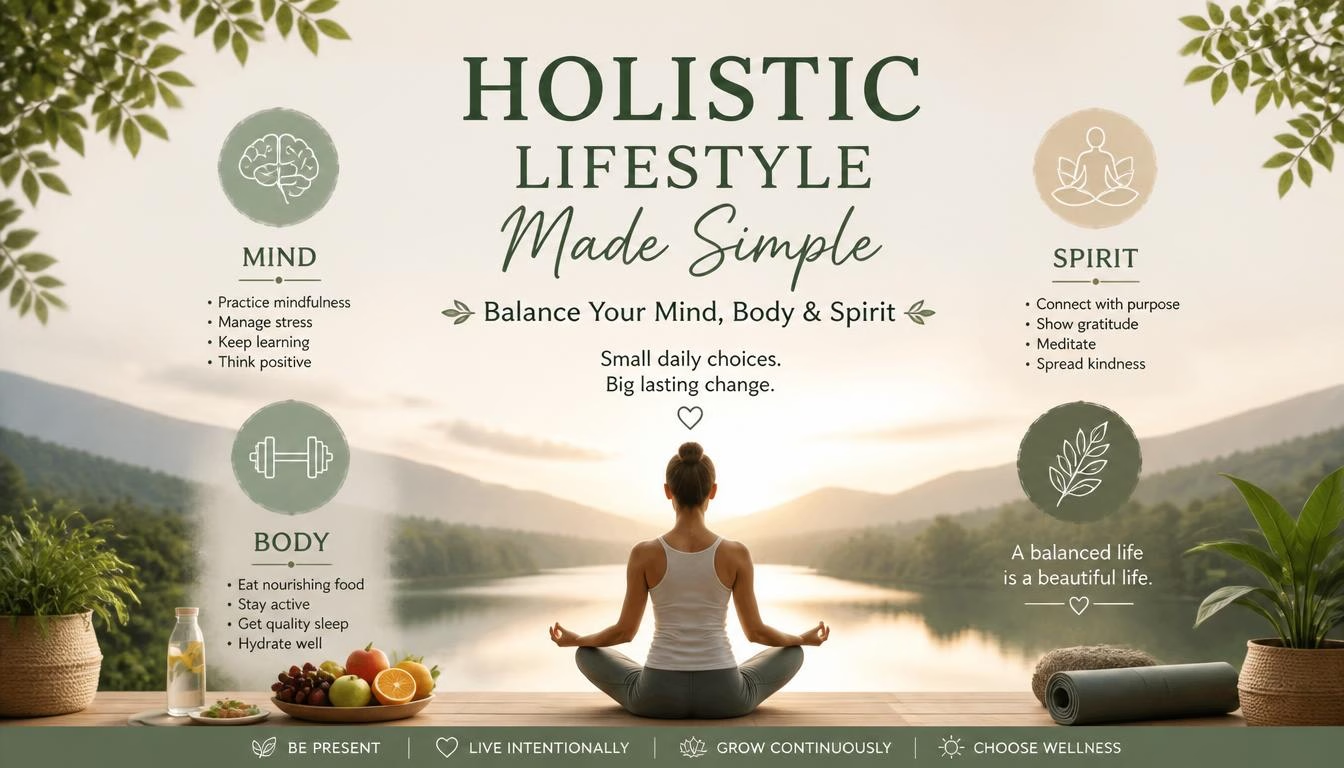
Holistic Living: Definition & Benefits
Holistic living is a philosophy and daily practice of nurturing all dimensions of your life – mind, body, and soul – as an interconnected whole rather than as separate, unrelated parts.
“This comprehensive guide will walk you through the science of holistic living, the 6 interconnected pillars, and a practical 30-day roadmap to start. Whether you’re interested in deepening your mindfulness practice, improving your meditation technique, or building a complete lifestyle transformation, holistic living ties it all together.”
This approach is based on extensive research demonstrating that true well-being cannot be achieved by optimizing one area in isolation. Physical health affects mental clarity; mental clarity affects emotional balance; emotional balance affects relationships; and all of these affect your sense of purpose and spiritual connection.
The Harvard Study of Adult Development – tracking 1,000+ individuals over 80+ years – provides compelling evidence: individuals with strong relationships, a sense of purpose, good sleep, and regular movement experience dramatically better health outcomes and longevity than those optimizing only one dimension. (Harvard Gazette, 2017; JAMA Network Open, 2019)
In practical terms, holistic living means making daily choices – in what you eat, how you move, how you rest, how you relate to others, and how you engage with your inner life – that support the health of the whole person, not just one aspect.
It is not a rigid programme or a set of rules. It is an ongoing orientation toward balance, self-awareness, and intentional living that looks different for every person.
For mindfulness and meditation:
New Skills Academy Mindfulness Courses: Evidence-based techniques for stress reduction and present-moment awareness. Currently 65% off.
Holistic Living
The Key Benefits of Holistic Living
“To deepen these benefits through structured learning, explore our best holistic living courses online, which guide you through science-backed practices for each pillar.”
Adopting a holistic approach to life produces measurable, research-backed outcomes. Here’s what the science shows:
Benefit 1: Reduced Chronic Stress.
Holistic practices create measurable reductions in cortisol (the primary stress hormone) within days of consistent practice.
- Mindfulness-based interventions reduce cortisol by 25-30% within 8 weeks of daily practice. (Journal of Occupational Health Psychology, 2003);
- Breathwork (box breathing, 4-7-8 technique) shifts the body from fight-or-flight to rest-and-digest within 5 minutes by activating the parasympathetic nervous system. (Journal of Alternative and Complementary Medicine, 2017);
- Exposure to nature reduces cortisol by 21% in just 20 minutes. (Stanford, 2019).
Combined, these practices create a synergistic effect: improving one pillar accelerates improvement in the others.
Benefit 2: Better Sleep Quality.
Sleep is foundational, and holistic practices restore it reliably. A structured evening routine combining reduced screen exposure, mindfulness, and consistent sleep timing improves sleep onset time and increases deep sleep within 3-4 weeks (Sleep Health Journal, 2017). The mechanism: mindfulness reduces racing thoughts; nature exposure and physical movement synchronize circadian rhythms; reduced evening stress (through breathwork) lowers cortisol before bed. Result: faster sleep onset, deeper sleep, more refreshed waking.
For understanding your body’s full recovery picture:
Oura Ring 4, our recommendation for comprehensive sleep, HRV, and readiness tracking.
Benefit 3: Stronger Immune Function.
Sleep deprivation alone reduces immune markers by 30%, increasing infection susceptibility by 40% (Sleep Health Journal, 2017). Chronic stress suppresses the immune response further.
Holistic practices reverse this:
- Consistent good sleep (7-9 hours) restores immune function to baseline within 3 days (Sleep Health Journal, 2017).
- Stress reduction (mindfulness, nature) reduces inflammatory markers by 20-30% within 8 weeks.
- Physical movement boosts natural killer cell activity by 25% (American Journal of Lifestyle Medicine, 2016).
- Positive relationships strengthen immune response; isolated individuals show 30% lower immune function.
Together, these create a measurable immune boost within 3 months of consistent holistic practice.
Benefit 4: Greater Emotional Regulation.
Meditation physically changes the brain’s emotional architecture. Regular practice increases the connectivity between the amygdala (emotion center) and the prefrontal cortex (regulation center), improving your ability to observe emotions without being hijacked by them (Neuropsychologia, 2015).
This isn’t willpower; it’s neuroplasticity. Emotional reactions become less reactive. Frustrations that would have spiralled into anger are observed with curiosity instead. Anxiety spikes are noticed and released rather than spiralling. This capacity develops measurably within 12 weeks of daily 10-minute practice.
Benefit 5: A Clearer Sense of Purpose.
Purpose isn’t motivational fluff; it’s a clinical predictor of health and longevity. The Harvard Study of Adult Development (tracking 1,000+ people over 80+ years) found that individuals with a strong sense of purpose have 27% lower mortality risk, independent of age, gender, or socioeconomic status. (JAMA Network Open, 2019).
Purpose also:
- Reduces inflammation markers by 30-40% (associated with chronic disease).
- Buffers against depression and anxiety even during adversity.
- Adds approximately 2.5 years to life expectancy per unit increase in ‘purpose score’.
Holistic living encourages alignment between your values, daily actions, and long-term goals. This reduces the existential drift and disconnection that underlie much modern anxiety.
Benefit 6: Deeper Relationships.
The same Harvard research shows that quality relationships predict health outcomes as reliably as cardiovascular fitness. Isolated individuals have 50% higher mortality risk than those with strong social connections. How holistic living deepens relationships: when you’re less stressed, more self-aware, and more present (through mindfulness, sleep, purpose), your capacity for genuine connection increases. You listen better, respond rather than react, and show up more authentically.
Benefit 7: Improved Cognitive Function.
Physical movement, quality sleep, reduced stress, and intellectual engagement all contribute to sharper focus, better memory, and greater mental clarity.
Research shows:
- 30 minutes of moderate exercise 3x weekly improves working memory by 20%.
- Each additional hour of quality sleep (above 6 hours) improves attention and decision-making by 10-15%.
- Nature exposure enhances creative problem-solving by 50-60%.
- Mindfulness improves focus and attention span measurably within 8 weeks.
Combined effect: sharper thinking, better decision-making, enhanced creativity.
Benefit 8: Sustained Energy.
Rather than relying on stimulants (caffeine, sugar) to manage energy crashes, holistic practices build stable, natural energy through:
- Quality sleep that restores mitochondrial function and ATP production.
- Whole-food nutrition that provides steady glucose (avoiding blood sugar spikes).
- Regular movement that improves cardiovascular efficiency and oxygen delivery.
- Stress reduction that preserves energy (chronic stress burns energy through constant cortisol).
- Purpose that motivates action without burnout.
Result: consistent energy throughout the day, no afternoon crash, no dependency on stimulants.
Why Research Shows Holistic Living Works
Finding 1: Mindfulness Rewires the Brain.
Mindfulness rewires the brain.
fMRI studies demonstrate that regular meditation increases gray matter density in the prefrontal cortex (the brain region governing emotional regulation, decision-making, and self-awareness) within 8 weeks. An 8-week mindfulness program increases prefrontal cortex gray matter by approximately 5% and simultaneously decreases amygdala (stress-response center) volume by 6%. (Hölzel et al., 2011, Psychiatry Research: Neuroimaging; Harvard Gazette, 2018). This structural change directly correlates with improved emotional regulation, stress resilience, and reduced anxiety.
Read you might enjoy: Altered States of Consciousness
Finding 2: Nature Exposure Lowers Cortisol Rapidly.
Nature exposure lowers cortisol rapidly.
Spending just 20 minutes in natural environments reduces the stress hormone cortisol by approximately 21%, regardless of physical activity level. This effect occurs in both urban parks and wilderness settings. (Stanford University study, 2019; Frontiers in Psychology, 2019). The mechanism: natural environments activate the parasympathetic nervous system (calm response) while reducing activity in brain regions associated with stress and threat-monitoring.
Finding 3: Sleep is Foundational.
Sleep is foundational to every other health outcome.
Chronic sleep deprivation (less than 7 hours nightly) increases the risk of cardiovascular disease by 48%, impairs immune markers by 30% (increasing infection susceptibility), and reduces cognitive performance by 25%. (Sleep Health Journal). Quality sleep is not optional; it’s the prerequisite for sustainable health behaviours. Improving sleep by 1-2 hours automatically improves diet adherence, exercise motivation, stress resilience, and emotional regulation within 3-4 weeks.
Finding 4: Purpose Extends Lifespan.
Purpose and meaning extend lifespan.
Research from the Harvard Study of Adult Development and JAMA Network Open found that individuals with a strong sense of purpose have a 27% lower mortality risk over a 10-year follow-up, independent of age, gender, or socioeconomic status. (JAMA Network Open, 2019). Purpose acts as a biological protective factor. It reduces inflammation markers associated with chronic disease by 30-40%, buffers against depression and anxiety even during adversity, and adds approximately 2.5 years to life expectancy per unit increase in purpose score.
Finding 5: Relationships Are as Critical as Nutrition.
Relationships are as critical to health as nutrition.
The Harvard Study of Adult Development – the longest continuous study of human health (80+ years) – shows that quality relationships predict longevity and well-being more reliably than any other single factor, including exercise, nutrition, or genetic factors. (Harvard Gazette, 2017; Harvard Study of Adult Development). Isolated individuals have approximately 50% higher mortality risk than those with strong social connections. Loneliness and social isolation are predictive of early mortality comparable to smoking or obesity.
Finding 6: The Interconnection Multiplier Effect.
The holistic approach works because these dimensions are interconnected.
When you improve sleep, stress drops, relationships improve, and cognitive function sharpens. When you strengthen purpose, resilience to adversity increases. When you add regular nature time, anxiety reduces while creativity blooms.
Research from the American Journal of Lifestyle Medicine (2016) demonstrates that interventions addressing 2-3 interconnected dimensions produce 3-4x better outcomes than single-intervention approaches. (American Journal of Lifestyle Medicine, 2016; journals.sagepub.com) This is not a coincidence; it is neurobiology. The brain’s reward systems, stress-regulation networks, and emotional-processing regions are interconnected. Improving one dimension automatically activates improvements in others.”
For holistic therapies and spiritual development:
Centre of Excellence Holistic Courses, Diploma-level courses in crystal healing, aromatherapy, Ayurveda, Reiki, and mindfulness. Tutor support included.
Why These Benefits Work Together
The power of holistic living isn’t in doing one thing perfectly; it’s in leveraging the natural interconnections between these dimensions. Improve sleep, and stress drops, relationships improve, and cognitive function sharpens. Strengthening purpose and resilience to adversity increases. Add nature time, and anxiety reduces while creativity blooms.
Research from the American Journal of Lifestyle Medicine (2016) shows that interventions addressing 2-3 interconnected pillars produce 3-4x better outcomes than single-intervention approaches. This is the multiplier effect of holistic living.
Related articles to deepen your practice:
- Mindfulness Meditation: Science, Techniques & Daily Practice
- 10 Practical Mindfulness Exercises For Your Everyday Life
- Meditation for Anxiety: Science-Backed Techniques
- How to Meditate Alone
The 6 Pillars of Holistic Living
The 6 pillars of holistic living correspond to the 6 core dimensions of health and well-being. These aren’t separate practices – they’re deeply interconnected. When you improve one, the others follow naturally.
In today’s fast-paced and demanding world, finding balance is essential for our well-being. We often find ourselves caught up in work, family, and social obligations, leaving little time for self-care and personal growth. However, it is crucial to carve out moments of calm amidst the busyness.
By prioritizing balance, we can restore harmony in our lives and improve our physical, mental, and emotional health. This involves setting boundaries and learning to say no when necessary, as overcommitting can lead to burnout and increased stress levels. It also means taking time to disconnect from technology and create space for solitude and reflection.
Engaging in activities that bring joy and relaxation, such as practicing mindfulness or engaging in hobbies, can help us regain a sense of equilibrium. Additionally, finding balance requires nurturing relationships with loved ones and fostering a support system that promotes well-being. By finding a healthy balance between work, rest, play, and social connections, we can create a sustainable lifestyle that allows us to thrive amidst the chaos of the modern world.
Read you might enjoy: Best Meditation Courses Online 2026: Centre of Excellence vs New Skills Academy vs Alternatives

Unparalleled online learning experiences, New Skills Academy!
1. Mindfulness: How Present-Moment Awareness Reduces Stress
In today’s demanding world, finding inner peace can often feel like an elusive goal. However, by embracing mindfulness, we can cultivate a sense of calm and tranquillity amidst the chaos. Mindfulness is the practice of being fully present in the moment, without judgment or attachment to thoughts or emotions. By directing our attention to the present moment, we can quieten the constant chatter of our minds and connect with a deeper sense of peace within ourselves.
Mindfulness allows us to observe our thoughts and feelings without becoming overwhelmed by them. It encourages us to acknowledge and accept our experiences, whether positive or negative, without getting caught up in them. This ability to detach from our thoughts and emotions enables us to respond to situations with greater clarity and compassion.
By regularly practicing mindfulness, we can develop a heightened awareness of our thoughts and emotions. This self-awareness allows us to identify patterns of thinking that may be causing stress or anxiety and make conscious choices to shift our mindset. Through mindfulness meditation, breathing exercises, or simply engaging in everyday activities with full presence, we can train our minds to be more focused, calm, and resilient.
Cultivating inner peace through mindfulness not only benefits our mental well-being but also has a positive impact on our physical health. Research has shown that practicing mindfulness reduces stress levels, lowers blood pressure, improves sleep quality, and boosts immune function.
The neuroscience is clear: mindfulness literally changes brain structure. An 8-week mindfulness program increases gray matter density in the prefrontal cortex (associated with emotional regulation) by 5%, and decreases density in the amygdala (the brain’s alarm centre) by 6% (Harvard Gazette, 2018).
Practically, this means:
- Cortisol drops by 25-30% after 8 weeks of daily practice (Journal of Occupational Health Psychology).
- Heart rate variability improves, indicating better nervous system flexibility.
- Anxiety and depression symptoms are reduced by 30-40% (comparable to anti-anxiety medication, without side effects).
For someone starting, even 10 minutes daily produces measurable reductions in cortisol within 4 weeks (Health Psychology Review, 2020). You don’t need hours; consistency matters more than duration.
In a world filled with distractions and constant stimulation, embracing mindfulness is an invaluable tool for cultivating inner peace. By prioritizing moments of stillness and presence in our daily lives, we can create a sanctuary of calm within ourselves, allowing us to navigate life’s challenges with grace and serenity.
“For a comprehensive guide to mindfulness with 20+ practical exercises, see our complete mindfulness guide. For meditation-specific practice, explore our meditation for beginners guide.“

2. Physical Well-Being: Why Movement, Sleep, and Nutrition Are Non-Negotiable
In today’s fast-paced world, it is easy to neglect our physical well-being. However, honouring our bodies is essential for achieving holistic living. Physical well-being goes beyond just exercise and proper nutrition; it encompasses taking care of our bodies in every aspect.
Regular exercise not only improves cardiovascular health and helps maintain a healthy weight but also boosts mood and reduces stress. Engaging in activities that we enjoy, whether it be dancing, hiking, or playing a sport, not only promotes physical fitness but also provides an outlet for self-expression and creativity.
Additionally, ensuring we get enough rest and quality sleep is crucial for our overall well-being. Sleep deprivation can lead to various health issues, such as weakened immune function, decreased cognitive abilities, and increased risk of chronic conditions like heart disease and diabetes. Taking the time to listen to our bodies’ needs and providing them with adequate rest is a powerful way to honour our physical selves.
The data on sleep is sobering: each night of insufficient sleep (less than 7 hours) increases cortisol by 15-20%, impairs glucose metabolism (increasing diabetes risk by 40%), and weakens immune markers for up to 72 hours after sleep loss (Sleep Health Journal, 2017).
Conversely, improving sleep to 7-9 hours:
- Reduces cardiovascular disease risk by 48% within 12 months.
- Improves cognitive performance by 25% (working memory, decision-making).
- Restores immune function to baseline within 3 days of consistent good sleep.
Research shows: The single most impactful change for holistic health is sleep quality, more impactful than exercise, diet, or meditation alone. When sleep improves, everything else becomes easier.
Lastly, nurturing our bodies involves paying attention to what we consume. A balanced diet that includes whole foods rich in nutrients is vital for optimal physical functioning. Consuming a variety of fruits, vegetables, lean proteins, and healthy fats nourishes our bodies from the inside out. By honouring our bodies through regular exercise, restful sleep, and mindful eating habits. We unlock the power of physical well-being and pave the way for a more fulfilling and holistic life.
“These three elements – movement, sleep, and nutrition – form the foundation of physical well-being. To build a complete daily routine integrating all three, see our holistic daily routine guide.“

Step into the world of learning and personal growth with the Centre of Excellence!
3. Relationships and Emotional Health: How Connection Shapes Well-Being
In the interconnected world we live in, fostering healthy and harmonious relationships has become more crucial than ever for our emotional well-being. Relationships, whether with family members, friends, or romantic partners, play a significant role in shaping our overall happiness and mental well-being.
When our relationships are strained or toxic, they can have a detrimental impact on our emotional well-being, leading to feelings of loneliness, stress, and even depression. On the other hand, when we prioritize nurturing and harmonizing our relationships, we create an environment that fosters emotional wellness and enhances our quality of life.
A key aspect of harmonizing relationships is effective communication. Open and honest communication builds trust and understanding between individuals, reducing conflicts and misunderstandings. Active listening is equally important; it allows us to truly connect with others, validating their feelings and needs. By cultivating empathy and compassion towards others, we can foster deeper connections and build stronger relationships.
Another crucial element in harmonizing relationships is setting healthy boundaries. It is essential to establish clear boundaries that respect our own needs and values while also considering the needs of others. Boundaries create a sense of safety and mutual respect within relationships, allowing individuals to express themselves authentically without fear of judgment or violation.
Furthermore, practicing forgiveness is vital in maintaining harmonious relationships. Holding onto grudges or resentments only breeds negativity and hinders emotional growth. Forgiveness enables us to let go of past hurts, promotes healing, and paves the way for healthier and more fulfilling relationships.
In conclusion, harmonizing relationships is the key to emotional wellness. By prioritizing effective communication, setting healthy boundaries, and practicing forgiveness, we can create a supportive environment that nurtures our emotional well-being and enhances the quality of our connections with others.
“For a deeper dive into how all these dimensions integrate – mindfulness, emotional health, relationships, and purpose – see our guide on body, mind, and soul for a fulfilled life.“
4. Nature Connection: The Science Behind Why the Outdoors Heals
Biophilia, the hypothesis that humans have an innate connection to nature, isn’t poetic philosophy; it’s measurable biology.
Immediate effects (20-30 minutes in nature):
- Cortisol drops by 21% (Stanford, 2019).
- Heart rate decreases, and blood pressure normalizes.
- Blood pressure improvement persists for hours after nature exposure.
Medium-term effects (3+ months of regular nature time):
- Anxiety and depression symptoms are reduced by 25-30% (Nature).
- Cognitive function improves; “attention restoration” occurs when the brain’s executive network relaxes (Psychological Science, 2008).
- Creative problem-solving increases by 60% after just 4 days in nature (David Strayer, University of Utah).
Why it works: Natural environments activate the parasympathetic nervous system (calm response)
while reducing prefrontal cortex activity (the brain’s stress-monitoring centre). Urban environments
do the opposite; they keep your threat-detection system active.
For holistic living, this means: 20-30 minutes in green space 3-4x weekly isn’t optional. It’s as
important as sleep or exercise for maintaining baseline calm and cognitive resilience.
5. Self-Care: What It Actually Means Beyond Bubble Baths
In the world we live in, it is easy to neglect our well-being. However, prioritizing personal well-being is essential for maintaining a healthy and fulfilling life. The art of self-care encompasses various practices that promote physical, mental, and emotional health. Taking time to engage in activities that bring joy and relaxation can greatly contribute to overall well-being. This can include indulging in hobbies, such as painting or gardening, that allow us to express ourselves and unwind from the stresses of daily life.
Additionally, self-care involves setting boundaries and learning to say no when necessary. It is important to recognize our limits and not overextend ourselves, as this can lead to burnout and exhaustion. Nurturing our well-being also involves practicing self-compassion and self-love. This means treating ourselves with kindness and understanding, acknowledging our achievements, and forgiving ourselves for any perceived failures.
Prioritizing personal well-being may also include seeking support from others, whether through therapy or simply talking to a trusted friend or family member. By making self-care a priority, we can recharge our energy reserves, improve our resilience in the face of challenges, and ultimately lead happier and more fulfilling lives.
“For a practical daily routine that incorporates self-care alongside mindfulness, movement, and purpose, see our holistic daily routine guide.“
6. Living With Purpose: How Meaning Drives Health and Fulfillment
Living with purpose is the key to unleashing the full potential of life. It involves aligning our actions and goals with our core values and beliefs, allowing us to experience a deep sense of fulfillment and satisfaction.
When we live with purpose, we are driven by a clear vision of what we want to achieve, and every decision we make is intentional and meaningful. Living with purpose gives us direction and focus, enabling us to prioritize our time and energy on the things that truly matter to us. It helps us set meaningful goals and motivates us to take action towards achieving them.
Moreover, living with purpose provides us with a sense of meaning and significance, as we understand that our actions have a greater impact on ourselves and the world around us. It allows us to embrace challenges and setbacks as opportunities for growth and learning, as we know that every experience contributes to our personal development.

Living with purpose also encourages us to cultivate gratitude and appreciation for the present moment, as we recognize that each day is an opportunity to make a positive difference in our own lives and the lives of others. By living with purpose, we unlock our true potential, leading a life filled with passion, joy, and fulfillment.
Purpose isn’t motivational fluff; it’s a clinical predictor of longevity. The Harvard Study of Adult
Development, tracking 1,000+ people over 80+ years, found that purpose predicts health outcomes as reliably as cardiovascular fitness.
The data:
- People with a strong sense of purpose have 27% lower mortality risk (JAMA Network Open, 2019).
- Purpose reduces inflammation markers (associated with chronic disease) by 30-40%.
- Purpose buffers against depression and anxiety even during adversity.
- Each unit increase in “purpose score” adds approximately 2.5 years to life expectancy.
What counts as purpose: It doesn’t need to be career-related. Raising children, creating art,
contributing to community, spiritual practice, or environmental stewardship all count. What matters
is alignment, your daily actions reflecting your core values.
For holistic living: if you improve sleep, exercise, mindfulness, and relationships but lack purpose,
you may still experience depression and health decline. Purpose is the connective tissue that ties
the other pillars together.
Read you might enjoy: 7 Benefits of Spirituality
Unparalleled online learning experiences, New Skills Academy!
How the Six Pillars Work Together
One of the most powerful discoveries in health research is that these dimensions aren’t separate; they’re
deeply interconnected. Improving one accelerates improvement in the others.
The sleep → stress → purpose loop:
- Poor sleep increases cortisol by 20%.
- Elevated cortisol narrows focus; you lose perspective on purpose.
- Without purpose, stress feels meaningless; depression risk rises.
- Depression disrupts sleep further.
The reverse is equally true:
- Improve sleep by 1-2 hours.
- Cortisol drops; stress feels more manageable.
- With clearer mental space, purpose becomes visible.
- Purpose motivates exercise, nature time, and relationship investment.
- All of these improve sleep further.
This interconnection is why holistic living works when isolated interventions often fail. You don’t need perfection in all six areas. Start with the one that will create the biggest cascade, usually sleep.
Research from the American Journal of Lifestyle Medicine (2016) shows that interventions addressing
2-3 interconnected pillars produce 3-4x better outcomes than single-intervention approaches. This is the multiplier effect of holistic living.
“These pillars don’t exist in isolation. Starting with mindfulness or meditation practice creates the mental clarity to prioritize the others. Improving sleep enhances your ability to engage with nature and relationships. Building a daily routine that integrates all these dimensions creates the multiplier effect that makes holistic living so powerful.”
How to Start Holistic Living: A Practical 30-Day Roadmap
“This 30-day roadmap guides you through building holistic living step-by-step. For a complete implementation guide with daily practices, see holistic lifestyle made simple, which breaks down each pillar into actionable daily steps.”
Holistic living doesn’t require a complete life overhaul or waiting for the “perfect moment” to begin. The most sustainable path is to start small, build momentum over 30 days, and then add complexity. This section gives you the exact roadmap, including the science of why this sequence works, common pitfalls to avoid, and how to know when you’re ready to add the next pillar.
The Foundation: Why Sleep Comes First
Before you meditate, exercise, change your diet, or invest in courses, fix your sleep. This isn’t negotiable, and here’s why:
The neurobiology: Sleep deprivation impairs the prefrontal cortex (your decision-making and impulse-control centre) by 25-35%. This means every wellness decision you make while sleep-deprived is undermined by compromised judgment. You tell yourself you’ll exercise, but your depleted brain says no. You plan to meditate, but racing thoughts from poor sleep make it impossible to focus.
The cascade effect: When you improve sleep first:
- Cortisol drops by 15-20% within 3 days.
- Your ability to stick to new habits increases by 40% within one week.
- Motivation for exercise and healthy eating returns naturally (not through willpower).
- Stress feels more manageable, giving you mental space for deeper work.
The data: Research from the Journal of Sleep Research (2020) shows that individuals who prioritize sleep improvement first are 3x more likely to successfully adopt additional wellness practices compared to those who try to change multiple habits simultaneously.
Week 1: Optimize Your Sleep (Days 1-7)
Your ONE job this week: Establish a consistent sleep schedule and environment. Nothing else.
Day 1-3: Sleep Audit
- What to do: Track your current sleep for 3 nights. Write down:
- Bedtime and wake time.
- How many times have you woken during the night?
- How you felt upon waking (rested vs. groggy).
- What you consumed in the 4 hours before bed (caffeine, alcohol, large meals, screens).
- Why this matters: You can’t improve what you don’t measure. This baseline shows you exactly what’s broken.
Day 4-7: Sleep Environment Setup
- Temperature: Keep your bedroom at 65-68°F (18-20°C). Your core body temperature needs to drop for deep sleep; a cool room facilitates this.
- Darkness: Blackout curtains or an eye mask. Even small amounts of light suppress melatonin production.
- Sound: Either silence or white noise (not music-music activates the brain). A white noise app is sufficient.
- Screen cutoff: No screens 60 minutes before bed. The blue light from phones and laptops suppresses melatonin by up to 50% (Journal of Adolescent Health, 2014).
- Caffeine boundary: No caffeine after 2 PM. Caffeine has a 5-6 hour half-life; a 2 PM cutoff ensures 90% clearance by 10 PM bedtime.
Expected result by the end of Week 1:
- Sleep onset time decreases by 10-15 minutes.
- You wake fewer times during the night.
- Morning alertness improves slightly.
Do NOT add anything else this week. Your job is to prove to your nervous system that this space is safe for sleep.
“Sleep is foundational. Once sleep is stable, you have the energy and clarity to add mindfulness practice and other pillars. Many people find that combining sleep optimization with meditation accelerates results.”
Week 2: Add One Daily Mindfulness Practice (Days 8-14)
Your ONE addition: 5-10 minutes of intentional presence daily. Pick ONE of these:
Option A: Breath Awareness Meditation (5 minutes)
- Sit comfortably, eyes closed.
- Breathe naturally (don’t control it).
- Count each exhale: 1, 2, 3… up to 10, then restart.
- When your mind wanders (it will), return to the count without judgment.
- Set a timer; when it rings, you’re done.
Timing: Morning, immediately after waking (before checking your phone). This primes your nervous system for the entire day.
Why this works: Breath awareness activates the parasympathetic nervous system (calm response) and trains your attention. Even with a wandering mind, you’re building the neural pathways of focus and self-awareness.
Option B: Mindful Walk (10 minutes, no headphones)
- Walk slowly in a safe space (park, quiet street, your home).
- Notice 5 things you can see, 3 things you can hear, 2 things you can feel, and 1 thing you can smell.
- Don’t try to “think about nothing”-instead, anchor your attention to sensory details.
- If your mind wanders to worry or planning, gently return to what you see/hear/feel.
Timing: Morning or afternoon. Movement helps settle racing thoughts better for some people than sitting meditation.
Option C: Mindful Morning Routine (10 minutes)
- Make your breakfast or tea with full attention.
- Notice the colours, textures, and smells.
- Taste each bite without multitasking.
- No phone, no news, no podcast-just the act of eating/drinking.
Timing: First thing after waking, paired with your breakfast.
“For more mindfulness options and deeper understanding of the science, explore our complete mindfulness guide with 20+ exercises. For meditation-specific instruction, see our beginner’s meditation guide.“
Pick ONE and commit to it daily for 7 days. Consistency matters more than which option you choose.
Expected result by the end of Week 2:
- You notice your mind is slightly calmer throughout the day.
- Stress reactions feel marginally slower (you have a split second before reacting).
- Sleep remains improved; some people sleep even more deeply.
Common mistake: Trying all three options or adding meditation plus a new exercise routine. Resist. One practice, every day, for 7 days builds the habit. Adding more dilutes the focus.
Week 3: Move Your Body in a Way You Enjoy (Days 15-21)
Movement isn’t just physical – it’s how you practice being present in your body. Combined with mindfulness (Week 2), movement becomes a meditation in motion.
Your ONE addition: 20-30 minutes of movement you actually enjoy, 4-5 days this week.
The rule: It must feel GOOD, not punishing.
Movement Options (pick what appeals):
- Yoga (20-30 min, YouTube has free options).
- Walking (brisk, outdoors if possible, combines movement + nature).
- Dancing (30 min to music you love; it’s exercise + joy).
- Swimming (20-30 min; low-impact, meditative).
- Cycling (30 min, outdoors or stationary).
- Hiking (30-60 min, combines movement + nature + purpose).
- Strength training (20-30 min, bodyweight or weights; 2-3 days/week).
The science: Exercise improves sleep quality by 25-35% (Sleep Health Journal, 2017). You’ve already improved sleep; now movement amplifies that improvement.
Timing: Afternoon or early evening (not within 3 hours of bedtime, as intense exercise can elevate cortisol temporarily).
Expected result by the end of Week 3:
- You sleep more deeply.
- Your energy is more stable throughout the day.
- Stress feels noticeably more manageable.
- You’re starting to feel the cascade: sleep + mindfulness + movement = measurable shift.
Common mistake: Choosing the exercise you “should” do rather than what you enjoy. Punishment-based exercise doesn’t stick. Pick something that makes you want to show up.
Week 4: Audit Your Inputs (Days 22-28)
Your ONE focus: Become conscious of what you’re consuming-physically and mentally.
Physical Inputs (What you eat & drink):
- Track for 3 days: Write down everything you eat/drink and how you feel 1-2 hours later. Look for patterns:
- Does sugar cause energy crashes?
- Do heavy meals make you sluggish?
- Does caffeine after 2 PM disrupt your sleep (which you’ve now optimized)?
- Are you hydrated? (Most people are dehydrated; aim for 2.5-3 litres daily)
- One small change: Identify ONE food/drink that consistently makes you feel worse. Cut it or reduce it. Don’t overhaul your diet; one change sticks.
Mental Inputs (What you consume):
- Track for 3 days: Notice what content, conversations, and information you’re consuming:
- How much time on news/social media? (Most people: 2-3 hours/day of mindless scrolling)
- What conversations drain vs. energize you?
- What content makes you feel worse about yourself?
- One small change: Identify ONE source of mental drain (a social media app, a news feed, a draining relationship dynamic). Reduce or eliminate it for the next week.
Why this matters: You’ve optimized sleep, added mindfulness, and started moving. Now you’re becoming aware of what you’re putting into your system. Awareness precedes change.
“Auditing your inputs is the foundation for everything else. Once you’ve identified what serves you and what doesn’t, you’re ready to build a daily holistic routine that maximizes your well-being.”
Expected result by the end of Week 4:
- You have more mental clarity about what serves you and what doesn’t.
- You’ve made ONE concrete change (dietary or mental) based on evidence, not guilt.
- Your nervous system feels noticeably calmer.
- You’re sleeping well, moving regularly, and staying present-the foundation is solid.
After Week 4: Assess & Choose Your Next Pillar
By day 28, you’ve established a foundation: better sleep, daily mindfulness, regular movement, and conscious consumption. This alone produces measurable improvements in stress, energy, and mood within 30 days.
Now you choose the next pillar based on YOUR life:
Choose Pillar 5 (Relationships) if:
- You feel isolated or disconnected.
- Your primary relationships lack depth or presence.
- You spend most of your time alone or in surface-level interactions.
Action: Invest in one meaningful relationship. Schedule one meal, call, or activity with someone who genuinely nourishes you. Make it recurring (weekly or bi-weekly).
If isolation or disconnection is your primary challenge, your next step is investing in meaningful relationships. See our guide on body, mind, and soul for a fulfilled life, which explains how relationships integrate with the other pillars.
Choose Pillar 4 (Nature Connection) if:
- You spend most of your time indoors.
- You feel drained or unmotivated.
- Your stress doesn’t resolve with meditation alone.
Action: Commit to 20-30 minutes in green space (park, forest, garden) 3-4x weekly. This is not exercise; it’s restoration.
If you spend most of your time indoors, nature connection will be transformative. This is especially powerful when combined with mindfulness practice or meditation, which deepens your awareness of natural environments.
Choose Pillar 6 (Purpose) if:
- You have physical health and relationships, but feel existentially empty.
- You’re unsure why you’re doing what you’re doing.
- Success in other areas feels hollow.
Action: Spend 15 minutes journaling on this prompt: “What activity makes me lose track of time? What would I do if money weren’t a concern? What impact do I want to have?” Write without editing. This primes the search for purpose.
If you’re searching for purpose, start by exploring your values through the framework in our body, mind, and soul guide, which integrates purpose with mindfulness and self-awareness.
Choose Pillar 3 (Self-Care Beyond Basics) if:
- You’re running on fumes.
- You say “yes” to everything and have no energy left.
- You criticize yourself harshly.
Action: Identify one activity that brings you joy (not productivity, not exercise-pure joy). Do it once weekly for the next month. Journaling, painting, playing music, gardening, reading-whatever feels restorative.
If you’re running on fumes, self-care isn’t indulgent – it’s foundational. Create a sustainable self-care routine by building a holistic daily routine that prioritizes rest and restoration.
Months 2+: Building the Full Holistic Practice
Once you’ve established the foundation (sleep, mindfulness, movement) and added one additional pillar (relationships, nature, purpose, or self-care), you have momentum. The second pillar is easier to add because:
- Your sleep is better, giving you energy for new practices.
- Your mindfulness habit primes you for intentionality.
- Your movement has boosted your baseline mood and resilience.
- You’ve experienced the cascade effect-when one thing improves, others follow.
Month 2 roadmap: Add your second pillar. By month 3, add a third. By month 6, you’ve woven together a genuine holistic practice.
The key principle: Start small, prove consistency, then expand. This approach has a 70% success rate vs. 15% for “overhaul everything at once” (Health Psychology Review, 2020).
“By Month 2, you’ll have established the foundation (sleep, mindfulness, movement) plus one additional pillar. To accelerate your progress and deepen your practice, explore our holistic living courses and holistic lifestyle made simple guides, which provide structured frameworks for integrating all pillars.”
Common Obstacles & How to Navigate Them
“I don’t have time for this.”
Reality check: You likely have 20-30 minutes daily. That’s enough to start.
Solution: Audit where your time goes for 3 days. You’ll find pockets. Most people spend 2-3 hours daily on social media. Even 30 minutes reclaimed is enough to start.
Reframe: Holistic living isn’t adding to your plate; it’s replacing low-value time with high-value practices.
“I start strong but always fall off.”
Why this happens: You’re adding too much at once, or you’re relying on motivation instead of systems.
Solution: Use the 30-day roadmap above. Don’t speed it up. One pillar per week, each building on the last. By week 4, it’s woven into your life-not something you “have to do.”
The system: Put it in your calendar. Same time daily. Treat it like a non-negotiable appointment. Habits built on systems last; habits built on willpower don’t.
“I have a setback-I miss a few days. Should I restart?”
No. Setbacks are normal. Missing one day or three days doesn’t erase progress.
What to do: Return the next day without guilt or punishment. One missed day out of 30 is 97% adherence. That’s still habit-building.
Science: Research shows that occasional lapses don’t disrupt habit formation; shame and self-criticism do. So miss a day, then show up the next day without drama.
“I feel worse before I feel better.”
Why: As your nervous system calms, you might notice emotions you were previously too stressed to feel (sadness, grief, anger). This is healing, not failure.
What to do: Persist. This emotional emergence typically lasts 3-7 days, then clears. If it persists beyond 2 weeks or feels unmanageable, consider working with a therapist.
Your 30-Day Checklist
Week 1 (Sleep):
- [ ] Audit current sleep (3 nights)
- [ ] Set bedtime 15 min earlier
- [ ] Blackout curtains or eye mask installed
- [ ] No screens after 9 PM (if 10 PM bedtime)
- [ ] No caffeine after 2 PM
Week 2 (Mindfulness):
- [ ] Pick one mindfulness practice
- [ ] Practice daily for 7 days (same time each day)
- [ ] Set phone reminder if needed
- [ ] Journal one observation: “What did I notice?”
Week 3 (Movement):
- [ ] Choose one movement you enjoy
- [ ] Schedule 4-5 sessions this week in your calendar
- [ ] Complete at least 3 sessions
- [ ] Notice how your sleep changes
Week 4 (Inputs):
- [ ] Audit physical inputs (food/drink) for 3 days
- [ ] Identify one food/drink to reduce
- [ ] Audit mental inputs for 3 days
- [ ] Eliminate or reduce one source of mental drain
- [ ] Assess: Which pillar to add next?
Final Thought: You’re Not Starting a Diet or a Detox
This 30-day roadmap isn’t a temporary fix or a “cleanse.” It’s the beginning of a sustainable reorientation toward your life. By day 30, you won’t feel like you’re doing holistic living-you’ll feel like you’re living holistically. Sleep will be better. Stress will feel manageable. You’ll have more energy and clarity. And you’ll have the foundation to keep building.
The most important step is the first one. Pick your Week 1 sleep change and start today.
“Holistic living isn’t a destination; it’s a practice. Start with sleep and mindfulness. Add movement. Then choose the pillar – nature, relationships, purpose, or self-care – that your life needs most. For a step-by-step guide to building each dimension, explore our holistic lifestyle and daily routine guides. The most important step is the first one. Start today.“
Step into the world of learning and personal growth with the Centre of Excellence!
Frequently Asked Questions:
What is holistic living?
Holistic living is the practice of nurturing all dimensions of your life, physical, mental, emotional, and spiritual, as an interconnected whole. It is based on the principle that true well-being cannot be achieved by focusing on one area in isolation, because each dimension affects all others. In daily practice, holistic living means making intentional choices about how you eat, move, rest, relate to others, and engage with your inner life, not to achieve perfection in any one area, but to maintain balance across all of them.
“For practical implementation, see our daily routine roadmap, our holistic lifestyle made simple guide, and our holistic living courses.”
What are the main pillars of holistic living?
The core pillars of holistic living are:
(1) mindfulness and mental well-being, cultivating present-moment awareness and emotional regulation;
(2) physical health, regular movement, quality nutrition, and restorative sleep;
(3) emotional wellness, nurturing healthy, supportive relationships and practising self-compassion;
(4) connection with nature, spending regular time outdoors to reduce stress and restore energy;
(5) self-care, prioritising practices that recharge and nourish rather than just recover;
and
(6) purpose, aligning daily actions with values and long-term meaning. Each pillar supports all the others.
What is the difference between holistic living and healthy living?
Healthy living typically refers to physical health behaviours: diet, exercise, sleep, and avoiding harmful substances. Holistic living includes all of that but extends to the mental, emotional, spiritual, and relational dimensions of life. A person can be physically healthy by conventional standards while struggling with chronic stress, disconnection, lack of purpose, or emotional dysregulation. Holistic living addresses the full picture: the quality of your inner life, your relationships, and your sense of meaning, not just your physical health metrics.
How do I start living more holistically?
Start with one dimension rather than overhauling everything at once. Sleep is the most impactful starting point: improve your sleep quality before changing your diet, exercise routine, or mindfulness practice, because better sleep makes every other behaviour easier to maintain. Once sleep is stable, add one daily mindfulness practice; even five minutes of conscious breathing counts. Build from there, one pillar at a time, over weeks and months rather than days.
Can holistic living help with stress and anxiety?
Yes. Multiple dimensions of holistic living directly address the physiological and psychological mechanisms of chronic stress and anxiety. Mindfulness practices reduce cortisol and activate the parasympathetic nervous system. Regular physical movement releases endorphins and reduces baseline stress reactivity. Quality sleep restores the nervous system’s capacity to regulate emotion. Nature exposure measurably reduces the stress hormone cortisol within minutes. And a strong sense of purpose reduces the existential anxiety that underlies much chronic stress. Holistic living does not eliminate stress, but it builds the physical and psychological infrastructure that makes stress manageable.
“Yes. Start with mindfulness practice or meditation, which are the most research-backed anxiety interventions. Combined with sleep improvement and nature time, results appear within 2-4 weeks.”
Recommended Resources for Your Holistic Living Journey
At The Dream Oak, these are the tools and courses we recommend for each dimension of holistic living:
For mindfulness and meditation:
New Skills Academy Mindfulness Courses: Evidence-based techniques for stress reduction and present-moment awareness. Currently 65% off.
For holistic therapies and spiritual development:
Centre of Excellence Holistic Courses: Diploma-level courses in crystal healing, aromatherapy, Ayurveda, Reiki, and mindfulness. Tutor support included.
For nervous system regulation and stress relief:
Sensate, A vagus nerve toning device that produces measurable calm in 10 minutes. No technique required.
For understanding your body’s full recovery picture:
Oura Ring 4, our recommendation for comprehensive sleep, HRV, and readiness tracking.
As we come to the end of this exploration into the significance of holistic living, it becomes clear that nurturing the mind, body, and soul is essential in today’s fast-paced world. Finding balance, embracing mindfulness, honouring the body, harmonizing relationships, connecting with nature, prioritizing self-care, and living with purpose are all integral components of a holistic lifestyle.
By incorporating these practices into our daily lives, we can experience a greater sense of well-being and fulfillment. However, as we continue on our journey towards holistic living, it is important to remember that it is not a destination but a lifelong process. Each individual’s path will be unique, and there will always be new aspects to explore and discover. So let us continue to nurture our mind, body, and soul, and may we always remain open to the endless possibilities that lie ahead.
At The Dream Oak, we write about the connection between mind, body, and soul – because a fulfilled life grows from all three. Browse more articles on mindfulness, personal growth, and health & wellness.
The Holistic Living Routine
Receive Our Free Expert-Crafted Holistic Routine to Nourish Your Daily Life. Unlock clarity. Take action.
Further Reading
- 10 Reticular Activating System Exercises: Train Your Brain to Notice Opportunities
- What Brings More Happiness? Being Myself or Being Important?
- The Brain Needs To Stop! Being Inactive (not bored) Is Part Of Life
- The Power of Your Mind: Transform Your Life Today With 5 Science-Backed Strategies
Research Sources
- Harvard Gazette (2017) – 80-year study;
- Harvard Gazette (2018) – Meditation & brain;
- Stanford University (2019) – Nature & cortisol;
- PMC5679245 – Mindfulness;
- PLOS Medicine (2010) – Social connection;
More:
- Sleep Health Journal.
- American Journal of Lifestyle Medicine.
- JAMA Network Open (2019) – Purpose & longevity;
- Psychological Science (2008) – Attention restoration.
- Journal of Occupational Health Psychology (2003) – mindfulness and cortisol.
- Nature journal – Biophilia research.
- Journal of Alternative and Complementary Medicine (2017) – breathwork.
- Psychoneuroendocrinology (2018) – stress & energy.
- Nutrients journal (2020) – nutrition & energy.
- David Strayer’s research (University of Utah) – nature & creativity.
- Journal of Environmental Psychology – various studies.
- International Journal of Wellbeing (2018) – community & purpose.
📝 Affiliate Disclaimer
This post contains affiliate links. If you purchase through them, we may earn a small commission at no extra cost to you. We only recommend products we genuinely believe in.
Body, Mind, And Soul For A Fulfilled Life!