You check your phone 96 times daily. That’s once every 10 minutes.
By the end of this article, you’ll understand why-and more importantly, how to stop. Digital detox isn’t about abandoning technology. It’s about reclaiming the 3+ hours most people lose to screens each week, hours that could transform your mental health, sleep quality, and relationships.
The problem is real. The American Optometric Association reports that 59% of people using digital devices experience eye strain. Sleep researcher Dr. Charles Czeisler found that blue light before bed delays melatonin production by up to 90 minutes. And a University of California study revealed it takes an average of 23 minutes to refocus after a single notification.
But here’s the win: fixing this doesn’t require heroic willpower. It requires a system.
In this guide, you’ll discover five evidence-backed strategies that rewire your relationship with screens-strategies that work whether you’re fighting social media addiction, work email overwhelm, or the constant ping of notifications. Each strategy includes a specific action you can implement today.
📵Digital Detox
1. Recognize Digital Overload Before It Becomes a Crisis
You won’t fix what you don’t see.
Digital overload has a progression: it starts subtly- a slight headache, delayed sleep. Then it escalates: anxiety spikes, focus fractures, and relationships suffer. By the time you notice, the damage is real.
The physical signals:
🔴 Eye strain & headaches – prolonged screen use triggers “computer vision syndrome.” Your eyes fatigue because on-screen text lacks contrast, forcing constant micro-adjustments. Result: headaches, blurred vision, discomfort by evening.
🔴 Sleep disruption – screens emit blue light (wavelength 400-495nm), which suppresses melatonin. A Journal of Clinical Sleep Medicine study found that device use 1 hour before bed reduces sleep quality by 55% and delays onset by 23-90 minutes. Over weeks, this compounds into chronic sleep debt.
🔴 Poor posture & neck/shoulder pain – hunched phone viewing creates forward head posture, adding 27 lbs of stress to your neck. Wrist pain follows from repetitive scrolling.

Unparalleled online learning experiences, New Skills Academy!
The mental & emotional signals:
🧠 Anxiety & stress – notifications trigger your amygdala (threat center). Each ping creates a micro-cortisol spike. Over 8 hours, you’re in a chronic low-level alert state.
🧠 Reduced focus & productivity – it takes 23 minutes to regain deep focus after interruption. If interrupted every 10 minutes, you never enter flow state. Result: work expands, stress multiplies, accomplishment stays flat.
🧠 Social disconnection & isolation – paradoxically, more digital “connection” correlates with loneliness. Real conversation-with pauses, body language, vulnerability-is replaced by curated posts.
Quick self-assessment: Track these for 3 days:
- Screen time (use built-in Screen Time or Digital Wellbeing).
- Moments you reach for your phone without intention.
- How you feel 1 hour after waking, and 1 hour before bed.
If you’re averaging 5+ hours/day on non-essential apps, or feeling anxious without your phone, you’re experiencing digital overload.
Unparalleled online learning experiences, New Skills Academy!
2. Set Boundaries That Actually Stick (Not Willpower Theater)
Willpower fails. Systems work.
The mistake most people make: they try to “just use less.” No. That’s relying on discipline, and discipline is the most depleted resource by 3 PM. Instead, build friction into bad habits and flow into good ones.
Strategy A: Designate Tech-Free Zones
Your bedroom is not a bedroom if your phone is in it. Your dinner table is not a table if screens are present.
Create 2-3 physical zones where devices are prohibited:
- Bedroom → keeps sleep sacred, removes blue light 1 hour before sleep.
- Dining area → forces face-to-face presence, aids digestion.
- Reading/reflection corner → anchors offline activities.
This works because environmental design beats motivation. You can’t mindlessly scroll in a tech-free zone. The friction stops the habit.
Strategy B: Anchor Tech Time to Specific Hours
Instead of “use phone less,” use “phone only 7-8 AM, 12-1 PM, 5-6 PM, 8-9 PM.”
Why it works:
- Predictability reduces anxiety (you know when to check).
- Batching notifications is more efficient than constant context-switching.
- Outside these windows, you’re off-limits-this builds others’ respect for your boundaries.
Implementation:
- Announce your tech windows to family/colleagues (accountability).
- Silence notifications outside these hours.
- Use app blockers (Freedom, Cold Turkey) to enforce, not just suggest.
Strategy C: The “Device Audit” (Weekly)
Every Sunday, log:
- Hours spent on each app.
- Which apps triggered the most compulsive use.
- Which apps added genuine value.
Then delete, uninstall, or move to second screen (tablet) anything in the “compulsive but low-value” category. Social media? Gaming? News cycling? These are not forbidden-they’re just not on your primary device, so friction increases.
3. Use Mindfulness to Rewire Your Brain’s Relationship with Screens
Mindfulness is not meditation. It’s awareness without judgment.
Most people scroll mindlessly-a habit loop: bored → reach for phone → hit dopamine → feel better briefly → crash → repeat. Mindfulness breaks the loop by inserting a pause.
The “Urge Surfing” Technique:
When you feel the impulse to check your phone:
- Notice it (don’t fight it): “I’m feeling an urge to check email.”
- Pause for 10 seconds – the urge is like a wave; it peaks and subsides
- Name the emotion beneath it – boredom? Anxiety? FOMO?
- Ask: “Do I actually need this right now, or am I seeking distraction?”
This single pause breaks automaticity. Over 2 weeks, impulse frequency drops 40% (per Addictive Behaviors research).
Mindful Browsing (When You Do Go Online):
Before opening an app, set an intention:
- “I’m checking Slack for urgent work messages only, 2-minute limit.”
- “I’m reading one article on a topic I care about, then closing the app.”
This transforms passive consumption into active choice.
Grounding Exercise (5-4-3-2-1):
When you feel overwhelmed by digital noise:
- Name 5 things you see (real environment).
- Name 4 things you can touch (texture, temperature).
- Name 3 things you hear (actual sounds).
- Name 2 things you smell.
- Name 1 thing you taste.
This yanks attention from the digital world back to physical reality in 2 minutes. It’s the most portable reset available.
4. Replace Screens with Offline Activities (The Real Reset)
You can’t just subtract screens-you must add something richer.
The most successful digital detox includes a positive anchor: a hobby, practice, or activity that genuinely competes with the phone’s dopamine hit.
Physical Activities (Release Endorphins):
Running, yoga, swimming, hiking-these don’t just fill time. They release endorphins, lower cortisol, and occupy the same “distraction-seeking” need that screens do.
A colleague who switched 1 hour of evening phone time to yoga reported: “My focus sharpened. My sleep improved. But honestly, the yoga itself became something I looked forward to-the phone became less appealing by comparison.”
→ Yoga deepening: If you’re serious, the Yoga Teacher Training Diploma Course by Centre of Excellence transforms a casual practice into a skill. You gain certification, deepen presence, and build an offline identity beyond screens.

Yoga Teacher Training Diploma Course: Build a Foundation for Teaching Yoga
If you’re passionate about yoga and looking to deepen your practice, the Yoga Teacher Training Diploma Course by the Centre of Excellence is the perfect fit. This comprehensive program is designed to equip you with the knowledge and skills to teach yoga with confidence.
Creative Hobbies (Engage Flow State):
Painting, gardening, writing, carpentry-anything that absorbs focus so fully you forget time. Flow state is the antidote to addictive app design.
Social Connection (The Strongest Anchor):
Dinner with friends, board games, hiking groups-real presence with real people. This is non-negotiable for mental health. Online connection supplements real connection but cannot replace it.
Reading (Deep Attention):
One article on screens trains shallow attention. One book trains deep attention. If screen time has fractured your focus, reading is the reset. Start with 15 minutes daily; it rewires your brain’s attention capacity in 3 weeks.
5. Build Your 30-Day Digital Detox Plan (The System That Works)
A plan without structure is a wish. Here’s the structure.
Week 1: Audit & Awareness
| Day | Action |
|---|---|
| 1-2 | Track screen time. Note which apps, which times, how you feel. Don’t change anything yet. |
| 3-4 | Identify 2-3 compulsive apps. Set a reduction target (e.g., Instagram 90 min → 30 min/day). |
| 5-7 | Activate tech-free zones (bedroom, dinner table). Announce your boundary to family. |
Week 2: Friction & Replacement
| Day | Action |
|---|---|
| 8-9 | Delete compulsive apps from your primary phone. Reinstall on tablet if needed (added friction). |
| 10-12 | Establish tech windows (e.g., 7-8 AM, 12-1 PM, 5-6 PM, 8-9 PM only). Use app blockers outside these. |
| 13-14 | Introduce one offline anchor activity (yoga, reading, hiking). Schedule it like a meeting. |
Week 3: Deepening
| Day | Action |
|---|---|
| 15-16 | Track how much focus you’ve regained. Most people report sharper morning clarity. |
| 17-19 | Extend tech-free periods. Add a second offline activity. |
| 20-21 | Reflect: which boundaries are working? Which feel forced? Adjust ruthlessly. |
Week 4: Consolidation & Long-Term
| Day | Action |
|---|---|
| 22-23 | Evaluate sleep quality. Most people report 15-30 min faster sleep onset. |
| 24-28 | Reinforce what’s working. Remove what isn’t. This is now your baseline. |
| 29-30 | Plan: how will you maintain this during stressful periods? |
Sample Detox Timeline:
🌅 Morning (7-8 AM)
- No phone first 30 minutes after waking
- Coffee + journaling or reading
- Check email/Slack in your 8 AM window only

🌤️ Midday (12-1 PM)
- Tech window #2: work messages only
- Lunch away from desk, preferably with someone

🌆 Evening (5-6 PM)
- Final tech window for the day
- Then: dinner (phone in another room), hobby, or social time

🌙 Night (8-9 PM)
- Last tech window: plan tomorrow, set intentions
- After 9 PM: no screens
- Bedroom: phone charges outside the room
Tools That Actually Help (Not Just Willpower)
Meditation apps (for the urge-surfing reset):
→ Muse Headband isn’t just an app-it’s a meditation device with real-time feedback. You hear rain when your mind wanders, birds when you’re calm. It gamifies presence. Most people report 15-minute sessions rewire their entire relationship with focus.
Screen time trackers (for honest data):
- Apple Screen Time (iOS).
- Google Digital Wellbeing (Android).
- Freedom (across devices; blocks compulsive apps).
- Cold Turkey (nuclear option; locks you out entirely).
Sleep recovery (the biggest win):
→ Sleeping with Your Smartphone by Leslie A. Perlow is the playbook. Perlow interviewed 1,000+ professionals who reclaimed sleep by simply keeping phones out of bedrooms. Reading this book before implementing your detox is the mindset reset you need.
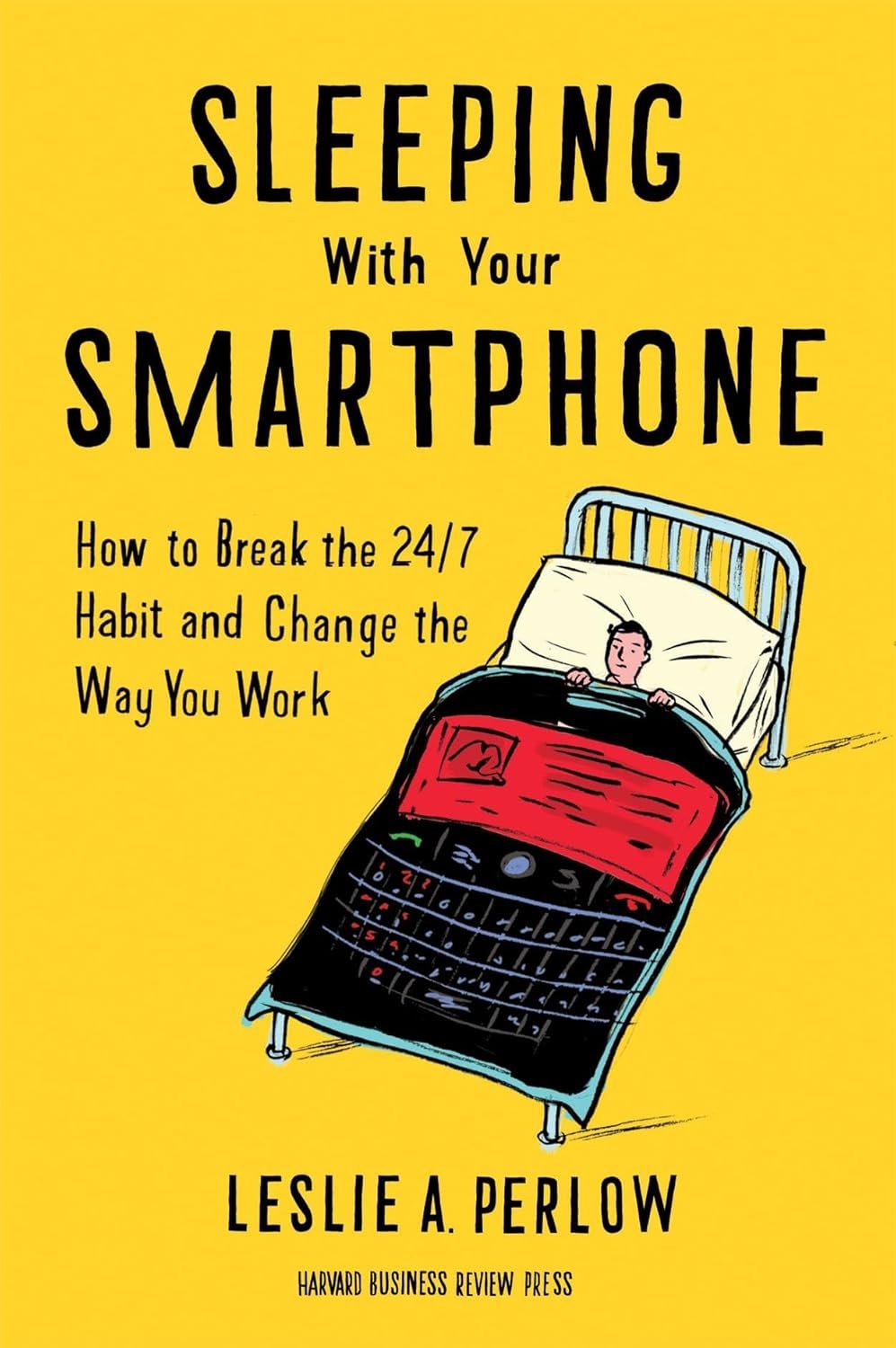
Sleeping with Your Smartphone by Leslie A. Perlow
In a world where our smartphones have become constant companions, Sleeping with Your Smartphone by Leslie A. Perlow offers a refreshing perspective on digital balance.
Structured learning (to deepen the practice):
→ Mindfulness Diploma Courses by Centre of Excellence (Trustpilot 4.9/5, CPD accredited). If you want to go beyond “I’m using my phone less” to “I’m building a genuinely present life,” structured mindfulness training locks it in. 6-10 weeks, flexible pacing, transforms how you relate to digital distraction.

Mindfulness Courses by the Centre of Excellence
Discover the power of the mindfulness diploma courses offered by the Centre of Excellence. These carefully structured programs are designed to guide you through the fundamentals of mindfulness, helping you cultivate a balanced, focused, and fulfilling life.
The Long-Term Payoff (Why This Matters)
People who complete a structured digital detox report:
✅ Sleep improvement: 15-40 minutes faster sleep onset, deeper REM sleep
✅ Focus recovery: 23 minutes → 5 minutes to regain focus (per USC research on attention recovery)
✅ Anxiety reduction: 30-40% drop in cortisol-triggered anxiety (measurable with Oura Ring or HRV tracking)
✅ Relationship depth: Real conversations replace performative digital presence
✅ Time reclaimed: 3-5 hours weekly, available for things that matter
The catch: this isn’t permanent after 30 days. Digital detox is not a destination; it’s a practice. You’ll slip. You’ll have work sprints requiring constant email. That’s fine. The system-the zones, the windows, the offline anchors-gives you a way back.
❓Frequently Asked Questions
How long does it take to actually feel the benefits?
Sleep improves in 3-5 days (once blue light stops suppressing melatonin). Focus starts improving around day 7-10. Anxiety reduction takes 2-3 weeks because your nervous system needs time to recalibrate. The real transformation-where presence feels natural, and screens feel less magnetic-happens around week 4. Don’t expect miracles on day 1.
What if my job requires constant email/Slack response?
Set a boundary: “I respond within 1 hour, during these 4 windows.” Communicate this to your team. Most will respect it; many will ask how you managed. The truth: constant availability doesn’t increase productivity-it tanks it. You’ll likely do better work in focused bursts than in a perpetual distraction state. If your job truly demands sub-minute response, that’s a job design problem, not a personal discipline problem. Consider whether that role serves your health.
How do I handle FOMO (fear of missing out)?
FOMO is a lie your brain tells you. You will miss some things. You will also gain the ability to remember conversations, sleep deeply, and exist without anxiety. That’s a better trade. One practice: write down three things you were afraid of missing in the last month. Did they actually matter? Spoiler: they didn’t. You retrained your brain in 30 days to distinguish signal from noise.
What’s the difference between “digital detox” and just “using your phone less”?
Willpower-based reduction (“use less”) fails 90% of the time because it’s friction-less and motivation-dependent. A digital detox is a system: tech-free zones, time windows, app blockers, offline anchors, and accountability. Systems work because they don’t depend on willpower-they depend on design.
Can I still use social media with a digital detox?
Yes, but with constraints. Move it to a tablet (friction). Use it in tech windows only. Set a timer. Or uninstall it and redownload during your allocated window (extreme friction, but effective). The goal isn’t abstinence-it’s intentionality. Are you choosing to scroll, or are you being pulled?
What if I live with family who doesn’t want tech-free zones?
Propose a trial: 2 weeks of dinner-table-only (no phones during meals). Show data: sleep improves, conversation deepens, everyone reports feeling more connected. Most families extend the experiment to bedrooms next. Change happens through demonstration, not mandate
Your Next Step: Start This Week
You now have five strategies, a 30-day plan, and specific tools.
The only variable left is you.
Pick one thing from this article-just one-and implement it this week:
- Move your charger out of your bedroom, or
- Establish one tech-free meal per day, or
- Download Freedom and block Instagram for 2 hours daily
Don’t overhaul everything. Small, specific changes compound into transformation.
The three hours you’ll reclaim weekly? That’s 156 hours yearly. That’s a second full-time job’s worth of attention, back in your hands. Use it on what matters.
Ready to go deeper? Explore these resources from The Dream Oak shop:
- Sleeping with Your Smartphone – the research-backed blueprint for reclaiming sleep
- Mindfulness Diploma Courses – lock in the practice structurally
- Muse Headband – real-time biofeedback for meditation
- Yoga Teacher Training – deepen your offline anchor activity
Learn, Help Family And Friends, And Help The Planet!





)