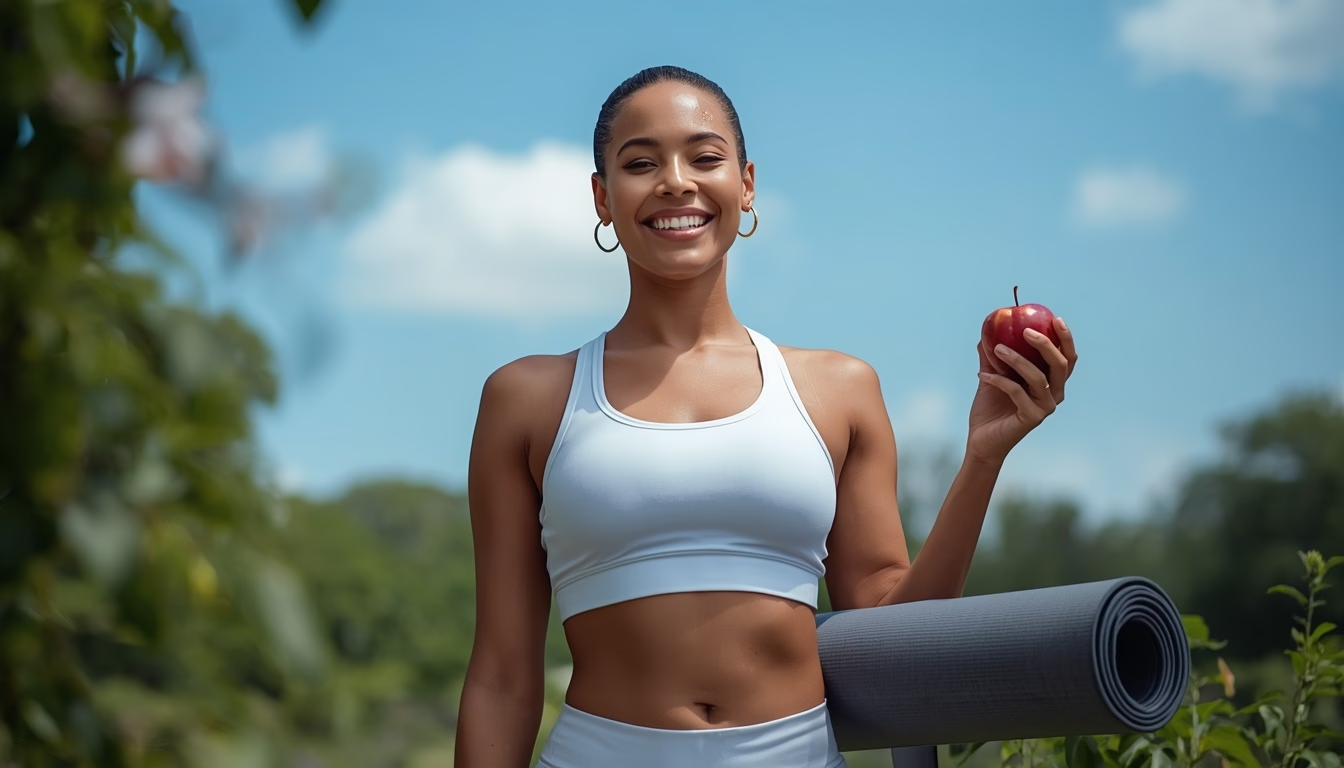
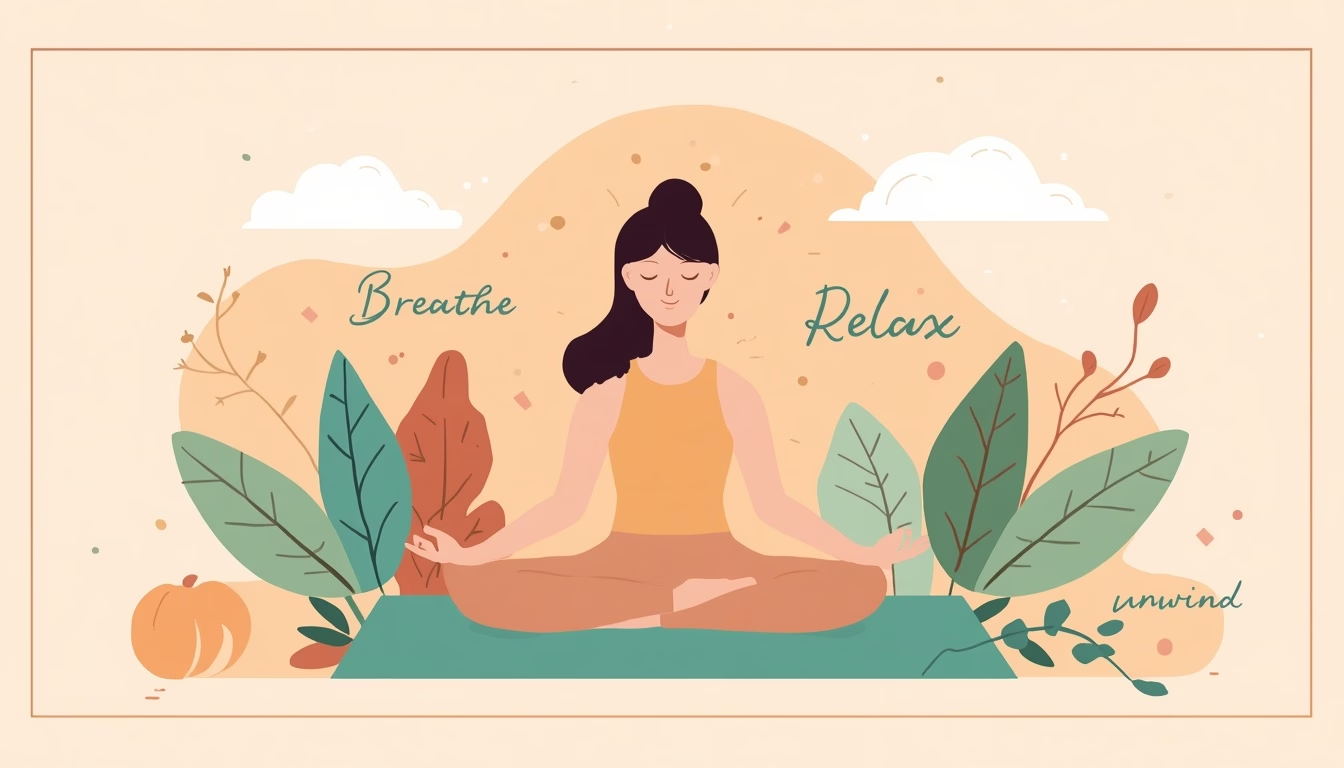
Yoga is not a performance of perfect flexibility. It is a practice of listening, adapting, and returning to yourself. 🧘🌿
Yoga is often shown through beautiful postures, peaceful studios, and exceptionally flexible bodies. That image can inspire us, but it can also make yoga seem inaccessible. You do not need to be young, athletic, spiritual, flexible, or experienced to begin. Yoga can meet you exactly where you are.
At its most useful, yoga combines movement, breathing, attention, relaxation, and self-awareness. It may support physical function, emotional regulation, mobility, balance, sleep, and a more compassionate relationship with the body. It is not a cure-all and should not replace medical or psychological care. The evidence is promising, but studies vary in the style of yoga, duration, population, and research quality. The most responsible conclusion is that yoga can be a valuable supportive practice within a broader approach to well-being.
🪷Benefits of Yoga for Your Well-Being
This guide explores five potential benefits, explains what research can – and cannot – tell us, introduces important figures in yoga’s modern history, and offers a practical way to begin. The goal is not to force your body into an impressive pose. The goal is to create a sustainable relationship with movement. ✨
Yoga, History, and the Whole Person
Yoga is not a single invention or a uniform exercise system. It developed through many centuries of South Asian philosophical, religious, contemplative, and physical traditions. Modern studio yoga is only one contemporary expression of a much broader history.
Patanjali is traditionally associated with the Yoga Sutras, a philosophical text that presents yoga as a discipline involving attention, ethical practice, meditation, and liberation – not simply stretching. Because the historical date and authorship are debated, it is more accurate to say that Patanjali is traditionally credited with compiling the text than to make claims of absolute certainty.
Swami Kuvalayananda (1883–1966) helped create a bridge between traditional yoga and modern physiological research through the Kaivalyadhama institution in India. Tirumalai Krishnamacharya (1888–1989) influenced several major modern lineages and emphasised adapting practice to the individual. B. K. S. Iyengar (1918–2014) became known for precision, alignment, sequencing, and the intelligent use of props. Indra Devi (1899–2002) was one of the early women to study with Krishnamacharya and helped introduce yoga to international audiences. T. K. V. Desikachar (1938–2016), Krishnamacharya’s son, further emphasised that yoga should be adapted to the person.
This history matters. A respectful practice recognises that yoga has cultural and philosophical roots rather than reducing it to a fashionable fitness aesthetic. It also explains why modern yoga includes such different approaches: movement, breath, meditation, relaxation, philosophy, and devotion.
That whole-person perspective connects yoga naturally with holistic living, where physical care, emotional awareness, purpose, relationships, and inner life are considered together.

Step into the world of personal growth with the Centre of Excellence!
1. Yoga May Help Reduce Stress and Support Emotional Regulation 🌬️
Stress involves the nervous system, breathing, muscle tone, attention, sleep, and behaviour. When stress becomes persistent, the body may remain prepared for danger even after an immediate threat has passed. You may notice shallow breathing, tense shoulders, digestive discomfort, a racing mind, or difficulty resting.
Yoga may help by combining gentle movement with slower breathing and deliberate attention. Instead of moving through the day while disconnected from physical sensations, you practise noticing pressure, fatigue, and tension without reacting automatically.
A systematic review published in Depression and Anxiety found promising evidence for yoga interventions in anxiety, while also highlighting limitations in the quality and consistency of the research. This supports careful language: yoga may help reduce anxiety symptoms for some people; it does not “cure anxiety.”
Research reference: Cramer and colleagues, “Yoga for Anxiety: A Systematic Review of the Research,” Depression and Anxiety. Read the research record on PubMed.
The U.S. National Center for Complementary and Integrative Health also describes yoga as a possible support for general well-being and stress management, while recommending appropriate instruction and individual adaptation. Read the NCCIH overview of yoga.
Yoga does not magically remove stress. It may help develop practical skills:
- recognising early signs of tension;
- slowing the breath;
- shifting attention away from repetitive worry;
- releasing unnecessary muscular effort;
- creating a predictable recovery ritual;
- responding to discomfort with less self-criticism.
Try this: Inhale gently for four counts and exhale for six, without straining. Repeat for one or two minutes. Stop if you feel dizzy or uncomfortable.
Yoga can complement therapy, social connection, time in nature, and mindfulness. Explore The Dream Oak’s mindfulness and meditation resources to continue developing present-moment awareness.
2. Yoga May Improve Mobility, Flexibility, and Body Awareness 🪷
Flexibility is not the same as health. Some people are naturally mobile but lack control or strength; others have limited range yet move comfortably. The practical aim of yoga is usable movement, not extraordinary bendiness.
Regular mobility work may help joints move through a comfortable range and reduce the sensation of stiffness. Yoga also develops proprioception – the ability to sense where your body is and how it is moving. This can be useful when working at a desk, returning to exercise, ageing, or noticing habits such as lifting the shoulders or locking the knees.
A safe approach distinguishes between productive effort and warning signs. A mild stretch sensation may be acceptable. Sharp pain, numbness, tingling, sudden weakness, or pain that worsens afterwards is a reason to stop and seek qualified advice.
Beginners often treat flexibility as a performance. They compare their forward fold with someone else’s and push harder. A better question is: Can I breathe comfortably and remain in control? If not, bend the knees, use a folded blanket, reduce the range, or choose another variation.
Useful beginner movements include cat-cow, supported child’s pose, a cushioned low lunge, gentle spinal rotation, and mountain pose. Move slowly enough to notice what changes from one breath to the next.
3. Yoga Can Contribute to Strength, Stability, and Balance 💪
Yoga is sometimes described only as stretching, yet many postures require muscular effort. Plank variations challenge the trunk and shoulders. Chair pose engages the legs. Warrior positions develop endurance and coordination. Balancing postures require concentration as well as strength.
A restorative practice will not provide the same stimulus as a vigorous flow. Yoga may contribute to strength, balance, coordination, and mobility, but many people will also benefit from walking, aerobic activity, and progressive resistance training.
The World Health Organization recommends a combination of aerobic activity and muscle-strengthening activity appropriate to a person’s age and ability. Read the WHO physical activity guidelines.
To build stability safely, prioritise quality over duration. Hold a modified plank for ten seconds with steady breathing rather than collapsing through a longer hold. Practise standing on one foot near a wall. Use blocks instead of reaching aggressively toward the floor. A prop is not failure; it is support and useful information.
People with injuries, osteoporosis, joint conditions, pregnancy-related needs, or significant balance limitations should adapt practice with guidance from an appropriately qualified professional.
4. Yoga May Support Sleep and Recovery 🌙
Sleep is influenced by stress, light exposure, routines, health conditions, medication, environment, and many other factors. Yoga cannot solve every sleep problem, but gentle evening practice may help the transition from alertness to rest.
Try legs supported on a chair, a gentle twist, constructive rest with the knees bent, and a few minutes of relaxed breathing. Keep the lights low and avoid turning the practice into another performance goal.
Research on yoga and sleep is encouraging but not conclusive. Some reviews report improvements in self-reported sleep quality, particularly among people experiencing stress or older adults. That does not mean yoga treats insomnia or sleep apnoea. Loud snoring, waking gasping, severe daytime sleepiness, and persistent insomnia deserve professional assessment.
Yoga works best alongside broader sleep habits: a consistent schedule, a cool and dark bedroom, sensible caffeine timing, daylight exposure, and a wind-down period. If technology is interfering with rest.
5. Yoga Can Strengthen Mindfulness and Self-Compassion ❤️
Mindfulness means paying attention to present experience with greater openness and less automatic judgement. Yoga offers a moving laboratory for this skill. You notice the breath, the contact between your feet and the floor, the urge to push, the impulse to compare, and the thoughts that appear when a posture becomes challenging.
Sometimes yoga reveals frustration, sadness, impatience, or fatigue. That awareness can still be useful. You learn that an emotion is an experience – not necessarily an instruction.
Self-compassion is equally important. Many people approach exercise through criticism: “I am weak,” “I am stiff,” or “I should be better.” Yoga can encourage a different relationship with the body, in which progress includes listening, adapting, resting, and returning.
End each practice with three questions:
- What did I notice in my body?
- What did I need today?
- What would make my next practice kinder and more realistic?
This connects yoga with mind and mindset and purpose and growth. The practice becomes less about collecting difficult postures and more about learning how to meet yourself.
Step into the world of personal growth with the Centre of Excellence!
Choosing a Yoga Style
Hatha Yoga
Hatha classes often move at a slower pace and may suit beginners learning foundational postures, breathing, and alignment.
Vinyasa Yoga
Vinyasa links movement with breath and may be demanding. Beginners should look for gentle, beginner, or foundations classes.
Yin Yoga
Yin involves longer, supported holds and may feel meditative. It is not simply “better stretching,” and long holds can be unsuitable when joints are pushed too far.
Restorative Yoga
Restorative practice uses props to support the body in restful positions. It may suit recovery, relaxation, or low-intensity days.
Iyengar-Inspired Practice
This approach emphasises alignment, precision, sequencing, and props. It may appeal to people who appreciate detailed instruction.
Yoga Nidra
Yoga Nidra is guided relaxation practised lying down or in a supported position. It can be a gentle entry point for people not ready for active movement.
How to Begin a Sustainable Practice
Start with ten minutes twice a week. A practice that fits your life is more valuable than an ambitious plan you abandon.
Choose safety over appearance. Use a wall, chair, blocks, blankets, or a strap. Keep your breathing smooth and avoid forcing range.
Look for teachers who explain modifications, welcome different bodies, and avoid promising medical cures. Online classes can work well when they are clearly labelled and responsibly taught.
You need enough room to extend your arms and lie down. A non-slip mat may improve confidence, although equipment is optional. If you choose to invest in one, explore the Complete Unity Yoga mat collection.
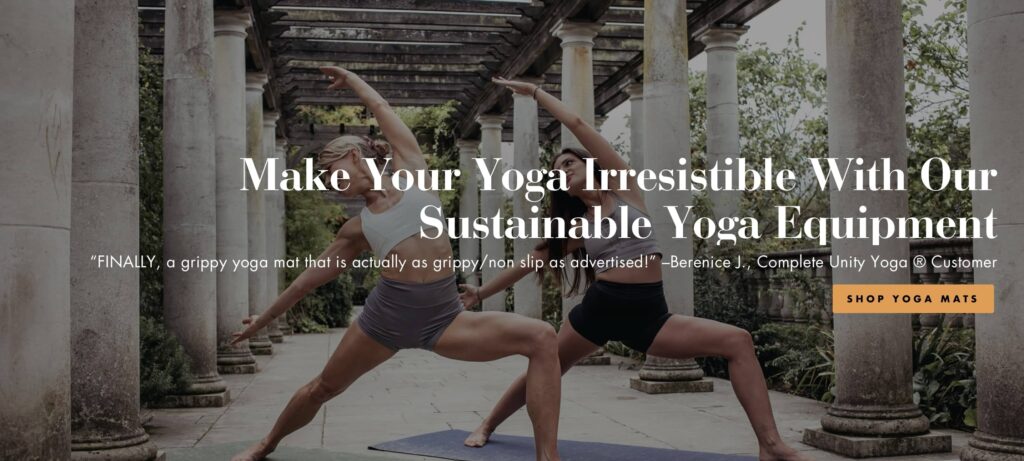
Complete Unity Yoga Mats: Support Your Yoga and Mindfulness Practice
Complete Unity Yoga® mats feature revolutionary CompleteGrip™ technology – a non-slip jute surface that grips with every pose, eliminating frustrating mat adjustments during practice. Made from sustainable, eco-friendly materials and trusted by over 20,000 yogis worldwide, these premium mats deliver confidence and stability whether you’re a beginner or an advanced practitioner. Available in 4mm studio mats (~$108), lightweight 2mm travel mats (~$95), or complete beginner sets with accessories (~$191). Featured in Vogue, The Guardian, and trusted by Netflix, Warner Bros., and L’Oréal. Every mat comes with a slip-free guarantee – experience the difference an unslipping mat brings to your practice.
Track how you feel afterwards. Do not measure success only by flexibility. Notice energy, mood, sleep, balance, and willingness to return.
A Gentle Seven-Day Reset
Day 1 – Arrive: breathing and gentle shoulder movement.
Day 2 – Mobilise: cat-cow, supported child’s pose, low lunge, and easy rotation.
Day 3 – Strengthen: modified plank, chair pose, bridge, and supported balance.
Day 4 – Recover: legs on a chair, supported rest, and slow breathing.
Day 5 – Flow: mountain pose, forward fold, half lift, low lunge, and gentle standing poses.
Day 6 – Reflect: notice comparison, tension, and self-talk.
Day 7 – Choose: repeat the session that felt most supportive and write down one next step.
Common Mistakes to Avoid ⚠️
- Treating pain as proof that the practice is working.
- Copying advanced poses without understanding the movement.
- Holding the breath during effort.
- Practising intensely every day without recovery.
- Believing yoga replaces professional care.
- Choosing a style because it is fashionable rather than suitable.
- Comparing your body with photographs online.
Step into the world of personal growth with the Centre of Excellence!
A Note on Research, Tradition, and Responsible Claims
The evidence supports cautious optimism. Yoga may help with perceived stress, anxiety symptoms, mobility, balance, physical function, sleep quality, and mindfulness. The size of the benefit varies, and yoga should not be presented as a universal treatment.
The historical context also matters. Yoga includes philosophy, meditation, breath, ethics, and cultural traditions alongside postures. Modern teachers and students can honour that background by avoiding exaggerated claims, learning from credible sources, using respectful language, and making classes accessible to different bodies and abilities.
For further reading, consult the NCCIH yoga overview, the PubMed review on yoga and anxiety, the WHO physical activity guidelines, and the Kaivalyadhama research institution, founded by Swami Kuvalayananda, at Kaivalyadhama.
Yoga Teacher Training Diploma Course: Build a Foundation for Teaching Yoga
If you’re passionate about yoga and looking to deepen your practice, the Yoga Teacher Training Diploma Course by the Centre of Excellence is the perfect fit. This comprehensive program is designed to equip you with the knowledge and skills to teach yoga with confidence.
Final Reflection
The benefits of yoga are not limited to flexibility or appearance. A thoughtful practice may support stress regulation, mobility, strength, sleep, attention, and a more compassionate relationship with the body. The strongest benefit may be continuity: returning, noticing, adapting, and learning.
You do not need to transform your entire life in one session. Put a mat – or a folded blanket – somewhere visible. Take three unhurried breaths. Move within a comfortable range. Let the practice be modest enough to repeat.
Continue exploring The Dream Oak’s holistic living guide, alongside physical and mental well-being, vitality and wellness. 🌳
❓Frequently Asked Questions
Do I need to be flexible to start yoga?
No. Flexibility is an outcome that may develop gradually, not an entry requirement.
How often should beginners practise?
Two or three short sessions per week is a realistic starting point. Consistency matters more than exhausting sessions.
Can yoga reduce anxiety?
It may support stress management and reduce anxiety symptoms for some people, especially alongside appropriate professional care. It is not a guaranteed treatment or replacement for therapy.
Is yoga enough for strength training?
Some yoga styles build strength, balance, and endurance. Depending on your goals, you may also benefit from progressive resistance training and aerobic activity.
What should I do if a pose hurts?
Stop or reduce the movement. Sharp pain, numbness, tingling, or sudden weakness should not be ignored.
Can yoga help with sleep?
Gentle yoga and relaxation may support sleep quality for some people. Persistent or severe problems should be assessed professionally.
Is yoga spiritual?
Yoga has spiritual and philosophical roots, but modern classes vary. You can approach it as movement, breathwork, meditation, spiritual practice, or a combination.
📚References and Biographical Sources
- National Center for Complementary and Integrative Health. “Yoga: What You Need to Know.” U.S. National Institutes of Health.
- Cramer, H., Lauche, R., Anheyer, D., Pilkington, K., de Manincor, M., Dobos, G., and Ward, L. “Yoga for Anxiety: A Systematic Review of the Research.” Depression and Anxiety.
- World Health Organization. WHO Guidelines on Physical Activity and Sedentary Behaviour. 2020.
- Kaivalyadhama. Institutional history and research on yoga and physiology.
- Iyengar, B. K. S. Light on Yoga. HarperCollins.
- Desikachar, T. K. V. The Heart of Yoga: Developing a Personal Practice. Inner Traditions.
- Feuerstein, Georg. The Yoga Tradition: Its History, Literature, Philosophy and Practices. Hohm Press.
Educational note: This article is for general information and is not medical advice. If you have a health condition, injury, pregnancy-related concern, or unusual symptoms, seek guidance from an appropriately qualified professional before beginning or changing an exercise programme.
Learn, Help Family And Friends, And Help The Planet!