What Is Feng Shui? The Ancient Science of Energy Flow Explained
Over 4,000 years ago, the Chinese developed a sophisticated system for understanding how energy flows through our environment and affects our well-being. That system is feng shui, a practice that remains remarkably relevant today.
In the West, we’re only recently waking up to what Eastern cultures have known for millennia: your environment isn’t just a backdrop. It’s an active force shaping your mood, relationships, health, and success.
This guide will walk you through the science and practice of feng shui, showing you exactly how to harness positive energy flow for a better life, starting in your home today.
🏡The Complete Guide to Feng Shui
The Translation: Wind, Water, and the Principle Behind It All
The word “feng shui” breaks down: feng means wind, shui means water.
These aren’t random. Wind and water are two of nature’s most powerful forces. They flow, move, and circulate everywhere. They’re invisible, yet they shape everything they touch: weather patterns, landscapes, seasons, and ultimately, how we live.
The deeper principle: Feng shui is about recognizing that you are not separate from your environment. You exist within it. Your space shapes you, and you shape your space. This exchange is continuous.
In Chinese philosophy, this principle is called Tao, “the way”, a reflection of how nature operates. Feng shui applies this understanding to the built environment: your home, office, garden, and every space you inhabit.
The Science Behind Feng Shui: Qi (Chi) and Energy Flow
At the heart of feng shui is a single concept: qi (pronounced “chee”), the life force that flows through all living and inanimate objects.
Think of qi like electricity flowing through wires. When it flows freely and unobstructed, everything works. Lights shine, devices function, and energy is distributed evenly.
When qi is blocked or stagnant, everything suffers.
In your home:
- Free-flowing qi = calm, focused energy, good relationships, vitality.
- Blocked or chaotic qi = stress, difficulty sleeping, relationship tension, lack of clarity.
The goal of feng shui is not to create qi; it’s already there. The goal is to optimize its flow, removing obstacles and directing it toward areas of your life where you need support.
How Does Qi Flow Through Your Home?
Qi enters through doorways and windows. It travels along pathways, settles in certain zones, and exits through other openings. If furniture blocks these pathways, if doors are cluttered, or if rooms are too dark or cramped, qi becomes stuck.
Think about how you feel in different spaces:
- A cluttered room makes you feel anxious.
- A well-lit, organized space calms your nervous system.
- A room with plants feels alive; an empty room feels sterile.
That’s qi. And it’s absolutely real.
Modern research supports this. Studies show that organized environments reduce cortisol levels (a stress hormone), improve focus, and enhance sleep quality. The feng shui principles developed over 4,000 years encode this knowledge in practical form.
The Five Elements: Understanding Energy Patterns
Each of the five elements carries distinct energy that affects different areas of your life. Below is a complete visual guide to each element-its colors, shapes, and associations.
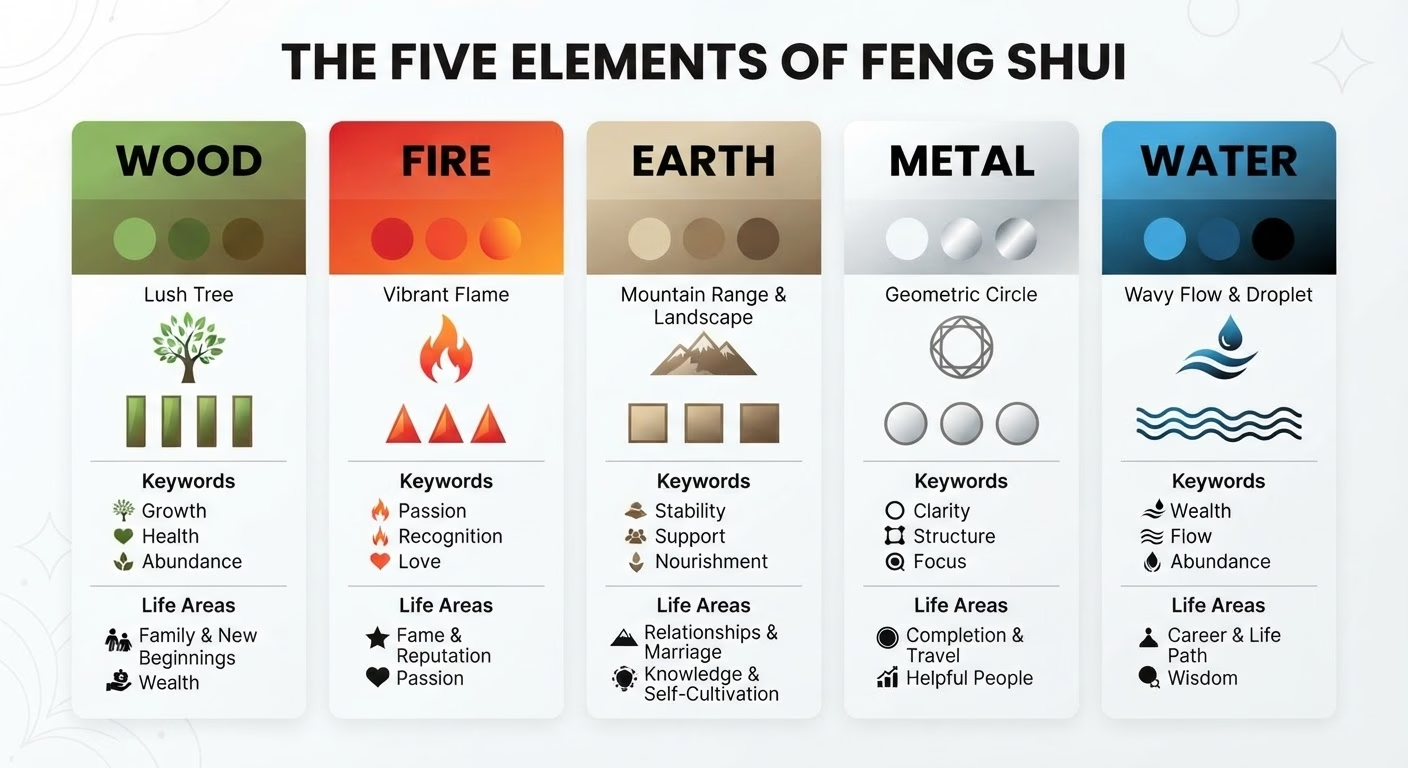
Feng shui categorizes all energy into five basic elements. Each element has different qualities, colors, shapes, and effects on your well-being.
Understanding these elements is the foundation of feng shui practice.
1. Wood: Growth, Health & Abundance🪵
What it represents: New growth, expansion, health, vitality, flexibility.
Colors: Green and brown.
Shapes: Tall, columnar, vertical.
Associated areas: Wealth, family, health, new beginnings.
How to bring wood energy into your home:
- Place plants throughout your living space (the easiest and most impactful practice).
- Use green and brown in pillows, throws, and artwork.
- Incorporate wooden furniture.
- Display images of forests, trees, or lush landscapes.
Why it matters: If you’re starting a new project, looking for better health, or want to invite abundance, wood energy is grounding and growth-oriented.
Example: A client felt stuck in her career. She added a large green plant to her home office (wealth corner) and hung a landscape painting of a thriving forest. Within two months, she was offered a promotion.
2. Fire: Passion, Recognition & Love🔥
What it represents: Passion, energy, fame, recognition, transformation, joy.
Colors: Red, bright orange, bright yellow, pink, purple.
Shapes: Pointed, triangular, star-shaped.
Associated areas: Fame, recognition, career passion, love, celebration.
How to bring fire energy into your home:
- Use candles (the most direct representation of fire).
- Incorporate red, orange, or bright yellow accents, pillows, artwork, and throws.
- Add bright lighting (especially in dull spaces).
- Display images of sunsets, fireplaces, or vibrant scenes.
- Use triangular shapes in décor.
Why it matters: Fire energy is warm, energizing, and transformative. It’s about being seen and celebrated.
Example: A shy person wanting to build confidence placed red throw pillows on her living room sofa and added a beautiful candle as a focal point. She reported feeling more outgoing and noticed others responding to her differently.
3. Earth: Stability, Nourishment & Support🌳
What it represents: Stability, grounding, nourishment, care, support, centering.
Colors: Beige, tan, ochre, brown.
Shapes: Square, flat, grounded.
Associated areas: Health, relationships, self-care, home, family.
How to bring earth energy into your home:
- Use earth-toned colors in bedrooms and family spaces.
- Add pottery, ceramics, or clay objects.
- Include images of landscapes, mountains, or earth scenes.
- Use natural materials: stone, clay, terracotta.
- Create grounding focal points (like a central coffee table).
Why it matters: Earth energy is the foundation. It supports everything else. Without it, spaces feel cold or chaotic.
Example: A family constantly arguing implemented earth energy by repainting the living room in warm beige, adding family photos in neutral frames, and using a large, solid wooden table as the central gathering point. The space became noticeably calmer.
4. Metal: Clarity, Structure & Productivity⛓️
What it represents: Clarity, focus, structure, precision, strength, completion.
Colors: White, gray, silver, metallic.
Shapes: Round, circular, oval.
Associated areas: Clarity, organization, precision, money, productivity.
How to bring metal energy into your home:
- Use white, gray, or silver in your workspace.
- Incorporate metal frames, mirrors, or metallic accents.
- Add geometric, round shapes.
- Use clean lines and minimal decoration.
- Bring in cool-toned lighting.
Why it matters: Metal energy cuts through clutter and confusion. It’s perfect for home offices, study areas, or spaces where you need focus.
Example: A creative person struggling with procrastination added white walls, metal shelving, and a minimalist desk setup. The clarity helped her finish three projects that had been sitting incomplete for months.
5. Water: Wealth, Renewal & Flow🌊
What it represents: Wealth, abundance, renewal, flow, wisdom, ease, communication.
Colors: Blue, black, deep tones.
Shapes: Wavy, flowing, organic.
Associated areas: Wealth, career, communication, abundance, ease.
How to bring water energy into your home:
- Add a small water fountain or aquarium.
- Use blue and black in décor and artwork.
- Display images of water: oceans, rivers, rain.
- Use flowing, organic shapes.
- Incorporate reflective surfaces (mirrors, glass).
Why it matters: Water energy invites abundance and ease. It’s not about struggling to achieve; it’s about allowing good things to flow toward you.
Example: An entrepreneur added a small desktop fountain near her front door (entry point for opportunity), combined with a blue painting of flowing water. Her business revenue increased by 40% within six months.
The Bagua Map: Mapping Your Life Areas
The Bagua is Feng Shui’s most practical tool. This octagonal map divides your space into nine sections, each corresponding to a different life area. To use it, align the ‘entry’ side (where you walk in) with the bottom of your floor plan, then identify which zones match which areas of your home.
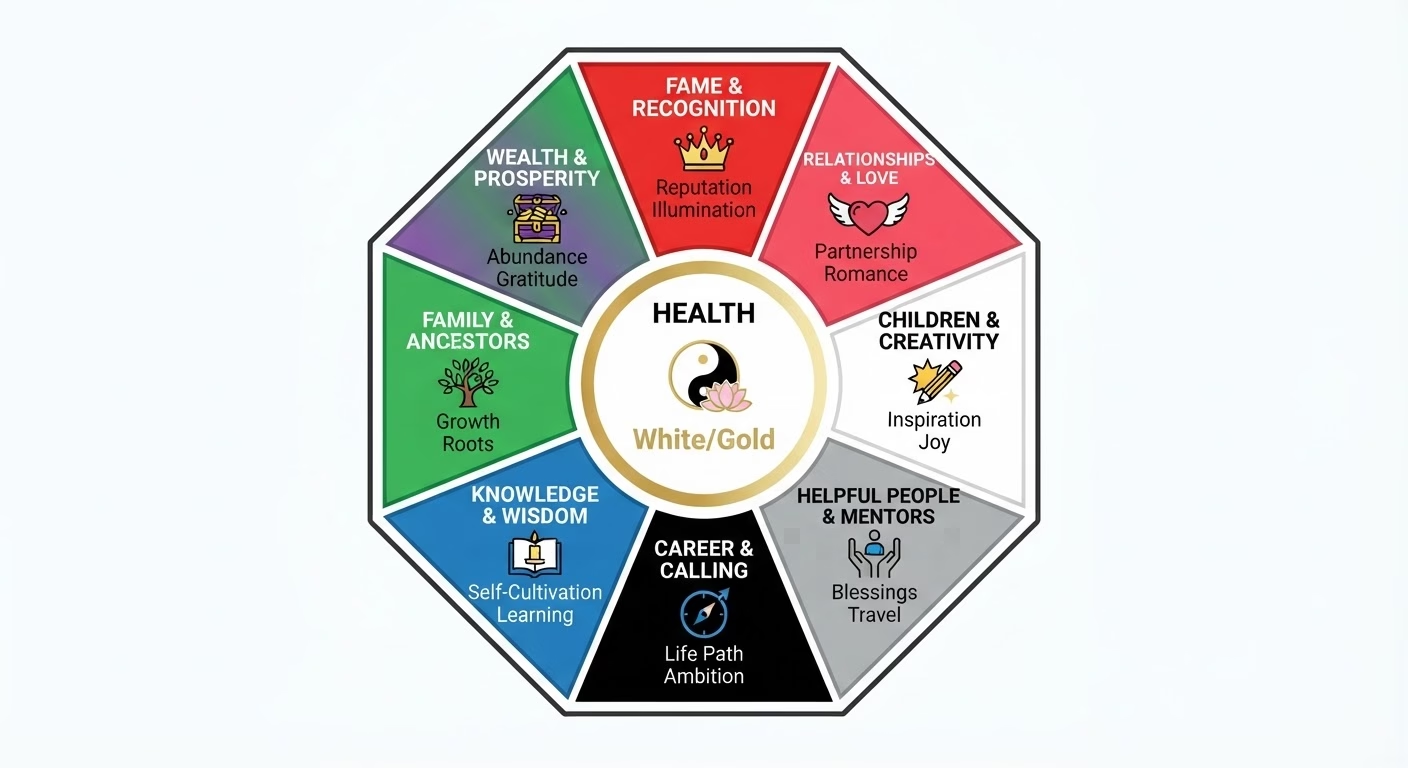
The Bagua is feng shui’s most practical tool. It’s a map divided into nine sections, each corresponding to a different life area.
To use the Bagua:
- Draw your floor plan – Start with your home or a single room.
- Overlay the Bagua map – Align the “entry” side (where you walk in) with the bottom of your plan.
- Identify the nine zones:
- Wealth (back left) – Abundance and prosperity.
- Fame (back center) – Recognition and reputation.
- Relationships (back right) – Romantic love and partnerships.
- Family (middle left) – Family harmony and ancestors.
- Health (center) – Physical and mental wellness.
- Children (middle right) – Creativity and legacy.
- Career (front center) – Work and calling.
- Knowledge (front left) – Learning and wisdom.
- Helpful People (front right) – Support and mentorship.
Practical example:
Your bedroom is in your “relationships” zone. Here, you’d want to:
- Use warm, welcoming colors (reds, pinks, warm tones).
- Include symbols of partnership (pairs of objects, romantic imagery).
- Remove anything solitary or isolating.
- Use soft, comfortable materials.
This isn’t magic. It’s psychology. Surrounding yourself with symbols and colors associated with relationships naturally orients your energy toward connection.
The Command Position: The Single Most Important Principle
If you apply only one feng shui principle, make it this one: the command position.
The command position is where you place the furniture you use most: your bed, desk, or sofa. The principle is simple:
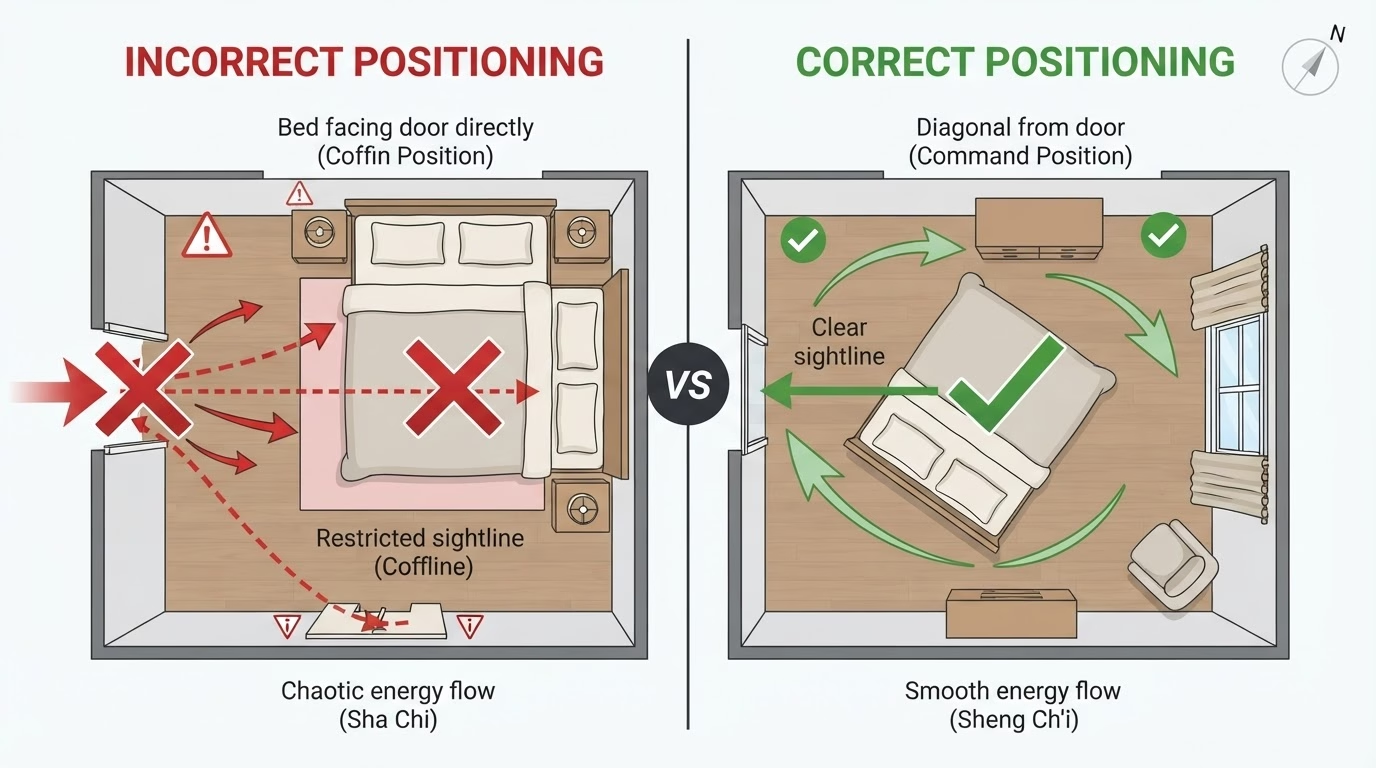
From your command position, you should be able to see the entrance to the room without being directly in line with the door.
Ideally, position yourself diagonally from the doorway so you have a clear, diagonal sightline to the entry.
The diagram below shows the difference between poor command position (left) and ideal command position (right). Notice how the correct positioning gives you a clear, diagonal view of the door without being directly in line with it.
Why This Matters
From a neurological perspective, humans are alert to threats. When you can’t see who’s entering, your nervous system stays slightly activated. Your body senses vulnerability.
When you can see the door, you feel in control. Safe. This affects everything:
- Sleep quality (if your bed is in the command position, you sleep deeper).
- Focus (if your desk is in command position, you concentrate better).
- Relationships (if your sofa is in command position, conversations feel more comfortable).
Practical Implementation
For the bedroom:
- Avoid placing your bed directly opposite the door (too direct, energy blasts straight through).
- Avoid placing your bed under a window (energetically draining).
- Position your bed so you can see the door from your pillow without craning your neck.
For the office:
- Your desk should face the door or be positioned so you can see it from your peripheral vision.
- Avoid sitting with your back directly to the door (creates tension).
- If your workspace is against a wall, add a mirror to reflect the door into your sightline.
For the living room:
- Your sofa should allow you to see the main entrance without being directly in line with it.
- If impossible, add a mirror to expand sightlines.
This one change alone often produces immediate results in sleep quality, stress levels, and focus.
Practical Feng Shui Tips You Can Implement Today
In the Bedroom (Health & Relationships)
- Remove clutter under the bed – Restricts energy flow while you sleep.
- Use soft, calming colors – Blues, soft greens, muted earth tones.
- Place plants or fresh flowers – Living energy supports regeneration.
- Position the bed in command position – See the door from your pillow.
- Avoid mirrors facing the bed – Can be energetically disturbing at night.
- Use soft, quality bedding – Your sensory environment affects sleep.
Result: Most people report a 30-50% improvement in sleep quality within two weeks of these changes.
In the Kitchen (Health & Abundance)
- Keep appliances clean and functional – Broken appliances block prosperity energy.
- Use warm colors – Reds, oranges, yellows stimulate appetite and joy.
- Ensure good lighting – Dark kitchens feel depressing.
- Place plants or fresh herbs – Symbolizes fresh, vital energy.
- Keep the entrance clear – Don’t block the flow of abundance into your home.
Result: Kitchens are where nourishment happens. A well-organized, bright kitchen naturally makes you cook and eat better.
In the Office (Career & Clarity)
- Position desk in command position – See the door, maintain control.
- Use white, gray, or metal accents – Brings clarity and focus.
- Minimize clutter – Every object should serve a purpose.
- Add plants for growth energy – Especially in the wealth corner (back left).
- Ensure good lighting – Bright, natural light is ideal.
- Display images of success – Surroundings shape thinking.
Result: People report 20-40% increases in productivity after implementing command position alone.
In the Entryway (First Impression & Opportunity)
- Keep it clean and organized – This is where opportunity enters.
- Ensure good lighting – Bright, welcoming energy.
- Add a mirror – Expands the space, reflects positive energy into the home.
- Include something living – A plant or flowers invites vitality.
- Remove shoes, clutter, or obstacles – Create a smooth transition.
Result: A clear, bright entryway naturally makes you feel more optimistic and open to possibility.

Step into the world of learning and personal growth with the Centre of Excellence!
Common Feng Shui Mistakes (And How to Fix Them)
Mistake 1: Over-Cluttering with Feng Shui Objects
Many people think feng shui means filling their space with crystals, wind chimes, and lucky symbols.
The reality: Feng shui is about clearing space, not filling it. Too many objects create clutter, which blocks energy flow.
Fix: Choose 2-3 meaningful items that support your intention. Quality over quantity.
Mistake 2: Fighting Your Layout
Some homes have layouts that don’t naturally support command position or ideal Bagua alignment.
The reality: You can’t fight physics. If your bedroom door opens directly onto your bed, you can’t force it otherwise. Work with your space.
Fix: Use mirrors, screens, or plants to redirect energy flow. Adjust what you can; accept what you can’t.
Mistake 3: Ignoring the Practical Fundamentals
You can’t feng shui your way out of a moldy, broken-down space.
The reality: A leaking faucet, broken appliances, or cracked windows literally drain your prosperity energy.
Fix: Handle maintenance first. Then add feng shui refinements.
Mistake 4: Expecting Instant Magic
Feng shui is a tool for aligning yourself with positive patterns. It’s not a miracle.
Reality: Change comes from consistent practice and intention combined with practical action.
Fix: Implement changes, then give them 21-30 days. Notice subtle shifts in mood, sleep, focus, and relationships. That’s how you’ll know it’s working.
Going Deeper: The Feng Shui Diploma Course
If feng shui resonates with you, if you’re feeling the truth in these principles, there’s a path to deeper understanding.
The Feng Shui Diploma Course from the Centre of Excellence is a comprehensive, accredited program that takes you from these fundamentals to genuine mastery.
What You’ll Learn
Over 10 detailed modules, you’ll explore:
✓ Advanced principles – Eight House feng shui, Flying Star techniques, time-based energy shifts.
✓ Room-by-room optimization – Customized approaches for bedroom, kitchen, office, and every space.
✓ Bagua mastery – How to draw and interpret Bagua maps for maximum impact.
✓ Elemental balance – How to combine the five elements strategically.
✓ Professional application – Start a feng shui consulting business or transform spaces for others.
Why This Course Matters
- CPD accredited – Recognized professional qualification.
- 2,800+ students – Proven, trusted methodology.
- Lifetime access – Revisit modules anytime.
- £127 investment – Or included in CoE membership (£16/month for 700+ courses).
- Flexible learning – Study on any device, at your own pace.
What Happens After
Graduates report:
- Personal transformation – Homes become sanctuaries instead of just spaces.
- Business potential – Some start consulting practices; others enhance their existing services.
- Authority & confidence – Understanding feng shui deeply gives you a framework for all design and life decisions.
- Practical mastery – You go from “I like these principles” to “I can apply this anywhere”.
Explore the Feng Shui Diploma Course →
Feng Shui Diploma Course: Learn the Principles of Intentional Living Spaces
Discover the transformative effects of the ancient practice of Feng Shui with our comprehensive Diploma Course offered by the Centre of Excellence. This program is designed to guide you through the essential principles and techniques that will enhance your environment and well-being.
❓Frequently Asked Questions:
Is feng shui real, or is it just superstition?
Feng shui combines ancient wisdom with observable psychology and neuroscience. A well-organized space with good lighting and clear sightlines genuinely affects your nervous system, sleep, focus, and mood. Whether you attribute this to “qi flow” or “environmental psychology,” the effects are real.
Do I need to believe in feng shui for it to work?
No. You can be skeptical and still benefit. Start with the command position principle alone; it’s pure ergonomics and psychology. If your sleep and focus improve, you’ll understand why.
Can I apply feng shui to a small apartment or rented space?
Absolutely. In fact, feng shui works better in smaller spaces because every adjustment has proportionally more impact. And most feng shui changes- plants, lighting, color, and furniture placement are renter-friendly.
What’s the fastest way to see results?
1. Clear clutter from your bedroom and entryway.
2. Position your bed and desk in command position.
3. Add one plant to your living space.
4. Ensure good lighting throughout.
Do these four things, and most people notice shifts in sleep, mood, and clarity within 2-4 weeks.
Is feng shui only for believers in Eastern philosophy?
No. Feng shui is a practical system. You don’t need to believe in qi or Taoism to benefit. The principles work because they’re grounded in human neurology and environmental psychology, universal truths, not cultural ones.
The Bottom Line: Energy Flow Starts With You
Your environment is not neutral. Every room you spend time in, every object you see, every color and light pattern- these shape you.
The beautiful part? You have complete power to redesign your environment. You don’t need expensive renovations or mystical knowledge. You need understanding and intentional action.
Feng shui gives you both.
Start today:
- Identify one room where you spend the most time.
- Position your command piece (bed, desk, or sofa) so you can see the door.
- Add one plant or improve the lighting.
- Notice what changes in how you feel over the next 30 days.
That’s feng shui. That’s energy flow. That’s a better life starting right now.
Ready to Transform Your Space?
If these principles spark something in you, if you want to understand feng shui deeply enough to transform your entire life, the Feng Shui Diploma Course is your next step.
Learn from accredited experts. Study at your own pace. Get lifetime access to a system that works across cultures, generations, and circumstances.
Start Your Feng Shui Journey Today →
Feng Shui Diploma Course: Learn the Principles of Intentional Living Spaces
Discover the transformative effects of the ancient practice of Feng Shui with our comprehensive Diploma Course offered by the Centre of Excellence. This program is designed to guide you through the essential principles and techniques that will enhance your environment and well-being.
About The Dream Oak
The Dream Oak is your guide to holistic living, practical wisdom for transforming your mind, body, and soul. From feng shui to meditation, from wellness practices to personal growth, we help you build a life of intention, balance, and genuine fulfillment.
Every article. Every resource. Every recommendation is grounded in evidence and tested by real people living real lives.
📒Related Reading on The Dream Oak
- Body, Mind, and Soul For A Fulfilled Life
- Morning Routine for Mental Health and Productivity
- Meditation for Anxiety: Science-Backed Techniques & Daily Practices
- Mindfulness Meditation: Brain Science, Daily Practices & How to Build Lasting Focus
Learn, Help Family And Friends, And Help The Planet!