❔ What is the soul?
Few words carry as much emotional, religious, and philosophical weight as soul.
For some people, the soul is an immortal essence God created. For others, it refers to consciousness, moral identity, inner life, or the part of a person that feels most deeply connected to meaning. Some traditions reject the idea of a permanent soul altogether, while still describing continuity, compassion, awareness, liberation, or spiritual transformation.
Science has not produced one universally accepted definition of the soul. Neuroscience can investigate consciousness, memory, perception, emotion, agency, and selfhood. It cannot, by experimental measurement alone, settle every metaphysical question about transcendence or life after death.
That does not make the question irrelevant. It means we need intellectual honesty. The soul can be explored through several lenses without pretending that one method answers every kind of question:
- Historical: How have cultures described the soul?
- Philosophical: Is mind distinct from matter?
- Religious: What is the soul’s origin, purpose, and destiny?
- Scientific: What can research say about consciousness and subjective experience?
- Existential: How should we live if life is finite, sacred, or interconnected?
The soul’s fascination may lie precisely in this borderland between what can be measured and what humans experience as meaningful. ✨
The Concept of the Soul
The soul in the history of human thought
Ancient Egypt: multiple dimensions of personhood
Ancient Egyptian thought described the person through several components, including the ka, often associated with life force or vital essence, and the ba, associated with personality and mobility between realms. These ideas were connected to ritual, death, memory, social identity, and the maintenance of cosmic order.
The Egyptian example reminds us that “the soul” has never referred to one universal object. It can describe a layered model of personhood.
Ancient Greece: psyche, reason, and life
In Greek thought, psyche could mean breath, life, mind, or soul. Plato described the soul as an immortal reality with rational, spirited, and appetitive dimensions. Aristotle’s account was more embodied: the soul was not simply a passenger inside the body but the form or organising principle of a living being.
This difference anticipates a debate that continues today. Is consciousness something separate from the physical organism, or is it an emergent expression of an organised living system?
South Asian traditions: Atman, rebirth, and liberation
Hindu philosophical traditions often discuss Atman, the deepest self, in relation to Brahman and liberation (moksha). The relationship between individual self and ultimate reality varies among schools.
Buddhist traditions are more cautious about a permanent, independent soul. The doctrine of anatta, or non-self, examines the changing, conditioned nature of experience. What we call “self” may be a dynamic process rather than an eternal substance.
These traditions should not be flattened into one category called “Eastern spirituality.” Their metaphysical claims, practices, and interpretations differ considerably.
Abrahamic traditions: soul, moral life, and divine relationship
Christian, Jewish, and Islamic traditions contain diverse understandings of soul, spirit, life, moral agency, resurrection, and relationship with God. The soul may be associated with personhood, accountability, divine origin, or destiny, but interpretations vary among denominations, scholars, and cultures.
A responsible article should avoid presenting one religious interpretation as the universal Christian, Jewish, or Muslim position.

Unparalleled online learning experiences, New Skills Academy!
Philosophical models of the soul
Substance dualism
Substance dualism proposes that the mind or soul is fundamentally distinct from physical matter. René Descartes is commonly associated with a version of this view, although contemporary scholarship debates how accurately simplified “mind versus body” summaries represent his work.
Dualism offers an intuitive explanation for the feeling that subjective experience cannot be reduced to physical description. Its challenge is interaction: how does an immaterial mind influence a material brain and body?
Physicalism and emergent consciousness
Physicalist approaches hold that mental life depends on physical processes. On this view, consciousness may emerge from sufficiently complex neural activity, even if we do not yet understand the mechanisms fully.
Physicalism does not necessarily deny the depth of love, morality, or spiritual experience. It interprets them as dimensions of embodied human life rather than evidence of a separate substance.
Monism and embodied mind
Monist and embodied approaches treat mind and body as aspects of one integrated process. Contemporary cognitive science often investigates how brain, body, environment, relationships, language, and culture interact to shape experience.
This perspective has practical implications. If identity is embodied and relational, sleep, trauma, pain, attachment, movement, social belonging, and environment are not peripheral to the “soul”; they are part of the conditions through which a person experiences selfhood.
Panpsychism and other possibilities
Some philosophers explore panpsychism, the idea that consciousness or proto-consciousness may be a fundamental feature of reality. Other theories focus on information, global neural integration, higher-order representation, predictive processing, or embodied enaction.
These are active philosophical and scientific debates, not settled proof that the soul exists in a particular form.
Soul, consciousness, and the brain
Consciousness includes several related but distinct questions:
- Why is there subjective experience at all?
- How does the brain integrate information?
- How do attention and awareness differ?
- How does a stable sense of self emerge from changing states?
- How are memory and identity connected?
- Can consciousness exist independently of a functioning brain?
Neuroscience has identified brain systems involved in perception, emotion, memory, agency, social cognition, and self-referential processing. Brain injury, anaesthesia, sleep, seizures, psychedelics, meditation, and altered states can change consciousness in observable ways.
These findings strongly support the dependence of ordinary human consciousness on brain function. They do not, by themselves, prove or disprove every possible metaphysical concept of soul.
This distinction is essential. Correlation between brain activity and experience is not identical to a complete explanation of consciousness. But an incomplete scientific explanation is also not evidence for a particular spiritual conclusion.
Near-death experiences: meaningful evidence, not simple proof
Near-death experiences (NDEs) may include vivid perceptions, a sense of separation from the body, encounters with light or beings, life review, timelessness, peace, fear, or profound transformation. Reports vary according to culture, expectation, medical context, memory, and interpretation.
Research has documented NDEs as genuine subjective experiences that can produce lasting changes in values, relationships, fear of death, and sense of purpose. A systematic analysis published in 2023 described recurring phenomenological themes while also emphasising the need for careful interpretation.
NDEs raise serious questions, but they do not provide uncomplicated proof that an immaterial soul leaves the body and continues independently. Possible explanations under investigation include altered oxygenation, neurochemical changes, memory construction, temporal-lobe activity, dissociation, dream-like processes, and the effects of extreme physiological stress. No single explanation has resolved every reported feature.
The appropriate stance is neither ridicule nor certainty:
NDEs deserve compassionate study because they are psychologically significant, while their metaphysical interpretation remains open.
Spirituality, religion, and mental health
Spirituality can involve meaning, transcendence, connection, compassion, awe, ritual, moral orientation, or relationship with the sacred. Religion may include these elements alongside community, doctrine, practice, tradition, authority, and shared identity.
Research suggests that spirituality and religious involvement can support some people through belonging, hope, meaning, forgiveness, social support, and coping. Harvard researchers have highlighted spirituality as a potentially important dimension of whole-person care.
The effects are not uniformly positive. Spiritual struggle, guilt, fear of punishment, exclusion, coercion, conflict with identity, or negative religious coping can increase distress. The quality of the relationship, community, interpretation, and practice matters.
A spiritually informed approach to well-being should therefore ask:
- Does this belief support compassion or shame?
- Does this community allow questions?
- Does the practice increase connection or isolation?
- Does it complement appropriate healthcare?
- Does it respect consent and personal boundaries?
A soul-centred life should not require abandoning critical thinking.
The soul as identity, memory, and moral continuity
People often recognise the soul through qualities that feel continuous across change: a voice, moral orientation, capacity for love, sense of humour, longing, memory, or commitment.
But identity is not static. The person you were at ten is not identical to the person you are now. Memory can be incomplete; values can evolve; the body changes; relationships reshape the self.
Perhaps the soul, in a psychologically useful sense, is not an unchanging object but a pattern of continuity maintained through memory, embodiment, relationship, values, and narrative. This does not settle the metaphysical question. It offers a bridge between spiritual language and psychological observation.
It also changes how we treat other people. If a person is more than their productivity, diagnosis, wealth, mistakes, or social role, then dignity cannot depend on performance.
Soul, meaning, and purpose
The question “What is my soul?” is often inseparable from “What is my life for?”
Meaning does not have to be grand. It may arise through care, truth, creativity, learning, service, family, nature, beauty, justice, friendship, or spiritual devotion. A meaningful life can include suffering; meaning is not the same as constant happiness.
Try distinguishing:
- Purpose: an organising direction for action.
- Meaning: the significance we interpret in experience.
- Values: principles that guide choices.
- Belonging: the experience of being connected and needed.
- Transcendence: orientation toward something larger than the individual self.
These dimensions can support one another but are not identical.
Read The Significance of Holistic Living and The Five Pillars of Personal Growth for related reflections.
Unparalleled online learning experiences, New Skills Academy!
A careful spiritual practice for exploring the soul
1. Clarify your language
Write what you mean by “soul.” Do you mean an immortal essence, consciousness, moral identity, life force, inner witness, relationship with God, or a poetic name for depth? Precision prevents confusion.
2. Keep a belief-and-evidence journal
Create three columns:
- What I believe.
- What I have experienced.
- What I can reasonably claim as evidence.
This practice protects wonder from becoming overconfidence.
3. Practise contemplative attention
Sit quietly for ten minutes. Notice breath, sensations, thoughts, memories, and the impulse to label each experience. Ask: “Which aspects of my experience change, and what do I interpret as continuous?”
For guidance, explore How to Start a Mindfulness Practice for Beginners.
4. Study traditions in context
If you explore a religious tradition, use primary texts, reputable academic sources, and voices from within that tradition. Avoid treating social-media summaries as theology.
5. Test beliefs through ethics
Ask what a belief produces in practice. Does it make you more truthful, compassionate, responsible, humble, and open to repair? A claim about the soul is not only intellectually interesting; it has moral consequences.
6. Use nature as a field of attention
Spend time outdoors without demanding a supernatural experience. Observe scale, interdependence, impermanence, and your own response. Awe can shift perspective without requiring a single doctrinal interpretation. 🌌
Common mistakes when discussing the soul
Treating metaphor as laboratory fact
Poetic language can be meaningful without being experimentally testable. “The soul is heavy with grief” expresses experience; it is not necessarily a physiological claim.
Treating science as a complete replacement for meaning
Neuroscience can describe mechanisms while leaving existential questions open. A neural account of compassion does not make compassion meaningless.
Treating personal experience as universal proof
A profound spiritual event may be deeply convincing to the person who experienced it. It does not automatically establish the same conclusion for everyone.
Using spirituality to avoid healthcare
Prayer, meditation, ritual, or community may support coping. They should not be used to delay urgent care, replace prescribed treatment, or blame someone for illness.
Flattening cultural differences
“Soul” is not a single universal concept translated into many languages. Terms such as psyche, nephesh, ruh, atman, anatta, and others carry distinct histories and meanings.
Unparalleled online learning experiences, New Skills Academy!
🌿 Your free holistic routine for soul nourishment
The Free Expert-Crafted Holistic Routine to Nourish Your Daily Life can help you translate reflection into daily practice through mindful pauses, nature, sleep, movement, relationships, purposeful work, and gratitude.
The Holistic Living Routine
📧 Receive Our Free Expert-Crafted Holistic Routine to Nourish Your Daily Life.
For a simple weekly rhythm:
- Monday: identify one value you want to embody.
- Tuesday: spend ten minutes in contemplative silence.
- Wednesday: have a meaningful conversation without rushing.
- Thursday: read a serious philosophical or spiritual source.
- Friday: perform one act of service without seeking recognition.
- Saturday: spend time in nature and observe awe.
- Sunday: review whether your actions reflected your deepest commitments.
For readers interested in metaphysical literature, The Neville Goddard Deluxe Collection is an optional affiliate resource. For a different exploration of consciousness and existence, see The Life Beyond Book by Dr. Manuel Sans Segarra. These resources represent particular perspectives, not established scientific consensus.

The Inspiring Neville Goddard Deluxe Collection
The Neville Goddard Deluxe Collection is a comprehensive assortment of the insightful works of Neville Goddard, a prominent figure in the realm of philosophy and metaphysical science. This carefully curated set encompasses his most influential writings and lectures, providing a deep dive into his teachings on reality creation and the power of imagination.
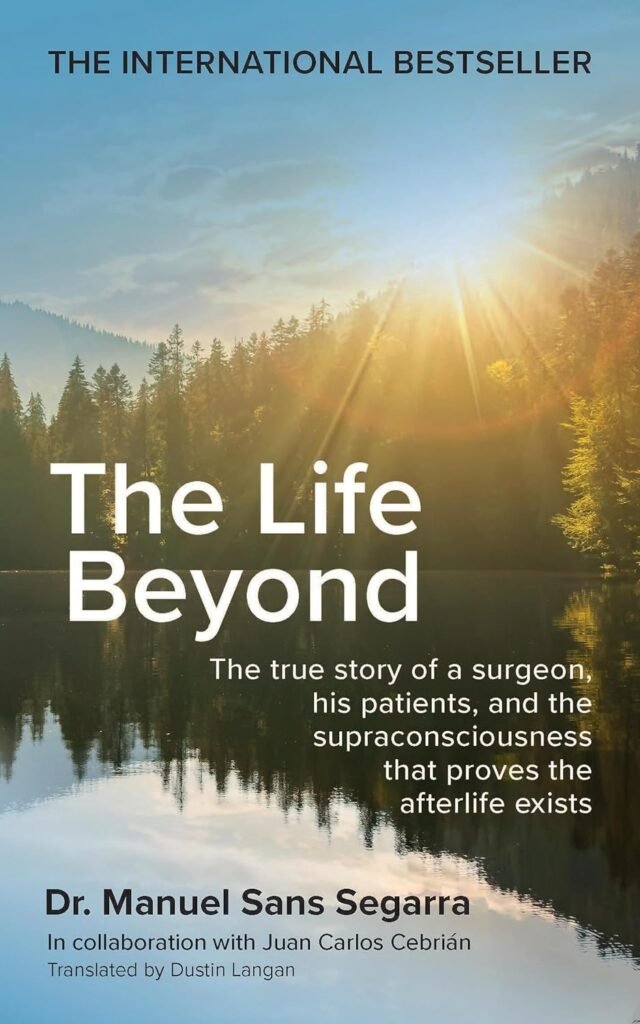
Discover The Life Beyond Book by Dr. Manuel Sans Segarra
Discover ‘The Life Beyond’ by Dr. Manuel Sans Segarra, a compelling exploration of the afterlife that blends science, personal experiences, and supraconsciousness insights.
❓ Frequently asked questions
Does the soul exist?
There is no scientific consensus that establishes an immortal, independent soul, nor is the philosophical question closed. Different religious, philosophical, and personal traditions answer it differently.
Is the soul the same as consciousness?
Not necessarily. Some traditions identify them; others distinguish soul, spirit, mind, awareness, and self. Neuroscience studies consciousness as an experience and process, not as proof of a metaphysical soul.
What does science say about the soul?
Science can investigate brain activity, consciousness, memory, personality, emotion, and altered states. It cannot currently verify every claim about an immaterial essence or consciousness after death.
Do near-death experiences prove an afterlife?
They are meaningful and sometimes transformative experiences, but they do not constitute universally accepted proof of an afterlife. Their causes and interpretation remain debated.
Can spirituality improve mental health?
Spirituality or religion can support meaning, belonging, coping, forgiveness, and hope for some people. Spiritual struggle, coercion, guilt, or exclusion can also increase distress.
Is the soul eternal in every religion?
No. Traditions differ substantially. Some affirm an immortal soul, some describe rebirth or liberation, and some reject a permanent self.
How can I explore the soul without following a religion?
You can examine consciousness, values, mortality, meaning, nature, ethics, meditation, creativity, and relationships through philosophical and contemplative practices without adopting a particular doctrine.
Is it possible to study the soul academically?
Yes. Religious studies, philosophy of mind, psychology, neuroscience, anthropology, medical humanities, and the study of consciousness all examine related questions, although they use different methods and standards of evidence.
💬 Questions for reflection and discussion
- When you use the word “soul,” what exactly do you mean?
- Do you see the soul as a substance, a process, a relationship, a moral centre, or a metaphor?
- Can a scientific explanation of consciousness coexist with spiritual belief?
- Which spiritual practices increase compassion – and which may produce fear or exclusion?
- Have experiences of nature, grief, love, meditation, or near-death changed your understanding of the self?
Share your perspective. The most valuable conversations about the soul may be those that combine intellectual humility with genuine curiosity.
The concept of the soul will probably remain a meeting point rather than a solved problem. Future research may map consciousness with greater precision, examine NDEs with better physiological data, and use artificial intelligence to model aspects of selfhood. None of these developments will automatically answer what makes a life sacred or worthwhile.
Perhaps the soul is an immortal essence. Perhaps it is the living pattern formed by consciousness, memory, relationship, and moral commitment. Perhaps the word points toward a reality that current categories cannot yet contain. Whatever one believes, the question changes us: it asks whether a human being is more than an organism to be optimised, a mind to be measured, or a role to be performed.
The most compelling evidence of a soul may not be found in a dramatic claim about what happens after death, but in what our beliefs make possible while we are alive: greater courage, deeper responsibility, compassion without certainty, and a willingness to treat every person as more mysterious and valuable than any description can capture. ✨
Editorial note: This article distinguishes belief, philosophy, personal experience, and scientific evidence. Claims about an immortal soul or consciousness after death remain matters of metaphysical, religious, or philosophical interpretation; they are not established scientific facts.
References:
- Stanford Encyclopedia of Philosophy. “Ancient Theories of Soul.”
- Stanford Encyclopedia of Philosophy. “The Neuroscience of Consciousness.”
- Stanford Encyclopedia of Philosophy. “The Problem of Consciousness.”
- Hashemi, A., et al. (2023). “Explanation of Near-Death Experiences: A Systematic Analysis.” PMC.
- Kopel, J. (2022). “Near-Death Experiences and Religious Experience.” Religions, 13(2), 156.
- University of Virginia, Division of Perceptual Studies. “Near-Death Experiences.”
- Lucchetti, G., et al. (2021). “Spirituality, Religiousness, and Mental Health.” PMC.
- Harvard T. H. Chan School of Public Health. “Spirituality Linked with Better Health Outcomes, Patient Care.”
- Aggarwal, S., et al. (2023). “Spiritual Well-Being and Depressive Symptoms: A Systematic Review and Meta-Analysis.” BMC Psychiatry.
- National Institute of Neurological Disorders and Stroke. “Brain Basics: Understanding Sleep.”
- World Health Organization. “Mental Health.”
- Chalmers, D. J. (1995). “Facing Up to the Problem of Consciousness.” Journal of Consciousness Studies, 2(3), 200–219.
- Varela, F. J., Thompson, E., & Rosch, E. (2017). The Embodied Mind: Cognitive Science and Human Experience. MIT Press.
Learn, Help Family And Friends, And Help The Planet!