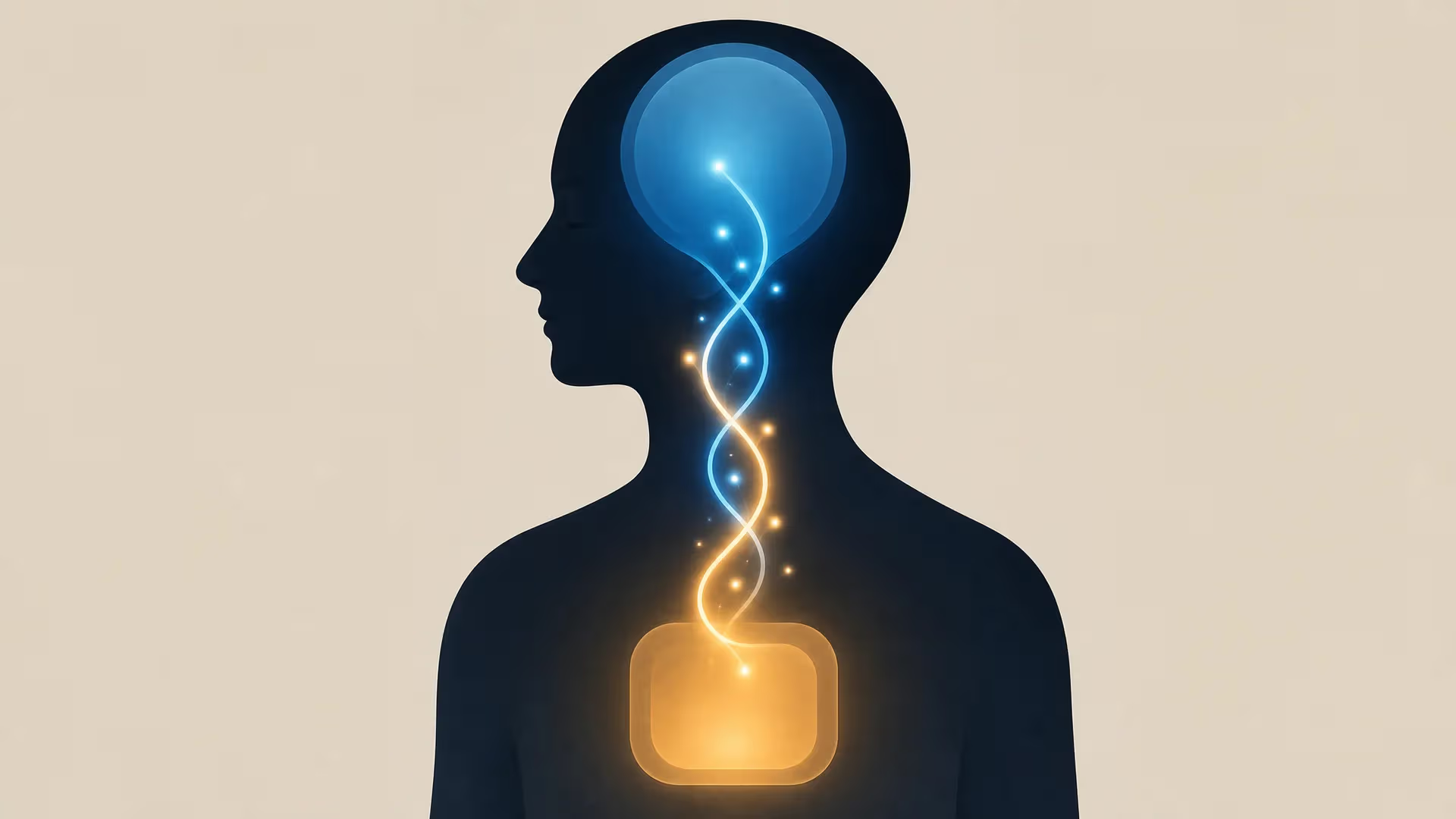
Your stress doesn’t live in your head; it lives in your body. Specifically, it lives in your nervous system: the intricate network of neurons that constantly monitors threat, triggers your fight-or-flight response, and keeps your cortisol elevated long after the danger has passed. This is why thinking positive thoughts rarely works. And this is why stress relief techniques that target your nervous system actually work.
The research is detailed. Mindfulness-based stress reduction (MBSR), a structured program combining breathing, body awareness, and meditation, has been studied for over two decades. The landmark 2004 Grossman meta-analysis, cited 8,070 times, concluded that MBSR significantly reduces anxiety, depression, and chronic pain across diverse populations. More recently, a 2023 randomized clinical trial published in JAMA Psychiatry found that MBSR was non-inferior to escitalopram (a prescription anxiety medication) in treating anxiety disorders, without the side effects.
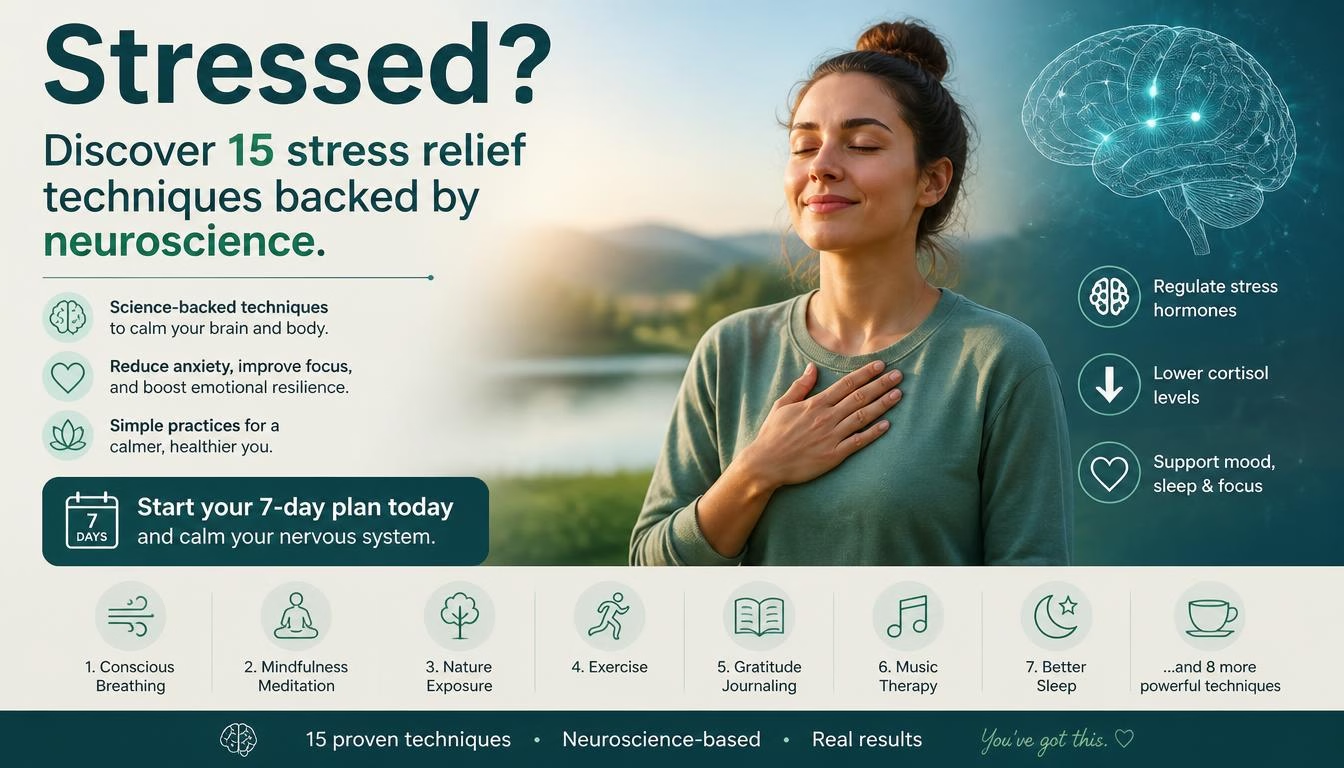
💆 Stressed? Discover 15 Stress Relief Techniques Backed by Neuroscience.
The techniques in this guide aren’t motivational fluff. Each one targets a specific part of your stress system: your HPA axis (hypothalamic-pituitary-adrenal), your parasympathetic nervous system, your amygdala, your breathing patterns. When you practice them consistently, you’re literally rewiring how your body responds to threat.
Let’s build your stress-relief toolkit, starting with the science, then moving on to the practices you can use today.
The Science Behind Stress Relief: Why Your Body Stays Stressed (And How to Reset It)
How Stress Gets Trapped in Your System
When you encounter a threat, real or perceived, your brain triggers the HPA axis: a cascade of hormonal signals that floods your body with cortisol and adrenaline. This is useful if you’re running from a predator. It’s destructive if you’re stuck in traffic or worried about email.
Here’s the problem: your primitive brain can’t tell the difference. A work deadline activates the same stress response as a physical threat. And unlike a sprint away from danger, a work deadline doesn’t end; it just triggers another one. Your cortisol stays elevated. Your nervous system stays in “red alert.” Over weeks and months, this becomes chronic stress.
The Knezevic 2023 study published in Frontiers in Neuroscience (756 citations) found that chronic cortisol elevation damages the HPA axis itself, making it harder for your body to turn off the stress response even when the threat is gone. You become stressed about being stressed.
How Stress Relief Techniques Reset Your Nervous System
Your stress system has an “off switch.” It’s called your parasympathetic nervous system, specifically, your vagus nerve, the longest nerve in your body, running from your brain stem to your gut.
When you activate your parasympathetic nervous system, three things happen:
- Your HPA axis downregulates; cortisol drops.
- Your heart rate slows; your body signals safety.
- Your amygdala quiets down; the alarm center of your brain stops shouting.
The techniques in this guide all activate one of these pathways. Some work through breathing (CO2 sensitivity in your vagus nerve). Some work through body awareness (interoception, sensing your internal state). Some work through cognitive reframing (changing the narrative your brain tells about threat).
The result: your nervous system learns that you’re safe, even when stress is present.
Quick Stress Relief Techniques You Can Use Anywhere (30 Seconds to 3 Minutes)
When you’re in the middle of a stressful moment, a heated conversation, anxiety spike, or panic onset, you don’t have time for a 20-minute meditation. You need something fast. These techniques activate your parasympathetic nervous system in minutes or seconds.
The Physiological Sigh: Your Fastest Reset
What it is: Inhale through your nose, take a second small top-up inhale through your mouth, then exhale slowly through your mouth for 6–10 seconds. Repeat 2–3 times.
Why it works: CO2 is the primary trigger for your vagus nerve to activate the parasympathetic response. By exhaling longer than you inhale, you increase CO2 sensitivity in your blood and lower your respiratory rate. This signals your brainstem: “We’re safe now.” Cortisol drops measurably within 2–3 cycles.
Research from Andrew Huberman’s lab at Stanford shows the physiological sigh produces faster anxiety reduction than box breathing, making it the go-to for acute stress.
When to use it: During a panic attack, before a difficult conversation, or when you feel tension rising.
Box Breathing: Structured Calm for Sustained Stress
What it is: Inhale for 4 counts, hold for 4, exhale for 4, hold for 4. Do 4–6 rounds (about 2–3 minutes total).
Why it works: Box breathing creates a steady, rhythmic pattern that your nervous system recognizes as safe. The exhale length (equal to the inhale) is longer than your natural shallow breathing, which activates your parasympathetic system. The holding phases increase your vagal tone, essentially building strength in your body’s “calm muscle.”
Military and first-responder training uses box breathing specifically because it works across high-stress environments. It’s slower than the physiological sigh but more sustainable for longer periods.
When to use it: Before meetings, during work stress, or as a midday reset. It’s the structured version of the physiological sigh; pick whichever matches your style.
5-4-3-2-1 Grounding: Anchor Yourself to the Present
What it is: Notice 5 things you can see, 4 things you can touch/feel, 3 things you can hear, 2 things you can smell, 1 thing you can taste.
Why it works: Anxiety lives in the future (“What if…?”). This technique pulls you into sensory experience, the present moment. It engages your prefrontal cortex (thinking brain) instead of your amygdala (threat brain). By focusing on what’s actually happening now, your brain realizes the threat is imagined, not real.
This is why sensory grounding is the cornerstone of trauma-informed therapy and panic attack treatment. It’s not about positive thinking; it’s about shifting where your attention lives.
Pro tip: Move through the senses slowly. Don’t rush. The longer you stay with each sense, the more your nervous system settles.
Hand-on-Heart: Self-Compassion + Vagal Activation
What it is: Place your hand over your heart, take slow, deep breaths, and silently say something like “This is hard, and I can meet it” or “This will pass.”
Why it works: Your skin contains pressure receptors that activate your parasympathetic nervous system when gently stimulated. Adding a compassionate internal message engages your prefrontal cortex, creating a “secure attachment” with yourself. The combination of physical touch + self-kindness is potent.
Research on self-compassion shows it reduces cortisol more effectively than self-criticism, even in the same stressful moment. You’re literally choosing a different neural pathway.
When to use it: During emotional overwhelm, self-doubt, or when you feel alone in a difficult experience.
Tension Release (Progressive Muscle Relaxation): From Tight to Soft in 2 Minutes
What it is: Briefly clench your fists and shoulders for 5 seconds, then release. Sweep your attention from the top of your head to your toes, noticing where tension softens.
Why it works: Muscle tension is a feedback loop: stress causes muscles to tense, and tense muscles signal your brain that danger is still present. By deliberately tensing and releasing, you interrupt the loop. Your brain gets the message: “Tension is voluntary, not involuntary. We can control it.”
This is Edmund Jacobson’s progressive muscle relaxation technique, developed in 1938 and still one of the most evidence-backed stress interventions.
When to use it: When you notice your shoulders creeping up to your ears, jaw clenching, or fists tightening. Interrupt the pattern before it becomes chronic tension.
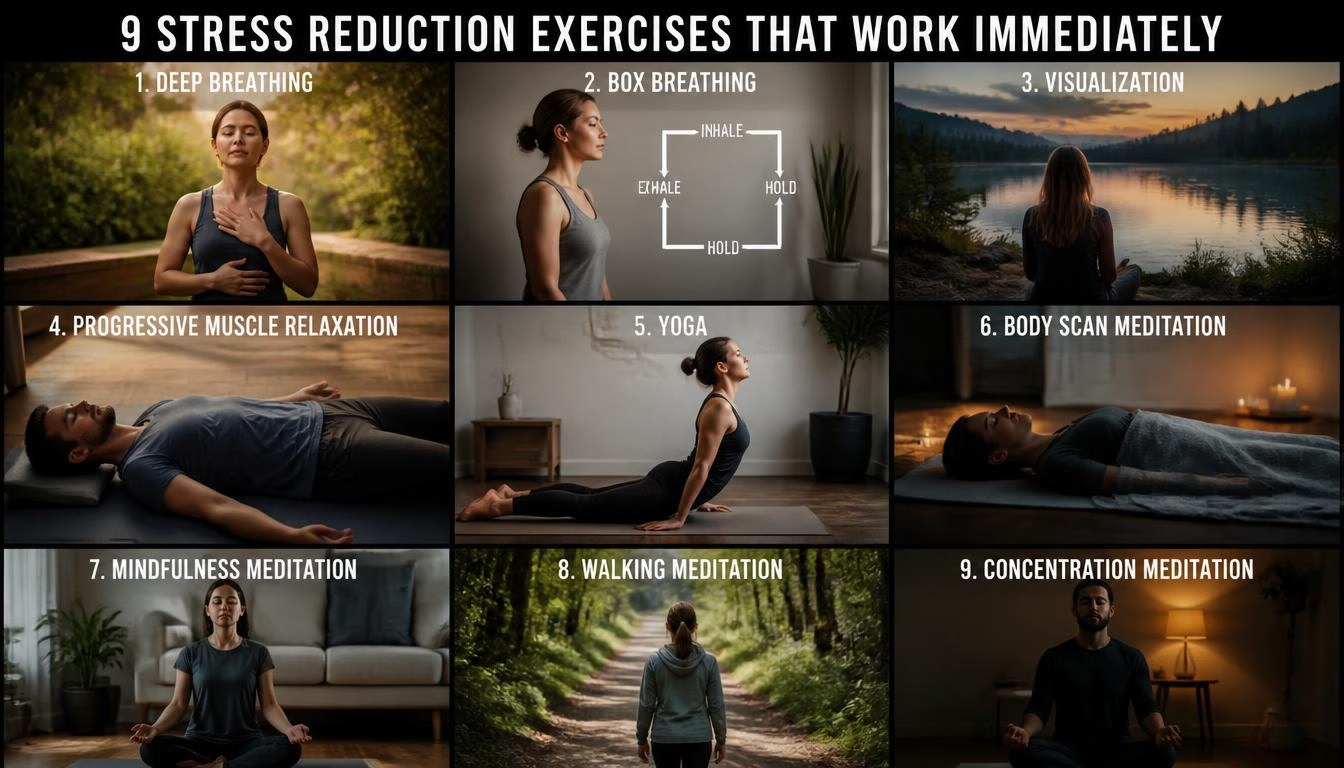
9 Scientifically Proven Stress Reduction Exercises That Work Immediately (Complete Guide + Daily Routine)
Short Daily Mindfulness Habits: Build Your Stress Relief Foundation (5–10 Minutes Total)
Quick resets work in the moment, but they’re band-aids. To actually change your stress response, you need daily practices that retrain your nervous system. These don’t require hours. 5–10 minutes daily is enough to shift your baseline.
Here’s why: your nervous system operates on repetition and prediction. When you practice calm daily, your brain learns that calm is normal. Your threat threshold rises. Situations that used to trigger stress no longer do.
Morning Breathwork: Start Your Day in the Parasympathetic
What it is: Before you touch your phone, before you check email, take 10 slow, deep breaths. Inhale for 4, exhale for 6. Just you and your breath.
Why it is: Your nervous system follows your attention. If your first input is notifications, urgency, and fragmented information, your sympathetic nervous system (stress mode) activates immediately. By starting with breath, you anchor your day in calm.
This is your nervous system’s “first thought.” Make it a good one.
Time: 2 minutes.
One-Minute Check-Ins: Three Times Daily
What it is: Set three alarms during your day (mid-morning, lunch, mid-afternoon). When each one goes off, pause for one minute and notice four things:
- Breath: Is it shallow or deep? Fast or slow?
- Body: Where do you feel tension? Ease? Warmth?
- Mood: What emotion is present right now?
- Intention: What’s one thing you want to focus on for the next hour?
Why it works: This is interoception, the ability to sense your internal state. People with high stress and anxiety have poor interoception; they don’t notice they’re stressed until they’re fully dysregulated. By checking in three times daily, you develop the sensitivity to catch stress early, when it’s easier to reset.
Research from the neuroscience of mindfulness shows that interoceptive awareness is the foundation of emotional regulation. You can’t change what you don’t notice.
Time: 1 minute × 3 = 3 minutes total.
Body Scan: Develop Felt Sense of Safety
What it is: Lie down or sit comfortably. Move your attention slowly from the crown of your head to your toes, spending 10–15 seconds at each area (forehead, eyes, jaw, throat, chest, belly, hands, legs, feet). As you notice each area, mentally label the sensation: “warm,” “tight,” “numb,” “relaxed,” “neutral.” Don’t try to change anything, just observe.
Why it works: A body scan is observation without judgment. It teaches your nervous system that sensations are temporary, not dangerous. When you’re anxious, you tense against sensations, which amplifies the anxiety. When you observe without resistance, the sensation naturally softens.
This is the foundation of MBSR. The 2004 Grossman meta-analysis found body scans reduced pain, anxiety, and depression across 45 different studies.
Time: 2–3 minutes.
Gratitude or “Win” Note: Anchor Positive Memory
What it is: Once daily (ideally evening), write down one thing that went well today and why you contributed to it. Be specific. Don’t just say “I had a good day.” Say “I stayed calm during that difficult conversation because I remembered the breathing technique, and it helped my colleague feel heard.”
Why it works: Your brain operates on narrative. The stories you tell about yourself become your reality. By deliberately noting moments where you handled stress well, you’re rewriting your stress story from “I’m always overwhelmed” to “I’m capable of managing difficulty.”
Gratitude also activates your prefrontal cortex and increases dopamine, the neurotransmitter of motivation and reward. You’re literally training your brain to seek and notice competence.
Time: 2 minutes.
Total daily time: 10 minutes. That’s it.

Stress Recovery: The 5-Step Strategy That Rewires Your Brain (Science-Backed + Practical Guide)
Mind Tools for Emotional Regulation: Change How You Relate to Stress
Stress isn’t just a physical response; it’s a thought. The same situation that stresses one person calms another. The difference is the narrative they’re telling themselves about it.
These mind tools don’t try to eliminate stress. Instead, they change your relationship to it. You become the observer instead of being consumed by the experience.
The STOP Method: Interrupt the Stress Loop
What it is:
- S, STOP. Pause whatever you’re doing.
- T, Take a breath (physiological sigh or box breathing).
- O, Observe your thoughts, feelings, and body sensations without judgment.
- P, Proceed with one small next step.
Why it works: This is cognitive defusion, the ability to step back from your thoughts instead of being trapped inside them. When you’re stressed, your mind produces catastrophic thoughts that feel 100% true. By observing them (“I notice I’m having the thought that this will go wrong”) instead of believing them (“This will go wrong”), you create space to choose your response.
This is the core skill in Cognitive Behavioral Therapy (CBT) and Acceptance and Commitment Therapy (ACT). The STOP method is the 30-second version.
When to use it: Before you react in anger, when anxiety is spiraling, or when you’re about to make a decision from a stressed state.
New Skills Academy Mindfulness Courses: Reduce Stress, Improve Focus & Build Lasting Calm
Unlock your inner calm with New Skills Academy’s mindfulness courses designed for all experience levels. Discover evidence-based techniques to reduce stress, boost focus, and enhance your overall well-being.
Name It to Tame It: Label Your Emotion to Reduce Its Power
What it is: When you notice an intense emotion (anxiety, frustration, shame), silently or aloud name it with precision. Not “I feel bad.” Say “I’m feeling anxious because my presentation is in 2 hours” or “I’m frustrated because my work isn’t matching my vision.”
Why it works: Neuroscientist Matthew Lieberman’s research shows that labeling an emotion activates your prefrontal cortex and dampens your amygdala. In other words, the act of naming reduces the emotion’s intensity.
When you stay stuck in the feeling (“I feel awful”), your amygdala runs the show. When you name the specific emotion and its trigger (“I feel anxious about the presentation”), you engage your thinking brain, which can problem-solve and plan.
The mechanism: Your amygdala (threat detection) is older and faster than your prefrontal cortex (thinking). Naming forces your thinking brain to engage, which literally slows down the amygdala’s activation.
When to use it: In any moment of strong emotion. Make it a reflex.
Worry Parking: Contain Your Anxiety Instead of Letting It Roam
What it is: When a worry arises during your workday, don’t suppress it (which makes it stronger) and don’t spiral into it (which wastes focus). Instead, jot down a keyword reminder of the worry in a notebook and return to your task. Set aside a dedicated “worry window”, say, 10 minutes at 4 PM, when you review and address your worries.
Why it works: This is cognitive offloading. Your brain has limited attentional resources. If you’re simultaneously trying to work and manage anxiety, you’ll do both poorly. By parking the worry with a physical reminder, you signal to your brain: “This is important, and I will address it, just not now.” Your prefrontal cortex can relax because the threat has been contained, not dismissed.
Research on anxiety disorders shows that worry containment (scheduling worry time) is more effective than trying to eliminate worry.
When to use it: Throughout your workday, any time a worry pulls your attention.
Circles of Control: Release What You Can’t Change
What it is: Draw two circles. In the inner circle, list everything you can control (your effort, your attitude, your preparation, your communication). In the outer circle, list everything you cannot control (others’ opinions, outcomes, timing, the past). Focus your energy on the inner circle only.
Why it works: Anxiety thrives on the illusion of control. You worry obsessively about outcomes you can’t control, which is exhausting and ineffective. By clarifying your actual sphere of control, you stop wasting energy on the uncontrollable and redirect it toward what you actually can influence.
This is locus of control theory, foundational to both cognitive psychology and Stoic philosophy. Victor Frankl’s entire philosophy was built on this principle: you can’t control what happens to you, but you can always control how you respond.
When to use it: When you’re stuck in worry about outcomes. Return to action in your sphere of control.
Movement-Based Calm: How Your Body Teaches Your Nervous System
Your nervous system doesn’t just respond to what’s in your head; it responds to what your body is doing. Stress causes physical tension and shallow breathing. Movement reverses this: it teaches your body it’s safe, which teaches your nervous system it’s safe.
Walking Meditation: Movement + Mindfulness
What it is: Take a 5–10 minute walk at a natural pace. Keep your eyes on the horizon (not on your phone or down at your feet). As you walk, notice 10 new details in your environment: colors, textures, sounds, the feeling of your feet on the ground.
Why it works: Walking engages your motor cortex, which naturally calms your amygdala. Your eyes moving across a visual field activate bilateral eye movements, which is why EMDR (Eye Movement Desensitization and Reprocessing) is effective for trauma. The combination of movement, present-moment attention, and gentle rhythm is profoundly settling.
This is why people say “I need to go for a walk to clear my head.” They’re literally right; the walk does the clearing.
Time: 5–10 minutes.

How 10 Minutes of Walking Meditation Changes Your Brain (The Science + Your Step-by-Step Guide)
Stretching: Release Tension at the Source
What it is: Focus on areas that hold stress: your hips, chest, jaw, and neck. Hold each stretch for 30–60 seconds, and on the exhale, let your body sink deeper into the stretch. Don’t force it; let gravity and breath do the work.
Why it works: Tension is stored in your connective tissue (fascia). When you stretch and deliberately exhale on the release, you’re signaling your parasympathetic nervous system: “I’m voluntarily releasing tension, which means we’re safe.” This is why gentle yoga and yin yoga are so effective for anxiety; they combine stretching with breath awareness.
Bonus: Pay special attention to your jaw. Jaw tension is one of the first signs of stress, and releasing it has an outsized effect on your whole nervous system.
Sensory Anchors and Environment: Design Your Space for Calm
Your environment is constantly feeding information to your nervous system. If your space is cluttered, loud, and stimulating, your nervous system stays activated. If it’s designed for calm, your baseline stress naturally lowers.
Light: Your Nervous System’s First Input
What it is: Get 5–10 minutes of bright, preferably natural light in the morning. If you can’t get outside, sit by a window or use a light therapy lamp.
Why it works: Your circadian rhythm (the 24-hour cycle that regulates sleep, alertness, and cortisol) is set by light exposure. Morning light tells your body “it’s time to be alert,” which also sets the timer for sleep at night. When your sleep is solid, your stress resilience the next day is dramatically higher.
Research shows that irregular light exposure contributes to anxiety and depression. Light is a foundational stress-relief tool, not just a supplement.

Stress Less, Accomplish More by Emily Fletcher
In her enlightening book, Stress Less, Accomplish More, Emily Fletcher shares invaluable insights on how to manage stress effectively. This guide is tailored for anyone seeking to enhance their productivity without added pressure.
Sound: Create a Calming Audio Anchor
What it is: Keep a 30–60 second audio clip of a sound you find calming: ocean waves, rain, forest ambience, or soft instrumental music. Use it only during your relaxation practices (meditation, stretching, wind-down).
Why it works: This is Pavlovian conditioning; your brain learns to associate the sound with the calm state. Over time, even hearing the sound briefly can trigger a parasympathetic response. You’re creating an audio shortcut to calm.
For deeper meditation or sleep, consider guided NSDR (Non-Sleep Deep Rest) or yoga nidra tracks; these are specifically designed to guide your nervous system toward parasympathetic activation. Yoga nidra research shows 10–20 minutes can restore as much mental fatigue as 1–2 hours of sleep, making it perfect for afternoon recovery or evening wind-down.
Scent: Build a Smell-Based Calm Response
What it is: Choose a scent you enjoy (lavender, citrus, sandalwood, whatever appeals to you). Use it only during your relaxation practices. Light a candle, use a diffuser, or apply a drop to your wrist. Over 2–3 weeks, your brain pairs that scent with relaxation.
Why it works: Your olfactory system (sense of smell) has direct access to your limbic system, the emotional processing center of your brain. It’s why smells trigger memories so vividly. By deliberately pairing a scent with calm, you create a neural pathway: smell → parasympathetic activation.
This is classical conditioning. After a few weeks, just a whiff can lower your cortisol.

Aromatherapy Benefits: 9 Essential Oils That Actually Work (With Science to Prove It)
Digital Boundaries: Protect Your Attention
What it is:
- Turn off non-essential notifications (social media, news, email alerts).
- Batch your email and message checks at set times (e.g., 10 AM, 2 PM, 4 PM) instead of constantly.
- Use “Do Not Disturb” during focused work.
- Keep your phone out of reach during meals, conversations, and the first/last hour of your day.
Why it works: Every notification triggers a mini stress response; your amygdala checks for threat. Multiple notifications throughout the day keep your nervous system in a constant state of low-level activation. By controlling when information enters your awareness, you control your nervous system’s baseline.
This is attention restoration theory: your prefrontal cortex has limited resources. Every fragmented attention cycle costs you calm and focus.

Crisis-Mode Stress Relief: Techniques for Acute Anxiety and Panic
Sometimes stress isn’t gradual; it’s acute. Your heart races, your thoughts spiral, panic rises. These techniques are designed for those moments.
Physiological Sigh or Extended Exhale Breathing
In acute panic, your breathing becomes shallow and rapid, which further activates your amygdala. The physiological sigh (2–3 cycles) is faster; extended exhale breathing (6–10 second exhales) is slightly slower but very powerful.
The mechanism is the same: longer exhales lower CO2 and activate your parasympathetic nervous system. In panic, this is your fastest reset.
Physical Grounding: Your Body Tethers You to Reality
When panic hits, your body dissociates; you feel disconnected, unreal, like something is wrong with you. Physical grounding brings you back.
Techniques:
- Press your feet firmly into the floor and notice the pressure.
- Name five objects in the room around you (specificity matters).
- Run cold water over your wrists or hold an ice cube.
- Stomp your feet or clap your hands firmly.
Why it works: Your interoceptive system (body awareness) is offline during panic. By creating strong, unavoidable sensations (cold, pressure, sound), you force your brain to process current physical reality, not the catastrophic future narrative.
Self-Compassionate Self-Talk
In panic, your brain generates catastrophic thoughts: “Something is wrong with me,” “I’m dying,” “I can’t handle this.” These thoughts amplify the panic.
Instead, speak to yourself as you would to a frightened child:
- “This is panic, and it’s uncomfortable, but it’s not dangerous.”
- “I can ride this wave. It will pass.”
- “I’ve felt this before, and it always passes.”
- “My body is doing what it’s designed to do to protect me. I’m actually safe.”
Why it works: Your prefrontal cortex (thinking brain) can reason, even when your amygdala is activated. By engaging your rational mind with compassionate language, you create an internal “secure attachment”, a sense that you’re not alone with the panic.
Important: If anxiety, panic, or depression are frequent or interfering with your life, talk to a mental health professional. These techniques support professional treatment but don’t replace it. In the U.S., you can call or text 988 (Suicide & Crisis Lifeline) anytime, 24/7.
Better Evenings, Better Sleep: Complete the Stress Relief Cycle
Stress affects sleep, and poor sleep increases stress sensitivity. By preparing your evening and sleep properly, you break the cycle.
Wind-Down Ritual: Signal the Transition to Rest
What it is: 30–60 minutes before bed, deliberately shift your environment and activity:
- Dim your lights (or use blue light filters on screens).
- Switch off intense work or emotional content.
- Shift to low-stimulation activities: gentle stretching, reading, journaling, or quiet conversation.
Why it works: Your body operates on circadian rhythms. Bright light and stimulation signal “stay alert.” Dim light and calm activity signal “prepare for sleep.” By creating a consistent wind-down, you help your body naturally lower cortisol and increase melatonin.
NSDR (Non-Sleep Deep Rest) or Yoga Nidra: The Afternoon and Evening Secret
What it is: Guided relaxation practices (10–20 minutes) that guide your attention through your body while keeping you awake but deeply relaxed. Think of it as meditation for people who can’t meditate.
Why it works: Your nervous system doesn’t distinguish between sleep and deep rest. A 20-minute NSDR session can restore as much mental and emotional recovery as 1–2 hours of sleep. This is why they’re so popular with high-performers and people managing chronic stress.
The mechanism: NSDR guides your nervous system into a state called “alert relaxation”; your body is rested, but your mind remains conscious. This activates your parasympathetic nervous system without the unconsciousness of sleep.
Research from Andrew Huberman’s lab shows that regular NSDR practice improves sleep quality, emotional regulation, and stress resilience.
Where to find them: Search for “yoga nidra” or “NSDR” on YouTube, Insight Timer, or Calm. Pick a voice and pace you enjoy; you’re more likely to stick with practices you actually like.
Brain Dump: Offload Before Sleep
What it is: 3 minutes before bed, write down everything on your mind: worries, to-dos, ideas, anything unfinished. Then, choose one thing to focus on tomorrow and let the rest go.
Why it works: Your brain uses sleep to consolidate memory and process emotion. If your mind is racing with to-dos, your brain can’t settle. By externalizing your thoughts (writing them down), you signal to your brain: “These are handled. I don’t need to keep processing them.”
This is cognitive offloading. Your brain can relax because you’ve taken responsibility.

Sensate: Unlock Natural Stress Reduction in Just 10 Minutes
Sensate is a non-electrical vagus nerve wellness device that uses low-frequency sound vibrations and synchronized soundscapes to calm your nervous system in just 10 minutes. No meditation experience or breathing techniques required. Clinically shown to reduce stress by 48% in 28 days and improve sleep quality with an average of +55 minutes extra sleep per night. Simply place it on your chest, put on headphones, and let the technology work passively while your body shifts into a state of deep relaxation-measurable brain activity similar to that of experienced meditators in just 10 minutes.
Your 7-Day Stress Relief Starter Plan
You don’t need to implement everything at once. Here’s a simple progression that builds from quick resets to daily practices.
Daily Foundation (Do Every Day)
- Morning: 10 mindful breaths before checking your phone.
- Midday: One 2–3 minute body scan.
- Afternoon: One-minute check-in (notice breath, body, mood, intention).
Day-by-Day Additions
Monday: Add digital boundaries.
- Turn off non-essential notifications.
- Set three times for email/message checks.
- Use “Do Not Disturb” during focused work.
Tuesday: Add movement.
- Take a 10-minute walk with sensory awareness (notice 10 new details).
- Or do 5 minutes of gentle stretching.
Wednesday: Add the STOP method.
- Practice STOP once or twice throughout the day, before decisions or reactions.
Thursday: Add evening recovery.
- Do 10–15 minutes of NSDR or yoga nidra before bed.
- Keep your wind-down ritual (dim light, low stimulation).
Friday: Add gratitude anchoring.
- Write one “win note” in the evening, something that went well and why you contributed.
- Plan one small joy for the weekend.
Weekend: Extend one practice.
- Do one longer meditation, nature walk, or gentle yoga session.
- Aim for something you genuinely enjoy, not something you “should” do.
Week Two and Beyond: Find Your Rhythm
By the end of Week One, you’ve experienced all the tools. Now is where the real work begins: consistency. Habit formation takes about 66 days of consistent practice. Your nervous system needs time to learn this new baseline.
Pick:
- 2 quick resets you’ll use in acute moments (physiological sigh, box breathing, 5-4-3-2-1).
- 1 daily habit you’ll do every single day (morning breaths, body scan, or check-ins).
- 1 weekly deeper practice (NSDR, longer walk, or yoga).
That’s your foundation. Everything else is optional and can be added as you build consistency.
Download Free 7-Day Mindfulness Reset Guide
7-Day Mindfulness Reset
The Neuroscience Truth: You Can Rewire Your Stress Response
Here’s what the research makes clear: your stress response is not fixed. It’s a learned pattern. And learned patterns can be unlearned.
Every time you use a stress relief technique, you’re literally rewiring your brain. You’re strengthening your parasympathetic nervous system. You’re building vagal tone. You’re teaching your amygdala that the world is safer than it thought. Over weeks and months, your baseline stress naturally drops. Situations that used to dysregulate you become manageable.
This isn’t positive thinking. This isn’t willpower. This is neuroscience.
The Grossman 2004 meta-analysis of 8,070 citations found that mindfulness-based stress reduction works across anxiety disorders, depression, chronic pain, and high-stress populations. The JAMA 2023 study found it equal to medication for anxiety. The research on breathing, body awareness, and movement is overwhelming.
But none of this works if you don’t practice it.
Your Next Step
This week, pick two quick resets and one daily habit. Just those.
If you find yourself running on cortisol, constantly activated, or unable to drop your baseline anxiety:
- Start with the physiological sigh (2–3 cycles, anytime you notice tension).
- Add morning mindful breaths (10 breaths, zero friction).
- Add one one-minute check-in (midday, just notice your state).
That’s 12 minutes of total practice time. It’s not ambitious. It’s not overwhelming. It’s sustainable.
Consistency beats intensity. A 5-minute daily practice beats a 60-minute practice you do once a month.
Your nervous system is waiting to learn that calm is possible. Give it a chance.
Need more support? Consider exploring mindfulness-based cognitive therapy (MBCT) if you’re managing recurring anxiety or depression, or MBSR programs in your area if you want group learning and accountability. Both are evidence-based and widely available.
For deeper learning on the neuroscience, Andrew Huberman’s Stanford Neuroscience courses on stress, sleep, and the vagus nerve are freely available and brilliant.
Your stress relief toolkit is complete. Now it’s about choosing the practices that fit your life and practicing them consistently.
You’ve got this.
Expand Your Stress Relief Techniques Journey:
- 10 Practical Mindfulness Exercises For Your Everyday Life
- Meditation for Anxiety: Science-Backed Techniques
- How to Meditate Alone
- What Is Holistic Living? Definition, Benefits, the 6 Pillars & How to Start
- Best Mindfulness Books 2026: Expert-Recommended Reads
The Holistic Living Routine:
Receive Our Free Expert-Crafted Holistic Routine to Nourish Your Daily Life.
Learn, Help Family And Friends, And Help The Planet!