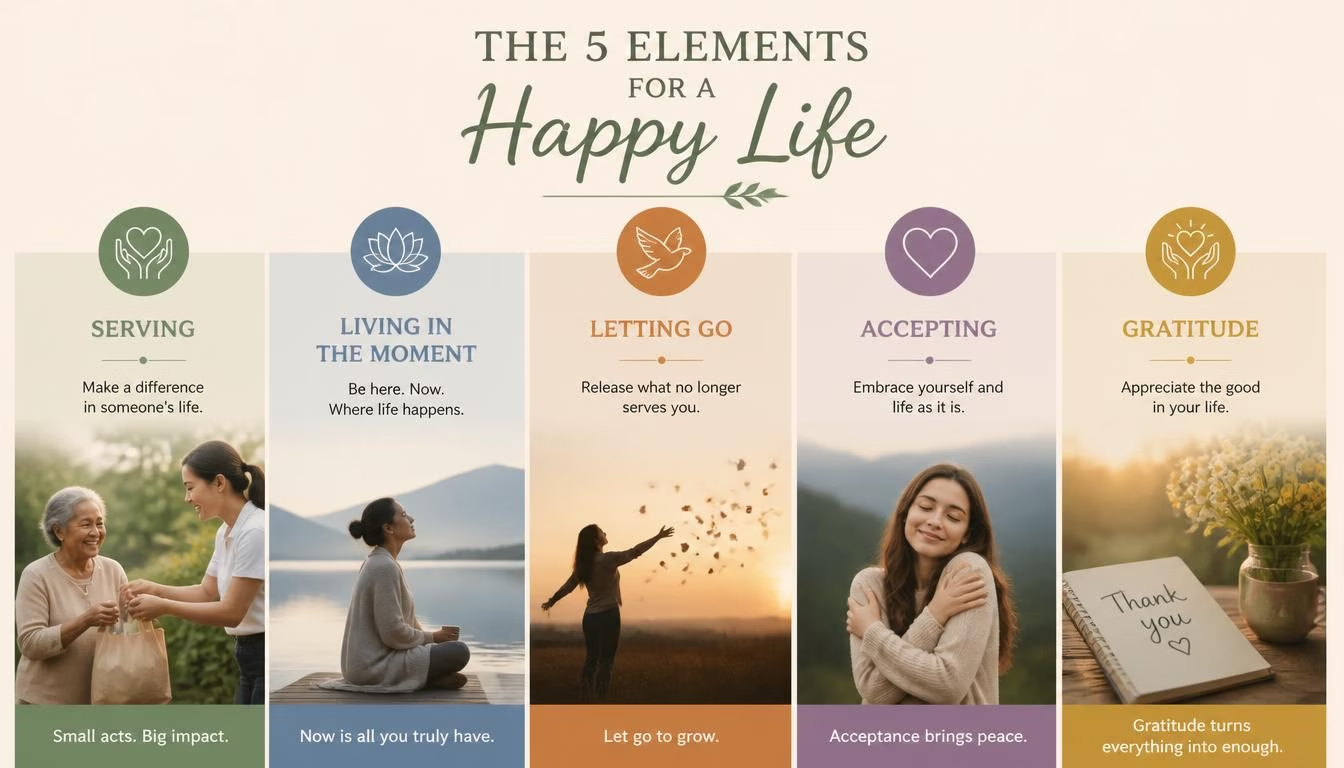
🤩 The 5 Elements for a Happy Life
The 5 elements for a happy life – serving, living in the moment, letting go, accepting, and gratitude – aren’t vague concepts. They’re actionable practices you can use today to feel noticeably happier.
Most people chase happiness like it’s a destination. But research and centuries of wisdom both point to the same truth: happiness is built, one small choice at a time. When you integrate these five elements into your daily routine, you stop waiting for life to feel good and start making it good.
This guide gives you exactly what to do – not abstract theory, but concrete steps you can take right now.
Quick Overview: The 5 Elements
| Element | What It Means | Immediate Win |
|---|---|---|
| Serving | Acts of kindness and helping others | Help one person today |
| Living in the Moment | Mindfulness and presence | 5 minutes of focused breathing |
| Letting Go | Surrendering control and accepting change | Release one worry this week |
| Acceptance | Acknowledging reality without judgment | Accept one thing you can’t change |
| Gratitude | Appreciating what you have | Write 3 things you’re grateful for tonight |
🤩 Happy Life: A Practical Guide to Lasting Joy
1. Serving Others: The Power of Giving
Serving others is the first of the 5 elements for a happy life – and it works fast. When you help someone, your brain releases dopamine (the “happy chemical”). But the effect goes deeper: you feel part of something larger than yourself.
Why Serving Makes You Happier
- Boosts mental health and reduces depression.
- Creates meaningful connections with others.
- Gives you a sense of purpose and impact.
- Builds resilience and self-confidence.
Practical Ways to Serve (Start Today)
1. The 15-Minute Helper
Pick one person this week – a friend, family member, or neighbor. Spend 15 minutes helping them: fix something, listen to their problem, cook a meal, run an errand. That’s it. The simplicity is the point.
2. Micro-Volunteering
Can’t commit to weekly volunteering? Start smaller:
- Reply thoughtfully to someone’s social media post.
- Leave a kind review for a local business.
- Send an encouraging message to someone you haven’t spoken to in months.
- Teach someone a skill you have (even 30 minutes counts).
3. The Monthly Service Day
Mark one day per month for deeper service – volunteer at a shelter, help clean a local park, mentor someone starting in your field. This anchors as a non-negotiable habit.
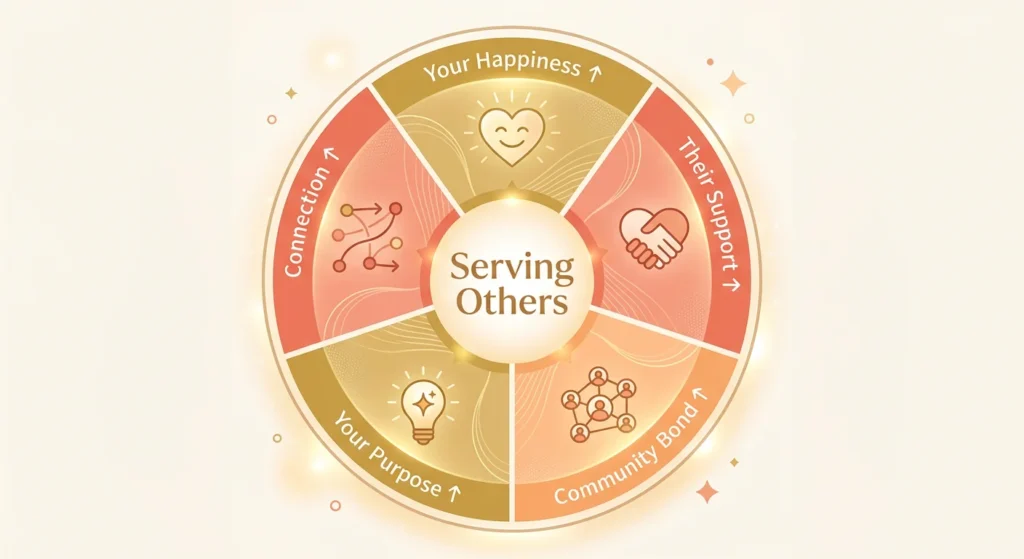
- Your Happiness ↑
- Their Support ↑
- Community Bond ↑
- Your Purpose ↑
- Connection ↑
Recommended Product: Centre of Excellence Coaching Diploma
If you want to deepen your ability to serve and support others, the Centre of Excellence offers structured, affordable coaching training. Learn practical skills to help people while building your confidence.
2. Living in the Moment: Master Mindfulness
Living in the moment is the antidote to anxiety. When your mind is in the past (“I messed up”) or future (“What if?”), You miss the now, where life actually happens.
Why Presence Matters
- Reduces stress and anxiety by up to 40% (studies show).
- Improves focus and decision-making.
- Deepens relationships (people feel truly heard).
- Makes ordinary moments feel rich.
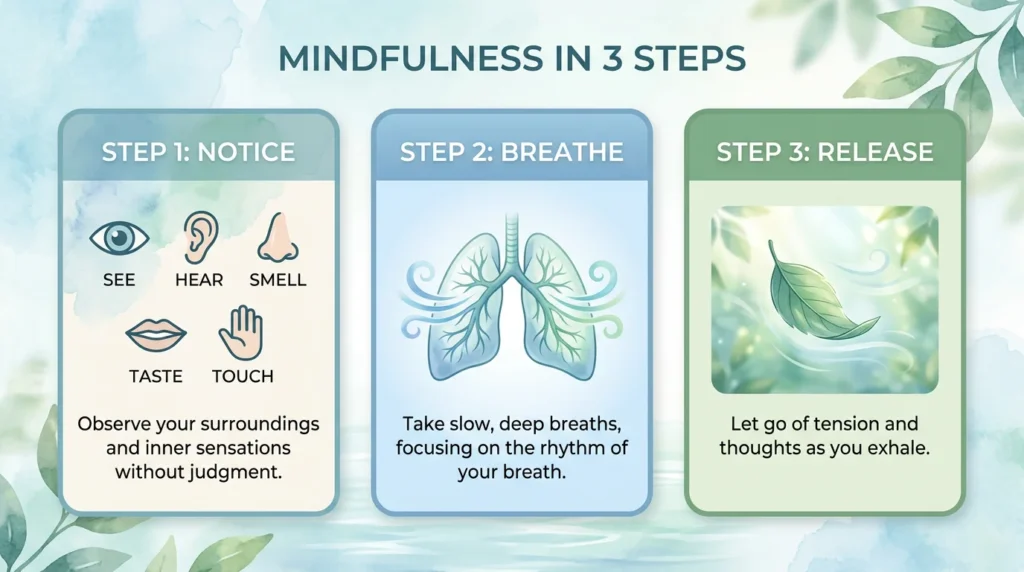
Simple Mindfulness Practices (Choose One)
1. The 5-Minute Breath Anchor (Easiest)
Sit. Close your eyes. Count your breaths: inhale (1), exhale (1), inhale (2)… up to 10, then restart. When your mind wanders (it will), gently return to counting. That’s the whole practice. Do this first thing in the morning or before lunch.
2. Mindful Single-Tasking (Most Practical)
Pick one daily activity – eating breakfast, drinking coffee, walking to the car – and do only that for those 5 minutes. No phone, no thinking about what’s next. Just taste, feel, and observe. You’ll be shocked at how much you notice.
3. The Body Scan (Best for Anxiety)
Lie down. Starting at your toes, slowly move your awareness upward – feet, calves, thighs, stomach, chest, shoulders, arms, neck, head. Notice sensation without judging it. Takes 10 minutes. Dissolves tension.
Quick Wins This Week
- Eat one meal without your phone ✓
- Take a 10-minute walk, noticing only sounds and smells ✓
- Do one task in complete silence ✓
Recommended Product: Muse Headband
The Muse 2 is a meditation headband that gives real-time feedback. It connects to an app and actually tells you when your mind wanders, helping you build consistency faster than meditating on your own. Perfect for people who struggle with focus.
3. Letting Go with the Flow: Surrender Control
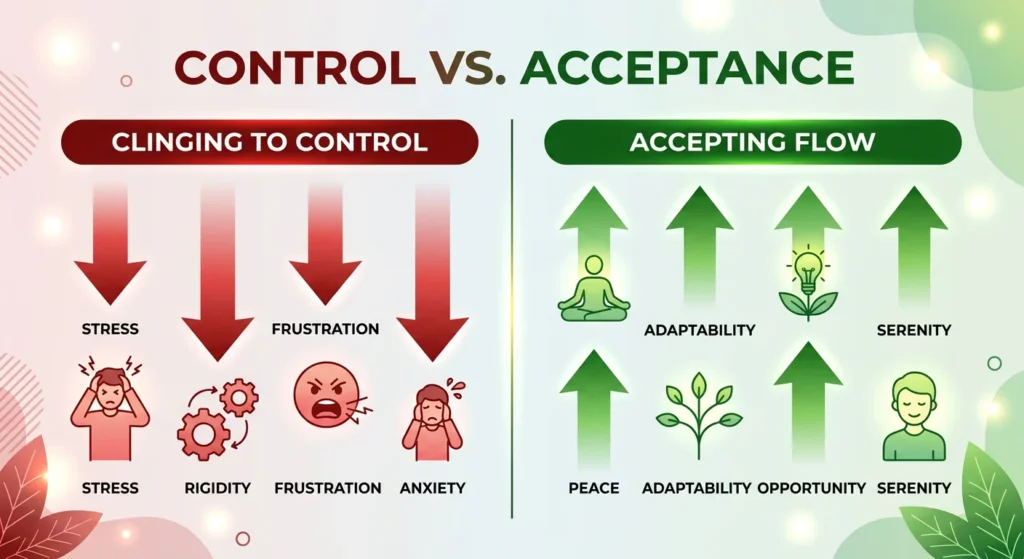
Letting go is the hardest element for most people – and the most transformative. You don’t stop planning. You stop white-knuckling outcomes.
Why Letting Go Reduces Suffering
- Control is an illusion; acceptance is freedom.
- Reduces chronic stress and anxiety.
- Opens you to unexpected opportunities.
- Builds adaptability and resilience.
Ways to Practice Letting Go (This Week)
1. The “I Can’t Control This” Journal (5 minutes)
Write down 3 things stressing you that are beyond your control (someone else’s opinion, the weather, the economy). For each, write: “I accept this is outside my control. I will focus on what I can control instead.”
Example:
❌ Can’t control: My boss’s mood
✅ Can control: My effort and attitude
2. The Flexibility Challenge
Tomorrow, change one routine or plan slightly – take a different route, order something new, talk to a stranger. Notice: nothing catastrophic happens. Flexibility is safe.
3. Surrender Meditation (10 minutes)
Sit quietly. Repeat: “I let go of the need to control.” When anxiety pops up, breathe and repeat. The point isn’t to feel calm immediately – it’s to practice choosing surrender over control.
Real-Life Example
Instead of rigidly sticking to a 5-year plan, stay flexible. The plan is your compass, not your cage. If a better opportunity appears sideways, you’re free to explore it.
Recommended Product: Sensate for Stress Relief
Sensate uses gentle vagus nerve stimulation to trigger your nervous system’s relaxation response in just 10 minutes. Perfect when you’re struggling to let go of anxiety – it helps your body release what your mind struggles with.

Sensate: A Simple Tool for Everyday Stress Relief and Relaxation
Sensate is a non-electrical vagus nerve wellness device that uses low-frequency sound vibrations and synchronized soundscapes to calm your nervous system in just 10 minutes. No meditation experience or breathing techniques required. Clinically shown to reduce stress by 48% in 28 days and improve sleep quality with an average of +55 minutes extra sleep per night. Simply place it on your chest, put on headphones, and let the technology work passively while your body shifts into a state of deep relaxation-measurable brain activity similar to that of experienced meditators in just 10 minutes.
4. Acceptance: The Foundation of Inner Peace
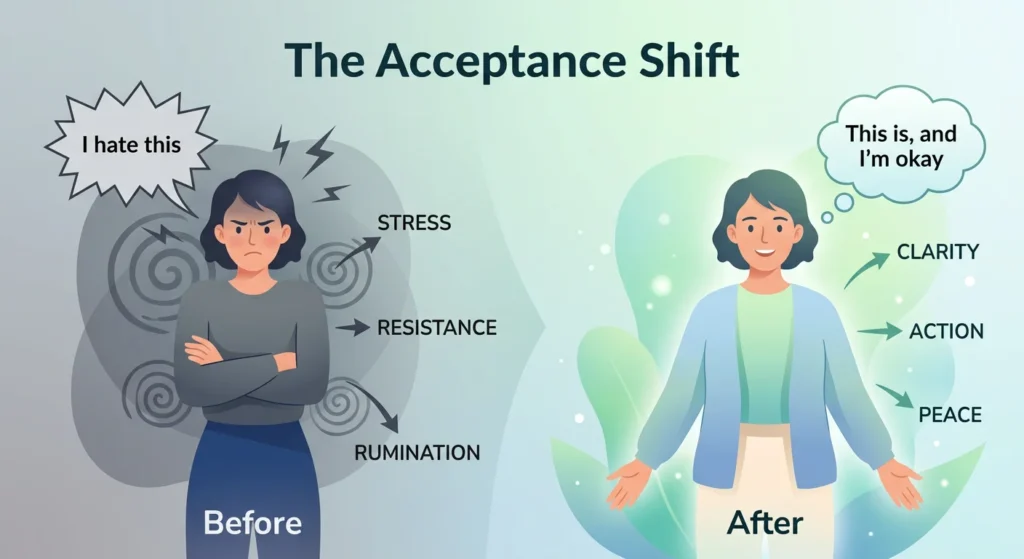
Acceptance isn’t resignation. It’s clarity. You’re not saying “I like this.” You’re saying, “This is true, and I’m not wasting energy fighting reality.”
Why Acceptance Matters
- Ends the internal resistance that creates suffering.
- Improves relationships (you stop demanding people change).
- Builds genuine self-compassion.
- Creates mental space for real solutions.
Acceptance Practices (Start Small)
1. Accept Your Emotions (Don’t Fight Them)
Right now: Notice one uncomfortable feeling (frustration, sadness, anxiety). Instead of pushing it away, say: “I’m feeling this. It’s okay. It will pass.” Sit with it for 1 minute. You’ll notice it actually eases when you stop resisting.
2. The “Reality Check” Conversation
Is someone annoying you? Instead of judgment, acknowledge: “They’re doing what makes sense to them, even if I don’t like it.” This shifts you from blame to understanding – and suddenly they feel less threatening.
3. Self-Compassion Affirmation
Look in the mirror. Say: “I accept myself – my flaws, my mistakes, my limitations.” Sounds cheesy. It works. Do it for 3 days straight and notice the weight lift.
What Acceptance Isn’t
- ❌ Staying in a harmful situation.
- ❌ Giving up on improving things you can change.
- ❌ Suppressing your emotions.
What It Is
- ✅ Facing reality without emotional denial.
- ✅ Directing energy toward what you can influence.
- ✅ Treating yourself with kindness, not judgment.
Recommended Product: The Science of Happiness by Bruce Hood
The Science of Happiness breaks down why acceptance and self-compassion actually rewire your brain. If you want the neuroscience behind why these practices work, this book delivers without the fluff.

The Science of Happiness by Bruce Hood
Ever wondered why some people simply radiate joy while others seem to be perpetually stuck in a frown? Well, dive into The Science of Happiness by the brilliant Bruce Hood, and prepare to have your mind blown! This book unravels the mysteries of happiness, illustrating how our brains perceive joy.
5. Gratitude: Shift Your Focus, Shift Your Life
Gratitude is the fastest happiness hack. It literally rewires your brain to notice good things instead of threats.
Why Gratitude Transforms You
- Increases dopamine and serotonin (natural happy chemicals).
- Reduces anxiety and depression by focusing on what you have (not what you lack).
- Improves relationships (people feel appreciated).
- Builds resilience (hardship hurts less when you see the good around it).
Gratitude Practices (Pick Your Style)
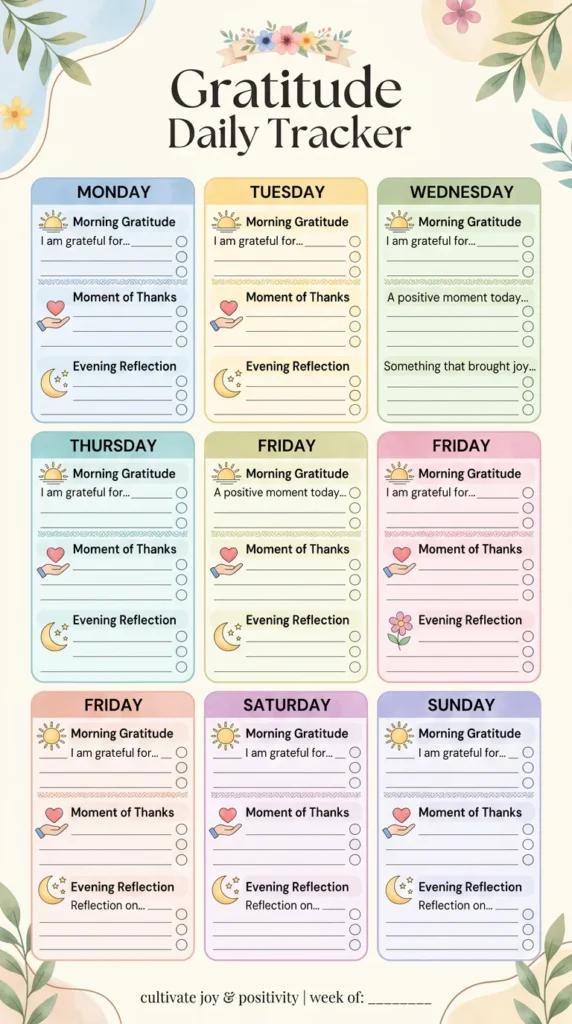
1. The 3-Thing Gratitude Habit (Easiest: 2 minutes)
Every evening, write or think of 3 things you’re grateful for today. They can be tiny:
- A warm cup of coffee.
- A text from a friend.
- 10 minutes of quiet.
- A song that made you smile.
The size doesn’t matter. Specificity does. “I’m grateful for that text from Sarah asking how I’m doing,” beats “I’m grateful for friends.”
2. Gratitude Walking (Active: 15 minutes)
Walk and actively notice 10 things you appreciate – a tree, someone’s smile, the feel of the sun, a bird’s song, your body moving. Pause at each one for 5 seconds. This trains your brain to spot goodness in real-time.
3. Gratitude Letter (Deep: 30 minutes, once a month)
Write a real letter to someone who made a difference in your life. Be specific about what they did and how it affected you. Optionally share it. The writing itself shifts something in you.
The Science
Studies show people who practice gratitude daily report 23% more life satisfaction than the average person. It’s not positive thinking – it’s attention training.
Recommended Product: Happier Hour by Cassie Holmes
Happier Hour teaches time optimization with joy. The principle: it’s not about having more time, it’s about experiencing more of it. Perfect companion to gratitude practice – makes you actually feel your good moments instead of rushing past them.

Happier Hour by Cassie Holmes
Ever wondered how to squeeze more joy from each day? Enter the Happier Hour book by Cassie Holmes! With a witty flair, Holmes teaches us that the secret to happiness is not in the quantity of time, but in the quality of our experiences. Who knew optimizing our hours could be this fun?
Your Weekly Happiness Checklist: The 5 Elements in Action
This Week: Build Your Baseline
| Day | Serve | Mindfulness | Let Go | Accept | Gratitude |
|---|---|---|---|---|---|
| Mon | Help one person (15 min) | 5-min breath work | Write 1 thing you can’t control | Say: “I accept myself” | 3 things you’re grateful for |
| Tue | Micro-volunteering (text/comment/review) | Mindful single task (no phone) | Flexibility challenge (change one routine) | Notice: Don’t judge one emotion | 3 things gratitude tonight |
| Wed | Help one person (15 min) | Mindful walk (noticing 5 senses) | Surrender meditation (10 min) | Reality check conversation | Gratitude walk (10 min) |
| Thu | Micro-volunteering (teach/mentor a bit) | 5-min breath work | Journal: Control vs. Acceptance | Accept 1 person’s flaw without judgment | 3 things grateful for |
| Fri | Help one person (15 min) | Mindful meal (no phone) | Let one plan shift without stress | Self-compassion affirmation (mirror) | Write a thank you to someone |
| Sat | Volunteer or deeper service (optional) | Body scan (10 min) | Flexibility challenge #2 | Meditate on acceptance (5 min) | 3 things grateful for |
| Sun | Rest & reflect on the week’s kindnesses | Mindfulness walk in nature | Journaling: What did I surrender well? | Accept yourself for imperfect effort | Reflect: Week’s best moments |
Your First 48 Hours: Start Today
Hour 0-2:
- [ ] Write 3 things you’re grateful for right now
- [ ] Help one person (call, text, visit, or small task)
Hour 2-4:
- [ ] Do one 5-minute breath meditation
- [ ] Notice one worry you can’t control; write it down and accept it
Hour 4-6:
- [ ] Have one conversation where you fully listen (no phone)
- [ ] Do one activity mindfully (eat, walk, work) without distraction
Hour 6-24:
- [ ] Practice one self-compassion affirmation
- [ ] Write down 3 more gratitudes before bed
By tomorrow morning, you’ll have activated all 5 elements. You’ll feel different.
❓ Common Questions: The 5 Elements for a Happy Life
Can I focus on just one or two elements?
Yes, start there. But the magic happens when all five work together. Serving without gratitude can feel exhausting. Acceptance without presence can feel numb. Start with one or two, add others as they feel natural.
How long until I notice a difference?
Gratitude and mindfulness? 3-7 days of consistent practice. Serving and acceptance? 2-4 weeks. The full synergy? 8-12 weeks. Brain changes take time, but you’ll notice shifts sooner.
What if I fail or skip days?
Perfectly normal. On the day you skip, just return the next day – no guilt, no “restarting.” Progress over perfection. Missing one day doesn’t erase the habit.
Can these elements help with depression or anxiety?
These practices are evidence-based and support mental health. But if you’re in a depressive or anxious episode, pair them with professional support (therapy, doctor). They’re tools to add to, not replace, professional care.
Which element should I prioritize if I don’t have time for all five?
Start with gratitude (2 minutes) + mindfulness (5 minutes). These unlock the others. Once you’re grounded, add serving and acceptance naturally.
Do these practices work for everyone?
The core principles are universal, but the way you practice is personal. If meditation doesn’t resonate, try mindful walking. If journaling feels forced, try gratitude conversations. Adapt, don’t abandon.
5️⃣ The 5 Elements for a Happy Life: Your Year-Long Vision
1 Month In:
You’ve integrated one element deeply. You notice small shifts – fewer anxious thoughts, one strong connection deepened, a bit more joy.
3 Months In:
All five elements feel like second nature. Good days come more frequently. Hard days hurt less. People around you seem happier, too.
6 Months In:
You’ve built unshakeable habits. When life throws challenges, you know exactly what to do. You recover faster.
1 Year In:
The 5 elements aren’t practices anymore – they’re how you naturally show up. Happiness isn’t something you chase. It’s something you’re building every single day.
🪜 Your Next Step: Pick One, Start Now
You don’t need to overhaul your life. Pick one element from the guide above and commit to one practice for 7 days. That’s it.
Which one will you start with?
- Serving: Help someone today.
- Mindfulness: 5-minute breath work tomorrow morning.
- Letting Go: Journal about one thing you can’t control.
- Acceptance: Mirror affirmation tonight.
- Gratitude: Write 3 things before bed.
The easiest entry point? Gratitude. It takes 2 minutes and works immediately.
Start tonight. You’ve got this.
📚 Resources & Further Learning
Books on the 5 Elements
- The Science of Happiness by Bruce Hood – neuroscience behind why these practices work.
- Happier Hour by Cassie Holmes – time optimization + joy.
- The Power of Now by Eckhart Tolle – deep dive into presence.
Products to Support Your Practice
- Muse Headband – real-time meditation feedback builds consistency.
- Sensate – vagus nerve stimulation for releasing stress in 10 minutes.
- Centre of Excellence Coaching Diploma – formal training in helping (and supporting) others.
Recommended Courses
- Meditation Teacher Diploma by Centre of Excellence – deepen your mindfulness practice with structure

Meditation Teacher Diploma Course by the Centre of Excellence
Embark on a journey of self-discovery and personal growth with the Meditation Teacher Diploma Course by the Centre of Excellence. Our experienced instructors will guide you through comprehensive modules designed to deepen your practice and teaching skills.
💭 Final Thought: The 5 Elements Are Your Blueprint
The 5 elements for a happy life – serving, living in the moment, letting go, accepting, and gratitude – aren’t new. They appear in Buddhism, Stoicism, modern psychology, and everyday wisdom.
What’s new is your commitment to them.
Start today. Not tomorrow, not Monday, not when life is perfect. Start with one small action that aligns with one element.
Because happiness isn’t a destination you reach. It’s a direction you choose, every single day.
Learn, Help Family And Friends, And Help The Planet!