❔ What does surrendering to life really mean?
Surrender is often misunderstood. Some people hear the word and imagine defeat, passivity, or the abandonment of ambition. Others associate it with spirituality, trust, faith, or a willingness to accept the unknown.
Healthy surrender is more precise than any of these simplified versions.
Surrendering means releasing the demand to control what cannot be controlled while remaining fully engaged with the actions that are available to you.
You still plan. You still set boundaries. You still prepare, communicate, learn, create, and protect the people and principles that matter. What changes is the psychological grip around the outcome.
This distinction is increasingly relevant in a world of constant uncertainty, performance pressure, digital stimulation, and instant feedback. The brain is designed to predict and pursue rewards. Dopamine helps encode motivational relevance, update expectations, and guide effort. When an important outcome remains uncertain, the reward system can become increasingly preoccupied with anticipation, checking, comparison, and control.
Surrender offers a pause in that loop. It asks us to notice the difference between responsible action and compulsive control.
What if joy is not waiting at the end of perfect control, but becoming more visible when control is no longer consuming all your attention? 🌿
This is the deeper invitation behind holistic living: to participate in life deliberately without demanding that life obey a complete script.
🔵 Surrendering: Embracing Joy in the Journey

Step into the world of learning and personal growth with the Centre of Excellence!
Surrender, acceptance, and agency
Surrender overlaps with acceptance, but the terms are not identical.
- Acceptance acknowledges present reality without adding unnecessary resistance.
- Surrender releases an unproductive struggle with what cannot be changed.
- Agency directs attention and effort toward what can still be influenced.
- Resignation concludes that action is pointless.
- Avoidance attempts to escape uncomfortable reality altogether.
Healthy surrender combines the first three. It does not require the last two.
For example, surrendering after a rejected application may mean accepting that the decision has already happened, releasing repetitive self-punishment, and choosing whether to revise the application, seek feedback, pursue another opportunity, or rest. It does not mean deciding that your abilities are irrelevant or that future effort has no value.
In psychological terms, this is close to psychological flexibility: staying in contact with the present, adapting to changing conditions, and acting according to values even when difficult thoughts and feelings are present.
The World Health Organization’s stress-management guidance similarly emphasizes practical skills for making room for difficult experiences while continuing to do what matters. Surrender is not the disappearance of responsibility. It is responsibility without the unnecessary burden of pretending to control the entire system.
Why control can become exhausting
Control is useful when it is specific, proportionate, and connected to a realistic action. It becomes costly when it expands into an attempt to eliminate uncertainty itself.
Common forms of excessive control include:
- Replaying conversations to find the perfect response.
- Checking messages repeatedly for reassurance.
- Planning every possible outcome before beginning.
- Trying to manage another person’s opinion or emotional state.
- Treating mistakes as threats to identity.
- Refusing to rest until every variable is resolved.
- Searching for certainty when only probability is available.
The body often reveals the difference. Responsible preparation may feel effortful but coherent. Compulsive control tends to feel urgent, repetitive, and temporarily relieving. The relief fades, so the behavior returns.
This is where dopamine becomes relevant. Dopamine is not simply a happiness chemical. It participates in reward prediction, motivation, attention, and learning. An uncertain reward can be especially attention-grabbing because the brain is continually updating its predictions. Checking for a notification, an approval, a sale, a result, or a sign of reassurance may become reinforcing even when the reward is inconsistent.
Surrender does not “remove dopamine.” It changes the relationship with the prediction loop. Instead of immediately checking or controlling, you notice the urge and ask whether the action will genuinely improve the situation or merely reduce discomfort for a few minutes.

Sensate: A Simple Tool for Everyday Stress Relief and Relaxation
Sensate is a non-electrical vagus nerve wellness device that uses low-frequency sound vibrations and synchronized soundscapes to calm your nervous system in just 10 minutes. No meditation experience or breathing techniques required. Clinically shown to reduce stress by 48% in 28 days and improve sleep quality with an average of +55 minutes extra sleep per night. Simply place it on your chest, put on headphones, and let the technology work passively while your body shifts into a state of deep relaxation-measurable brain activity similar to that of experienced meditators in just 10 minutes.
The dopamine paradox of letting go
Dopamine is often discussed as if more is always better. That is a poor model. Dopamine systems help the brain estimate value, energize pursuit, learn from outcomes, and assign salience. They do not guarantee lasting satisfaction.
A person can strongly want an outcome while receiving little genuine liking from it. This distinction appears in research on reward and motivation. The anticipation of a reward may become more powerful than the reward itself.
Control can exploit this system in subtle ways:
- Uncertainty creates a prediction gap.
- The mind generates a strategy to close the gap.
- Checking or manipulating produces brief relief or information.
- The behavior is reinforced.
- A new uncertainty appears.
Surrender interrupts step two or three. It introduces a moment in which uncertainty is experienced rather than immediately neutralized.
That moment can be uncomfortable. But tolerating a manageable amount of uncertainty may allow slower, more stable rewards to become visible again: a conversation, a walk, creative practice, learning, sleep, or time in nature. These rewards may not create the same intense anticipation as digital novelty, yet they can contribute more to a coherent life.
Step into the world of learning and personal growth with the Centre of Excellence!
The benefits of surrendering
1. Surrender can reduce wasted cognitive effort
Trying to control uncontrollable events consumes working memory. When the mind is busy predicting every possible problem, less attention remains for perception, creativity, and decision-making.
Releasing the impossible task does not make you careless. It allows you to redirect effort toward the controllable variables: preparation, timing, communication, boundaries, and recovery.
2. Surrender supports emotional regulation
Emotions become more difficult when they are treated as emergencies that must be removed instantly. Acknowledging disappointment, fear, or grief can reduce the secondary struggle around the emotion.
This does not mean that acceptance immediately makes the feeling pleasant. It means the feeling no longer has to be amplified by thoughts such as “I should not be experiencing this” or “I cannot function until this disappears.”
For readers interested in this process, stress-reduction exercises and ten practical mindfulness exercises for everyday life offer useful starting points.
3. Surrender creates room for creativity
Creativity requires exploration, uncertainty, and the willingness to produce imperfect material. Excessive outcome control narrows attention toward evaluation before discovery has had time to occur.
Surrendering the demand that the first attempt be impressive can restore experimentation. A writer can draft without knowing the final structure. A musician can improvise. An entrepreneur can test an assumption rather than defend it.
The goal is not random behavior. It is to create a feedback-rich environment in which unexpected information can improve the work.
4. Surrender improves adaptability
Rigid plans are often mistaken for commitment. In reality, commitment to a value may require changing the method.
If the value is health, the method may shift from running to strength training after an injury. If the value is connection, the method may shift from frequent messaging to a more honest conversation. If the value is financial security, the method may shift after new information changes the market.
Surrendering an outdated strategy can protect the larger purpose.
5. Surrender can make connection more authentic
Control also appears in relationships: trying to manage how we are perceived, rehearsing every response, or demanding that another person remove all uncertainty. Letting go of impression management can make interaction more honest.
This does not mean abandoning self-awareness or boundaries. It means allowing another person to have an independent perspective rather than treating their reaction as a problem that must be engineered.
The Dream Oak’s article on the importance of authenticity explores this territory from another angle.
6. Surrender restores attention to the present
A mind preoccupied with the future is rarely available for the actual moment. Surrender can return attention to sensory details, conversation, movement, and the ordinary experiences that are not waiting for a dramatic conclusion.
Walking can be especially useful because it combines rhythmic movement, visual change, and a natural reduction in sedentary rumination. A reflective resource such as A Philosophy of Walking can deepen this connection between movement, attention, and meaning.

A Philosophy of Walking by Frédéric Gros
If you thought walking was merely a way to move your feet, think again! In A Philosophy of Walking, Frédéric Gros invites you to stride into a world of contemplation and inspiration. This book is less about the mechanics of walking and more about the metaphysical journey it ignites.
7. Surrender strengthens resilience
Resilience is not the ability to prevent disruption. It is the capacity to adapt, recover, learn, and continue with greater wisdom after disruption occurs.
When a person believes life must follow one exact path, ordinary setbacks can feel like identity collapse. When a person understands that the method may change while the value remains, setbacks become information rather than final verdicts.
Surrender does not mean abandoning discernment
The language of “going with the flow” can become dangerous when it is used to justify passivity.
Do not surrender your safety to an unsafe person. Do not surrender medical care to wishful thinking. Do not surrender financial judgment to magical beliefs. Do not surrender your boundaries because someone calls resistance “negative energy.” Do not surrender your voice when injustice requires clear speech.
A useful test is:
Is this surrender reducing unnecessary control, or is it asking me to ignore evidence and responsibility?
Healthy surrender should increase clarity and agency. If it makes you more vulnerable to manipulation, less able to make decisions, or unwilling to seek help, it has become avoidance or resignation.
This distinction is particularly important for people living with trauma, chronic illness, anxiety, depression, grief, or addiction. Acceptance-based practices can be valuable, but they should be adapted to the person’s condition and supported by qualified care when needed.
Advanced practices for surrendering without losing direction
The control–influence–release map
Divide a stressful situation into three columns:
| Zone | Question | Example |
|---|---|---|
| Control | What can I directly do? | Prepare, communicate, rest, choose a boundary |
| Influence | What might my action affect but not determine? | A decision, relationship, team response |
| Release | What is outside my authority? | Another person’s reaction, past events, exact timing |
Choose one action from the first column, one respectful influence attempt from the second, and a release practice for the third.
This turns surrender into a behavioral process rather than a vague emotional instruction.
The prediction audit
When you feel compelled to control or check, write:
- What outcome am I predicting?
- What reward do I expect if it happens?
- How long do I expect the relief to last?
- What evidence shows that repeated checking helps?
- What valued activity is this urge displacing?
This is a dopamine-aware approach to desire. It does not shame pleasure; it tests whether the behavior is actually producing the value it promises.
Deliberate uncertainty exposure
Choose a low-risk uncertainty and delay your usual control behavior for ten minutes. Do not check the email, rehearse the conversation, or search for reassurance. Notice the urge as a physical wave.
Then extend the delay gradually. The objective is not to prove that nothing bad will happen. It is to teach the nervous system that uncertainty can be experienced without an immediate ritual.
Do not use this exercise for urgent safety issues, medical symptoms, abuse, or situations that genuinely require timely action.
Outcome-independent process goals
Define success by the quality of your participation rather than the final result:
- Ask the honest question.
- Submit the application.
- Complete the creative draft.
- Have the difficult conversation respectfully.
- Take the restorative walk.
- Practice the skill for 20 minutes.
Outcome-independent does not mean outcome-irrelevant. Results still matter. It means the result is not the only evidence that your action was worthwhile.
Planned spontaneity
Surrender is easier when spontaneity has a safe container. Reserve one period each week for an unplanned but bounded activity: a new walking route, an unfamiliar book, a creative experiment, a conversation with someone outside your normal circle, or a visit to a place you have not explored.
This creates novelty without turning your whole life into impulsive decision-making. It also gives the reward system a chance to learn that exploration can be nourishing rather than merely stimulating.
Step into the world of learning and personal growth with the Centre of Excellence!
Surrender and the joy of the journey
A destination provides direction, but it cannot provide continuous emotional reward. The brain adapts to achieved goals, which is one reason satisfaction from success often fades sooner than expected. The next target then becomes necessary to recreate anticipation.
A journey-based orientation adds intermediate rewards: skill, friendship, insight, beauty, courage, humor, and contribution. These rewards are not consolation prizes for failing to arrive. They are the substance of the experience.
The benefits of humor can be relevant here because playfulness loosens the assumption that every moment must serve a serious outcome. Likewise, a philosophy of authenticity can help you distinguish a life that looks successful from one that feels internally coherent.
The journey becomes joyful not because every stage is pleasant, but because attention is no longer permanently mortgaged to the future.
🌿 Your free holistic routine for practicing surrender
Surrender becomes easier when your daily rhythm includes deliberate pauses rather than running entirely on urgency. Begin with the Holistic Routine Created by a Free Expert to Nourish Your Daily Life.
The Holistic Living Routine
📧 Receive Our Free Expert-Crafted Holistic Routine to Nourish Your Daily Life.
Adapt the routine to include:
- A brief morning intention focused on values rather than control.
- Movement or time outdoors.
- One period of focused work without constant checking.
- A nourishing meal and adequate hydration.
- A short mindfulness or breathing practice.
- A meaningful human connection.
- An evening reflection on what to keep, change, and release.
Resources such as Stress Less, Accomplish More, and The Silva Mind Control Method may appeal to readers who want to explore structured approaches to attention, mental training, and stress management. Use them as learning resources, not substitutes for clinical advice.
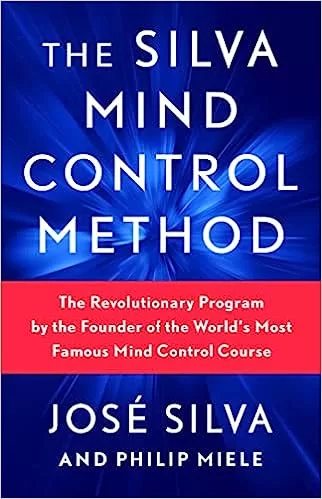
The Silva Mind Control Method by José Silva
Ever wondered what it feels like to have your mind work like a finely tuned machine? Enter The Silva Mind Control Method, your guide to harnessing the power of your thoughts! This practical read promises to transform your mental capabilities like never before.
❓ Frequently asked questions about surrendering
Does surrender mean giving up on my goals?
No. Surrender means releasing excessive attachment to controlling the exact outcome while continuing to take responsible action. You can remain ambitious and still accept uncertainty.
Can surrender reduce stress?
It may reduce stress created by rumination, perfectionism, uncertainty intolerance, and repeated attempts to control uncontrollable events. It does not remove legitimate problems, and it should be combined with practical problem-solving.
What does dopamine have to do with surrender?
Dopamine helps the brain learn from reward prediction, motivation, and salient feedback. Uncertain rewards can encourage repeated checking or pursuit. Surrender creates space to notice those urges and decide whether acting on them serves a meaningful goal.
Is surrender the same as mindfulness?
They overlap but are not identical. Mindfulness trains present-moment awareness and non-reactive observation. Surrender is the release of unnecessary control, often followed by acceptance and values-based action.
Can surrender become unhealthy?
Yes. If surrender means ignoring abuse, refusing treatment, abandoning boundaries, or accepting preventable harm, it is not healthy surrender. The practice should increase safety, clarity, and agency.
How do I surrender when I feel anxious?
Name the anxiety, identify the specific uncertainty, separate controllable actions from uncontrollable outcomes, and choose one small values-based step. If anxiety is persistent or disabling, professional support may be appropriate.
💬 Questions for reflection and discussion
- Which situation are you trying to control beyond what is realistically possible?
- What action remains available after you release the outcome?
- Are you pursuing a reward – or repeatedly pursuing relief from discomfort?
- What would spontaneity look like if it had healthy boundaries?
- Which part of your life needs more planning, and which part needs more trust?
Share your experience. Surrender is not a universal formula; it looks different in grief, creativity, relationships, recovery, work, and spiritual practice. Discussion makes the idea more honest and useful.
Surrender is best understood not as a single dramatic moment, but as a repeated recalibration. You notice where effort has become compulsive, where anticipation has replaced experience, and where fear is disguising itself as preparation. Then you return to what can be done now.
The future may bring increasingly sophisticated systems designed to predict our preferences, capture our attention, and intensify reward anticipation. The more accurately technology learns what we are likely to click, buy, or check, the more valuable the human ability to pause may become.
Perhaps the next stage of well-being will not be about maximizing stimulation or eliminating desire. It will be about developing reward literacy: understanding which experiences energize us, which merely hook us, which deepen our lives, and which leave us needing another hit of anticipation.
Surrendering does not remove the river’s current. It teaches us to stop exhausting ourselves by arguing with its existence. We still steer when steering is possible, swim when swimming is necessary, and rest when the current carries us. Joy in the journey begins when our attention becomes available for the life that is already happening – not only the outcome we hope will happen next. 🌅
Editorial note: This article is educational and not a substitute for medical or psychological care. Healthy surrender never means tolerating abuse, abandoning safety, refusing treatment, or giving up responsibility.
📒 Further Reading:
- 💍 The Meanings Behind Rings: Symbols of Love, Promise & Spiritual Connection
- 🌟 Acceptance: Living a Fulfilling Life Without Being Ruled by Desire
- 🌀 Altered States of Mind: Discover 7 Evidence-Informed Ways to Explore Consciousness
- 🚿 Cold or Hot Shower? Find Out Which Is Better for Your Health
- ⏰ Synchronicities: When Coincidence Becomes a Guide to Your Life’s Purpose
References:
- Bromberg-Martin, E. S., Matsumoto, M., & Hikosaka, O. (2010). “Dopamine in Motivational Control: Rewarding, Aversive, and Alerting.” Neuron, 68(5), 815–834.
- Schultz, W. (2016). “Dopamine Reward Prediction-Error Signalling: A Two-Component Response.” Nature Reviews Neuroscience, 17, 183–195.
- Kashdan, T. B., & Rottenberg, J. (2010). “Psychological Flexibility as a Fundamental Aspect of Health.” Clinical Psychology Review, 30(7), 865–878.
- Lindsay, E. K., & Creswell, J. D. (2017). “Mechanisms of Mindfulness Training: Monitor and Acceptance Theory.” Clinical Psychology Review, 51, 48–59.
- Keng, S.-L., Smoski, M. J., & Robins, C. J. (2011). “Effects of Mindfulness on Psychological Health.” Clinical Psychology Review, 31(6), 1041–1056.
- World Health Organization. “Doing What Matters in Times of Stress: An Illustrated Guide.”
- World Health Organization. “Mental Health.”
- National Institute of Mental Health. “Depression.”
- National Institute on Drug Abuse. “Drugs and the Brain.”
Learn, Help Family And Friends, And Help The Planet!