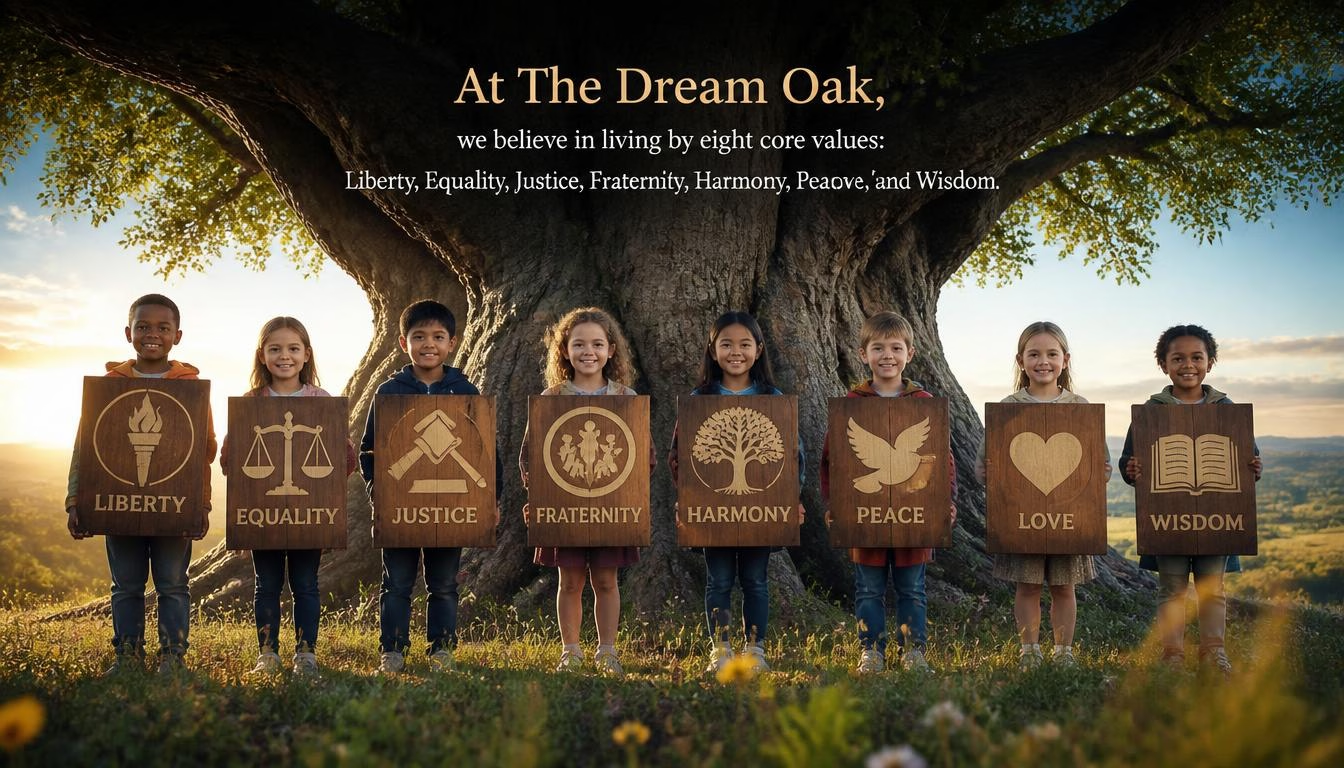
Values aren’t just abstract concepts – they’re the invisible architecture of thriving societies. Research from the Stanford Center on Longevity shows that individuals anchored in core values report 27% higher life satisfaction and are 3x more likely to inspire positive change in their communities. Yet most people can’t name their own.
At The Dream Oak, we believe that understanding and living by eight core values – Liberty, Equality, Justice, Fraternity, Harmony, Peace, Love, and Wisdom – transforms not only your life but ripples outward, reshaping the world around you. This isn’t philosophy. It’s behavioral science translated into action.
Let’s explore what these values mean, why they matter, and how to embed them into your daily life starting today.
🗽 How Values Shape Societal Growth: Discover 8 Core Values
8️⃣ The 8 Core Values That Drive Social Growth
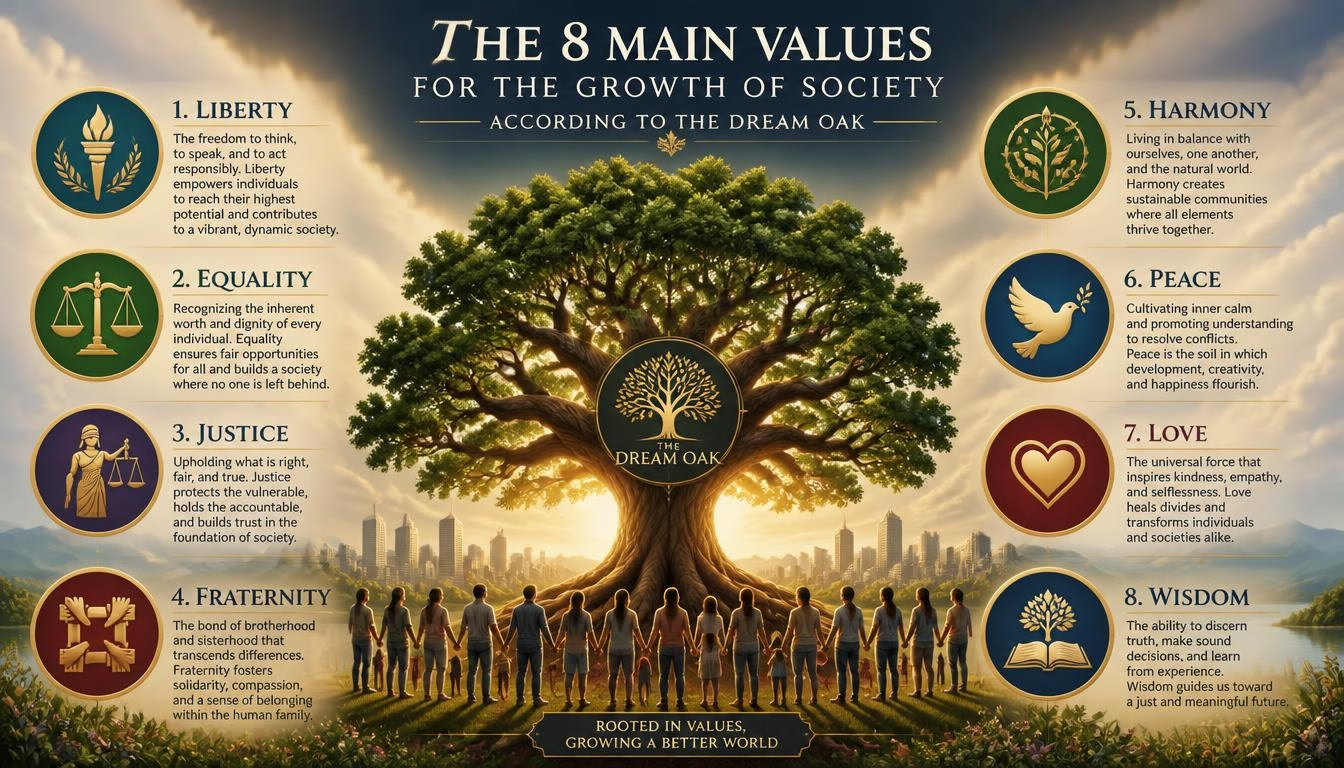
Liberty: Freedom as a Foundation for Authenticity
What it means: Liberty is the freedom to make independent choices, to express yourself authentically, and to pursue your vision without external constraints.
Historical context: The principle emerged as central to the Enlightenment (17th-18th century), championed by philosophers like John Locke and Jean-Jacques Rousseau. Locke’s concept of “natural rights” positioned liberty not as a privilege but as inherent to human dignity.
Why it matters: According to self-determination theory (Deci & Ryan, 2000), autonomy – the psychological need to feel in control of your choices – is fundamental to well-being and motivation. When you exercise liberty, you unlock creativity, resilience, and intrinsic drive.
Real-world ripple: An individual who exercises liberty to pursue their passion (starting a business, learning an art, changing careers) becomes a model for others, normalizing courage and self-direction in their circles.
Equality: Recognizing Shared Human Worth
What it means: Equality is the principle that every person deserves equal respect, equal opportunity, and equal voice – regardless of race, gender, socioeconomic status, or background.
Historical context: The Universal Declaration of Human Rights (1948) enshrined equality as foundational to peace and dignity. Modern behavioral research confirms this: when people feel seen and equal, they’re more collaborative and trusting.
Why it matters: Inclusive organizations (those that actively practice equality) show 22% lower turnover and higher innovation rates (McKinsey, 2020). Equality isn’t nice – it’s a performance multiplier.
Real-world ripple: When you treat someone with genuine equality – listening without judgment, valuing their input – you dismantle the shame cycles that isolate people. That person then carries that feeling forward.
Justice: Fairness as a Social Glue
What it means: Justice means treating people fairly, correcting wrongs, and creating systems where merit and effort are honored – not exploited.
Historical context: Aristotle defined justice as “giving people what they deserve.” Modern social contract theory (Rawls, 1971) expands this: a just society is one where inequalities only exist if they benefit the least advantaged.
Why it matters: Societies with high perceived fairness have lower crime, better health outcomes, and greater civic participation. People will sacrifice for a system they believe is just.
Real-world ripple: One act of standing up for someone treated unfairly – defending a colleague, advocating for policy change, refusing complicity – signals to everyone watching that justice matters. It permits others to do the same.
Fraternity: Solidarity and Collective Belonging
What it means: Fraternity is the bond of mutual respect, support, and shared responsibility. It’s feeling part of something larger than yourself.
Historical context: The French Revolution’s motto – “Liberty, Equality, Fraternity” – positioned this triad as inseparable. You cannot have lasting equality without fraternity (the will to support one another); you cannot have meaningful liberty without fraternity (the safety net to take risks).
Why it matters: Loneliness is as deadly as smoking 15 cigarettes a day (Harvard Study of Adult Development). Conversely, people embedded in communities of mutual support live longer, recover faster from illness, and report higher meaning. Fraternity is a health intervention.
Real-world ripple: When you show up for someone – mentor a young person, help a neighbor, volunteer – you activate their sense of belonging. That belonging then extends: they help others, creating concentric circles of care.
Harmony: Balance and Conflict Resolution
What it means: Harmony is the state where differences coexist, and conflicts resolve through dialogue, compromise, and mutual understanding – not domination.
Historical context: Eastern philosophy (Buddhism, Taoism) positioned harmony as central to flourishing. The Yin-Yang symbol captures it: opposing forces in dynamic balance, each creating space for the other.
Why it matters: Workplaces with high psychological safety (where people feel safe to disagree constructively) show 76% higher engagement and lower burnout (Google’s Project Aristotle). Harmony enables growth; conflict without harmony breeds resentment.
Real-world ripple: When you model disagreement with respect – listening deeply, finding common ground, valuing the other person’s perspective – you create a template for everyone in that space. It becomes the norm.
Peace: Internal Calm and External Non-Violence
What it means: Peace is tranquility within yourself (freedom from chronic stress, anxiety, inner conflict) and the commitment to resolve external conflicts without violence or aggression.
Historical context: The Peace Research Movement (1950s onward) defined peace not as the absence of war but as the presence of justice, cooperation, and the conditions for human flourishing (Johan Galtung’s “positive peace”).
Why it matters: Chronic stress from unresolved conflict floods your body with cortisol, impairing immune function, sleep, and decision-making. Peace is physiology. When you cultivate peace internally, your nervous system becomes coherent – and that coherence is contagious.
Real-world ripple: A person who has done their own inner peace work (through meditation, therapy, or spiritual practice) radiates a different energy. Others in their presence naturally calm down. Peace spreads.
Love: Compassion, Connection, and Generosity
What it means: Love is the active practice of compassion, empathy, and unconditional regard – for yourself and others. It’s the decision to see the humanity in someone, even when it’s hard.
Historical context: Philosopher Martha Nussbaum defines love as “the appropriate recognition of another person’s worth and vulnerability.” It’s not sentimentality; it’s a sober, courageous choice.
Why it matters: Oxytocin (the “love hormone”) isn’t metaphorical – it reduces inflammation, lowers blood pressure, and increases pain tolerance. Acts of love and generosity create measurable physiological shifts in both giver and receiver. Love is medicine.
Real-world ripple: One genuine act of kindness – listening when someone’s hurting, forgiving someone, offering help without expectation – can redirect someone’s life trajectory. Love is the most contagious force we have.
Wisdom: Integrated Knowledge and Right Action
What it means: Wisdom is the synthesis of knowledge (facts), experience (what you’ve learned), and discernment (knowing which principles apply when). It’s judgment applied with humility.
Historical context: Aristotle called wisdom “phronesis” – practical wisdom, the ability to perceive what a situation calls for and act accordingly. It’s not about knowing everything; it’s about knowing what matters most right now.
Why it matters: People guided by wisdom make decisions that compound over time. They learn from failures, adjust course, and build lives of increasing coherence and impact. Wisdom is the difference between cleverness and genuine effectiveness.
Real-world ripple: When you pause before reacting, consult your values, and ask, “What does this situation truly need?” – you model deliberation. That slowing down becomes contagious in a culture of reactivity.

For unparalleled online learning experiences, New Skills Academy!
🏗️ The Mechanism: How Individual Values Create Collective Growth
Here’s the insight most miss: values don’t work in isolation. They create feedback loops.
When you embody Liberty, you signal to others that autonomy is possible. That signal strengthens Fraternity (people feel safe to be themselves around you). Authentic connection deepens Love. Love creates the safety for Peace. Peace opens space for Wisdom (you can’t think clearly in a nervous system flooded with threat). Wisdom makes you see injustice clearly, activating Justice. Justice requires Equality – you can’t champion one person’s cause without valuing all. And Equality thrives in Harmony, where differences are honored.
The Cascade:
- You embody a value → You signal it’s possible.
- Others witness it → They feel permission to explore it.
- Small groups form → Families, teams, communities that share the value.
- Culture shifts → The value becomes normalized.
- Systems change → Institutions reflect the value.
This isn’t mystical. It’s how social norms actually propagate (Sunstein’s “group polarization,” Gladwell’s “tipping point”). One person practicing Justice might advocate for a fairer hiring process. That process hires more capable people. Those people bring Wisdom. Wisdom improves outcomes. Better outcomes attract more people. Suddenly, fairness is a competitive advantage.
For unparalleled online learning experiences, New Skills Academy!
❔ How to Apply These Values in Your Daily Life: A Practical Framework
Knowing a value and living it are different things. Here’s how to embed each into your week:
📋 The Values Integration Map
Step 1: Choose ONE value to focus on each week (rotate through all 8 over two months).
Step 2: Identify a specific context (work, family, friendships, community).
Step 3: Set a micro-commitment (one concrete action, <5 min daily).
Step 4: Notice the ripple (what shifts in that relationship or context?).
🎯 Week-by-Week Activation
| Value | Context | Micro-Commitment | Ripple to Watch |
|---|---|---|---|
| Liberty | Work | Suggest one idea that’s authentically yours in a meeting | Do colleagues feel safer being themselves? |
| Equality | Family | Ask one person’s opinion on a decision and actually consider it | Does their voice carry more weight next time? |
| Justice | Community | Speak up against one unfair comment or policy | Do others follow suit? |
| Fraternity | Friendship | Offer help without being asked | Does the person reciprocate or extend that care elsewhere? |
| Harmony | Conflict | Listen to resolve, not to rebut | Does the other person soften? |
| Peace | Personal | Meditate or pause for 3 min before reacting | Do you respond differently? Does your tone shift? |
| Love | Relationships | Say one genuine appreciation to someone | Do they open up? |
| Wisdom | Decisions | Pause and ask “What does this moment need?” before acting | Do your choices feel more aligned? |
🧠 The Weekly Reflection Protocol
Every Sunday, ask yourself:
- Which value did I embody this week? (Be specific – where, how, with whom?)
- Where did I fall short? (No judgment – just notice.)
- What did I learn about this value? (What made it real, not abstract?)
- Who witnessed it? (Who saw you live this value? Did it shift them?)
- What’s one micro-commitment for next week? (Build momentum.)
Output: A simple journal entry (3-5 sentences). Over time, you’ll see patterns – which values come naturally, which challenge you, which create the biggest ripples in your world.
❓ FAQ: Questions About Values and Societal Growth
1. How long does it take to see real change by living these values?
Changes in your own life (peace, clarity, relationships) often show up in 2-4 weeks. Changes in your wider community take longer – 6-12 months – because they require multiple people to shift. But the cascade compounds: the longer you practice, the more others catch on, and the faster momentum builds.
The key is consistency over intensity. A 5-minute daily micro-commitment beats sporadic grand gestures every time.
2. What if my environment doesn’t share my values?
You don’t need everyone aligned. Research on social tipping points (Sunstein, 2009) suggests that 10-25% of a group actively practicing a value can shift the entire culture. Start with one person – a friend, colleague, family member. Build from there. You’re planting seeds, not expecting instant forests.
One person practicing Justice in an unfair workplace becomes a model. That model gives others permission. Over time, the culture shifts. It’s slower, but it’s real.
3. Can I practice all 8 values simultaneously, or should I focus on one?
Start with one. Trying to overhaul everything at once leads to burnout and shallow practice. Pick a value that resonates most deeply – the one that feels most alive to you right now. Practice it for 4 weeks, then add another. By rotating through all 8 over two months, you’ll develop competence and confidence. After that, they become integrated – you’re not “trying” anymore; you’re being.
The 8-week challenge at the end of this article gives you a framework for exactly this.
4. What if practicing one value seems to conflict with another?
Justice might feel like it conflicts with Harmony. Standing up for what’s right can disrupt peace. Or Liberty might seem to clash with Fraternity – autonomy at the expense of community.
But at the deepest level, values rarely conflict. The tension is usually a sign you’re missing a middle value. If standing up for Justice feels harsh, you likely need more Wisdom (discerning how to pursue justice respectfully) and Love (holding the other person’s humanity while disagreeing firmly).
When values feel at odds, go deeper. The conflict is usually in the application, not the principle.
5. How do I know if I’m truly living a value or just performing it?
True values are lived from authenticity, not obligation. Ask yourself: Do I practice this when no one’s watching? If yes, it’s genuine. If you’re only performing for approval or image, that’s a starting point – but not the destination.
Here’s the test: Can you feel the value? Does practicing Peace actually calm your nervous system? Does Love create genuine warmth, not just the appearance of kindness? If yes, you’re living it. If you feel hollow, you’re performing – and that’s worth noticing.
The micro-commitments framework in Section 3 helps you live values privately, which builds genuine roots faster.
6. Which value should I start with if I don’t know where to begin?
Let your life right now tell you.
Feeling constrained or stifled? Start with Liberty.
Outraged by unfairness? Start with Justice.
Lonely or disconnected? Start with Love or Fraternity.
Anxious or reactive? Start with Peace.
Confused about direction? Start with Wisdom.
Seeing conflict everywhere? Start with Harmony.
Feeling unequal or invisible? Start with Equality.
Lost sense of unity? Start with Fraternity.
Your intuition knows. Trust it.
7. What’s the difference between personal values and societal values?
Personal values are how you choose to live. Societal values are the norms a culture endorses. The beauty of this framework is that personal practice creates societal shift.
When you embody Equality in how you treat people, you’re not just improving your relationships – you’re signaling to everyone watching that equality matters. Your kids see it. Your colleagues see it. Your community sees it. Over time, that signal normalizes equality as a cultural value.
Social change doesn’t start with laws or institutions (though it can create those). It starts with individuals choosing to live differently. You’re the seed. The culture is the forest.
8. How do I handle value conflicts with people I’m close to?
This is real and hard. What if your partner doesn’t value Peace (they’re conflict-avoidant or aggressive)? What if your family prioritizes Liberty so much that Fraternity (collective responsibility) gets ignored?
Three steps:
– Practice your value anyway – don’t abandon it to match someone else’s values.
– Lead by example – show, don’t tell. Let them see what Peace or Fraternity looks like.
– Have honest conversations – “I value Peace because it helps me think clearly. I’d like our conflicts to feel safe. Can we try this approach?”
You can’t force alignment, but you can invite it. And sometimes, living your values differently is enough to gently shift how others see possibility.
💫 Deepen Your Practice: Courses & Books That Cultivate Each Value
Understanding values intellectually is one thing. Living them requires practice, community, and the right tools. Here’s what actually works:
🎓 Courses to Activate Each Value
For Liberty & Authenticity:
Neuro-Linguistic Programming Courses – New Skills Academy (€25-€50)
Why: NLP teaches you to reprogram limiting beliefs that block Liberty. You’ll uncover where you’re playing small and why. Then you’ll rebuild your identity around authentic choice.
Who it’s for: People who know they should be doing something but can’t break free from fear or obligation.
For Justice & Courage:
Advanced Diploma in Life Coaching – Centre of Excellence (€40-€80)
Why: Life coaching trains you to see systems clearly – where fairness breaks down, where change is needed. Coaches become advocates. You learn to stand up for what’s right constructively.
Who it’s for: People driven by justice who want to channel that energy into real change.
For Love & Connection:
Mindfulness for Personal Transformation – New Skills Academy (€30-€60)
Why: You can’t truly love – yourself or others – from a defended, reactive state. Mindfulness softens that armor. It opens your nervous system to genuine compassion.
Who it’s for: People who intellectually believe in love but struggle to feel it or express it.
For Peace & Nervous System Resilience:
Biohacking Your Physical & Mental Health – Academy for Health & Fitness (Was €415, now €25)
Why: Peace requires a resilient body and nervous system. This course teaches you the science and the how – sleep optimization, movement, nutrition, stress recovery. Without this foundation, everything else is willpower against biology.
Who it’s for: High-stress individuals, anxious people, anyone whose nervous system is running in overdrive.
For Wisdom & Discernment:
The Science of Happiness by Bruce Hood – Book (€15-€30)
Why: Wisdom requires understanding why things work. Bruce Hood’s book is the science-backed guide to how happiness, meaning, and good decision-making actually function neurologically. Read it, and Wisdom stops being abstract.
Who it’s for: People who want to understand the why behind values, not just follow rules.
For Harmony & Conflict Resolution:
Advanced Diploma in Life Coaching – Centre of Excellence (€40-€80)
Why: Same course as Justice, but the angle is different: coaches learn to hold multiple perspectives simultaneously. That’s Harmony. You learn to see why someone disagrees without making them wrong.
Who it’s for: People in leadership, relationships, or communities where harmony is constantly tested.
For Equality & Inclusive Practice:
Mindfulness for Personal Transformation Certificate – Centre of Excellence (€30-€120)
Why: Equality requires seeing people without judgment or hierarchy. Mindfulness trains exactly this – non-judgmental awareness. You learn to look at everyone – including yourself – with equal compassion.
Who it’s for: People in positions of power (managers, parents, educators) who want to practice genuine equality.
For Fraternity & Community:
New Skills Academy: Mindfulness for Children Training (€60-€120)
Why: Fraternity is shared practice. This course – especially when learned in community – teaches you to build belonging. Plus, if you have kids or work with young people, you’re multiplying the impact of Fraternity.
Who it’s for: People building teams, families, or communities who want shared values.
📚 Books That Illuminate & Sustain Values
Foundational Understanding:
The Science of Happiness by Bruce Hood (€15-€30)
Takes Love, Peace, and Wisdom from feel-good abstractions to neuroscience. You’ll understand why these values aren’t optional – they’re how humans thrive.

The Science of Happiness by Bruce Hood
Ever wondered why some people simply radiate joy while others seem to be perpetually stuck in a frown? Well, dive into The Science of Happiness by the brilliant Bruce Hood, and prepare to have your mind blown! This book unravels the mysteries of happiness, illustrating how our brains perceive joy.
Practical Application:
Biohacking Your Physical & Mental Health
The operating manual for Peace. Master sleep, stress recovery, and energy. With a resilient nervous system, all the other values become easier to live.
Biohacking Your Physical and Mental Health: Optimize Performance, Clarity & Resilience
Biohacking Your Physical and Mental Health: Optimize Performance, Clarity & Resilience. Master evidence-based strategies to optimize physical health, mental clarity & resilience. Expert-led biohacking course-12-month access. Start now at £25.
Philosophical Depth:
The Neville Goddard Deluxe Collection (€35-€50)
14 books on consciousness, imagination, and the power of belief. Dense but transformative. Brings Wisdom and Liberty into alignment – you realize you are creating your reality.
Daily Practice:
Move Your Stuff, Change Your Life by Karen Rauch Carter (€18)
Feng Shui as a tool for Harmony and Peace. Sounds esoteric, but it works: aligning your physical space with intention creates emotional and relational shifts. A practical book that embeds values into your environment.
Community & Connection:
Awakening Your Psychic Powers by Henry Reed (€22)
Develops your intuition – which is Wisdom in real time. Learn to sense what people need, what situations call for, where Justice or Love is being blocked. Intuition is values in action.
🎯 The Complete Values Toolkit
If you’re serious about this, here’s the roadmap:
Month 1: Foundation
- Take Mindfulness for Personal Transformation (builds nervous system resilience for Peace).
- Read The Science of Happiness (understand the why behind values – feeds Wisdom).
Month 2: Application
- Take NLP Courses (reprogram blocks to Liberty and authenticity).
- Read Biohacking Your Physical & Mental Health (anchor Peace in your body).
Month 3: Integration
- Take Advanced Diploma in Life Coaching (learn to see systems clearly for Justice, navigate Harmony).
- Read Move Your Stuff, Change Your Life (embed Harmony into your environment).
Month 4: Deepening
- Read The Neville Goddard Collection (Wisdom + Liberty merged).
- Take Mindfulness for Children (if you have family/community – multiply the impact of Fraternity).
Total investment: €200-€400 over 4 months
Return: A life rebuilt on values that actually work
💡 How to Use These Resources
Don’t take them all at once. Pick one course that matches your starting value (see the FAQ above: “Which value should I start with?”). Take it. Apply it. Then pick the next one.
Don’t just consume. After each course/book, practice what you learned for 2 weeks before moving on. Use the Weekly Reflection Protocol from Section 3.
Track the ripples. As you go deeper, notice:
- What shifts in you (clarity, calm, courage)?
- What shifts in your relationships?
- Who notices the change in you?
- What conversations become possible?
This is how you know it’s working – not because you feel more virtuous, but because your life actually changes.
🪜 Your Next Step: The 8-Week Values Challenge
Don’t just read this. Live it.
Here’s how:
- Pick your starting value (choose the one that resonates most).
- Set a micro-commitment (use the table above as a template).
- Journal weekly (use the reflection protocol – 3-5 sentences every Sunday).
- After 4 weeks, rotate to a new value.
- By week 8, you’ll have deepened in two values and have a clear sense of which ones are your north star.
The real magic happens after week 8: You stop trying and start being. The values become you. And that’s when the ripples compound.
🎯 Key Takeaways
- Values aren’t abstract – they’re the architecture of thriving lives and communities.
- Eight core values – Liberty, Equality, Justice, Fraternity, Harmony, Peace, Love, and Wisdom – compound when lived together.
- Change happens in layers: first in you, then in your circles, then in your community, then in culture.
- Start with one value, one micro-commitment, one week at a time. Small is sustainable.
- Track the ripples. Notice who shifts, what conversations change, what becomes possible.
🚀 Ready to Go Deeper?
Explore these related articles on The Dream Oak:
- Body, Mind, and Soul For A Fulfilled Life – the foundational philosophy behind all eight values.
- The 5 Pillars of Personal Growth – how values fit into your larger growth journey.
- Meditation: A Beginner’s Guide – the practice that anchors Peace and Wisdom.
- Personal Growth vs Personal Development: What Works + 10 Proven Tactics.
- The Power of Forgiveness: Transform Your Life Through Letting Go. Forgiveness! Why?
- The Power of Gratitude: Transform Your Life Through the Science and Practice of Thankfulness.
Learn, Help Family And Friends, And Help The Planet!