Philosophy as a Modern Necessity
In an era dominated by rapid technological advancement and unprecedented global complexities, the seemingly abstract discipline of philosophy is not merely a relic of classical study – it’s an increasingly vital toolkit for navigating the modern world.
While STEM fields rightly command significant attention and investment, a growing consensus among educators, industry leaders, and policymakers suggests that philosophical inquiry provides the foundational critical thinking, ethical reasoning, and adaptability crucial for addressing the ‘who,’ ‘what,’ ‘when,’ ‘where,’ and ‘why’ of our interconnected future.
This understanding aligns with the broader framework of holistic living – philosophy develops not just your intellect, but your character, your values, and your capacity to live with purpose.
In this guide, you’ll learn:
- Why philosophy has been sidelined (and why that’s a mistake).
- How philosophical thinking rewires your brain for leadership.
- The 4 critical philosophical domains for the 21st century.
- How philosophy integrates with personal growth and mindfulness practice.
- Your practical philosophy protocol.
The 21st Century’s Most Critical Skill
The Misunderstood Foundation of Progress
For centuries, philosophy served as the bedrock of all intellectual pursuits, encompassing what we now delineate as science, ethics, logic, and metaphysics. Ancient Greek thinkers like Plato and Aristotle laid the groundwork for Western thought, while Eastern philosophies offered equally profound insights into human existence and societal harmony.
However, with the rise of specialized scientific disciplines from the Enlightenment onwards, philosophy gradually became perceived as an esoteric academic pursuit, often detached from practical concerns. Its utility was questioned, particularly in an educational landscape increasingly focused on vocational training and measurable, tangible outcomes.
Why Philosophy Was Abandoned (And Why It Shouldn’t Have Been)
The 20th century cemented this perception. As industrialization and technological innovation prioritized engineering, mathematics, and empirical sciences, educational curricula reflected this shift, marginalizing humanities and philosophy in particular, in favor of fields promising direct economic returns.
This trend continues into the 21st century, where the allure of coding bootcamps and AI specializations often overshadows the perceived ‘soft skills’ offered by philosophical study. Yet, this narrow focus risks creating a generation of highly skilled technicians who lack the broader contextual understanding, ethical compass, and critical discernment necessary to wisely apply their technical prowess.
The irony: The very problems demanding technical solutions – climate change, AI ethics, social fragmentation – are fundamentally philosophical problems. You can’t code your way out of a question about what’s right.
Unparalleled online learning experiences, New Skills Academy!
Philosophy as Cognitive Training: Building Superior Critical Thinking
What Philosophy Actually Does to Your Brain
At its core, philosophy is rigorous training in critical thinking, logical analysis, and coherent argumentation. It teaches individuals not merely what to think, but how to think effectively.
The cognitive process:
Students of philosophy engage with:
- Complex texts: Parsing arguments for validity and soundness.
- Opposing viewpoints: Understanding perspectives they disagree with.
- Logical fallacies: Identifying where reasoning breaks down.
- Their own assumptions: Questioning what they take for granted.
This process hones an unparalleled ability to:
- Analyze information critically.
- Break down intricate problems into manageable components.
- Evaluate diverse perspectives.
- Construct reasoned positions.
- Adapt arguments based on new evidence.
The Evidence: Why Philosophy Majors Excel
Studies consistently show that philosophy majors outperform peers from other disciplines on standardized tests requiring analytical reasoning, such as the LSAT (Law School Admission Test) and GRE (Graduate Record Examinations).
Why? Because philosophy is practice in exactly what these tests measure: logical reasoning under uncertainty.
Moreover, top technology firms – including Google, LinkedIn, and Apple – have increasingly recognized this value, hiring philosophy graduates for roles requiring:
- Advanced problem-solving.
- Ethical oversight.
- Strategic foresight.
- Innovation leadership.
These companies understand something universities are slowly rediscovering: critical thinking is the most valuable skill in a rapidly changing world. You can teach someone specific technologies; you can’t easily teach them how to think clearly when the domain is unfamiliar.

The 4 Critical Philosophical Domains for the 21st Century
Domain 1: Ethics – Navigating the Moral Labyrinths of Technology
The rapid advancement of artificial intelligence, biotechnology, and autonomous systems presents humanity with profound ethical dilemmas previously confined to science fiction.
Questions demanding philosophical attention:
- Should AI be allowed to make life-and-death decisions?
- What are the moral implications of genetic engineering?
- How do we balance privacy with security?
- What does “consent” mean in the age of data collection?
- Can algorithms be racist? And if so, whose fault is it?
Why philosophy matters:
Ethical theories – from utilitarianism (greatest good for greatest number) to deontology (certain acts are right/wrong regardless of consequences) to virtue ethics (what character should we cultivate) – offer systematic approaches to moral reasoning.
Philosophers are uniquely positioned to articulate the moral implications of emerging technologies, guiding policy development and fostering responsible innovation. Without a strong ethical foundation, technological progress risks outstripping our capacity for moral governance, leading to unintended and potentially catastrophic consequences.
Real example: The ethics of AI facial recognition is fundamentally a philosophical question, not a technical one. Engineers can build the system; philosophers help us decide if we should.
Domain 2: Epistemology – Discerning Truth in an Age of Disinformation
Epistemology – the branch of philosophy concerned with the theory of knowledge – directly addresses questions of truth, belief, justification, and skepticism.
The problem: The digital age has created an environment ripe for misinformation, echo chambers, and erosion of shared facts.
What epistemology offers:
- Frameworks for evaluating sources.
- Understanding of cognitive bias.
- Recognition of your own limits (what you can’t know).
- Tools for distinguishing propaganda from evidence.
In an era where deepfakes blur the line between reality and fabrication, and social media algorithms amplify extreme views, the ability to engage in rigorous epistemological inquiry is paramount.
Citizens trained in philosophical discernment are better equipped to:
- Navigate the complex information landscape.
- Resist manipulation.
- Contribute to informed public discourse.
This skill is not just academic; it’s a civic imperative, fostering a more resilient and intellectually robust democracy capable of resisting forces that seek to undermine truth and reason.
Domain 3: Existentialism & Meaning – Finding Purpose in Volatility
The 21st century is characterized by unprecedented volatility, uncertainty, complexity, and ambiguity (VUCA). Job markets shift rapidly; global crises emerge unexpectedly; personal identities are constantly negotiated.
Existential philosophy offers profound insights into:
- Authenticity: How to live in alignment with your values.
- Freedom: Understanding your actual agency vs. perceived constraints.
- Meaning: Creating purpose rather than waiting to discover it.
- Mortality: How awareness of life’s finitude clarifies priorities.
Philosophers like Viktor Frankl (who survived Nazi concentration camps) demonstrated that meaning-making is the primary human drive – more powerful than comfort or even survival instinct.
Practical application: When you understand existential philosophy, job market disruption becomes an invitation to clarify what you actually want, rather than a threat to your identity. This reframing is foundational to resilience.
As explored in the importance of personal growth, existentialism teaches that growth isn’t something that happens to you – it’s something you actively choose.

Domain 4: Metaphysics & Systems Thinking – Understanding Interconnection
Metaphysics asks: What is real? How do things relate? What is the fundamental nature of reality?
Why it matters now:
Modern challenges (climate change, pandemics, social fragmentation) are systems problems. They can’t be solved by optimizing individual components; you need to understand how everything connects.
Philosophical systems thinking teaches:
- How to see hidden connections.
- How changing one variable affects the whole.
- The limits of reductionist thinking.
- How to reason about emergent properties.
This capacity for systems-level thinking is why Silicon Valley increasingly values philosophy: building sustainable AI, creating ethical tech ecosystems, and navigating complex regulatory environments all require understanding how pieces fit together.
How Philosophy Connects to Holistic Living
Philosophy isn’t separate from wellness and personal development – it’s foundational to it.
When you engage with philosophical questions, you’re engaging in the same reflective, introspective practice as mindfulness meditation. Both practices:
- Slow your mind.
- Question automatic assumptions.
- Build awareness of your own thinking.
- Develop compassion (for others and yourself).
Moreover, philosophy directly supports the other pillars of holistic living:
Physical health: Philosophical understanding of mortality and meaning clarifies why you’d invest in sleep, movement, and nutrition
Mental clarity: Philosophical training in reasoning prevents rumination and builds focus
Emotional resilience: Existential philosophy teaches that facing failure is part of growth, reducing shame and building acceptance
Relationships: Understanding different philosophical worldviews builds empathy and bridges across difference
Purpose: Philosophy is the practice of clarifying what matters and why
Unparalleled online learning experiences, New Skills Academy!
Philosophy in Practice: The 3 Schools That Shape Modern Thinking
School 1: Stoicism (Ancient Rome) – Resilience Through Virtue
Core idea: You can’t control external events, but you can control your response. Focus your energy on what’s within your power.
For the 21st century:
- Leaders use Stoicism to maintain clarity during crises.
- It teaches emotional resilience without emotional suppression.
- It grounds decision-making in values rather than fear.
Modern practitioners: Naval aviators, elite athletes, and tech founders study Stoicism for precisely this reason – it builds the mental toughness to navigate uncertainty.
School 2: Pragmatism (American Philosophy) – Usefulness as Truth
Core idea: Ideas are true if they work. The test of a philosophy is whether it solves real problems.
For the 21st century:
- Pragmatism bridges the “impractical” reputation of philosophy and the need for results.
- It asks: “Does this approach solve the problem at hand?” rather than “Is this theoretically pure?”
- It’s especially valuable for decision-making under uncertainty, where perfect information is unavailable.
School 3: Virtue Ethics (Aristotle) – Character Development
Core idea: The goal isn’t to follow rules or maximize happiness – it’s to develop excellent character (virtue) and thereby flourish (eudaimonia).
For the 21st century:
- Virtue ethics shifts focus from “Am I doing the right thing?” to “What kind of person am I becoming?”
- This is foundational for sustainable personal growth – not temporary behavior change, but character transformation.
- It emphasizes practices and habits that gradually build excellence.
Your Philosophy Practice: A 7-Day Protocol
Day 1: Choose a Philosophical Question
Action (30 minutes):
Pick one question that genuinely puzzles or troubles you:
- What makes a life meaningful?
- How should I spend my time?
- What do I owe others?
- Am I living authentically?
- What happens after we die?
Write it down. Don’t answer it yet.
Why: Philosophy starts with genuine curiosity, not academic exercise.
Day 2: Read Three Perspectives
Action (45 minutes):
Research your question across three different philosophical traditions:
- A Western philosopher (Plato, Aristotle, Descartes, Nietzsche, contemporary philosopher).
- An Eastern philosopher (Confucius, Buddha, Lao Tzu, contemporary).
- A contemporary thinker (TED talk, article, book chapter).
Read enough to understand their core argument, not enough to feel overwhelmed.
Why: Philosophy requires encountering perspectives different from your own. This builds both understanding and intellectual humility.
Day 3: Identify Your Assumptions
Action (20 minutes):
Journal:
- What assumptions am I making about this question?
- Where did those assumptions come from?
- What would change if I questioned them?
Example: If your question is “What makes life meaningful,” you might assume meaning comes from achievement. But what if it comes from relationships? Or from acceptance? From growth?
Why: Philosophy teaches that clarity starts with recognizing what you don’t know you’re assuming.
Day 4: Stress-Test Your Thinking
Action (25 minutes):
Take a position on your question. Now, deliberately argue against it.
- What’s the strongest counterargument?
- What would someone who disagrees say?
- Where might you be wrong?
Write down the best arguments against your position.
Why: This prevents dogmatism and builds intellectual flexibility. It’s also how philosophers think – not by finding The Answer, but by testing ideas against resistance.
Day 5: Apply It to Your Life
Action (30 minutes):
Ask: “How does this philosophical question apply to a real decision I’m facing?”
Example:
- If you’re wrestling with authenticity, apply that to a relationship that doesn’t feel honest.
- If you’re wrestling with meaning, apply it to a career choice.
Write down how the philosophical inquiry informs the real decision.
Why: Philosophy isn’t useful if it stays abstract. Real philosophy changes how you live.
Day 6: Discuss With Someone Else
Action (45 minutes):
Share your question and your thinking with someone you trust (friend, mentor, family member). Listen to their perspective.
Don’t try to convince them you’re right. Just listen.
Why: Dialogue is where philosophy really happens. New perspectives emerge when you engage with others, not when you think alone.
Day 7: Sit With Uncertainty
Action (15 minutes):
Meditate on your question. Don’t try to solve it. Just notice the texture of the question itself.
Philosophy isn’t about reaching final answers; it’s about deepening your engagement with questions that matter.
Why: This builds philosophical maturity – the ability to hold complexity without collapsing into false certainty.
Tools That Deepen Philosophical Practice
A Philosophy of Walking by Frédéric Gros
Walking and philosophy have been intertwined since ancient times. Gros explores how movement, solitude, and natural observation open philosophical thinking. This book reconnects philosophy to the body and to nature – returning it to its holistic roots.
Why it matters: If philosophy is often seen as “just thinking,” Gros reminds us that philosophy is a whole-body practice, inseparable from how you move and how you interact with nature.
Explore A Philosophy of Walking

A Philosophy of Walking by Frédéric Gros
If you thought walking was merely a way to move your feet, think again! In A Philosophy of Walking, Frédéric Gros invites you to stride into a world of contemplation and inspiration. This book is less about the mechanics of walking and more about the metaphysical journey it ignites.
Autobiography of a Yogi by Paramahansa Yogananda
Yogananda bridges Eastern and Western philosophy, exploring how ancient philosophical practices (meditation, self-inquiry) lead to direct experience rather than just intellectual understanding.
Why it matters: The book demonstrates that philosophy isn’t just an intellectual exercise – it’s a path to direct insight and transformation. For those practicing mindfulness, Yogananda shows how meditation is a form of philosophical inquiry.
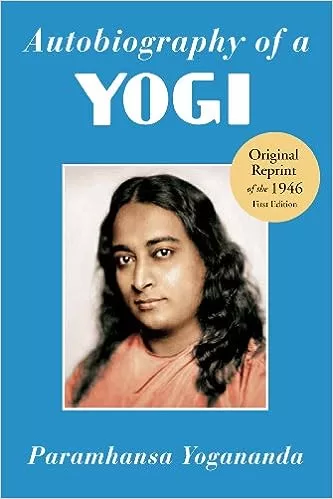
Autobiography of a Yogi by Paramahansa Yogananda
Paramahansa Yogananda’s Autobiography of a Yogi is a profound exploration of spirituality and self-realization. This book serves as both a memoir and a guide, enlightening readers about the author’s mystical journey.
Personal Development Courses by New Skills Academy
Philosophy is learned through both reading and reflection. New Skills Academy’s personal development courses integrate philosophical frameworks into practical skill-building, helping you not just understand concepts but live them.
Why it matters: This bridges the theory-practice gap. You’re not just learning philosophy; you’re building the character and resilience that philosophy teaches.
Explore Personal Development Courses

Personal Development Courses – academy+
Are you ready to unleash the inner powerhouse hiding beneath the surface? The personal development courses from the New Skills Academy are designed to do just that! No more snoozing through life; it’s time to wake up and take charge!
FAQ – Philosophy in the 21st Century
Q: Isn’t philosophy just opinion? How is it different from anyone’s random thoughts?
A: Philosophy is rigorous thinking. It follows logical rules, considers counterarguments, and builds on centuries of established thinking. A random opinion is “I think X.” Philosophy is “I think X, and here’s the logical structure supporting it, and here’s how I’ve considered alternatives.”
Q: I’m not smart enough for philosophy. Is it for everyone?
A: Yes. You don’t need to be “smart” – you need to be curious. Philosophy is more about asking good questions than having quick answers. Some of the deepest philosophers work slowly and carefully.
Q: How does philosophy help with practical problems like job stress or relationship conflict?
A: Philosophy provides frameworks for thinking clearly about problems. If you’re experiencing job stress, philosophy asks: “What do I actually value here? Am I working for the right reasons? What’s within my control vs. outside it?” These clarifications often dissolve half the stress immediately.
Q: Isn’t philosophy just for academics?
A: No. Philosophy is increasingly recognized as essential for leadership, ethics, and innovation in every field. Tech companies, hospitals, law firms, and military organizations now employ philosophers.
Q: How does philosophy connect to mindfulness and meditation?
A: Both are forms of rigorous attention. Meditation observes your mind directly. Philosophy asks questions about your mind. Together, they create a comprehensive practice: meditation shows you how your mind actually works; philosophy explores why that matters.
Q: Is Western philosophy better than Eastern philosophy, or vice versa?
A: They’re different toolkits for different problems. Western philosophy excels at logical analysis and systematic thinking. Eastern philosophy excels at understanding experience directly and cultivating wisdom. Together, they’re more complete than either alone.
The Bottom Line: Philosophy as Essential Infrastructure
Philosophy is not a luxury. It’s essential infrastructure for navigating the 21st century.
In a world of:
- Rapid change: Philosophy teaches adaptability and resilience.
- Information overload: Philosophy teaches discernment.
- Ethical complexity: Philosophy teaches principled reasoning.
- Existential questions: Philosophy teaches meaning-making.
A person without philosophical training is like a navigator without maps, relying on intuition and habit when encountering new terrain.
The individuals and organizations that thrive in this century won’t be those with the most information or the fastest computers. They’ll be those who can think most clearly, reason most ethically, and adapt most wisely.
That’s what philosophy teaches.
Ready to Develop Philosophical Wisdom?
Download our Free Expert-Crafted Holistic Routine – a comprehensive guide integrating philosophical practice with mindfulness meditation, daily reflection, and purposeful living.
This routine shows you how to build a sustainable practice of asking meaningful questions, examining your assumptions, and living with greater clarity and purpose.
Join 300+ subscribers building wisdom alongside wellness.
Research Sources & Further Reading
- Sellars, W. (1963). Science, Perception, and Reality. Routledge.
- Gros, F. (2014). A Philosophy of Walking. Verso.
- Yogananda, P. (1946). Autobiography of a Yogi. Self-Realization Fellowship.
- Gutting, G. (2009). What Philosophy Can Do. W.W. Norton & Company.
- Warburton, N. (2010). Philosophy: The Basics (4th ed.). Routledge.
- The Internet Encyclopedia of Philosophy.
Body, Mind, And Soul For A Fulfilled Life!





)