🎯 The Ancient Plant Medicine of the Amazon
Ayahuasca is far more than a hallucinogenic brew – it’s a gateway to consciousness that has been used for centuries by indigenous Amazonian communities. This powerful plant medicine, traditionally consisting of Banisteriopsis caapi vine combined with Psychotria viridis leaves, induces profound psychological states characterized by vivid introspective experiences and altered consciousness.
The active compound? DMT (dimethyltryptamine) – a naturally occurring psychedelic that fundamentally shifts how your brain processes reality. When paired with MAOIs (monoamine oxidase inhibitors) found in the brew, DMT becomes orally active, allowing it to cross the blood-brain barrier and produce transformative experiences.
In today’s world, where stress and disconnection plague millions, ayahuasca represents a path to healing and self-discovery. But it’s not without risks or ethical considerations.
What you’ll discover in this guide:
- 🌍 The ancient origins and spiritual significance of ayahuasca.
- 🧠 The neuroscience behind its transformative effects.
- 💚 The therapeutic potential for mental health (depression, PTSD, anxiety).
- ⚠️ Safety protocols, legal status, and ethical concerns.
- 🔄 Integration practices to anchor insights after the experience.
- 7️⃣ Your 7-day integration protocol for sustainable transformation.
Ayahuasca: Discovering Its Rich History and Spirituality
🌍 PART 1: ORIGINS & CULTURAL SIGNIFICANCE
The Sacred Roots: Ayahuasca in Indigenous Tradition
For centuries, indigenous tribes throughout the Amazon Basin have wielded ayahuasca as a cornerstone of their spiritual, medicinal, and communal practices. This wasn’t casual use – it was sacred medicine.
Shamans (spiritual healers) conducted elaborate ceremonies, viewing ayahuasca as a bridge between the physical and spiritual realms. These rituals served multiple purposes:
- 🎭 Rites of passage (marking transitions into adulthood or spiritual maturity).
- 🩹 Healing ceremonies (addressing physical and emotional wounds).
- 👥 Community bonding (collective spiritual experiences strengthening tribal bonds).
- 🔮 Divination and guidance (seeking wisdom about personal or collective futures).
The shaman’s role was critical – they navigated the difficult psychological terrain the drinker entered, providing reassurance and guidance through what could be an overwhelming experience.
Why it worked: Ayahuasca was never consumed in isolation. It was embedded within:
- ✨ Intentional spiritual frameworks.
- 🥁 Ritual music and chanting.
- 👨👩👧👦 Communal support and witnessing.
- 🌙 Careful timing (often during full moons or auspicious periods).
This holistic context is crucial – the medicine worked with the environment, the community, and the spiritual intention, not despite them.
Modern parallel: Just as holistic living integrates mind, body, and spirit, traditional ayahuasca use integrated the individual with community and cosmos.

Muse Headband: A Game-Changer for Meditation
🧠 PART 2: THE NEUROSCIENCE OF AYAHUASCA
How DMT Changes Your Brain
When ayahuasca enters your bloodstream, DMT floods your serotonin receptors – particularly the 5-HT2A receptors critical for perception and thought.
What happens neurologically:
- 🔴 Amygdala quieting: Your fear center downregulates (less reactivity to threat).
- 🌐 Default Mode Network disruption: The part of your brain that generates the “sense of self” goes quiet.
- 🔗 New neural connections: Your brain forms unexpected connections between normally isolated regions.
- 🎨 Enhanced neuroplasticity: Your brain becomes malleable – ready to rewire.
The result? You experience:
- Loss of ego boundaries (you’re not separate from the universe).
- Vivid visual hallucinations (intricate patterns, beings, landscapes).
- Deep emotional catharsis (often releasing years of suppressed trauma).
- Spiritual insights (feelings of unity, unconditional love, interconnection).
The Default Mode Network (DMN): The Ego’s Neural Seat
Your Default Mode Network is responsible for:
- Self-referential thinking (“What do others think of me?”).
- Rumination (replaying the past, worrying about the future).
- Ego maintenance (protecting your sense of separate identity).
Ayahuasca silences the DMN. For hours, you experience reality without the constant narration of your ego. This is profound because:
✅ It proves the ego is not fixed – it’s a neural pattern, not your true nature.
✅ It reveals interconnection – without ego filtering, you feel your connection to all existence.
✅ It creates neuroplasticity windows – with the ego quiet, your brain can rewire limiting beliefs.
Muse Headband: A Game-Changer for Meditation
💚 PART 3: THE THERAPEUTIC POTENTIAL
Depression, PTSD & Anxiety: What Research Shows
Recent clinical trials (Johns Hopkins, Imperial College London, UCSF) have documented remarkable results:
| Condition | Improvement | Timeline |
|---|---|---|
| Depression | 60-70% symptom reduction | 1-6 months post-ceremony |
| PTSD | 50-80% reduction in flashbacks | 2-8 weeks |
| Anxiety | 40-50% symptom relief | Immediate, sustained |
| Addiction | 65% sustained abstinence | 6+ months |
Why it works:
🧠 Neurobiological reset: Ayahuasca seems to “reboot” stuck neural patterns – like rebooting a computer to clear corrupted files
💭 Ego dissolution = emotional breakthrough: When your protective ego quiets, suppressed emotions surface and process in real-time
🔄 Meaning-making: You access parts of yourself (intuition, wisdom, compassion) normally dominated by analytical mind
✨ Spiritual insight: Many report that connecting to something larger than themselves fundamentally shifts how they relate to suffering
How Ayahuasca Differs from Therapy
| Aspect | Traditional Therapy | Ayahuasca |
|---|---|---|
| Timeline | Months/years | Hours |
| Mechanism | Cognitive reframing | Direct neural rewiring |
| Experience | Intellectual understanding | Embodied knowing |
| Integration | Ongoing | Weeks to months |
The truth? Ayahuasca is not a replacement for therapy – it’s a catalyst. It accelerates what would take years of traditional therapy into hours. But the integration work (making meaning, building new habits) still requires commitment.
This aligns with the broader principle of holistic healing – addressing mind, body, and spirit simultaneously produces transformation faster than any single modality alone.
Muse Headband: A Game-Changer for Meditation
⚠️ PART 4: SAFETY, ETHICS & INTEGRATION
Who Should NOT Use Ayahuasca
🚫 Contraindications (absolute):
- Family history of psychosis or schizophrenia.
- Current use of antidepressants (especially SSRIs – dangerous interaction).
- Cardiovascular conditions.
- Pregnancy.
⚠️ Cautions (relative):
- History of severe trauma (professional support needed).
- Active substance abuse.
- Untreated bipolar disorder.
- Recent heart attack or stroke.
Why? Ayahuasca is not dangerous for most people, but it amplifies pre-existing vulnerabilities. If your mental health is fragile, ayahuasca can destabilize rather than heal.
The Ethical Imperative: Respecting Indigenous Traditions
🌍 The problem: Ayahuasca tourism has exploded. Commercial retreat centers profit billions while indigenous communities remain marginalized.
Key ethical concerns:
- 🏴 Cultural appropriation: Sacred medicine commodified for Instagram moments.
- 💰 Exploitation: Indigenous guides paid a pittance while retreat centers charge $5,000+.
- 🎯 Disrespect: Ceremonies conducted with insufficient reverence, sometimes with intoxicated facilitators.
- 📚 Knowledge theft: Traditional knowledge extracted, repackaged, and sold back.
What responsible retreat centers do:
✅ Partner directly with indigenous communities.
✅ Pay fair wages to local guides and facilitators.
✅ Conduct ceremonies with appropriate reverence.
✅ Educate participants about indigenous cultures.
✅ Practice environmental stewardship (no deforestation).
Your responsibility as a participant: Research your retreat center. Not all are ethical. The cheaper the retreat, the more likely exploitation is occurring.
Muse Headband: A Game-Changer for Meditation
🔄 PART 5: THE 7-DAY INTEGRATION PROTOCOL
Integration is where the real work happens. The ceremony is 4-6 hours. Integration is weeks to months. Here’s your protocol:
Day 1: Grounding (The day after ceremony)
Your nervous system is still activated. Your goal: stabilize.
Morning (30 minutes):
- 🌅 Gentle yoga or stretching (no intense exercise).
- 💧 Hydrate (ayahuasca dehydrates; drink electrolyte water, not plain water).
- 🥗 Eat simple, clean foods (your digestion is sensitive).
Afternoon (45 minutes):
- 📔 Journey journal: Write everything you remember, felt, or experienced.
- Don’t analyze yet – just record.
- Include emotions, imagery, messages, confusion.
- ✋ Body scan: Notice where you hold tension; breathe into it.
Evening:
- 🌙 Early bedtime (your body needs rest).
- 🚫 No alcohol, drugs, or intense stimulation.
- 🧘 10-minute meditation (grounding breath work).
Day 2-3: Processing (Initial Integration)
Goal: Extract meaning without intellectualizing away the experience.
Daily practice (60 minutes total):
🧠 Morning reflection (20 min):
- What insights or messages came through?
- What surprised you?
- What felt unresolved?
🤝 Afternoon: Reach out to a trusted person (20 min):
- Share what you experienced (not to convince them, but to externalize).
- Listen to their reflections.
- Notice what lands and what doesn’t.
🌿 Evening: Mindful time in nature (20 min):
- Walk in a park or garden, fully present.
- No phone, no agenda – just being.
- Nature itself is integration medicine.
Day 4-7: Anchoring (Building New Patterns)
Goal: Translate insights into behavior change.
The reality: Insights fade without action. Your job is to anchor them.
Identify one key insight:
Example insights:
- “I realize I’ve been people-pleasing instead of honoring myself”.
- “I saw how my anxiety comes from trying to control the future”.
- “I felt unconditional love and want to experience that in my relationships”.
- “I understood that I’m part of something greater than my individual concerns”.
Design ONE actionable practice (not five):
| Insight | One Practice | Schedule |
|---|---|---|
| People-pleasing → self-honoring | Say “no” to one request per week | Every Monday |
| Control anxiety | Daily stress relief practice (breathing, meditation) | 10 min daily |
| Lacking love → wanting connection | Schedule one meaningful conversation | Weekly |
| Feeling disconnected → needing unity | Volunteer or help someone in need | 2 hours weekly |
Why one practice? Because sustained change comes from one small habit repeated daily, not from trying to change everything at once.
By day 7, you’ve:
✅ Processed the experience.
✅ Extracted meaning.
✅ Anchored insights into practice.
✅ Created momentum for ongoing integration.
🎁 TOOLS THAT SUPPORT AYAHUASCA INTEGRATION
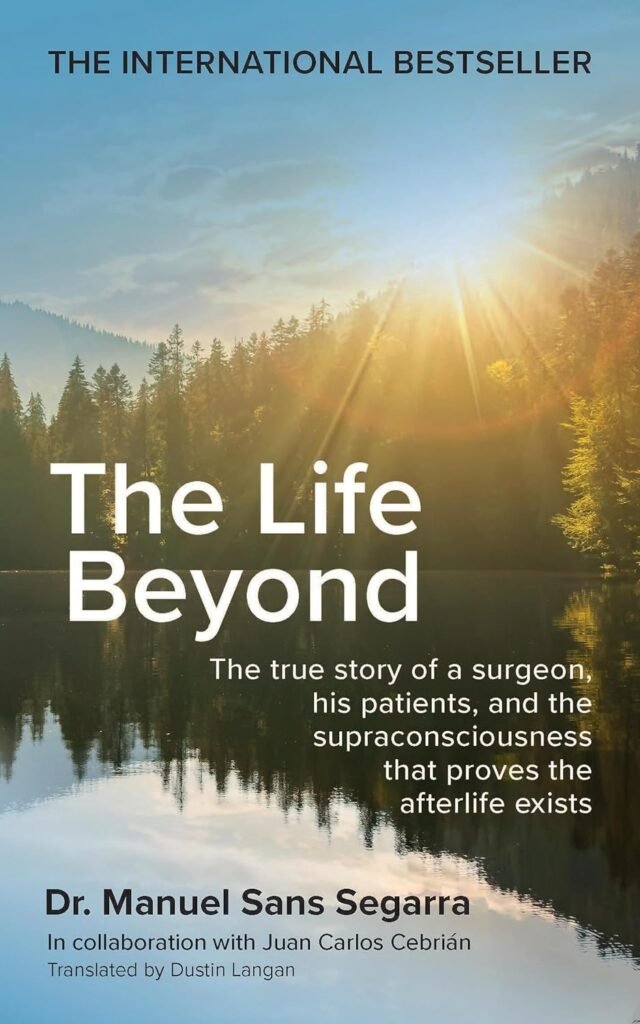
📚 The Life Beyond by Dr. Manuel Sans Segarra
A compelling exploration of consciousness and the afterlife. Why it matters: Ayahuasca often raises questions about death, consciousness, and what lies beyond. This book provides scientific + experiential perspectives on those questions.
Discover The Life Beyond Book by Dr. Manuel Sans Segarra
Discover ‘The Life Beyond’ by Dr. Manuel Sans Segarra, a compelling exploration of the afterlife that blends science, personal experiences, and supraconsciousness insights.
🌟 Spirituality Courses at New Skills Academy
Structured guidance in exploring spiritual experiences safely. Why it matters: Post-ayahuasca, many people want to deepen spiritual practice. These courses provide frameworks and support.

Spirituality Courses At New Skills Academy
Embrace a deeper understanding of spirituality with the comprehensive Spirituality Courses offered at New Skills Academy. These courses are designed for anyone looking to explore various spiritual practices and enhance their personal and professional growth.
🧠 Awakening Your Psychic Powers by Henry Reed, Ph.D.
Based on Edgar Cayce’s wisdom, this book guides you in developing intuition and psychic sensitivity. Why it matters: Ayahuasca often awakens dormant intuitive capacities. This book helps you understand and develop those gifts.
Read Awakening Your Psychic Powers

Awakening Your Psychic Powers
In the transformative book, “Awakening Your Psychic Powers,” readers explore Edgar Cayce’s timeless wisdom designed for the new age. This insightful work guides individuals on a journey to tap into their intuitive abilities, promoting personal growth and self-discovery.
❓ FAQ – AYAHUASCA
Q: Is ayahuasca safe?
A: For people without contraindications (psychosis, cardiac issues, certain medications), ayahuasca is physically safe – your body doesn’t overdose. Psychologically, it’s intense but not dangerous if you’re mentally stable. The real risks are:
⚠️ Bad retreat centers (unsafe facilitators, contaminated brew).
⚠️ Expectation misalignment (hoping it will “fix” you without your effort).
⚠️ Inadequate integration support.
Q: How many ceremonies do I need?
A: Most people report that 1-3 ceremonies create meaningful shifts. Some do 10+. There’s no “right number” – it depends on your intention and what emerges.
Q: Will ayahuasca solve my depression/trauma/anxiety?
A: No. Ayahuasca is a catalyst, not a cure. It opens doors; you walk through them. The work happens in integration – the daily practices, the therapy, the choices you make afterward.
Q: What if I have a “bad trip”?
A: Difficult experiences are often the most valuable. A “bad trip” usually means:
– You’re confronting something you’ve avoided.
– Your nervous system is processing stored trauma.
– An important lesson is trying to emerge.
Trained facilitators know how to support you through difficulty. It’s not actually dangerous; it’s uncomfortable.
Q: How does ayahuasca connect to holistic wellness?
A: Perfectly. Holistic living integrates mind, body, and spirit. Ayahuasca works on all three:
– Mind: Rewires beliefs and perspectives.
– Body: Activates healing and cellular memory.
– Spirit: Connects you to something greater than yourself.
Add daily meditation, quality sleep, and purposeful living for optimal integration.
🎯 THE BOTTOM LINE
Ayahuasca is not for everyone. But for those ready to face themselves deeply, it can catalyze transformation in ways that take years of conventional therapy to achieve.
The key: Respect the medicine, do the integration work, and understand that real transformation requires your participation. Ayahuasca shows you the door; you choose to walk through it.
🌟 Ready to Transform Your Whole Self?
Download our Free Expert-Crafted Holistic Routine – a comprehensive guide integrating meditation practice, stress relief, sleep optimization, and intentional living for sustained transformation beyond any single experience.
Join 300+ subscribers building holistic wellness.
Learn, Help Family And Friends, And Help The Planet!