The gut health and mental health connection is one of the most significant and most underappreciated discoveries in modern medicine. Most people still think of the gut as a digestion machine and the brain as the sole seat of mood and cognition. The science says otherwise. Your gut and brain are in constant two-way conversation, and the trillions of microbes living in your digestive tract have a direct hand in how you feel, think, and cope with stress. What is the gut-brain axis?
At The Dream Oak, we treat gut health not as a diet trend but as a pillar of holistic living. Caring for your inner ecosystem is one of the most direct acts of self-investment you can make for your mind, mood, and sense of meaning.
🧠 The Gut-Brain Axis
What Is the Gut-Brain Connection, Really?
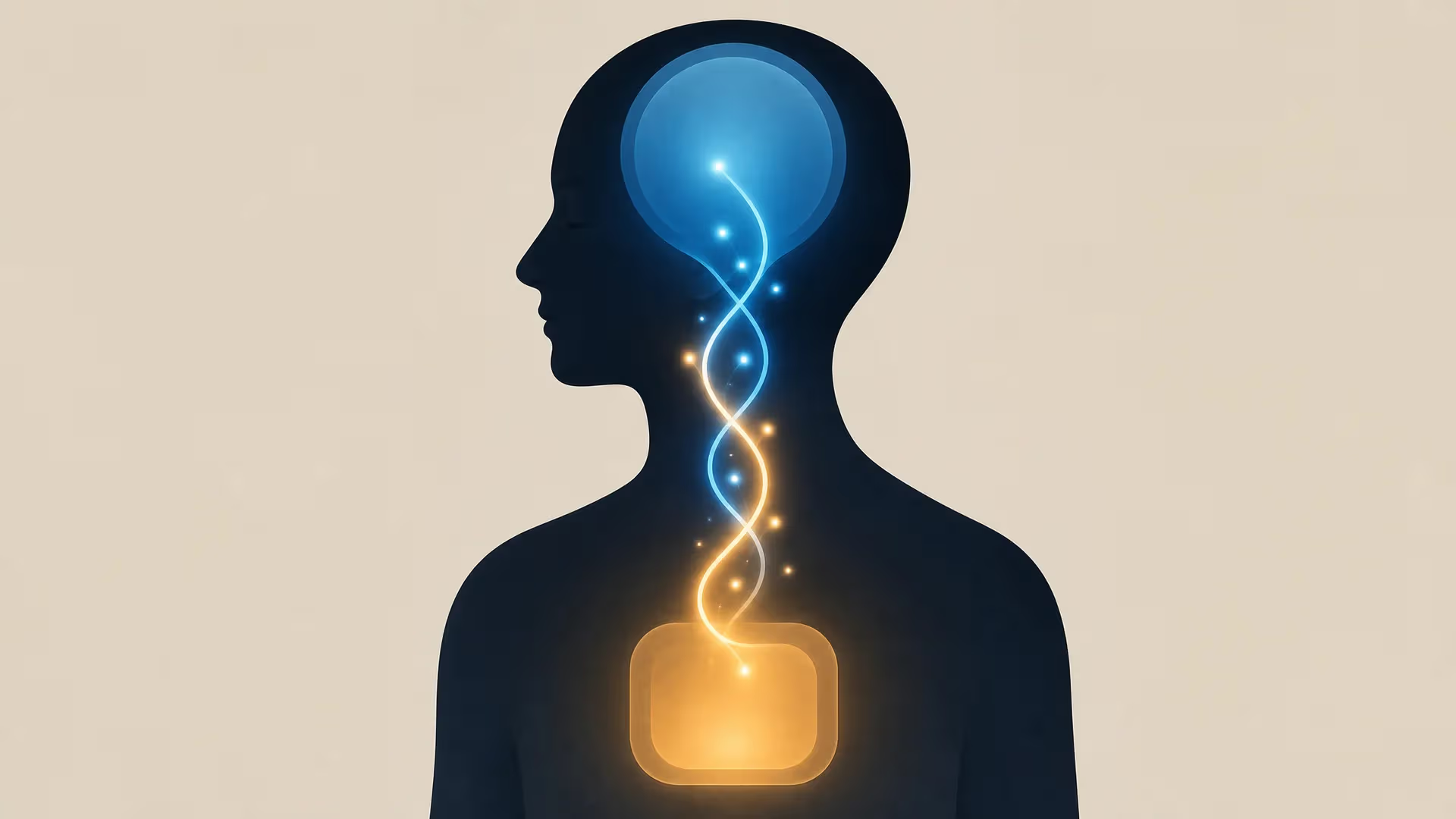
The gut-brain axis is a bidirectional communication network. It links your central nervous system, your brain and spinal cord, to your enteric nervous system, the vast web of nerve tissue embedded in your gut wall. Signals travel in both directions, continuously. What happens in your gut influences your brain, and what happens in your brain influences your gut.
Pioneering gastroenterologist Michael Gershon at Columbia University described the gut’s roughly 500 million neurons as a “second brain,” arguing that the enteric nervous system operates with remarkable autonomy and profoundly shapes emotional states. That framework now underpins the entire field of nutritional psychiatry.

Step into the world of learning and personal growth with the Centre of Excellence!
The vagus nerve: your body’s internal messaging highway
The vagus nerve is the physical cable connecting these two systems. It runs from the brainstem down through the chest and into the abdomen, carrying signals in both directions. About 80% of the traffic on the vagus nerve flows upward, from gut to brain, not the other way around. That ratio matters because it means your gut is sending far more information to your brain than your brain sends down to your gut.
When gut bacteria produce metabolites, neurotransmitters, and short-chain fatty acids, many of those signals travel up the vagus nerve and influence mood, stress response, and cognitive function. A calm, diverse microbiome tends to send calming signals. A disrupted one sends the opposite.
How the microbiome and mental health are scientifically linked
Your gut microbiome, the ecosystem of bacteria, fungi, and other microbes in your digestive tract, does far more than break down food. These microbes produce neurotransmitters, regulate immune responses, and modulate the body’s stress hormones. Disruption to this ecosystem, through poor diet, antibiotics, chronic stress, or sleep deprivation, ripples outward and upward. The same microbial imbalances that inflame the gut also inflame the brain.
📒 Related reads:
- 10 Practical Mindfulness Exercises
- The 3 M Policy: Meditation, Mindfulness, and Minimalism
- What Is Holistic Living? Definition, Benefits, the 6 Pillars
Gut Bacteria, Depression, and Anxiety: What the Science Shows
Research consistently finds that people with depression and anxiety have measurably different gut microbiome compositions compared to those without these conditions. The relationship is not simply a correlation. Several well-established biological mechanisms explain exactly how gut bacteria and depression are connected.
Leaky gut and anxiety: the inflammation pathway
Leaky gut, or intestinal hyperpermeability, occurs when the tight junctions in the gut lining weaken. Normally, these junctions act as a tightly controlled barrier. When they break down, bacterial endotoxins called lipopolysaccharides (LPS) escape into the bloodstream. The immune system recognizes LPS as a threat and mounts an inflammatory response. That inflammation doesn’t stay in the gut; it reaches the brain.
This is the leaky gut and anxiety link that clinical researchers have been building a case for over the past two decades. Neuroinflammation, inflammation inside the brain, is increasingly recognized as a driver of depressive episodes and heightened anxiety. A disrupted gut lining is one of the clearest pathways by which a poor diet, chronic stress, or microbial imbalance translates into a mental health consequence you can feel.
The serotonin factory hiding in your digestive tract
Here is a fact that surprises almost everyone: roughly 90–95% of the body’s serotonin, the neurotransmitter most associated with mood stability, is produced in the gut, not the brain. Specialized cells lining the gut wall synthesize serotonin, and the gut microbiome directly influences how much gets produced.
That single fact makes the gut health and mental health connection a direct biological relationship, not a metaphor. When your gut microbiome is healthy and diverse, serotonin production is supported. When it’s disrupted, that production can falter, and mood follows.
Step into the world of learning and personal growth with the Centre of Excellence!
Foods That Improve Mood: Building a Brain-Friendly Plate
Diet is the most immediate lever you can pull to reshape your microbiome. The foods that improve mood are largely the same foods that feed beneficial gut bacteria and reduce gut inflammation.
Fermented foods, fiber, and the microbiome
Fermented foods introduce live beneficial bacteria directly into your gut. Yogurt with live cultures, kefir, kimchi, sauerkraut, miso, and tempeh are practical, accessible sources. A 2021 Stanford study published in Cell found that a high-fermented-food diet significantly increased microbiome diversity and reduced inflammatory markers, one of the strongest human dietary trials on this question to date.
Prebiotic fiber feeds the good bacteria already living in your gut. Oats, bananas, garlic, leeks, onions, asparagus, and Jerusalem artichokes are reliable prebiotic sources. Omega-3 fatty acids, found in oily fish, walnuts, and flaxseed, support gut barrier integrity and reduce neuroinflammation. Polyphenol-rich foods like blueberries, raspberries, dark chocolate, extra-virgin olive oil, and green tea provide compounds that beneficial bacteria ferment into anti-inflammatory metabolites.
What to reduce: the foods that quietly drain your mood
Ultra-processed foods disrupt the microbiome by crowding out fiber, introducing artificial additives, and feeding inflammatory bacterial strains. Refined sugar promotes the overgrowth of less beneficial microbes and drives gut inflammation. Alcohol, even in moderate amounts, damages the gut lining and reduces microbial diversity over time.
The pattern is straightforward: the foods most heavily marketed for pleasure and convenience are consistently the ones that impair the systems your brain depends on.

Eat to Beat Disease by William W Li, MD
Eat to Beat Disease by William W. Li, MD, is a revolutionary guide offering insights into how food can enhance your health and vitality. The book delves deep into the science of nutrition, presenting evidence that everyday foods can combat diseases.
Probiotics for Brain Health: Helpful Tool, Not a Magic Pill
Probiotics for brain health are genuinely useful, but only when understood correctly. A probiotic supplement dropped into an otherwise poor diet and a high-stress lifestyle will not meaningfully move the needle on mental health. Probiotics work best as one component of a broader approach.
The emerging concept of psychobiotics is worth knowing. Coined by researchers Dinan, Stanton, and Cryan in a 2013 paper in Biological Psychiatry, the term refers to probiotic strains specifically studied for their effects on mood, stress response, and cognition. As of 2026, multiple human randomized controlled trials have examined specific strains, particularly Lactobacillus and Bifidobacterium species, for their impact on anxiety, depression, and stress hormones. Results are promising, though the field is still establishing which strains work best for which conditions.
The practical takeaway: look for multi-strain probiotics with clinical evidence behind the specific strains listed, and take them consistently. Treat them as a complement to a fiber-rich, fermented-food diet and genuine lifestyle change, not a substitute for those foundations.

Biohacking Your Physical and Mental Health: Optimize Performance, Clarity & Resilience
Biohacking Your Physical and Mental Health: Optimize Performance, Clarity & Resilience. Master evidence-based strategies to optimize physical health, mental clarity & resilience. Expert-led biohacking course-12-month access. Start now at £25.
The Holistic Mind-Body Approach: Beyond Diet
Diet is the most-discussed lever in the gut-brain conversation, but it isn’t the only one. Stress, sleep, and physical movement each directly shape your microbiome and therefore your mental health.
How stress disrupts your gut microbiome (and what to do about it)
Chronic stress triggers the release of cortisol and other stress hormones that alter gut motility, reduce blood flow to the intestinal lining, and change the composition of gut bacteria within days. Studies in both animal models and humans show that sustained psychological stress measurably reduces microbial diversity, the key marker of a healthy microbiome.
This creates a damaging loop: stress disrupts the gut, a disrupted gut amplifies stress signals back to the brain via the vagus nerve, and anxiety increases. Breaking the loop requires addressing stress directly, not just diet. Starting a beginner mindfulness practice is one of the most evidence-supported stress-reduction strategies available, and through its cortisol-lowering effects, it is also, indirectly, a gut-health practice.
Sleep, movement, and mindfulness as gut-health practices
Poor sleep reduces microbial diversity and disrupts the circadian rhythm that gut bacteria rely on to function. Even two to three nights of poor sleep produce measurable shifts in microbiome composition. Prioritizing consistent sleep, a same bedtime, and adequate duration is one of the simplest gut-health investments available.
Regular physical movement supports healthy gut motility, reduces systemic inflammation, and is associated with greater microbial diversity in people who exercise consistently compared to sedentary individuals. You don’t need intense training. Regular brisk walking produces meaningful benefits for gut and mental health alike.
Mindfulness practices reduce cortisol, lower systemic inflammation, and calm the nervous system signals that travel down to the gut. The gut-brain axis runs in both directions, so calming the brain calms the gut. This is why stress management belongs in any serious conversation about gut health.
Step into the world of learning and personal growth with the Centre of Excellence!
A Practical Starting Point: Small Shifts, Lasting Change
The gut health and mental health connection can feel overwhelming to act on. It doesn’t need to be. The most sustainable approach is to add one positive habit at a time rather than overhaul everything at once.
A simple weekly rhythm to start:
- Add one fermented food daily. A portion of yogurt, a spoonful of kimchi, or a glass of kefir is enough to begin shifting your microbiome in a beneficial direction.
- Add one prebiotic serving daily. Oats at breakfast, a banana as a snack, or garlic in dinner- any consistent source counts.
- Add one stress-reduction practice. Even ten minutes of focused breathing or a short mindfulness session daily reduces cortisol levels and begins to protect your gut from stress-driven disruption.
These small shifts compound. Within a few weeks, a more diverse, resilient microbiome begins to support steadier mood, clearer thinking, and a quieter stress response. That is not a promise; it is what the science consistently shows when people make these changes and maintain them.
The gut-brain axis is a biological reality, not a wellness trend. Caring for your microbiome through food, sleep, movement, and stress management is one of the most evidence-grounded things you can do for your mental health. If you’re ready to take the next step, building a mindfulness habit is a natural complement to the dietary shifts above, a practice that benefits your brain and your gut at the same time.
Learn, Help Family And Friends, And Help The Planet!