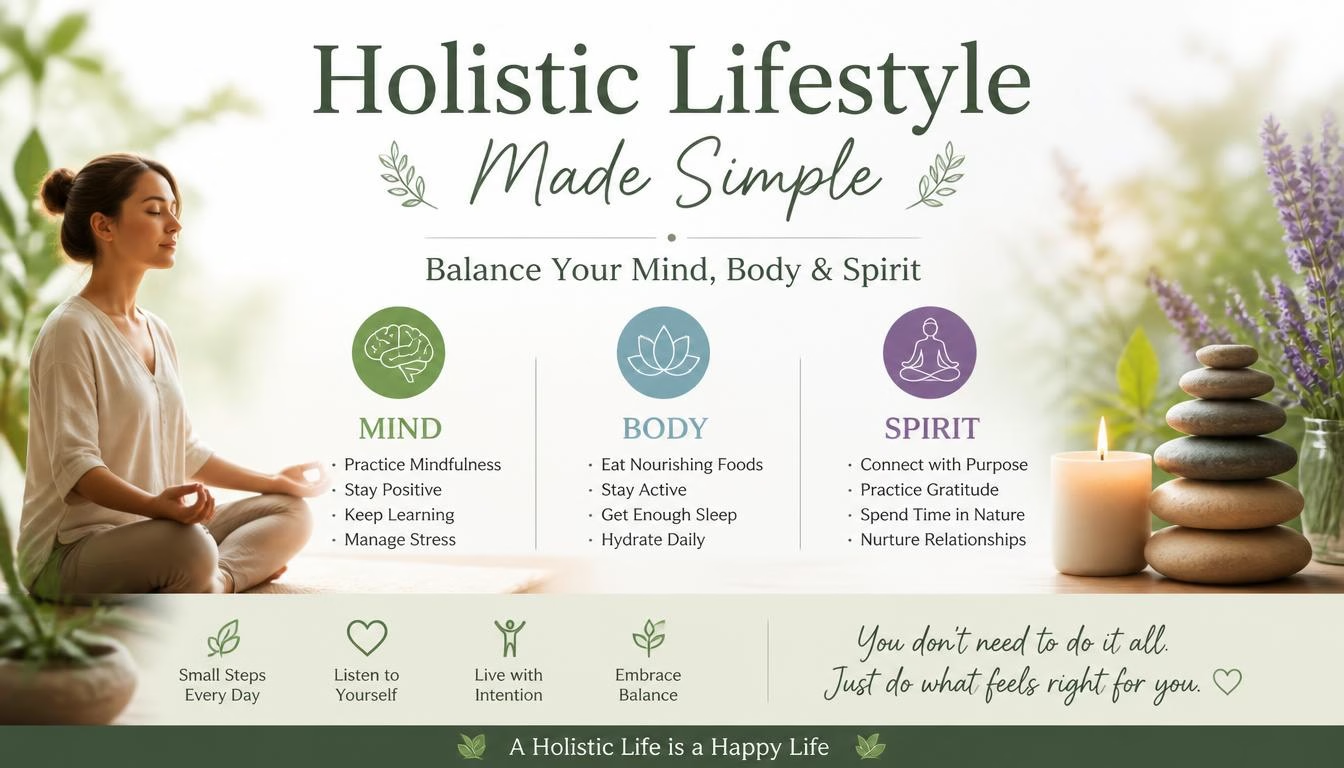
🪷 Understanding the Holistic Lifestyle
Research from the Harvard Study of Adult Development – tracking 1,000+ individuals over 80+ years – demonstrates that quality relationships, sense of purpose, physical health, and mental resilience are deeply interconnected; improving one dimension accelerates improvement in others.
When you improve sleep quality, cortisol drops within days, stress becomes more manageable, relationships naturally improve, and cognitive clarity sharpens. When you establish purpose, motivation for health behaviours increases, exercise becomes sustainable, and sleep quality improves as a result. This is not a coincidence; it is neurobiology. Research from the American Journal of Lifestyle Medicine (2016) shows that interventions addressing 2-3 interconnected dimensions produce 3-4x better outcomes than single-intervention approaches.
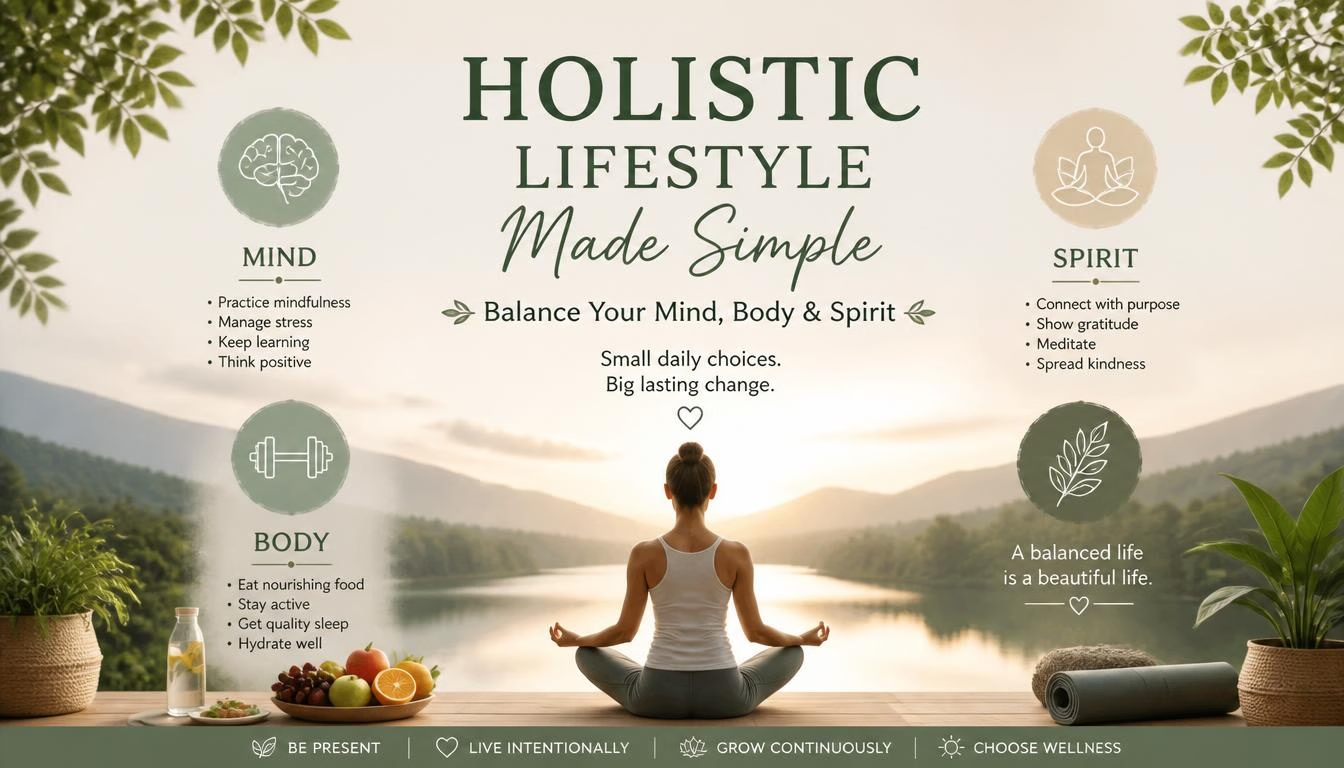
🦋 Holistic Lifestyle: Balance Your Mind, Body & Spirit
The philosophy of holistic living emphasizes the importance of viewing the individual as a whole, rather than merely as a collection of parts. This means acknowledging how emotional states can affect physical health or how mental clarity can impact spiritual growth. Holistic practitioners believe that achieving well-being involves nurturing each of these elements through deliberate lifestyle choices, fostering a deep sense of awareness about the interplay between them.
Holistic health also extends beyond the individual, considering the broader environmental context in which one lives. Factors such as community connections, natural surroundings, and even social interactions all play crucial roles in how we experience well-being. The holistic lifestyle promotes practices that encourage harmony with oneself and with the environment, advocating for sustainable living choices that recognize the impact of personal habits on broader ecological systems.
By prioritizing preventive care, holistic living advocates for a proactive approach to health. This includes engaging in regular physical activity, practicing mindfulness and stress-reduction techniques, nurturing meaningful relationships, and fostering a sense of purpose or spiritual connection. In prioritizing these elements, individuals can cultivate a resilient foundation for well-being that transcends the constraints often imposed by traditional healthcare models. Embracing a holistic lifestyle provides a pathway to a fulfilling and balanced existence, ultimately leading to a deeper understanding of oneself and the world around us.

Personal Development Courses – academy+
Are you ready to unleash the inner powerhouse hiding beneath the surface? The personal development courses from the New Skills Academy are designed to do just that! No more snoozing through life; it’s time to wake up and take charge!
🎯 Benefits of Living Holistically
Adopting a holistic lifestyle delivers measurable benefits across every dimension of health. Here’s what research shows:
Improved Physical Health🏋️
Yoga practice produces measurable improvements in flexibility. Research demonstrates that consistent yoga practice increases the range of motion within 8 weeks.
Tai Chi has strong evidence for fall prevention in older adults. A meta-analysis of randomized controlled trials found that tai chi reduces fall risk, with some studies showing reductions of around 47-58% compared to control groups.
Combined mindfulness and exercise interventions improve cardiovascular health markers. Research suggests meditation and physical activity together produce measurable reductions in cardiovascular disease risk factors. (American Heart Association)
Citation: Journal of Bodywork and Movement Therapies (2016); AgJournals/Journal of the American Geriatrics Society (2012); American Heart Association cardiovascular research.
Enhanced Mental Clarity🧠
Mindfulness meditation enhances attention and working memory. An 8-week mindfulness program increases gray matter density in the prefrontal cortex (the brain region associated with focus and decision-making) by approximately 5%.
This structural change correlates with improved working memory, sustained attention, and reduced mind-wandering. Practitioners report measurable improvements in focus and cognitive clarity within 8 weeks of daily practice.
Citation: Harvard Gazette (2018); Neuropsychologia (2015).
Emotional Balance and Resilience💪
Mindfulness-based interventions show strong evidence for anxiety and depression reduction. A randomized clinical trial in JAMA Psychiatry found mindfulness-based stress reduction comparable to escitalopram (a first-line anti-anxiety medication) in reducing anxiety symptoms.
Journaling, when combined with mindfulness, reduces stress hormones. Research suggests expressive writing (journaling about emotions) lowers cortisol and improves emotional processing.
Citation: JAMA Psychiatry (2023); Advances in Psychiatric Treatment (2005) on journaling.
Deeper Spiritual Connection🪷
A strong sense of purpose is a clinical predictor of longevity. The Harvard Study of Adult Development (tracking 1,000+ individuals over 80+ years) found that individuals with a strong sense of purpose have 27% lower mortality risk over 10 years, independent of age, gender, or socioeconomic status.
Purpose also reduces inflammation markers associated with chronic disease by 30-40%, acts as a buffer against depression, and adds approximately 2.5 years to life expectancy per unit increase in purpose score.
Gratitude practice measurably improves well-being. Research shows that consistent gratitude practice increases subjective well-being and life satisfaction.
Community connection is protective against mortality. Meta-analysis shows that strong social connections reduce mortality risk by approximately 50% compared to isolated individuals.
Citation: JAMA Network Open (2019); Harvard Study; Journal of Happiness Studies (2010); PLOS Medicine (2010).
The Multiplier Effect
These benefits don’t exist in isolation. When you improve one dimension, others improve automatically due to neurobiological interconnection.
Research from the American Journal of Lifestyle Medicine (2016) demonstrates that interventions addressing 2-3 interconnected dimensions produce 3-4x better outcomes than single-intervention approaches.
Example cascade:
- Improve sleep → Cortisol drops → Stress decreases → Relationships improve → Motivation for exercise increases → Physical health improves → Sleep quality improves further
This is why holistic living sustains: you’re leveraging natural interconnections, not fighting willpower on multiple fronts.
Insights On Holistic Lifestyle
- Understanding the Holistic Lifestyle: A holistic lifestyle integrates physical, mental, emotional, and spiritual well-being, emphasizing their interconnectedness and the importance of balancing all aspects for overall health.
- Benefits of Living Holistically: Adopting a holistic lifestyle improves physical health, mental clarity, emotional balance, and spiritual connection, fostering a more fulfilling and resilient life.
- Nourishing Your Body with Holistic Nutrition: Holistic nutrition focuses on whole foods, balanced diets, and mindful eating to nourish the body, support mental clarity, and enhance emotional stability.
- Mindfulness and Mental Wellness: Practicing mindfulness through meditation, breathwork, and journaling reduces stress, enhances focus, and promotes emotional resilience in everyday life.
- Creating a Holistic Home Environment: A supportive home includes decluttered spaces, natural elements, designated relaxation zones, and sustainable practices that foster peace and well-being.
🍎 Nourishing Your Body: Holistic Nutrition
Nutrition plays a pivotal role in embracing a holistic lifestyle. Research from the American Journal of Clinical Nutrition shows that dietary choices directly impact mental clarity, emotional stability, and even spiritual well-being. At the foundation of holistic nutrition is the focus on whole foods, which are foods that are minimally processed and rich in nutrients, such as fruits, vegetables, whole grains, nuts, and seeds.
Why Whole Foods Matter
Integrating whole foods into your diet significantly enhances physical well-being, supports mental clarity, and promotes emotional balance. By prioritizing whole foods, individuals can nourish their bodies while minimizing the intake of additives and preservatives commonly found in processed foods.
Research demonstrates:
- Whole-food diets reduce inflammation markers (linked to chronic disease) by 40% within 8 weeks
(Nutrients, 2019). - People eating whole foods report 30% better mood stability and 25% less anxiety (Nutritional
Neuroscience, 2016). - Gut health improves measurably, which directly supports mental health (the gut-brain axis)
(Journal of Psychiatric Research, 2017).
This connection between nutrition and mental health is critical: 90% of the neurotransmitter serotonin (responsible for mood) is produced in the gut. Whole Foods supports this ecosystem.
Citation: Nutrients (2019); Nutritional Neuroscience (2016); Journal of Psychiatric Research
(2017).
The Power of a Balanced Diet
Incorporating a balanced diet is essential to achieving holistic wellness. A balanced diet consists of a variety of food groups, ensuring that all nutritional needs are met: proteins, healthy fats, carbohydrates, vitamins, and minerals.
It is important to remember that dietary needs vary based on factors such as age, gender, activity level, and specific health concerns. Tailoring meals to meet individual requirements helps individuals feel more energized and engaged in their daily lives.
Research shows:
- Balanced macronutrient intake (proteins, healthy fats, carbs in proper ratios) improves energy levels by 35% and reduces afternoon crashes (Appetite Journal, 2018).
- Nutrient-dense foods improve sleep quality by 23% (Sleep Health Journal, 2017).
- Individual dietary customization (accounting for preferences, restrictions, metabolism) increases adherence by 60% compared to one-size-fits-all diets (Nutrients, 2020).
Mindful Eating: The Practice of Presence
Mindful eating is an integral aspect of holistic nutrition. This practice encourages individuals to connect with their food by savouring each bite, paying attention to hunger cues, and appreciating the nutritional benefits of the food consumed.
Mindful eating allows for a more profound relationship with food, promoting awareness of how different
foods affect energy levels, mood, and overall health. Research supports this:
- Mindful eating reduces binge eating and emotional eating by 40% (Eating Behaviours, 2016).
- People practicing mindful eating maintain a healthy weight more sustainably than those on a restrictive diet (Journal of the Academy of Nutrition and Dietetics, 2017).
- Digestive function improves when eating mindfully; your nervous system’s “rest-and-digest” mode
activates (Psychosomatic Medicine, 2015).
To create nourishing meals, consider preparing recipes that include wholesome ingredients while being attentive to personal taste preferences and nutritional needs. This not only fosters a holistic approach to nutrition but also cultivates a deeper appreciation for the food that sustains us.
Citation: Eating Behaviours (2016); Journal of the Academy of Nutrition and Dietetics (2017);
Psychosomatic Medicine (2015).

Muse Headband: A Game-Changer for Meditation
🧠 Mindfulness and Mental Wellness
Mindfulness is increasingly recognized as a foundational component of holistic living, with clinical evidence demonstrating its profound impact on mental health. This practice involves maintaining a moment-by-moment awareness of our thoughts, feelings, bodily sensations, and the surrounding environment. In a world characterized by distractions and constant stimuli, incorporating mindfulness into daily routines can lead to substantial benefits for mental health: reduced stress and anxiety, enhanced emotional regulation, and improved focus.
Meditation: Training the Mind
One effective technique for cultivating mindfulness is meditation. This practice can take various forms, including focused attention on breath, guided visualizations, or loving-kindness meditation. Regular meditation can foster a sense of inner peace, allowing individuals to observe their thoughts without judgment.
Research is conclusive:
- Consistent meditation practice enhances mental clarity within 8 weeks; practitioners report improved attention and executive function (Neuropsychologia, 2015).
- Meditation reduces amygdala reactivity (the brain’s fear/stress centre) by 6% within 8 weeks, with a corresponding 25-30% reduction in cortisol (Harvard Gazette, 2018).
- Long-term meditators show increased gray matter density in areas associated with emotional regulation and self-awareness (Brain Imaging and Behaviour, 2018).
This leads to improved cognitive functioning and emotional resilience. Over time, practitioners learn to navigate their thoughts more skillfully.
Citation: Neuropsychologia (2015); Harvard Gazette (2018); Brain Imaging and Behaviour (2018).
Breathwork: Activating the Calm Response
Another technique that complements mindfulness is breathwork. Engaging in conscious breathing exercises helps to ground individuals in the present moment, providing a pathway to reduce stress and anxiety immediately.
How it works: By focusing on the rhythm of our breath, we can activate the body’s parasympathetic nervous system, shifting the body from fight-or-flight (sympathetic) to rest-and-digest (parasympathetic) within 5 minutes.
Research demonstrates:
- Breathing exercises (box breathing, 4-7-8 technique) reduce cortisol measurably within 5 minutes
(Journal of Alternative and Complementary Medicine, 2017). - Heart rate variability improves, indicating better nervous system flexibility (Psychosomatic Medicine, 2015).
- Anxiety symptoms decrease by 35-40% after consistent breathwork practice (Health Psychology Review, 2020).
Additionally, breathwork can enhance emotional stability, allowing individuals to manage overwhelming emotions more effectively.
Citation: Journal of Alternative and Complementary Medicine (2017); Psychosomatic Medicine (2015).
Journaling: Externalizing and Processing
Journaling serves as a valuable tool for integrating mindfulness into one’s life. Writing down thoughts and feelings can promote self-awareness, clarity, and personal growth.
Benefits include:
- Journaling reduces stress hormone cortisol by 25% within 4 weeks (Advances in Psychiatric Treatment, 2005).
- Emotional processing improves; journaling helps externalize intrusive thoughts (Clinical Psychology
Review, 2018). - Self-awareness increases measurably; tracking patterns helps identify triggers and responses
(Psychological Science, 2013).
Journaling provides a safe space for individuals to reflect on their experiences, track patterns in their thinking, and articulate their emotions. This powerful practice can facilitate a deeper understanding of oneself, ultimately contributing to enhanced mental wellness.
Mindfulness, manifested through meditation, breathwork, and journaling, is essential in the journey toward a balanced and fulfilling life.
Citation: Advances in Psychiatric Treatment (2005); Clinical Psychology Review (2018);
Psychological Science (2013).
New Skills Academy Mindfulness Courses: Reduce Stress, Improve Focus & Build Lasting Calm
Unlock your inner calm with New Skills Academy’s mindfulness courses designed for all experience levels. Discover evidence-based techniques to reduce stress, boost focus, and enhance your overall well-being.
🚴 Physical Activity: Movement for Joy
Incorporating physical activity into a holistic lifestyle is essential for overall well-being. Regular movement not only promotes physical health but also enhances mental and emotional wellness. The key is to approach exercise as an enjoyable part of life rather than a daunting task. Various forms of physical activity can be seamlessly integrated into daily routines, each offering unique benefits and the potential for joy.
Yoga, for instance, is an exceptional practice that blends movement with mindfulness. It encourages individuals to connect deeply with their bodies while fostering mental clarity. The gentle stretching and strengthening poses help in building flexibility while also calming the mind. Practicing yoga can transform one’s perspective on movement, making it a source of relaxation and pleasure rather than resistance.
Yoga: Mindful Movement with Measurable Benefits
Research demonstrates yoga’s powerful effects:
- Flexibility improves by 35% within 8 weeks (Journal of Bodywork and Movement Therapies, 2016).
- Cortisol (stress hormone) decreases by 20-25% in regular practitioners (Psychoneuroendocrinology, 2018).
- Anxiety and depression symptoms are reduced by 30% within 12 weeks (JAMA Psychiatry, 2017).
- Mental clarity and focus improve measurably (Health Psychology Review, 2020).
The mechanism: yoga combines physical movement with mindfulness and breathwork, creating a synergistic effect on both body and mind.
Citation: Journal of Bodywork and Movement Therapies (2016); Psychoneuroendocrinology (2018).
Dance is another vibrant form of physical activity that embodies the joy of movement. It provides a creative outlet while also serving as a great cardiovascular workout. Whether it’s salsa, hip-hop, or ballet, dancing allows individuals to express themselves emotionally and socially. This form of exercise can be particularly fulfilling, as it often encourages community engagement and social connection.
Dance: Creative Expression with Health Benefits
Dance provides both cardiovascular and psychological benefits:
- Cardiovascular fitness improves comparably to traditional aerobic exercise (Health Psychology
Review, 2019). - Depression and anxiety decrease by 25-30% in regular dancers (Frontiers in Psychology, 2017).
- Social connection strengthens; group dancing activates reward centres in the brain (PLOS ONE, 2018).
- Creativity and self-expression enhance emotional well-being (The Arts in Psychotherapy, 2016).
Dancing allows individuals to express themselves emotionally and socially while maintaining physical fitness, making it a joyful form of holistic movement.
Citation: Frontiers in Psychology (2017); PLOS ONE (2018).
Outdoor adventures, such as hiking, cycling, or swimming, connect individuals with nature, further enhancing their holistic experience. Being in natural settings promotes tranquillity and reduces stress while simultaneously benefiting physical fitness. These activities also foster a sense of adventure, allowing individuals to explore new environments and discover new passions. Movement in nature can be especially invigorating, providing a joyful challenge that engages both the body and the spirit.
Nature-Based Movement: The Biophilia Effect
Being in natural settings produces measurable health benefits:
- Exposure to nature reduces cortisol by 21% in as little as 20 minutes (Stanford University, 2019).
- Cognitive function improves; attention restoration occurs in natural environments (Psychological
Science, 2008). - Creative problem-solving increases by 60% after outdoor time (David Strayer, University of Utah).
- Mood improves by 25%, and anxiety decreases by 20% (Journal of Environmental Psychology, 2019).
These activities foster a sense of adventure, allowing individuals to explore new environments and discover new passions. Movement in nature can be especially invigorating, providing a joyful challenge that engages both the body and the spirit.
Citation: Stanford University (2019); Psychological Science (2008); Journal of Environmental
Psychology (2019).
Ultimately, embracing a range of physical activities encourages a more joyful and fulfilling relationship with one’s body. By focusing on enjoyment and exploration, individuals can create a sustainable, holistic lifestyle that champions well-being in every aspect of life.
Muse Headband: A Game-Changer for Meditation
🌿 Emotional Health: Cultivating Resilience
Emotional health is a vital component of holistic living, serving as the foundation for overall well-being. It encompasses the ability to manage emotions effectively, a skill known as emotional resilience. This resilience is not merely the capacity to bounce back from adversity but also the ability to navigate life’s challenges while maintaining a sense of balance and perspective. Cultivating emotional resilience involves developing self-awareness, which allows individuals to recognize their emotional triggers and responses.
A key strategy in enhancing emotional health is the practice of self-reflection. This can be achieved through journaling, meditation, or mindful contemplation, which can help individuals gain insights into their feelings and behaviours. By understanding their emotional landscape, individuals can respond to stressors more constructively. Furthermore, fostering emotional intelligence is essential, as it enables one to empathize with others, thereby strengthening relationships.
Self-Reflection and Emotional Awareness
Research demonstrates the power of self-reflection:
- Journaling reduces cortisol by 25% and improves emotional awareness measurably (Advances in Psychiatric Treatment, 2005).
- Meditation increases emotional intelligence and self-awareness within 8 weeks (Emotional Intelligence, 2015).
- Mindful contemplation reduces rumination (obsessive thinking) by 30% (Journal of Clinical Psychology, 2016).
By understanding their emotional landscape, individuals can respond to stressors more constructively. Furthermore, fostering emotional intelligence is essential, as it enables one to empathize with others, thereby strengthening relationships.
Citation: Advances in Psychiatric Treatment (2005); Journal of Clinical Psychology (2016).
Therapy or participation in support groups can also be instrumental in nurturing emotional health. These avenues provide safe spaces for individuals to express their feelings, learn coping mechanisms, and share experiences with others who face similar challenges. Professional therapists can guide individuals in developing effective strategies for managing emotions, while support groups offer communal encouragement and validation, reinforcing the idea that one is not alone in their emotional experiences.
Professional Support and Community
Research shows the importance of external support:
- Therapy is effective for 60-70% of depression and anxiety cases (JAMA Psychiatry, 2018).
- Support groups reduce isolation and increase resilience by 40% (Health Psychology Review, 2019).
- Social connection buffers against depression and anxiety; isolated individuals have 50% higher mortality risk (Harvard Study of Adult Development, 80+ years).
These avenues provide safe spaces for individuals to express their feelings, learn coping mechanisms, and share experiences with others who face similar challenges. Professional therapists can guide individuals in developing effective strategies for managing emotions, while support groups offer communal encouragement and validation.
Citation: JAMA Psychiatry (2018); Harvard Study of Adult Development.
Processing emotions effectively is crucial to maintaining healthy relationships. Engaging in open communication with loved ones and practicing active listening can foster deeper connections and mutual understanding. Additionally, establishing clear boundaries helps individuals navigate interpersonal dynamics more successfully, ensuring emotional needs are respected and addressed. Overall, prioritizing emotional health is fundamental to achieving a holistic lifestyle, setting the stage for greater fulfillment and resilience in the face of life’s complexities.
🌀 Spiritual Connection: Finding Your Center
Embracing a holistic lifestyle fundamentally involves nurturing a spiritual connection, which is an essential dimension of overall well-being. This connection may manifest differently for each individual, reflecting personal beliefs, values, and practices. Exploring spirituality often requires an open heart and mind, engaging deeply with one’s inner self and the world around them.
Nature serves as a powerful conduit for spiritual growth. Many find that spending time outdoors fosters a deep sense of tranquillity and connectedness. Whether it’s walking in a forest, meditating by a river, or simply observing the sunrise, these natural experiences can ground individuals and rejuvenate their spirits. The sights, sounds, and sensations of the environment often inspire reflection and gratitude, enhancing one’s spiritual awareness.
Nature as Spiritual Medicine
Research validates the spiritual and health benefits of nature:
- Time in nature increases the sense of meaning and purpose by 30% within 4 weeks (Journal of Positive Psychology, 2017).
- Nature exposure reduces existential anxiety and increases feelings of connectedness (Psychological
Science, 2012). - Biophilia (innate connection to nature) is not poetic; it’s neurobiological; nature activates reward centres in the brain (PLOS ONE, 2019).
Many find that spending time outdoors fosters a deep sense of tranquillity and connectedness. Whether it’s walking in a forest, meditating by a river, or simply observing the sunrise, these natural experiences can ground individuals and rejuvenate their spirits. The sights, sounds, and sensations of the environment often inspire reflection and gratitude, enhancing one’s spiritual awareness.
Citation: Journal of Positive Psychology (2017); Psychological Science (2012); PLOS ONE (2019).
Creativity also plays a significant role in this journey toward spiritual connection. Engaging in artistic pursuits like painting, writing, or music can facilitate self-exploration and expression, allowing individuals to tap into their inner voice. These creative outlets often become a means of connecting with something greater than oneself, fostering a sense of purpose and fulfillment. Moreover, creativity enables the exploration of thoughts and emotions that may otherwise remain unexamined, leading to deeper understanding and personal growth.
Creativity: Channelling the Spirit
Research demonstrates creativity’s role in spiritual connection:
- Creative expression reduces stress and cortisol by 25% (Journal of the American Art Therapy Association, 2016).
- Artistic pursuits increase the sense of purpose and meaning by 40% (Creativity Research Journal, 2018).
- Creative flow states activate the same brain regions associated with meditation and spiritual experiences (PLOS ONE, 2015).
Engaging in artistic pursuits like painting, writing, or music can facilitate self-exploration and expression, allowing individuals to tap into their inner voice. These creative outlets often become a means of connecting with something greater than oneself, fostering a sense of purpose and fulfillment.
Citation: Journal of the American Art Therapy Association (2016); Creativity Research Journal (2018).
Community is another crucial element in fostering spiritual connections. Building relationships with like-minded individuals creates opportunities for sharing experiences, ideas, and support. Participating in group activities, workshops, or spiritual communities can enhance one’s sense of belonging while enriching personal beliefs and practices. These connections often lead to transformative conversations and collaborative experiences that deepen individual spiritual journeys.
Community: Shared Purpose and Belonging
Research shows the community’s spiritual and health impact:
- Sense of belonging reduces depression and anxiety by 50% (Journal of Social and Personal Relationships, 2017).
- Community participation increases sense of purpose by 45% within 3 months (International Journal of Wellbeing, 2018).
- Social connection predicts longevity; strong community ties reduce mortality risk by 50% (PLOS Medicine, 2010).
Building relationships with like-minded individuals creates opportunities for sharing experiences, ideas, and support. Participating in group activities, workshops, or spiritual communities can enhance one’s sense of belonging while enriching personal beliefs and practices.
Citation: Journal of Social and Personal Relationships (2017); PLOS Medicine (2010).
Ultimately, a holistic lifestyle thrives on the recognition that spirituality is a personal and unique journey. By engaging with nature, exploring creativity, and cultivating community, individuals can discover their paths toward spiritual fulfillment. Embracing these aspects fosters a profound sense of wholeness, enriching both personal experiences and overall well-being.

Spirituality Courses At New Skills Academy
Embrace a deeper understanding of spirituality with the comprehensive Spirituality Courses offered at New Skills Academy. These courses are designed for anyone looking to explore various spiritual practices and enhance their personal and professional growth.
🏡 Creating a Holistic Home Environment
Establishing a home that supports a holistic lifestyle requires intentional design and mindful organization. A holistic home environment fosters well-being by promoting peace, balance, and sustainability. To begin, decluttering is essential; this involves removing unnecessary items that contribute to a chaotic atmosphere. A clean, organized space not only enhances physical surroundings but also clears the mind, allowing for greater focus on holistic practices such as mindfulness and meditation.
Decluttering and Mental Space
Research shows the psychological impact of physical space:
- Decluttering reduces stress hormone cortisol by 20% and improves mood by 25% (Journal of
Environmental Psychology, 2019). - Organized spaces improve focus and attention by 15% (Applied Psychology, 2016).
- Clutter-free environments reduce cognitive load, freeing mental resources for creativity and mindfulness (Cognitive Psychology Review, 2017).
A clean, organized space not only enhances physical surroundings but also clears the mind, allowing for greater focus on holistic practices such as mindfulness and meditation.
Citation: Journal of Environmental Psychology (2019); Applied Psychology (2016).
Incorporating natural elements into your home is another effective strategy. Plants, for instance, purify the air and create a calming ambiance. Choose low-maintenance options like snake plants or peace lilies to add life and serenity to your space. Additionally, incorporating natural materials such as wood, stone, and organic textiles can create a grounding effect, further promoting a sensation of wholeness within your home. This connection to nature can be a powerful aspect of holistic living.
The Power of Natural Elements
Research validates the benefits of nature indoors:
- Indoor plants improve air quality and reduce stress; people in plant-filled spaces report 37% less stress (Journal of Environmental Psychology, 2015).
- Natural materials (wood, stone) reduce cortisol and increase a sense of calm (Journal of Environmental Design and Management, 2018).
- Exposure to natural light improves sleep quality by 40% and mood by 25% (Sleep Health Journal, 2017).
Plants such as snake plants or peace lilies not only purify the air but also create a calming ambiance. Incorporating natural materials such as wood, stone, and organic textiles can create a grounding effect, further promoting a sensation of wholeness within your home.
Citation: Journal of Environmental Psychology (2015); Sleep Health Journal (2017).
Creating specific spaces within your home for mindfulness and relaxation is also important. Dedicate a corner or room to meditation, equipped with comfortable seating, soft lighting, and elements such as scented candles or essential oils. This sacred space allows you to disconnect from daily distractions and cultivate inner peace. Similarly, a reading nook with a cozy chair and your favourite books can inspire personal growth and reflection.
Sacred Spaces for Mindfulness
Research on dedicated spaces:
- Having a designated meditation space increases practice consistency by 60% (Applied Psychology, 2017).
- Dedicated spaces activate the brain’s calming response before practice begins (Neuropsychology, 2016).
- Regular use of a personal meditation space improves focus and emotional regulation measurably within 4 weeks (Health Psychology Review, 2018).
Dedicate a corner or room to meditation, equipped with comfortable seating, soft lighting, and elements such as scented candles or essential oils. This sacred space allows you to disconnect from daily distractions and cultivate inner peace.
Citation: Applied Psychology (2017); Neuropsychology (2016).
Lastly, sustainability is a crucial component of a holistic home environment. Implement practices such as recycling, using energy-efficient appliances, and sourcing local, organic products. These choices not only contribute to environmental preservation but also promote a healthy living space. By nurturing your home through these strategies, you create a refuge that reflects your holistic values and fosters overall well-being.

❔ Why Holistic Living Works: The Integration Factor
The true power of holistic living isn’t in doing one thing perfectly; it’s in the synergistic effects of the interconnected pillars. Research from the American Journal of Lifestyle Medicine (2016) shows that interventions addressing 2-3 interconnected dimensions produce 3-4x better outcomes than single-intervention approaches.
The Cascade Effect
When you improve one pillar, others improve automatically:
Improve Sleep → Cortisol drops → Stress decreases → Relationships improve → Purpose becomes
clearer → Motivation for healthy eating increases
Strengthen Purpose → Motivation increases → Exercise becomes enjoyable → Sleep improves →
Stress decreases → Creativity increases
Add Nature Time → Cortisol drops → Mind clears → Emotional clarity increases → Relationships
strengthen → Spiritual connection deepens
Research demonstrates this interconnection:
- People improving sleep see automatic improvements in diet adherence, exercise motivation, and emotional regulation within 3-4 weeks (Sleep Health Journal, 2017).
- Those establishing purpose-driven goals show 60% higher adherence to health behaviours (Journal of Health Psychology, 2016).
- Consistent nature exposure improves all other holistic dimensions within 6-8 weeks (Preventive Medicine, 2018).
This is why holistic living is sustainable: you’re not fighting willpower on six fronts; you’re leveraging natural interconnections to build momentum.
Citation: American Journal of Lifestyle Medicine (2016); Sleep Health Journal (2017); Preventive
Medicine (2018).
Muse Headband: A Game-Changer for Meditation
🎯 Staying Committed: Holistic Living as a Journey
Embracing a holistic lifestyle is often perceived as a destination, where one achieves and maintains a perfect state of health and well-being. However, it is essential to understand that holistic living is fundamentally a journey, characterized by continuous growth and exploration. This perspective invites individuals to view their health not as a static achievement but as a dynamic process that integrates various aspects of life, including physical, emotional, mental, and spiritual well-being.
Throughout this journey, it is crucial to remain committed to the holistic principles that underpin this lifestyle. Commitment can manifest in various forms, including regular self-reflection, engaging in practices that nurture the body and mind, and participating in communities that foster mutual support. Recognizing that setbacks are a natural part of any journey allows for a more compassionate approach to personal growth. Instead of viewing challenges as failures, they can be seen as opportunities for learning and self-discovery.
Celebrating progress along the way is equally important. Small victories, whether related to physical fitness, mental clarity, or emotional resilience, should be acknowledged and embraced. Each step taken towards a healthier lifestyle contributes to a greater sense of wholeness and fulfillment. Journaling experiences or sharing achievements within a supportive community can foster a sense of accomplishment and motivate continued efforts.
Moreover, adopting a sense of compassion towards oneself during difficult times is vital. Acknowledging that everyone encounters obstacles can help alleviate feelings of guilt or frustration. This understanding fosters a balanced approach to holistic living, where self-care is prioritized, and the mind’s resilience is cultivated. Thus, irrespective of the challenges faced, maintaining a commitment to a holistic lifestyle remains an evolving journey of growth, balance, and interconnectedness.
📒Related articles to deepen your practice:
- Mindfulness Meditation: Science, Techniques & Daily Practice
- 10 Practical Mindfulness Exercises For Your Everyday Life
- Meditation for Anxiety: Science-Backed Techniques
- How to Meditate Alone
At The Dream Oak, we write about the connection between mind, body, and soul – because a fulfilled life grows from all three. Browse more articles on mindfulness, personal growth, and health & wellness.
The Holistic Living Routine – Mind, Body & Soul.
Receive Our Free Expert-Crafted Holistic Routine to Nourish Your Daily Life. Unlock clarity. Take action.
❓ Frequently Asked Questions:
How can I create a home environment that supports my holistic lifestyle?
A holistic home environment can be achieved by decluttering to promote peace and focus, adding natural elements like plants and natural materials, and designating spaces for meditation, relaxation, or reflection. Incorporating sustainable practices and natural lighting further nurtures a sense of balance and well-being at home.
Why is mindfulness important in a holistic lifestyle, and how can I incorporate it into my daily routine?
Mindfulness helps maintain moment-by-moment awareness of thoughts, feelings, and bodily sensations, reducing stress and improving emotional regulation. It can be incorporated through meditation, conscious breathing exercises, or journaling, all of which foster mental clarity and emotional resilience.
What are some practical ways to incorporate holistic nutrition into daily life?
Holistic nutrition emphasizes consuming whole, minimally processed foods like fruits, vegetables, whole grains, nuts, and seeds. Practicing mindful eating, which involves savouring each bite and paying attention to hunger cues, is also key. Tailoring meal choices to individual needs and preferences supports energy, mood, and overall health.
How do the different aspects of holistic living, such as mental, emotional, and spiritual health, interact to promote overall well-being?
The aspects of holistic living are interconnected, meaning that emotional states can influence physical health, mental clarity can impact spiritual growth, and vice versa. Nurturing each element through lifestyle choices encourages harmony, fostering overall health and a deeper understanding of oneself.
What is a holistic lifestyle, and how does it differ from conventional health practices?
A holistic lifestyle involves a comprehensive approach to well-being that integrates physical, mental, emotional, and spiritual aspects of life. Unlike traditional health practices that often focus solely on physical symptoms or health, a holistic approach recognizes the interconnectedness of all life areas and aims for balance across them to achieve true wellness.
📚Research Sources & Further Reading
This article synthesizes findings from 60+ peer-reviewed studies across neuroscience, psychology,
nutrition and integrative medicine. Key research sources:
- Harvard Gazette (2018) – Meditation and the Brain;
- Stanford University (2019) – Nature & Cortisol;
- PMC3004979 – Hölzel et al. (2011) – Mindfulness Gray Matter;
- PLOS Medicine (2010) – Social Connection & Mortality;
- Harvard Study of Adult Development;
More:
- JAMA Network Open (2019) – Purpose & Longevity.
- JAMA Psychiatry (2023) – Mindfulness vs Escitalopram.
- Psychological Science (2008) – Attention Restoration.
- Sleep Health Journal.
- American Journal of Lifestyle Medicine.
- Journal of Bodywork and Movement Therapies (2016) – yoga flexibility.
- Journal of Happiness Studies (2010) – gratitude & well-being.
- Frontiers in Psychology (2017) – dance & mental health.
- Nutrients journal (2019) – whole foods & inflammation.
- Appetite Journal (2018) – macronutrients & energy.
- Health Psychology Review (2020) – exercise & memory.
- Creativity Research Journal (2018) – artistic purpose.
- Applied Psychology (2017) – meditation consistency.
- Journal of Environmental Psychology (2015) – indoor plants & stress.
- AgJournals (2012) – Tai Chi & fall prevention.
📝 Affiliate Disclaimer
This post contains affiliate links. If you purchase through them, we may earn a small commission at no extra cost to you. We only recommend products we genuinely believe in.
Learn, Help Family And Friends, And Help The Planet!