Most people think a good holistic daily routine means waking up at 5 a.m., journaling for an hour, meditating, hitting the gym, and still making it to work on time. That’s not a routine – that’s a full-time job.
The truth is, a daily routine that actually works is one you’ll keep doing. Not the perfect one. The real one. The one that fits your life and still covers everything that matters: your body, your mind, and your soul.
🗓️ What Is a Holistic Daily Routine?
A holistic daily routine is a structured set of daily habits that addresses the whole person- mind, body, and soul- rather than focusing on productivity or physical health alone. It goes beyond diet and exercise to include practices like meditation, intentional learning, creative expression, and restorative rest. The goal is not to be more efficient, but to feel more whole: clear in your thinking, energised in your body, and grounded in your sense of purpose.
❔ What Should a Daily Routine Include for Mind, Body & Soul?
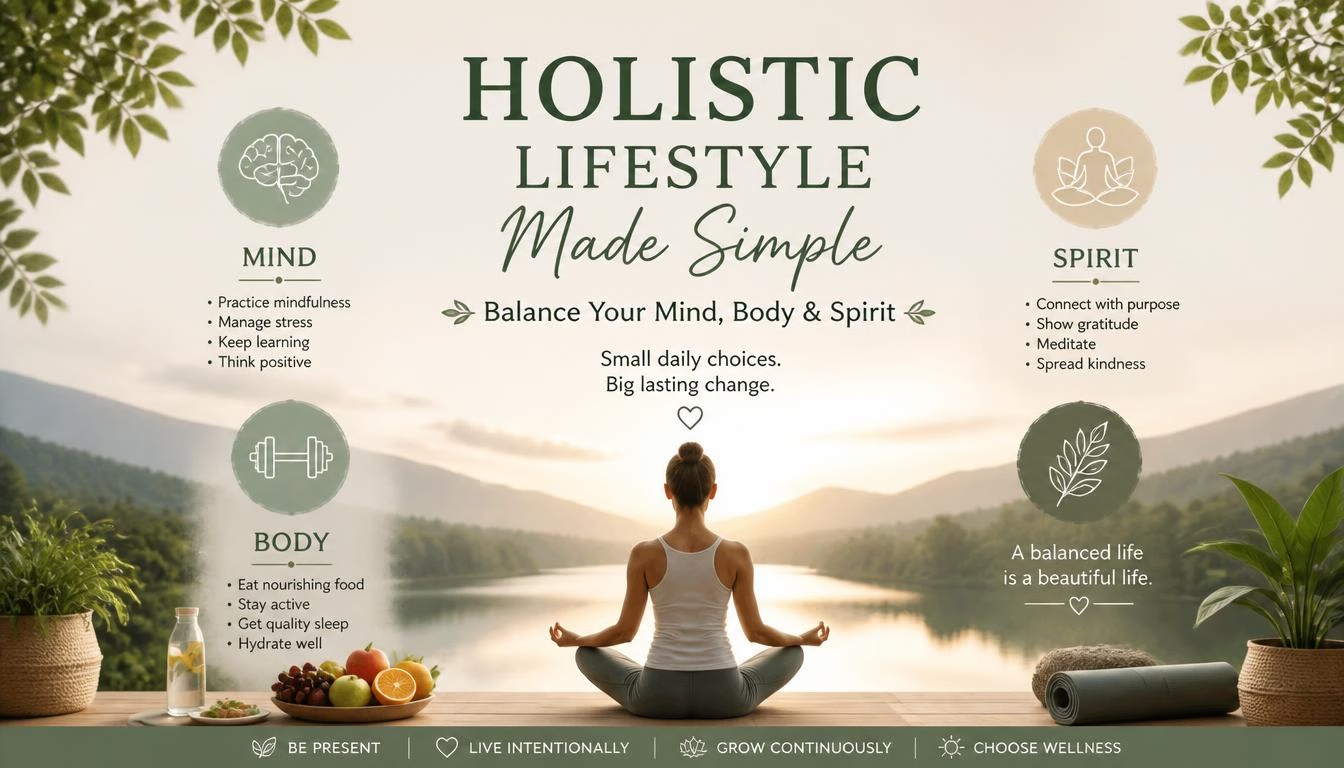
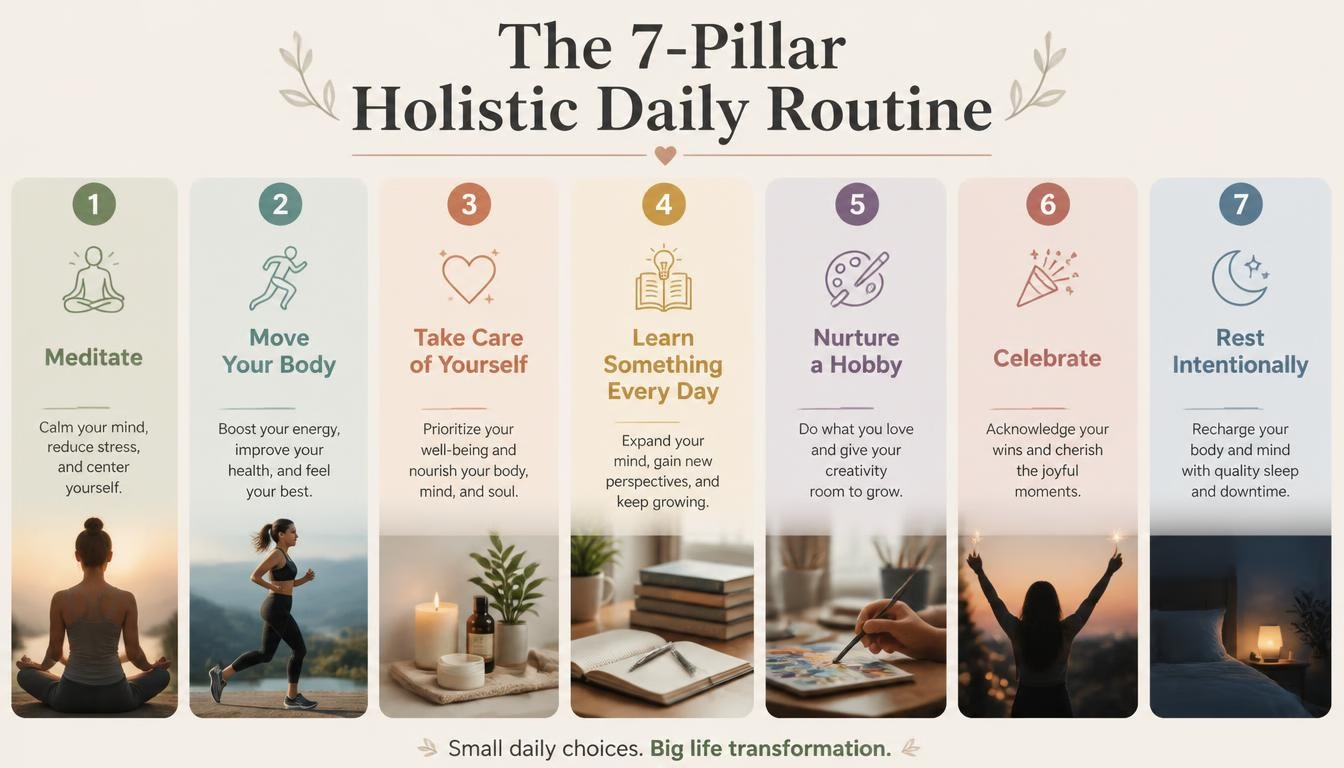
A complete holistic daily routine that covers mental, physical, and spiritual well-being includes these seven essentials:
- Meditation or mindful stillness, even 5–10 minutes before engaging with screens, sets a focused tone for the day
- Daily movement, any form of intentional physical activity, from walking to yoga to strength training
- Self-care rituals, hydration, nourishing meals, and a morning block dedicated to your own well-being
- Intentional learning, one chapter, podcast, or lesson that keeps the mind growing
- A hobby or creative outlet, unstructured time for something done purely for joy
- Daily acknowledgement of wins, a single sentence of gratitude, or self-recognition to train the brain toward progress
- Restorative sleep with a wind-down ritual, consistent bedtime, and screens off 45 minutes before sleep
Here’s a simple framework built around seven essential pillars. You don’t need to do them all perfectly. You just need to show up – and keep showing up.
Holistic Daily Routine: Mind, Body & Soul
Why Your Daily Routine Matters More Than You Think
Your daily routine is the architecture of your life. Every small choice you repeat – morning coffee, phone-first or breath-first, movement or stillness – stacks up over time into the person you become.
Science backs this up. A study published in the Journal of Health Psychology found that daily routines are strongly linked to lower stress levels, better sleep quality, and a greater sense of purpose. It’s not about doing more. It’s about doing the right things consistently.
The seven pillars below aren’t random. They were chosen because together, they cover every dimension of holistic wellbeing: physical health, mental clarity, emotional resilience, creativity, self-respect, recovery, and joy.
7️⃣ The 7-Pillar Holistic Daily Routine (And How to Actually Follow It)
🌅 1. Meditate – Start Before the Noise Does
Before you reach for your phone, give yourself 10 minutes of quiet. Meditation doesn’t have to be complicated – sit comfortably, close your eyes, and focus on your breath. When your mind wanders (it will), gently bring it back. That’s the practice.
Even a short meditation session in the morning sets the tone for the entire day. Research from Harvard Medical School has shown that regular meditation physically changes the brain – reducing the size of the amygdala (your stress response centre) and strengthening the prefrontal cortex (the part responsible for focus and decision-making).
How to start: 5–10 minutes, right after waking. Try a guided app like Insight Timer if silence feels uncomfortable at first.
🛒 Want to go deeper? The Muse Headband uses real-time brainwave tracking to guide your meditation sessions and help you actually feel the difference. It’s one of our favourite tools for building a consistent practice.

Muse Headband: A Game-Changer for Meditation
💪 2. Move Your Body – Every Single Day
Exercise doesn’t have to mean a 90-minute gym session. A 30-minute walk, a yoga flow, a home workout, even dancing in your kitchen – all of it counts. What matters is that you move your body intentionally, every day.
Physical movement isn’t just about fitness. It regulates mood, improves cognitive function, and reduces anxiety. The endorphins released during exercise are some of the most powerful natural mood-boosters your body can produce.
How to start: Pick a movement you enjoy first. Consistency matters more than intensity, especially at the beginning.
🛒 Go further with biohacking: The Biohacking Your Physical and Mental Health course from the Academy for Health & Fitness is a science-backed deep dive into optimising your body and mind – including how to build an exercise habit that actually sticks.
🧴 3. Take Care of Yourself – It’s Self-Respect, Not Vanity
A morning routine that includes proper hygiene, a nourishing meal, and dressing in a way that makes you feel good is not shallow – it’s foundational. How you treat yourself on the outside signals something to your inner world: I matter. I’m worth this.
Self-care in a daily routine also means hydrating well, eating mindfully, and creating small rituals (your morning tea, your skincare, your ten minutes outside) that remind you to be present in your own body.
How to start: Build a 20–30 minute morning block dedicated entirely to yourself – no screens, no tasks, just you.
🛒 Ancient wisdom for modern self-care: The Ayurveda Diploma Course is a fascinating way to discover how this 5,000-year-old system of medicine approaches daily routines, nutrition, and caring for your body in harmony with nature. Currently 94% off.
📚 4. Learn Something Every Day
You don’t need to read 50 books a year to be a lifelong learner. One chapter, one podcast episode, one documentary, one online lesson – that’s enough. The goal is to keep the mind curious and growing.
Learning daily is one of the most consistent habits shared by high-performing, fulfilled people. It doesn’t have to be career-related. Philosophy, cooking, history, a new language, a new skill – anything that expands how you see the world counts.
How to start: Replace one scrolling session (Instagram, TikTok, news) with 20–30 minutes of intentional learning.
🛒 Books we recommend for this pillar:
- Factfulness by Hans Rosling – A brilliant, eye-opening book that rewires how you see the world. Perfect for daily reading.
- The 5 Types of Wealth by Sahil Bloom – A holistic look at what it means to truly grow, beyond money and productivity.
- NLP Courses by New Skills Academy – If you want to understand how your mind works and rewire limiting patterns, this is a great place to start.
🎨 5. Nurture a Hobby – Do Something for the Joy of It
Your hobby is a part of your day with zero productivity pressure. It’s not for income, it’s not for a goal – it’s just for you. Writing, painting, gardening, music, cooking, hiking, knitting, gaming – the form doesn’t matter. The feeling does.
Psychology research on “flow states” (the experience of being fully absorbed in an activity) shows that regular engagement with meaningful hobbies significantly reduces stress, boosts creativity, and even improves work performance. Hobbies aren’t a luxury. They’re a necessity.
How to start: Protect 30–60 minutes in your afternoon or evening, and treat it with the same respect as a work meeting.
🛒 If your hobby is self-discovery: Dopamine Nation by Dr. Anna Lembke is a fascinating read on pleasure, pain, and how to find authentic joy in a world of constant stimulation. Great for anyone rethinking how they spend their free time.
🎉 6. Celebrate – Even the Small Wins
At the end of each day, pause and ask: What did I do well today? It doesn’t have to be monumental. Drank enough water. Had a hard conversation. Made someone laugh. Showed up when you didn’t feel like it. These are wins.
Celebrating daily trains your brain to notice progress instead of defaulting to what went wrong. It builds self-confidence over time, and it keeps you motivated on the days when energy is low.
How to start: Write one sentence in a journal each evening: “Today I’m proud that I ________.” That’s it. One sentence.
🛒 Struggling with procrastination instead of celebrating wins? The Art of Laziness by Library Mindset is a surprisingly powerful book that reframes procrastination and helps you build the kind of momentum that gives you things to celebrate.
🌙 7. Rest Intentionally – Sleep Is Not a Reward
Rest is not what happens after you’ve done everything else. Rest is the work. Sleep is when your brain consolidates memories, your body repairs itself, and your nervous system recovers. Skimping on it doesn’t make you more productive – it makes everything harder.
A consistent wind-down ritual signals to your body that it’s time to rest: dim the lights, put the screens down 30–60 minutes before bed, do something calming (reading, stretching, a warm shower), and go to sleep at a consistent time.
How to start: Set a “devices off” alarm 45 minutes before your intended bedtime. Treat it as non-negotiable.
🛒 Two resources for better sleep:
- How to Sleep Like a Caveman by Merijn van de Laar – Applies evolutionary science to modern sleep problems. Practical, readable, and genuinely eye-opening.
- Sleeping with Your Smartphone by Leslie A. Perlow – If your phone is the last thing you see at night, this book is a must-read. A direct companion to your wind-down routine.
🚦 How to Start a Holistic Daily Routine That Actually Sticks
Start with two pillars, not seven. Choose one morning habit (meditation or movement) and one evening habit (wind-down ritual or journaling). Do those two things consistently for two weeks before adding anything else. Once they feel natural, layer in a third. Trying to implement all seven pillars at once is the most common reason daily routines fail within a week. Consistency with two beats, perfection with seven, every time.
📋 A Simple Holistic Daily Schedule
| Time | Pillar | Activity | Why It Matters |
|---|---|---|---|
| 6:30–7:00 | 🌅 Mind | Meditate + set intention | Lowers cortisol before the day begins |
| 7:00–7:45 | 💪 Body | Movement (walk, yoga, gym) | Releases endorphins, regulates mood |
| 7:45–8:15 | 🧴 Self-care | Shower, breakfast, get ready | Signals self-respect to your nervous system |
| 8:30–9:00 | 📚 Mind | Read, listen, or learn | Keeps the mind curious and growing |
| Afternoon | 🎨 Soul | Creative hobby or passion | Activates flow state, reduces stress |
| Evening | 🎉 Soul | Celebrate one win | Trains the brain to notice progress |
| 9:30–10:00 | 🌙 Body | Wind-down ritual, screens off | Prepares the nervous system for deep sleep |
The times are suggestions, not rules. Shift them to fit your life. What matters is that all seven pillars have a home in your day.
Muse Headband: A Game-Changer for Meditation
💯 The One Rule That Makes This Work
Progress over perfection.
If you meditate for 5 minutes instead of 20, that counts. If your movement was a short walk, that counts. If your only celebration was mentally noticing something good as you fell asleep – that counts.
The biggest mistake people make with daily routines is treating a missed day as a failed routine. It isn’t. It’s just Tuesday. Get back to it on Wednesday.
Growth isn’t a checklist. It’s a practice. And every day you show up, even imperfectly, is a day you’re becoming the person you’re meant to be.
🎯 Ready to Start?
Download the free Holistic Daily Routine Checklist below – a simple, printable one-pager with all seven pillars, so you can check in with yourself every day.
🌿 My Holistic Daily Routine Checklist
❓ Frequently Asked Questions
What is the best daily routine for mental health?
The most effective daily routine for mental health combines three core habits: morning meditation or mindfulness (even 5 minutes), daily physical movement, and a consistent sleep schedule with a screen-free wind-down window. Research from UCLA Health and the American Psychological Association consistently shows that these three practices, done regularly, reduce anxiety and improve mood more reliably than any single intervention.
How long does it take to build a daily routine?
Research on habit formation suggests that a new behaviour becomes automatic after an average of 66 days, not the commonly cited 21 days. The key is starting with one or two habits rather than a complete overhaul. Small, consistent actions taken daily compound into lasting routines over two to three months.
What should I do every morning for mind, body, and soul?
For mind: spend 5–10 minutes in meditation or quiet reflection before checking your phone. For body: drink water immediately on waking and move your body within the first hour; even a short walk counts. For soul: set one intention for the day, something that matters to you, not just your task list. These three actions take under 30 minutes and lay the foundation for every other habit.
Can a daily routine reduce anxiety?
Yes. A structured daily routine reduces anxiety by lowering decision fatigue, creating predictability for your nervous system, and building self-efficacy through consistent small wins. A 2021 review in the Journal of Affective Disorders found that routine disruption is one of the strongest predictors of anxiety and depressive episodes, making consistent structure a clinically recognised protective factor.
At The Dream Oak, we write about the connection between mind, body, and soul – because a fulfilled life grows from all three. Browse more articles on mindfulness, personal growth, and health & wellness.
🗓️The Holistic Living Routine
📧 Receive Our Free Expert-Crafted Holistic Routine to Nourish Your Daily Life. Unlock clarity. Take action.
📝 Affiliate Disclaimer
This post contains affiliate links. If you purchase through them, we may earn a small commission at no extra cost to you. We only recommend products we genuinely believe in.
References:
- Wrosch, C., Miller, G. E., Scheier, M. F., & De Pontet, S. B. (2007). Giving up on unattainable goals: Benefits for health? Personality and Social Psychology Bulletin, 33(2), 251-265.
- Stefani, M., Harfika, A., Anwar, K., Humayrah, W., Pujilestari, S., Azni, I. N., & Hardinsyah, H. (2018, December). An integrated healthy breakfast education for teachers, school children, and parents in West Java. In ICCD (Vol. 1, No. 1, pp. 165-170).
- Alspach, G. (2009). Extending the tradition of giving thanks and recognising the health benefits of gratitude.
- Mutz, M., & Müller, J. (2016). Mental health benefits of outdoor adventures: Results from two pilot studies. Journal of Adolescence, 49, 105-114.
- Eigenschenk, B., Thomann, A., McClure, M., Davies, L., Gregory, M., Dettweiler, U., & Inglés, E. (2019). Benefits of outdoor sports for society. A systematic literature review and reflections on evidence. International Journal of Environmental Research and Public Health, 16(6), 937.
- Ferrara, M., & De Gennaro, L. (2001). How much sleep do we need? Sleep Medicine Reviews, 5(2), 155-179.
Learn, Help Family And Friends, And Help The Planet!




)