Introduction to Meditation Positions
The significance of selecting an appropriate position for meditation cannot be overstated. The posture one assumes during meditation can profoundly influence the quality and effectiveness of the practice. A well-chosen position enhances comfort, supports sustained focus, and fosters a more profound meditative experience. Conversely, an ill-suited posture may lead to discomfort, distraction, and reduced meditation efficacy.
“This guide is part of our complete beginner’s meditation guide, which covers all fundamentals including posture, breathing, and daily practice.”
Quick Answer: What’s the Best Position for Meditation?
The best position for meditation is the one where you can stay comfortable and alert.
Here’s the quick comparison:
| Position | Best For | Difficulty |
|---|---|---|
| Lotus | Stability & focus | Hard |
| Seiza | Aligned spine | Medium |
| Burmese | Beginners | Easy |
| Chair | Accessibility | Very Easy |
| Standing | Alertness | Medium |
| Lying Down | Deep relaxation | Medium |
👉 Keep reading to understand each position and choose your best match.
🧘Best Position for Meditation🪷
Individual preferences and physical conditions are crucial in determining the most suitable meditation position. Flexibility, strength, and pre-existing physical ailments must be considered. Meditation positions are not one-size-fits-all; what works perfectly for one person may not be ideal for another. This underscores the importance of exploring various positions to find the one that aligns best with one’s unique physical attributes and meditation goals.
There are several traditional and widely practiced meditation positions, each offering distinct benefits. From the classic cross-legged postures to more modern seated or lying down alternatives, the spectrum of options ensures that everyone can find a comfortable and effective position. The key lies in maintaining a balance between relaxation and alertness, enabling the practitioner to engage fully in the meditation process without succumbing to physical discomfort or mental distraction.
“Learn the full 10-step meditation process in our complete guide to understand how posture fits into the bigger picture.”
In the following sections, we will delve into the most recommended positions for meditating, exploring the nuances and benefits of each. By understanding the importance of posture and experimenting with different positions, individuals can enhance their meditation practice, leading to improved mental clarity, emotional stability, and overall well-being.

Meditation Teacher Diploma Course by the Centre of Excellence
Embark on a journey of self-discovery and personal growth with the Meditation Teacher Diploma Course by the Centre of Excellence. Our experienced instructors will guide you through comprehensive modules designed to deepen your practice and teaching skills.
1. The Classic Lotus Position
Best For: Advanced practitioners seeking stability
Difficulty: Hard
Key Benefit: Creates a stable base for deep focus
Make It Easier:
The lotus position, or Padmasana in Sanskrit, stands as one of the most iconic and traditional postures for meditation. This classic pose, deeply rooted in ancient practices, is renowned for its profound ability to promote stability and enhance focus during meditation sessions.
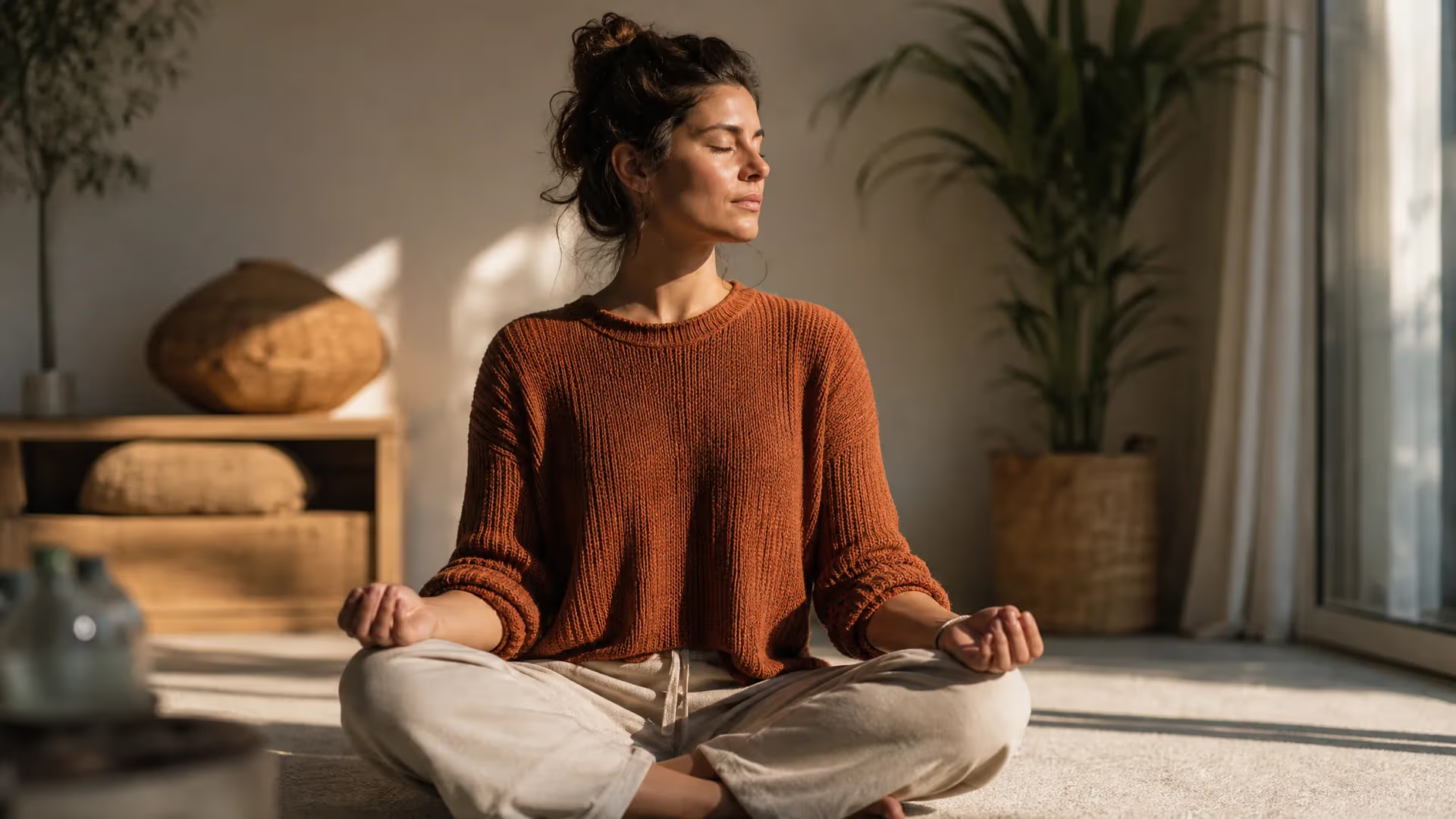
To achieve the full lotus position, one begins by sitting on the floor with legs extended. Each foot is then gently placed on the opposite thigh, ensuring the soles face upward and the heels are close to the abdomen. The spine should remain erect, the shoulders relaxed, and the hands resting on the knees in a mudra conducive to meditation.
For those with limited flexibility, the half-lotus position offers an alternative. This variation involves placing one foot on the opposite thigh while the other leg remains beneath the opposite thigh or simply rests on the ground. Both versions of the lotus position provide a stable base, which is essential for prolonged periods of meditation.
The origins of the lotus position trace back to ancient yogic traditions, where it was believed to symbolize purity and enlightenment. It has been a favored posture among practitioners for centuries due to its ability to create a solid foundation, both physically and mentally. By aligning the body in this manner, the lotus position facilitates an unobstructed flow of energy, aiding in deeper states of meditation.
Despite its numerous benefits, the lotus position can pose challenges, particularly for beginners or those with limited flexibility. Achieving the full lotus requires significant hip and knee flexibility, which may necessitate gradual practice and patience. It is crucial to listen to one’s body and avoid forcing the position, as this could lead to injury. Utilizing props such as cushions or blankets can provide additional support and comfort, making the posture more accessible.
In essence, the lotus position remains a revered choice for meditation, offering a blend of stability, focus, and historical significance. Through consistent practice and mindful adaptation, it can become a powerful tool in one’s meditation journey.

Muse Headband: A Game-Changer for Meditation
2. The Seiza Position: Kneeling Meditation
Difficulty: Medium
Key Benefit: Aligned spine
Make It Easier:
The seiza position is a traditional kneeling posture deeply rooted in Japanese culture. It involves kneeling on the floor with the buttocks resting on the heels and the tops of the feet flat on the ground. This position is often associated with formal sitting in Japanese ceremonies, martial arts, and meditation practices. The term “seiza” itself translates to “proper sitting,” reflecting its importance and formality in Japanese society.
To execute the seiza position correctly, begin by kneeling on a comfortable surface, such as a meditation cushion or mat, to minimize strain on the knees. Sit back gently so that your buttocks rest on your heels. Ensure that your spine remains straight, your shoulders relaxed, and your hands resting comfortably on your thighs. The alignment of the spine is crucial, as it promotes optimal breathing and concentration during meditation. Maintaining a straight back also helps in reducing fatigue and minimizing distractions, allowing for a more focused meditative state.
One of the notable benefits of the seiza position is its ability to keep the spine aligned, which is essential for effective meditation. Proper spinal alignment facilitates better circulation and deep breathing, enhancing the overall meditation experience. Additionally, for individuals who find cross-legged positions challenging or uncomfortable, the seiza position offers a viable alternative. It reduces pressure on the hips and allows for a more accessible and stable meditation posture.
While the seiza position may initially cause some discomfort, especially for those unaccustomed to kneeling, regular practice can lead to increased flexibility and comfort over time. It is recommended to start with shorter meditation sessions and gradually increase the duration as your body adapts to the posture. Incorporating the seiza position into your meditation practice can provide a unique and culturally rich experience, fostering a deeper connection to the meditative process.
Mindfulness Courses by the Centre of Excellence
Discover the power of the mindfulness diploma courses offered by the Centre of Excellence. These carefully structured programs are designed to guide you through the fundamentals of mindfulness, helping you cultivate a balanced, focused, and fulfilling life.
3. The Burmese Position: An Alternative to Lotus
Best For: Beginners
Difficulty: Easy
Make It Easier:
The Burmese position serves as an accessible alternative to the traditional lotus pose in meditation. For those who find the lotus position challenging due to its demanding flexibility requirements, the Burmese position offers a simpler yet effective solution. In this posture, one sits with legs crossed but not interlocked, which reduces strain on the knees and hips.
To assume the Burmese position, begin by sitting on a cushion or a meditation mat. Position one leg in front of the other, ensuring that the feet rest flat on the floor or mat without overlapping. This configuration creates a stable base while allowing the spine to remain upright and relaxed, facilitating deeper breathing and increased focus during meditation sessions.
The primary advantage of the Burmese position lies in its accessibility. Unlike the lotus pose, which requires a high degree of flexibility in the hips and knees, the Burmese position can be maintained comfortably by a broader range of individuals. This inclusivity makes it particularly beneficial for beginners or those with limited flexibility who still wish to reap the benefits of a stable and grounded meditation practice.
Stability is another significant benefit of the Burmese position. Providing a secure and balanced seating arrangement allows meditators to maintain mental focus and physical stillness for extended periods. This stability is crucial for achieving a meditative state where distractions are minimized, and mindfulness is enhanced.
Overall, the Burmese position offers a practical and comfortable alternative to the lotus pose, making the practice of meditation more accessible to a diverse audience. Its ease of adoption and ability to provide a steady foundation underscore its value as a recommended position for meditating, especially for those seeking a balance between stability and ease.

Unparalleled online learning experiences, New Skills Academy!
4. Sitting on a Chair: Modern Adaptations
Difficulty: Very easy
Key Benefit: Accessibility
Make It Easier:
Meditation, an age-old practice, has seen various adaptations to fit the modern lifestyle. One such adaptation is meditating while sitting on a chair, which offers practicality and comfort, especially for individuals with mobility issues or those who find floor sitting uncomfortable. This position aligns well with the contemporary needs of many who seek the profound benefits of meditation without the physical strain associated with traditional postures.
When meditating on a chair, ensuring proper posture is paramount to maintain the integrity and benefits of the practice. Start by selecting a chair that allows your feet to rest flat on the floor, promoting stability and grounding. If your feet do not reach the floor, using a footrest can be beneficial. Position your back firmly against the chair’s backrest to support a straight spine, a critical element in meditation that facilitates unobstructed breathing and energy flow.
To further optimize your seated posture, keep your knees at a right angle, directly above your ankles. Your hands can rest comfortably on your lap, with palms facing up or down, depending on your preference. Aligning your head with your spine, tuck your chin slightly to elongate the neck and keep your shoulders relaxed yet open. This alignment helps in reducing muscle strain and enhances focus during meditation sessions.
The chair position for meditation offers an accessible and adaptable approach, particularly for those who may experience discomfort or pain while sitting on the floor. It allows individuals to engage in their meditation practice consistently, fostering a sense of physical ease and mental clarity. By adopting this modern adaptation, one can enjoy the transformative power of meditation without compromising on comfort or posture.
Muse Headband: A Game-Changer for Meditation
5. Lying Down: Savasana for Deep Relaxation
Best For: Alertness
Difficulty: Medium
Make It Easier:
Meditating in a lying down position, particularly in the savasana or corpse pose, offers a distinct approach to achieving deep relaxation. Savasana is often characterized by its simplicity: lying flat on one’s back with arms and legs comfortably spread, palms facing upwards. This position is highly accessible, making it an excellent choice for individuals with physical limitations or those who find it challenging to sit for extended periods.
One of the primary benefits of meditating in savasana is the profound sense of relaxation it induces. The body’s full contact with the floor provides a sense of grounding and support, allowing mental and physical tension to dissipate. This position can be particularly beneficial for those who experience chronic pain or discomfort, as it minimizes strain on the joints and muscles.
However, meditating while lying down does come with potential downsides. The most notable is the increased likelihood of falling asleep. To mitigate this, it’s advisable to practice savasana meditation with a clear intention to remain awake and aware. Techniques such as focusing on the breath, using guided meditation recordings, or setting a short timer can help maintain wakefulness. Additionally, ensuring a comfortable yet supportive surface, such as a yoga mat or a firm mattress, can aid in staying alert.
While savasana may not be the traditional posture associated with meditation, it offers a valuable alternative for achieving mental clarity and relaxation. By understanding its benefits and potential challenges, practitioners can effectively incorporate this position into their meditation routine, enhancing their overall well-being.
6. Standing Meditation: Embracing Stability
Best For: Deep relaxation
Difficulty: Medium
Make It Easier:
Standing meditation, a practice that emphasizes balance and grounding, offers a unique approach to mindfulness. Unlike traditional seated meditation, standing meditation can be particularly beneficial for enhancing alertness and integrating mindfulness into everyday activities that require standing. This form of meditation is rooted in the principles of stability and connection to the earth, making it an ideal practice for those seeking to cultivate a sense of presence and awareness.
One of the primary advantages of standing meditation is its ability to promote alertness. When standing, the body is naturally engaged, which can help prevent the drowsiness that sometimes accompanies seated meditation. This heightened state of awareness can be especially useful in situations where maintaining focus is crucial. Additionally, standing meditation can seamlessly integrate into daily routines, such as waiting in line or taking a break during work, making it a versatile practice for busy individuals.
To practice standing meditation effectively, it is essential to maintain proper alignment. Begin by standing with your feet hip-width apart, ensuring that your weight is evenly distributed between both feet. Keep your knees slightly bent to avoid locking them, which can cause strain. Your spine should be straight, with your shoulders relaxed and your arms hanging naturally by your sides. Engage your core muscles to support your posture, and imagine a string gently pulling the top of your head towards the sky, elongating your neck and spine.
Breathing plays a crucial role in standing meditation. Focus on taking slow, deep breaths, allowing your breath to flow naturally. As you breathe, direct your attention to the sensations in your body, noting any areas of tension or discomfort. Use each exhale to release this tension, grounding yourself more firmly with each breath. This mindful breathing helps to anchor your awareness in the present moment, enhancing the meditative experience.
By incorporating standing meditation into your practice, you can develop a greater sense of stability and mindfulness. This position not only enhances alertness but also allows for a deeper connection to the present moment, making it a valuable addition to your meditation repertoire.
“For step-by-step instructions on executing each position correctly, see our full beginner’s guide.”
Unparalleled online learning experiences, New Skills Academy!
Choosing the Right Position for You
When embarking on a meditation journey, selecting the most suitable position is paramount for both comfort and effectiveness. The ideal posture can vary significantly from person to person, emphasizing the need for a personalized approach. Listening to your body is crucial; it often provides cues about what feels natural and sustainable for extended periods.
To begin, experiment with various traditional meditation positions such as the lotus, half-lotus, Burmese, kneeling (seiza), or even sitting on a chair. Each of these positions offers unique benefits and challenges. For instance, the lotus position is highly regarded for its stability and alignment, but may not be suitable for everyone, especially those with hip or knee issues. In contrast, sitting on a chair can provide excellent support for individuals who may struggle with flexibility or back pain, ensuring the spine remains upright and relaxed.
Another critical aspect is the use of props or cushions. Meditation cushions (zafus) or benches can significantly enhance comfort by promoting proper alignment and reducing strain on the joints. Elevating the hips above the knees can alleviate pressure and enhance circulation, making the practice more enjoyable and sustainable.
“Ready to start meditating? Follow our complete beginner’s meditation guide for a full introduction.”
It is also beneficial to consult with a meditation instructor or physical therapist. These professionals can offer tailored advice based on your unique physical and mental needs, helping you to identify a position that not only supports your body but also enhances your meditation practice. They can provide insights into adjustments or alternative positions that you might not have considered.
Ultimately, the goal is to find a meditation position that allows you to focus inward without being distracted by discomfort. Through patience and experimentation, you can discover the posture that best supports your meditative journey, paving the way for a more profound and enriching experience.
❓Frequently Asked Questions:
What is the best meditation position for beginners?
The best meditation position for beginners is the Burmese position, or sitting on a chair. Both are easy to maintain, require minimal flexibility, and provide a stable foundation without causing discomfort. Start with whichever feels more natural to your body, and gradually explore other positions as your practice deepens.
Can you meditate lying down?
Yes, you can meditate lying down in Savasana (corpse pose). This position is excellent for deep relaxation and is ideal for people with physical limitations. However, the main challenge is staying awake; the comfort can sometimes lead to sleep. To stay alert, use guided meditations, focus on your breath, or set a timer for shorter sessions.
How long should you sit in one meditation position?
Start with 10-15 minutes in your chosen position and gradually increase to 20-30 minutes as your body adapts. The duration depends on your comfort level and flexibility. Listen to your body; if you experience pain (not just discomfort), switch positions. Consistency matters more than duration, so daily 10-minute sessions beat occasional long sessions.
Do I need special equipment like a meditation cushion?
No, you don’t need special equipment to start meditating. However, a meditation cushion (zafu) or yoga mat can significantly improve comfort by elevating your hips and supporting proper spinal alignment. If the budget is tight, use a regular pillow or a folded blanket. The key is maintaining an upright spine and comfort; the equipment is just a tool to help achieve that.
“If posture is causing issues, see why you struggle with meditation.”
Ready to deepen your practice? These resources help you maintain your position with science-backed support.
Resources to Deepen Your Faith-Health Practice
The science of faith and health becomes most powerful when put into practice. Below are carefully selected resources, from books to courses to tools, that transform understanding into lived transformation.
📚 Books: The Foundation
For Understanding the Neuroscience
Altered Traits: Real Neuroscience of Meditation and Mindfulness by Daniel Goleman & Richard J. Davidson
This is THE book if you want rigorous, peer-reviewed evidence on how spiritual practice actually changes the brain. Goleman and Davidson synthesize decades of neuroscience research to show:
- How meditation physically strengthens areas linked to emotional regulation
- Why some spiritual practices create lasting change while others don’t
- The difference between temporary relaxation and permanent neuroplasticity
Why it matters: It bridges the gap between the mechanisms we’ve discussed (amygdala regulation, prefrontal cortex activity) and real, measurable brain change. Essential for skeptics and seekers alike.
The Power of Your Subconscious Mind by Dr. Joseph Murphy
A classic that has influenced millions. Murphy’s work shows how belief, prayer, and inner dialogue reshape your experience of reality and your health outcomes. Practical exercises included.
Why it matters: Demonstrates the cognitive appraisal mechanism in action: how changing your internal narrative changes your neurochemistry and immune response.
For Finding Purpose and Meaning
Warrior of the Light: A Manual by Paulo Coelho
Short, poetic reflections on living a purposeful, spiritually grounded life. Perfect for someone building meaning amid life’s challenges.
Why it matters: Addresses the “sense of purpose” pathway, one of the strongest predictors of health and longevity in the research.
The 5 Types of Wealth by Sahil Bloom
Redefines what a meaningful life looks like beyond money: time, health, relationships, purpose, and community. A natural companion to understanding why faith supports health.
Why it matters: Connects faith-based meaning-making to broader life satisfaction and the protective health effects of purposeful living.
The Element: How Finding Your Passion Changes Everything by Ken Robinson
Explores the intersection of passion, talent, and purpose. For anyone asking, “What is my spiritual calling?” or “How do I align my life with my deepest values?”
Why it matters: Purpose is medicine. This book helps you find it, whether through religious faith or secular meaning-making.
For Emotional Resilience and Stress
The Upside of Stress: Why Stress Is Good for You by Kelly McGonigal
McGonigal challenges the “stress kills you” narrative and shows that reframing stress as meaningful (exactly what faith does) transforms its health impact. Neuroscience-backed mindset shift.
Why it matters: Demonstrates the cognitive appraisal mechanism in the stress-buffering pathway, how faith reframes adversity as growth.
Stress Less, Accomplish More: Meditation for Extraordinary Performance by Emily Fletcher
A practical guide to Ziva Meditation, combining mindfulness, meditation, and manifesting. Designed for modern life, neuroscience-backed.
Why it matters: Shows how meditation (central to many faiths) activates the parasympathetic nervous system, reducing chronic stress.
For Relationships and Compassion
The Science of Happiness: Seven Foundations of Well-Being by Bruce Hood
Explores the relational roots of genuine well-being: empathy, compassion, and connection. The “social support” pathway is made concrete.
Why it matters: Faith communities work partly because they provide belonging. This book shows why belonging is literally health-giving.
Calling in The One (Revised and Expanded) by Katherine Woodward Thomas
A guide to attracting and cultivating loving partnerships rooted in personal transformation and spiritual awareness. Not just romance, it’s about becoming someone who can hold meaningful connections.
Why it matters: Addresses the relational and community pathways of faith-health, showing how spiritual alignment attracts healthier relationships.
The Essential Rumi: 40th Anniversary Edition by Coleman Barks (Translator)
800 years of wisdom on love, loss, longing, and union from the Sufi poet Rumi. Spirituality distilled into poetry that heals.
Why it matters: The emotional and affective regulation pathway, how faith (especially through sacred texts and poetry) cultivates hope, forgiveness, and resilience.
For Spiritual Transformation
Autobiography of a Yogi by Paramahansa Yogananda
One of the most profound spiritual memoirs ever written. A guide to consciousness, discipleship, and the possibility of spiritual awakening.
Why it matters: Shows how faith-based practice (yoga, meditation, spiritual community) transforms consciousness itself, the ultimate health outcome.
The Neville Goddard Deluxe Collection by Neville Goddard
All 14 works by one of the most influential spiritual teachers of the 20th century. Goddard’s teachings on consciousness, imagination, and reality creation remain transformative for anyone undergoing big personal change.
Why it matters: Addresses the neurobiological pathway, how visualization and consciousness reshape reality at the level of the nervous system and behavior.
The Hero With A Thousand Faces by Joseph Campbell
Campbell’s landmark work on the universal spiritual journey across all cultures and mythologies. Understanding it deepens your sense of connection to every other seeker, the community pathway made cosmic.
Why it matters: Belonging to something larger than yourself (faith’s community pathway) connects you to the entire human story.
The Silva Mind Control Method by José Silva
A foundational text in mind-body transformation. Silva’s techniques for entering deeper states of consciousness have been practised by millions. The practical bridge between spirituality and daily performance.
Why it matters: Shows how meditation and mindfulness (spiritual practices) create measurable changes in well-being, immune function, and health outcomes.
Awakening Your Psychic Powers by Henry Reed (Based on Edgar Cayce)
Explores intuitive capacities as part of broader spiritual awakening. A gentle, accessible guide for anyone opening to deeper dimensions of self.
Why it matters: Intuition and spiritual connection are underestimated pathways to health; learning to trust your inner wisdom is protective.
🧘 Courses: Learn by Doing
Spirituality & Mindfulness
Spirituality Courses at New Skills Academy – 65% OFF
Comprehensive courses in Reiki, Tarot, meditation, and spiritual practice. Learn alongside a community of like-minded seekers. Currently heavily discounted.
Best for: Anyone wanting structured, guided learning in spiritual practices.
New Skills Academy Mindfulness Courses – 65% OFF
Evidence-based mindfulness techniques for all levels. Reduce stress, boost focus, enhance overall well-being.
Best for: Those wanting to practice the mindfulness pathway directly (cognitive appraisal reframing, stress reduction, emotional regulation).
Personal Development Courses – academy+ – 65% OFF
Structured programs in confidence, mindset, goal-setting, and life skills. The practical side of spiritual transformation, building the outer life that matches your inner evolution.
Best for: Those ready to integrate spiritual awareness into concrete life changes.
Specialized Health & Wellness
Ayurveda Diploma Course – 94% OFF
Learn the ancient spiritual-medical system of Ayurveda. Integrates faith-based wellness philosophy with practical health practices.
Best for: Those wanting a non-Western, spiritually integrated approach to health.
🎧 Tools: Technology Meets Spirituality
Muse Headband
Real-time brainwave feedback during meditation. See your brain enter calm, focused states. Perfect for those who want to feel (and measure) what neuroplasticity looks like.
Best for: Anyone skeptical about meditation or wanting biometric proof of its effects. Shows the amygdala regulation pathway in real time.
Why it works: Bridges the faith-neuroscience gap. You’re not just meditating on belief; you’re seeing the brain change happening.
Muse Headband: A Game-Changer for Meditation
Sensate: Stress Relief in 10 Minutes
A sensory device that lowers stress through infrasound resonance. No meditation experience needed. Activates the parasympathetic nervous system (the “rest and digest” system).
Best for: Those with busy lives who want a physical anchor for the stress-reduction pathway. Works even if you don’t “believe” in spirituality; your nervous system does.
📖 Your Starting Point (By Path)
| Your Focus | Start Here | Then Explore |
|---|---|---|
| “Prove it to me” (Need neuroscience) | Altered Traits | Muse Headband |
| “I want to feel better” (Stress & resilience) | Sensate | The Upside of Stress |
| “I’m ready to practice” (Want structured learning) | Spirituality Courses | Autobiography of a Yogi |
| “I need purpose” (Searching for meaning) | Warrior of the Light | The Element |
| “Help my relationships” (Community & connection) | The Science of Happiness | The Essential Rumi |
| “I want deep transformation” (Ready for the journey) | The Silva Mind Control Method | The Neville Goddard Collection |
🌿 Final Word
The research is detailed: faith and spirituality are powerful health tools. But like any tool, they work best when you actually use them.
Start somewhere. Pick one book, one course, one practice. The pathways outlined in this article- cognitive appraisal, social connection, behavioral change, emotional resilience, and neurobiological shifts- all activate when you move from knowing to doing.
Your nervous system doesn’t care about your beliefs about spirituality. It responds to practice.
Begin today. Your health is waiting.
📝 Affiliate Disclaimer
This post contains affiliate links. If you make a purchase through them, we may earn a small commission at no extra cost to you. We only recommend products we genuinely believe in and that align with the science presented in this article.
🔗 Explore the Full Mind-Body-Soul Framework
- Holistic Daily Routine for Mind, Body & Soul: 7-Step Wellness Guide (2026)
- 7 Benefits of Spirituality – Understand the spiritual dimension
- Faith and Health: Science & Mechanisms – Learn the neuroscience
- The Silva Method Explained: Meditation Techniques to Master Your Mind & Achieve Goals
- How to Meditate Alone: 10 Simple Steps for Beginners (That Actually Work)
Together, these articles form a complete guide to holistic wellness.
Learn, Help Family And Friends, And Help The Planet!