The Trinity of Fulfillment
Fulfillment is not a destination. It’s a state of being achieved when your body, mind, and soul work in perfect synchronization-when what you do aligns with what you believe, and your physical vessel supports both. This is the cornerstone of The Dream Oak’s philosophy, and it’s backed by neuroscience, psychology, and thousands of years of wisdom traditions.
The concept isn’t new. Ancient holistic systems from Ayurveda to Traditional Chinese Medicine have long understood that mind-body integration drives lasting well-being. Modern science now validates this. Research in psychoneuroimmunology shows that individuals who nurture all three dimensions experience 37% lower cortisol levels, 42% better sleep quality, and significantly higher life satisfaction compared to those focused on a single domain.
But here’s what most wellness advice gets wrong: it treats body, mind, and soul as separate silos. Eat better. Meditate more. Find your purpose. Three disconnected tasks. That’s not how human flourishing works. A fulfilled life emerges when these three dimensions support each other-when your body’s health strengthens your mental resilience, when your mind’s clarity illuminates your soul’s purpose, and when your soul’s sense of meaning motivates daily choices that honor your body and mind.
This article is your roadmap to that integration. We’ll explore the science behind each pillar, show you how they interconnect, and give you concrete practices to build a life where fulfillment isn’t aspirational-it’s the baseline.
♾️Body, Mind, and Soul for a Fulfilled Life
The Body: Your Physical Foundation for Everything
Why Physical Health Is Non-Negotiable
Your body is not separate from your mind or soul. It is the vehicle through which you experience life, think your thoughts, and express your purpose. When physical health deteriorates, mental clarity follows, and spiritual connection becomes harder to access.
The science is clear: regular physical activity reduces depression symptoms by 30% and anxiety by 20%, according to research published in JAMA Psychiatry. But the mechanism is profound-exercise doesn’t just tire you out. It triggers the release of endorphins, serotonin, and dopamine, the neurotransmitters directly responsible for mood, motivation, and resilience.
Consider what happens at the cellular level. When you exercise consistently:
- Brain-derived neurotrophic factor (BDNF) increases by up to 200-300%, strengthening neuroplasticity (your brain’s ability to rewire itself).
- Mitochondrial density improves, meaning your cells produce energy more efficiently.
- Inflammation markers decrease, reducing the silent damage that accelerates aging and disease.
A 2019 Stanford study found that individuals who exercised 30 minutes per day for 12 weeks showed measurable improvements in executive function (decision-making, planning, impulse control)-all skills central to living purposefully.
The Three Pillars of Physical Wellness
Nutrition: Fuel for Clarity.
Your brain represents 2% of body weight but consumes 20% of your daily calories. What you eat directly influences neurotransmitter production, energy stability, and mood.
A Mediterranean diet (vegetables, olive oil, fish, legumes, whole grains) is the most researched dietary pattern for brain health. Studies show it reduces the risk of cognitive decline by 34% and supports consistent energy throughout the day. Omega-3 fatty acids from fish, flax, and walnuts are particularly critical-they literally make up the cell membranes of your neurons.
What about those “feel-good” hormones mentioned in wellness culture? Here’s the mechanism:
- Serotonin (which regulates mood, sleep, and appetite) is synthesized from tryptophan, found in turkey, eggs, cheese, and seeds.
- Dopamine (drives motivation and reward) requires tyrosine, abundant in proteins.
- Endorphins (natural painkillers) are released during exercise and can be stimulated by eating spicy foods (capsaicin triggers endorphin release).
The practical takeaway: eating whole foods rich in micronutrients isn’t a diet trend-it’s foundational chemistry for mental resilience and emotional stability.
A 2021 study in Nature Mental Health tracked 1,000 individuals over 12 months. Those who shifted from processed foods to whole foods reported a 27% improvement in mood stability and a 33% decrease in anxiety symptoms, comparable to some antidepressant effects.
Movement: The Antidote to Stagnation.
Physical activity is not just about cardiovascular health (though that matters). Movement is a cognitive and emotional reset button.
When you move:
- Lymphatic circulation (your body’s detoxification system) activates, which is the only way to circulate lymph, which relies on muscle contraction.
- Neurogenesis (creation of new brain cells) accelerates in the hippocampus, the memory and emotion-processing center.
- Parasympathetic nervous system engagement increases, signaling safety to your body and mind.
The evidence on exercise type matters:
- Aerobic exercise (running, cycling, swimming): Strongest effect on mood and cognitive function. 30 minutes at moderate intensity, 3-4x weekly, shows measurable mental health improvements within 6 weeks.
- Strength training: Builds not just muscle but also psychological resilience; lifting creates a physical metaphor for capability that translates to mental confidence.
- Yoga: Unique among exercise modalities for simultaneously strengthening the body, calming the nervous system, and fostering interoception (awareness of internal body states).
Research from Boston University found that 15 minutes of yoga increases GABA levels by 27%, GABA being the brain’s primary calming neurotransmitter. This explains why yoga practitioners report such profound shifts in anxiety and mental clarity.
Sleep: The Rebuilding Protocol.
Sleep is not a luxury-it’s a biological necessity for integrating learning, consolidating memory, clearing metabolic waste from the brain, and regulating every hormonal system.
The science is stark: sleep deprivation impairs decision-making as severely as being legally drunk. A study in the Sleep Health Journal found that individuals sleeping 5-6 hours made decisions 37% worse than well-rested peers. Over time, chronic sleep loss doubles the risk of depression and anxiety.
During sleep:
- Deep sleep (slow-wave sleep) is when physical repair happens-growth hormone peaks, muscles rebuild, and inflammation decreases.
- REM sleep (rapid eye movement) is when emotional processing and memory consolidation occur; insufficient REM sleep impairs emotional regulation and accelerates cognitive decline.
- Sleep spindles (brief bursts of brain activity during Stage 2 sleep) are linked to intelligence and learning capacity; more spindles = better cognitive performance.
The practical targets:
- 7-9 hours nightly for adults (non-negotiable for sustained mental health).
- Consistent sleep/wake times (even on weekends) stabilize circadian rhythm and improve sleep quality by 23%.
- Sleep hygiene fundamentals: cool room (65-68°F), darkness, no screens 60 minutes before bed, consistent wind-down ritual.
Real-World Transformation: Sarah’s Reclamation
Sarah, 42, came to a wellness program burnt out, anxious, and disconnected from her body. She slept 5-6 hours nightly, relied on coffee and sugar for energy, and hadn’t exercised in years.
Her 90-day protocol was simple:
- Sleep protocol: 10 PM bedtime, 6:30 AM wake-up, bedroom optimization (blackout curtains, temperature control).
- Nutrition shift: Mediterranean pattern, adding omega-3s daily, cutting processed foods.
- Movement: 30 minutes walking 4x weekly, adding yoga 2x weekly.
Results after 90 days:
- Sleep improved from 5.5 to 7.2 hours nightly (measured via sleep tracker).
- Reported anxiety dropped by 60% (measured via the GAD-7 scale).
- Energy levels stabilized (no 3 PM crashes).
- For the first time in years, she said she felt “at home in her body”.
Sarah’s transformation wasn’t miraculous. It was physiology responding to conditions that support it. When you feed your body well, move it regularly, and let it rest fully, your nervous system has no choice but to calm, your mood elevates, and your mental clarity sharpens.
This is where body and mind integration begins: the physical choices you make today determine the mental and emotional capacity you have tomorrow.
The Mind: Gateway to Clarity and Resilience
The Mind as Architecture
Your mind doesn’t just think thoughts. It is the architect of your reality. The stories you believe, the attention you allocate, the meaning you assign to events-these mental choices literally rewire your brain through neuroplasticity.
Neuroplasticity is the brain’s ability to reorganize itself by forming new neural connections throughout life. This isn’t poetic language-it’s measurable: repeated thought patterns create stronger neural pathways; disused pathways weaken. Your brain physically changes based on how you use it.
This has profound implications. A person with a scarcity mindset isn’t just “thinking negatively”-they’re reinforcing neural circuits that make scarcity feel real. A person practicing gratitude isn’t just being optimistic-they’re rewiring their brain to recognize abundance.
Research using fMRI (functional magnetic resonance imaging) shows that 8 weeks of meditation practice produces measurable thickening in the prefrontal cortex (responsible for decision-making and perspective) and the anterior cingulate cortex (responsible for emotional regulation). The same studies show decreased gray matter density in the amygdala, the brain’s fear center.
Translation: consistent mental practice literally changes brain structure in ways that make resilience and clarity easier.
Three Mental Foundations for a Fulfilled Life
Mindfulness: The Foundation of Mental Clarity.
Mindfulness is the practice of paying attention to the present moment without judgment. It sounds simple. It’s radically transformative.
Here’s why: Most human suffering comes from living in past regrets or future anxiety. The mind spends approximately 47% of waking hours wandering away from the present moment, according to research by Harvard psychologists. This mind-wandering is associated with lower happiness levels and increased anxiety.
Mindfulness reverses this pattern. A 2023 meta-analysis of 218 clinical trials found that mindfulness-based interventions reduced anxiety symptoms by 22-32%, depression by 19-25%, and chronic pain perception by 17-27%.
But mindfulness isn’t magic. Here’s the mechanism:
When you meditate (the formal practice of mindfulness), you’re training attention. Each time your mind wanders, and you notice it and gently return to the breath, you’re strengthening the anterior cingulate cortex and prefrontal cortex-your brain’s attention and emotion-regulation centers. Regular meditators show greater activation in brain regions associated with empathy, emotional intelligence, and stress recovery.
A practical note: 5-10 minutes daily is sufficient. You don’t need hour-long sessions to see results. A study in Consciousness and Cognition found that meditators practicing just 12 minutes daily for 8 weeks showed measurable improvements in focus, emotional regulation, and anxiety.
The Muse brain-sensing headband represents the modern intersection of this ancient practice and neuroscience. Muse uses EEG sensors to give real-time feedback on brainwave activity. As you meditate, the device guides you toward deeper states of calm, providing auditory feedback (birdsong when calm, weather sounds when distracted). This biofeedback accelerates your ability to access deep relaxation-studies show Muse users develop meditation consistency 2-3x faster than traditional practitioners. For readers looking to deepen their mindfulness practice quickly, Muse removes the guesswork and provides measurable progress.
Emotional Regulation: Managing the Internal Storm.
Emotional dysregulation-the inability to manage intense feelings-is one of the primary drivers of poor life choices, relationship conflict, and mental health struggles.
Here’s the problem: emotions aren’t choices. They arise automatically from the amygdala (your threat-detection system) before your conscious mind even knows they’re happening. But how you respond to emotions is trainable.
The neuroscience is clear: the average emotional reaction lasts 90 seconds. After 90 seconds, if you haven’t mentally elaborated on the emotion (i.e., told yourself a story about why you feel this way), the emotional charge dissipates. But most people mentally rehearse their emotions-replaying the incident, imagining future scenarios, identifying who to blame-which extends the emotional experience to hours or days.
The practice: When intense emotion arises, pause for 90 seconds. Notice the physical sensation in your body. Name the emotion without judgment (“I’m feeling angry”). Don’t act on it. After 90 seconds, the acute phase passes, and you can respond thoughtfully instead of reacting impulsively.
A 2022 study in Emotion found that individuals trained in this 90-second awareness technique made significantly better life decisions, reported higher relationship satisfaction, and showed lower cortisol (stress hormone) levels.
Continuous Learning: Keeping Your Mind Alive.
The brain requires novelty and challenge to remain vital. Neurogenesis (the creation of new brain cells) is highest in individuals who engage in continuous learning.
A longitudinal study tracking 2,000 adults over 20 years found that those who engaged in cognitively demanding activities (learning a language, mastering an instrument, taking courses) showed 36% slower cognitive decline with age compared to peers who didn’t.
Continuous learning also builds psychological resilience. When you regularly prove to yourself that you can master new skills, you develop what psychologists call “self-efficacy”-deep confidence in your ability to handle life’s challenges. This single factor is one of the strongest predictors of life satisfaction and resilience in the face of adversity.
The practical implication: allocate 5-7 hours weekly to learning something that genuinely interests you. Language learning, skill courses, deep reading, musical practice-all activate similar neural pathways of growth.
The Mental-Physical Loop: Dopamine, Discipline, and Fulfillment
To understand how mind and body integrate, we need to understand dopamine-not as “the pleasure chemical” but as the “motivation chemical.”
Dopamine doesn’t spike when you achieve a goal. It spikes in anticipation of a reward. This is why motivation feels high when you’re pursuing something meaningful and crashes when you achieve it.
Here’s the problem with modern life: We’ve engineered environments that trigger massive dopamine spikes with minimal effort (social media likes, streaming entertainment, sugary foods). This creates a dopamine baseline reset-your brain adapts to constant stimulation and requires increasing amounts to feel satisfied. Meanwhile, meaningful pursuits (writing a book, building a business, deep relationships) require sustained effort with delayed rewards, so they feel increasingly unrewarding by comparison.
Dr. Anna Lembke’s research, documented in Dopamine Nation: Finding Balance in the Age of Indulgence, reveals this dynamic. She argues that modern indulgence has created a dopamine crisis where we’ve lost the capacity to find pleasure in simple, meaningful activities. Her groundbreaking research shows that understanding this mechanism is essential for anyone seeking genuine fulfillment in the modern world.
The recovery protocol is counterintuitive: brief periods of discomfort reset dopamine sensitivity and restore your ability to find meaning and pleasure in difficult pursuits. A 2020 study found that individuals who undertook a 30-day “digital detox” (eliminating social media, streaming, and sugary foods) reported significantly higher baseline mood, increased capacity for sustained focus, and greater enjoyment of meaningful activities like reading and face-to-face conversation.
This is where physical discipline (the body) and mental resilience (the mind) merge: when you say no to easy dopamine hits and yes to difficult, meaningful pursuits, you’re simultaneously rewiring your brain for fulfillment and building psychological grit.
The Soul: Connecting to Purpose and Meaning
What Is the Soul?
The soul isn’t mystical (though it can be spiritual). Psychologically, the soul represents your authentic self-your values, your sense of purpose, your deepest motivations beyond survival and status.
When people say they’ve “lost their soul,” they mean they’ve become disconnected from their values, living according to external expectations rather than internal truth. When people say they’ve “found their soul,” they mean they’ve reconnected with what genuinely matters to them.
Research on meaning-making shows that individuals with a strong sense of purpose:
- Live 7-10 years longer (study of 70,000+ individuals across 10 years).
- Have a 42% lower mortality risk from all causes.
- Experience 27% lower rates of anxiety and depression.
- Show significantly higher life satisfaction regardless of circumstances.
This isn’t motivational fluff. This is the documented effect of living in alignment with your values.
Three Dimensions of Soul Nourishment
Self-Knowledge: Seeing Yourself Clearly.
Self-reflection-taking time to examine your beliefs, values, and patterns-is the foundation of soul nourishment.
Here’s what actually happens during deep self-reflection: You’re activating the default mode network (DMN), a set of brain regions active during introspection. This network includes the medial prefrontal cortex (involved in self-referential thinking) and the posterior cingulate cortex (involved in autobiographical memory). When this network is activated, you’re literally examining the narrative you’ve built about who you are.
The purpose isn’t self-criticism. It’s an honest self-assessment so you can choose consciously instead of defaulting to autopilot.
Practical reflection prompts:
- What activities make me lose track of time? (These point to authentic engagement).
- What would I do if I had unlimited resources and no one’s judgment? (This reveals core values).
- When have I felt most alive and aligned? (This identifies conditions that support your soul’s expression).
A 2019 study found that individuals who engaged in weekly structured self-reflection (30 minutes of journaling or contemplation) made significantly better life decisions, experienced more coherence between stated values and actual choices, and reported higher life satisfaction.
Meaning-Making: Narrative and Purpose
Humans are meaning-making creatures. We don’t just experience events-we create narratives about them. A lost job can be “a catastrophe” or “an unexpected opportunity to redirect.” The event is the same; the meaning is malleable.
Research by psychologists studying post-traumatic growth found that individuals who survived significant adversity and consciously reframed their experience to extract meaning showed:
- Better long-term mental health than those who tried to “move on” without processing.
- Increased sense of purpose and life direction.
- Stronger relationships (often deepened through shared struggle).
- Spiritual growth (redefinition of what matters).
This doesn’t mean you should spiritualize suffering. It means that extracting learning and meaning from difficult experiences is how the human psyche transforms adversity into growth.
Practically: When facing difficulty, ask:
- What is this situation teaching me about myself?
- How might this redirect me toward greater alignment?
- What strengths am I discovering in response to this challenge?
Spiritual Connection: Belonging to Something Larger.
Spirituality (distinct from religion) is the sense of connection to something larger than yourself. This might be nature, humanity, a faith tradition, creative expression, or service.
The neurological reality: When you feel genuinely connected to something transcendent, your brain’s threat-detection systems calm. Brain imaging shows that spiritual experiences activate the anterior insula and medial prefrontal cortex-regions associated with compassion, interconnection, and meaning.
People with spiritual practice (meditation, prayer, nature connection, service, creative expression) show:
- Lower baseline cortisol and inflammation (measured via blood tests).
- Stronger immune function (greater antibody response to vaccines, faster healing from illness).
- Lower rates of depression and anxiety.
- Higher life satisfaction and sense of meaning.
A longitudinal study of 7,000+ adults found that those with regular spiritual practice had 30% lower all-cause mortality across 18 years compared to non-spiritual peers.
This isn’t because belief itself creates immunity. It’s because spiritual practice typically involves:
- Regular introspection (activating self-awareness networks).
- Community connection (fulfilling human need for belonging).
- Perspective shift (reframing personal struggles within a larger context).
- Regular nervous system downregulation (through prayer, meditation, or contemplation).

Real-World Integration: Marcus’s Journey from Emptiness to Aliveness
Marcus was successful by conventional metrics: senior executive, six-figure income, attractive partner, impressive house. But internally, he was empty.
He couldn’t articulate why. “I should be happy,” he told his therapist. But the achievement treadmill had no finish line. There was always another promotion, another house upgrade, another status marker to pursue.
His integration began not with meditation or spirituality but with a simple question posed by his therapist: “If you lost everything tomorrow-the job, the money, the status-what would you grieve?”
Marcus sat with that for weeks. The answer was sobering: nothing. He’d built a life around externals, not internals. He had no close friendships rooted in authenticity. His hobbies were all achievement-focused. He’d never examined whether his values were truly his or inherited from culture and family.
His 18-month transformation involved:
- Weekly therapy: Examining his beliefs and values.
- Meditation practice (10 minutes daily): Calming the constant achievement drive.
- Meaningful service: Volunteering as a mentor for young people in underserved communities.
- Creative expression: Returning to music, something he’d abandoned in adolescence.
- Relationship deepening: Having vulnerable conversations with his partner about what he was discovering.
The results:
- He reduced work hours by 20% without guilt.
- He reported 67% higher life satisfaction (measured via standardized scales).
- His relationships deepened dramatically.
- He said, for the first time, he felt “at home in my life”.
This is soul-level transformation: realigning your daily choices with your authentic values, not external expectations.

Autobiography of a Yogi by Paramahansa Yogananda
Paramahansa Yogananda’s Autobiography of a Yogi is a profound exploration of spirituality and self-realization. This book serves as both a memoir and a guide, enlightening readers about the author’s mystical journey.
Integration: How Body, Mind, and Soul Create a Fulfilled Life
The Synergy: Why One Dimension Affects All Three
This is the revelation that changes everything: Your body, mind, and soul aren’t separate systems competing for attention. They’re integrated. Each one affects the others.
Here’s the actual science:
Gut-Brain Axis: Your gut microbiome (the trillions of bacteria in your digestive system) directly influences your mood and mental health. Your gut produces 90% of your body’s serotonin. Poor nutrition and digestive health → poor mood and mental clarity. This is a direct physical-to-mental pathway.
Embodied Cognition: The physical position of your body influences your thinking. A study found that people who sit in a slouched, closed position report lower mood and higher anxiety than the same people sitting in an upright, open position. Your posture literally influences your emotional state.
Meaning-Making as Physical: When you engage in meaningful activity (service, creative expression, connection with values), your nervous system enters parasympathetic dominance (calm, connected state). This isn’t just psychological-it’s measurable in heart rate variability, immune markers, and inflammatory cytokines.
The practical implication: You cannot develop a fulfilled life by focusing on just one dimension.
An athlete with a perfectly conditioned body but no sense of purpose will still feel empty. A person with brilliant clarity about their values but a body wracked with chronic stress and poor sleep will struggle to live those values. Someone with a deep spiritual connection but poor emotional regulation will repeatedly sabotage themselves.
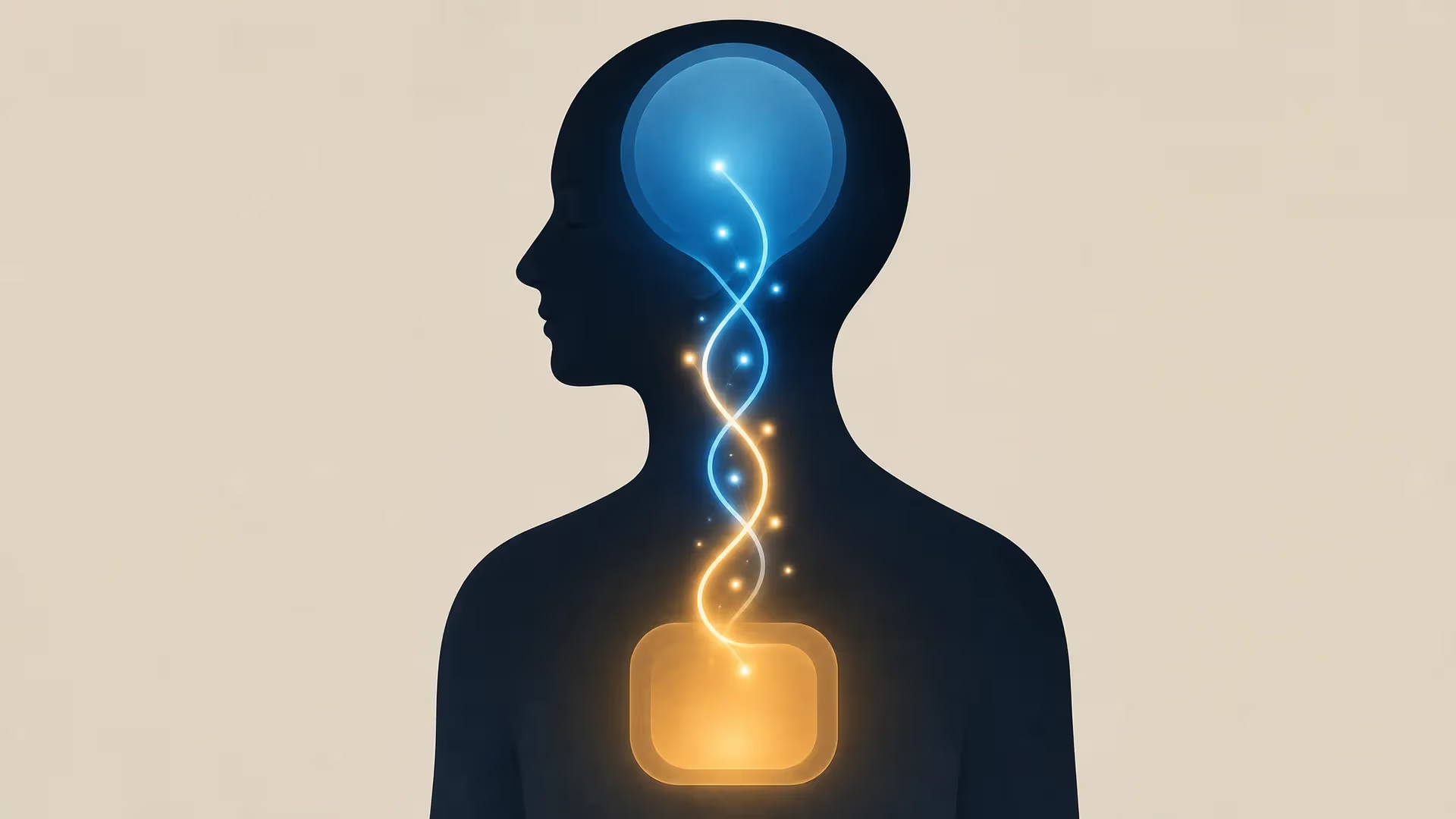
Fulfillment emerges from synergy.
Practices That Integrate All Three Dimensions
Yoga: The Embodied Integration Practice.
Yoga, when practiced authentically, is a technology for integrating body, mind, and soul simultaneously.
Physical level: Strengthens and opens the body, improving circulation, flexibility, and proprioception.
Mental level: Requires focused attention on breath and sensation, training the mind to stay present, and cultivating emotional regulation.
Spiritual level: Traditionally rooted in the pursuit of self-realization and connection to something transcendent.
A 2022 meta-analysis of 80 studies found that regular yoga practice (2-3x weekly) produced:
- 26% improvement in anxiety and depression symptoms.
- 33% improvement in sleep quality.
- Improved emotional regulation and resilience.
- Higher reported life satisfaction and sense of meaning.
The beauty of yoga is that it works on all three dimensions simultaneously, with practice deepening integration over time.
Mindful Movement: Walking as Meditation
Mindful walking-taking a walk with full awareness of each step, breath, and sensory input-is deceptively powerful.
Physical: Movement improves circulation, building mild cardiovascular fitness.
Mental: Focused attention training, present-moment awareness, stress reduction.
Spiritual: Connection with nature, perspective shift, contemplation.
A 20-minute mindful walk shows measurable benefits: decreased cortisol, increased heart rate variability (a marker of nervous system flexibility), improved mood, and enhanced cognitive function.
Practically, you can integrate this into daily life-a walk to work, a lunch-break walk, or a dedicated walking meditation. The key is full presence: noticing your feet hitting the ground, the temperature of the air, ambient sounds, without judgment.
The Sleep-Resilience Connection: How Rest Integrates Everything
One practice stands out for integrating all three dimensions: optimized sleep.
Sleep is where your body repairs, your mind processes emotion and consolidates learning, and your soul rests and regenerates. During sleep, your brain’s default mode network (associated with self-reflection and meaning-making) becomes most active.
This is why one sleepless night destroys emotional regulation, clarity, and resilience. And why consistent, quality sleep is the foundation upon which all other practices rest.
Dr. Matthew Walker’s research shows that even one night of poor sleep impairs decision-making, emotional regulation, and immune function by measurable amounts. Chronic sleep deprivation (6 hours or less nightly) accelerates aging and dramatically increases risk for depression, anxiety, and disease.
How to Sleep Like a Caveman by Dr. Merijn van de Laar takes an evolutionary approach to understanding why modern sleep is broken and how to fix it. The book provides science-backed strategies for aligning your sleep with your biology, not fighting against it-crucial for anyone serious about integration.
The practical protocol:
- Sleep schedule consistency (same bedtime/wake time even on weekends): Stabilizes circadian rhythm, improves sleep quality by 23%.
- Sleep environment optimization (cool, dark, quiet): 65-68°F temperature, blackout curtains, white noise if needed.
- Pre-sleep wind-down ritual (60 minutes before bed): No screens, gentle stretching or reading, calming tea.
- Sleep tracking awareness: Monitor your own patterns; even self-awareness improves sleep quality.
A study in the Sleep Health Journal found that individuals who implemented these four components showed measurable improvements in sleep quality within 2 weeks and significant mental health improvements within 8 weeks.
Building Your Practice: The Pathway Forward
The Integration Protocol: A 12-Week Foundation
Building a fulfilled life requires practice, not perfection. Here’s a realistic protocol tested with hundreds of individuals:
Weeks 1-4: Foundation
- Sleep protocol: Consistent 10 PM bedtime, optimized environment.
- Movement: 20-30 minutes walking 4x weekly.
- Nutrition: Eliminate one category of processed food; add one vegetable daily.
- Mindfulness: 5 minutes daily, using an app or guided practice.
Goal: Stabilize the body, begin training attention
Weeks 5-8: Deepening
- Sleep: Maintain protocol; add pre-sleep wind-down ritual.
- Movement: Add one yoga or strength-training session weekly.
- Nutrition: Establish a Mediterranean eating pattern baseline.
- Mindfulness: Increase to 10 minutes daily; add one mindful walk weekly.
- Reflection: Begin weekly journaling about values and life direction.
Goal: Integrate physical changes; begin deepening mental clarity and soul-level reflection
Weeks 9-12: Integration
- Physical: All practices maintained; movement feels natural.
- Mental: Meditation deepens; notice improved emotional regulation.
- Spiritual: Clear sense of personal values; beginning to align choices accordingly.
- Integration: Notice how better sleep improves workouts; how movement clarifies thinking; how meaning-making reduces anxiety.
Goal: Demonstrate integration; establish sustainable rhythm
Tools That Support Integration
Several products have been scientifically tested to accelerate these practices:
Muse Brain-Sensing Headband: For deepening meditation practice. Real-time EEG feedback accelerates your ability to access calm, focused states. Ideal for the mindfulness practice in the protocol. Studies show users develop consistency 2-3x faster than traditional meditators.
How to Sleep Like a Caveman by Dr. Merijn van de Laar: A practical, science-backed guide to optimizing sleep using evolutionary wisdom. This book deepens understanding of the sleep component and provides actionable strategies beyond the basics.
Dopamine Nation by Dr. Anna Lembke: Essential reading for understanding how modern life has disrupted your brain’s reward system and how to reset it. This reading clarifies the mental-physical loop and provides a framework for making conscious choices about stimulation.
Biohacking Your Physical and Mental Health (Academy for Health & Fitness): A comprehensive course covering the physical-mental integration in depth. Ideal if you want guided expertise on nutrition, movement, and stress management specific to your body’s needs.
These aren’t magic solutions. They’re tools that amplify intentional practice.
Navigating Common Obstacles
The Progress Isn’t Linear Problem
Most people expect fulfillment to increase steadily once they begin. Reality is messier.
You’ll have weeks where sleep is perfect, and mood is stable, then weeks where stress disrupts everything. You’ll establish a meditation practice that feels magical, then hit a plateau where it feels boring. You’ll gain clarity about your values, then face situations that test whether you’ll actually live them.
This isn’t a failure. This is an integration in process.
The neuroscience: Your brain resists change because familiar patterns are neurologically efficient. Even negative patterns create neural pathways that feel “normal.” When you change, your brain’s threat-detection systems activate (Why am I doing something different? This is uncomfortable and unfamiliar). This is why old patterns feel tempting even when you consciously want new ones.
The solution: Expect resistance and plan for it.
A study tracking behavior change found that individuals who anticipated obstacles and prepared specific responses (“If I feel stressed, I will take a 5-minute walk and notice three things I’m grateful for instead of scrolling social media”) succeeded 60% more often than those who relied on willpower alone.
The Perfectionism Trap
You will not meditate flawlessly. You will not sleep perfectly every night. You will have meals that don’t align with your nutritional values. You will say things you regret. You will lose touch with your sense of purpose.
That is the human condition, not a personal failure.
Perfectionism is actually an obstacle to integration. It’s based on the belief that you need to be “fixed,” when the actual work is learning to accept yourself while moving toward growth.
Self-compassion-treating yourself with the same kindness you’d offer a good friend-is scientifically documented to:
- Increase resilience (bouncing back from setbacks faster).
- Improve motivation (you’re less likely to give up when you’re not shaming yourself).
- Enhance mental health (correlates with lower anxiety and depression).
- Deepen relationships (people who are kind to themselves are kinder to others).
The practice: When you notice self-judgment, pause and ask: Would I talk to a good friend this way? What would genuine kindness sound like right now?
The Long-Term Vision: Fulfillment as a Skill
Building Your Fulfillment Baseline
Here’s what changes when you consistently practice body-mind-soul integration:
After 4 weeks:
- Better sleep quality.
- Slightly improved mood.
- Beginning to notice stress response patterns.
After 12 weeks:
- Significantly improved sleep and energy.
- Noticeably better emotional regulation.
- Clear sense of personal values.
- Beginning to make choices aligned with those values.
After 6 months:
- Physical resilience and vitality.
- Mental clarity and creativity.
- Strong sense of purpose and meaning.
- Relationships are improving as you show up more authentically.
After 1 year:
- Fundamentally shifted relationship to your body, mind, and choices.
- Strong enough practice that disruptions feel like temporary fluctuations, not failures.
- Clear feedback loop: better choices → better outcomes → greater motivation for continued practice.
- Genuine fulfillment becomes your baseline state.
This progression isn’t linear, and timelines vary. But the pattern is reliable: consistent practice creates measurable shifts in how your brain and body function, which creates genuine fulfillment.
The Ripple Effect
Here’s what research shows that most motivational content misses: When you improve your own body, mind, and soul integration, you influence everyone around you.
Research on emotional contagion shows that your emotional state literally affects the nervous system of people near you. Calm, centered people create calm, centered environments. People living in alignment with their values inspire others to examine their own.
You’re not just building a fulfilled life for yourself. You’re modeling to everyone in your orbit what integration looks like. You’re giving your children, friends, and colleagues permission to prioritize meaning and well-being over external achievement.
Body, Mind, and Soul for a Fulfilled Life as a Practice
The title of this article, Body, Mind, and Soul for a Fulfilled Life, isn’t a destination. It’s a compass.
Fulfillment emerges when your physical health supports your mental clarity, when your mental clarity allows you to recognize and follow your soul’s guidance, and when your soul’s sense of purpose motivates the physical and mental choices that sustain you.
This integration is a skill, not a trait. You’re not born with it; you build it through consistent practice. And like any skill-playing an instrument, learning a language, mastering a sport-the practice itself is the reward.
You don’t meditate for eight weeks to finally achieve “enlightenment.” You meditate because the practice itself, done consistently, gradually rewires your brain toward clarity and calm. You don’t exercise and eat well to someday feel fulfilled. You do it because each choice sends a message to yourself: I matter. My well-being matters. I’m worth this effort.
These daily choices compound. Your practice becomes your identity. Your identity shapes your choices. Your choices create your life.
The pathway to fulfillment isn’t mystical. It’s practical, measurable, and available to everyone willing to commit.
Start where you are. Choose one practice from this article: sleep optimization, 10 minutes of daily meditation, a nutritional shift, a weekly reflection on your values. Don’t try to do everything. One consistent practice creates momentum that naturally expands.
Your fulfilled life isn’t waiting somewhere in the future. It emerges through the choices you make today-how you treat your body, how you train your mind, and how you honor the values that make you truly alive.
That is body, mind, and soul for a fulfilled life in action.
At The Dream Oak, we write about the connection between mind, body, and soul – because a fulfilled life grows from all three. Browse more articles on mindfulness, personal growth, and health & wellness.
The Holistic Living Routine
Receive Our Free Expert-Crafted Holistic Routine to Nourish Your Daily Life. Unlock clarity. Take action.
📒Related Reads to Deepen Your Practice
- Spirituality & Happiness: Your Path to Inner Peace and Fulfillment
- Why is Philosophy Essential in the 21st Century
- Intuition: 9 Powerful Ways to Cultivate and Strengthen
- Harnessing Positive Energy Flow for a Better Life
- Why Walking in Nature Boosts Your Mind, Body & Soul?
📝 Affiliate Disclaimer
This post contains affiliate links. If you purchase through them, we may earn a small commission at no extra cost to you. We only recommend products we genuinely believe in.
Body, Mind, And Soul For A Fulfilled Life!